
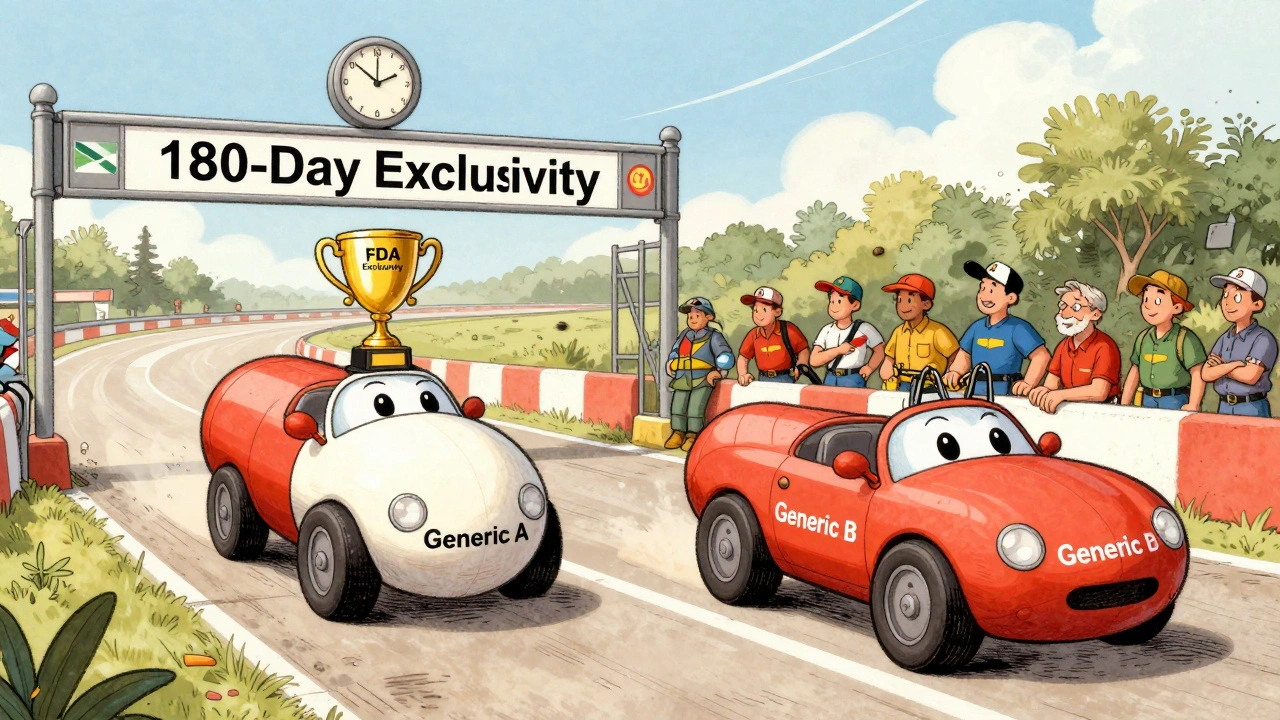
When a brand-name drug’s patent runs out, you’d think generics would flood the market right away. But that’s not how it works. In the U.S., a single generic manufacturer can block everyone else for up to 180 days - even if the patent is weak or expired. This isn’t a loophole. It’s the law. And it’s called 180-day exclusivity.
How the Hatch-Waxman Act Created a Winner-Takes-All Race
In 1984, Congress passed the Drug Price Competition and Patent Term Restoration Act - better known as the Hatch-Waxman Act. Its goal was simple: get cheap generics to market faster without killing innovation. The solution? Let generic companies challenge patents before they expire. But to make it worth the risk, they offered a reward: 180 days of exclusive sales. Here’s how it works. A generic company files an Abbreviated New Drug Application (ANDA) and includes a Paragraph IV certification. That’s a legal notice saying: "This patent is invalid, or we don’t infringe it." The first company to file that certification gets the 180-day clock. Everyone else waits. Even if five other companies submit identical applications the next day, only the first one wins. This isn’t just a delay. It’s a monopoly. For those six months, no other generic can enter. That means the first filer can set the price. For a blockbuster drug like Lipitor or Humira, that exclusivity window can be worth over a billion dollars. No wonder companies race to file first. Some spend millions on legal teams just to be the earliest to submit.When Does the Clock Start? It’s Not What You Think
The 180-day clock doesn’t start when the FDA approves the drug. It doesn’t even start when the court rules the patent is invalid. It starts on the earliest of two events: either the day the generic drug hits the market for sale, or the day a court says the patent is invalid or not infringed. That’s a big deal. If the first applicant files the ANDA, wins the lawsuit, but then sits on the approval for two years before selling the drug? The clock still hasn’t started. That means no other generic can enter - even though the patent expired years ago. The market stays blocked. And consumers keep paying brand-name prices. This loophole has been called a "strategic delay." It’s not illegal. It’s just how the law reads. The FDA has tried to fix it. In 2018, they clarified that forfeiture can happen if the first applicant doesn’t market the drug within 75 days after a court decision or 30 months after ANDA submission. But the rules are messy. Courts have overturned FDA interpretations. Companies have sued each other over who really filed first.Forfeiture Rules: One Mistake and You Lose Everything
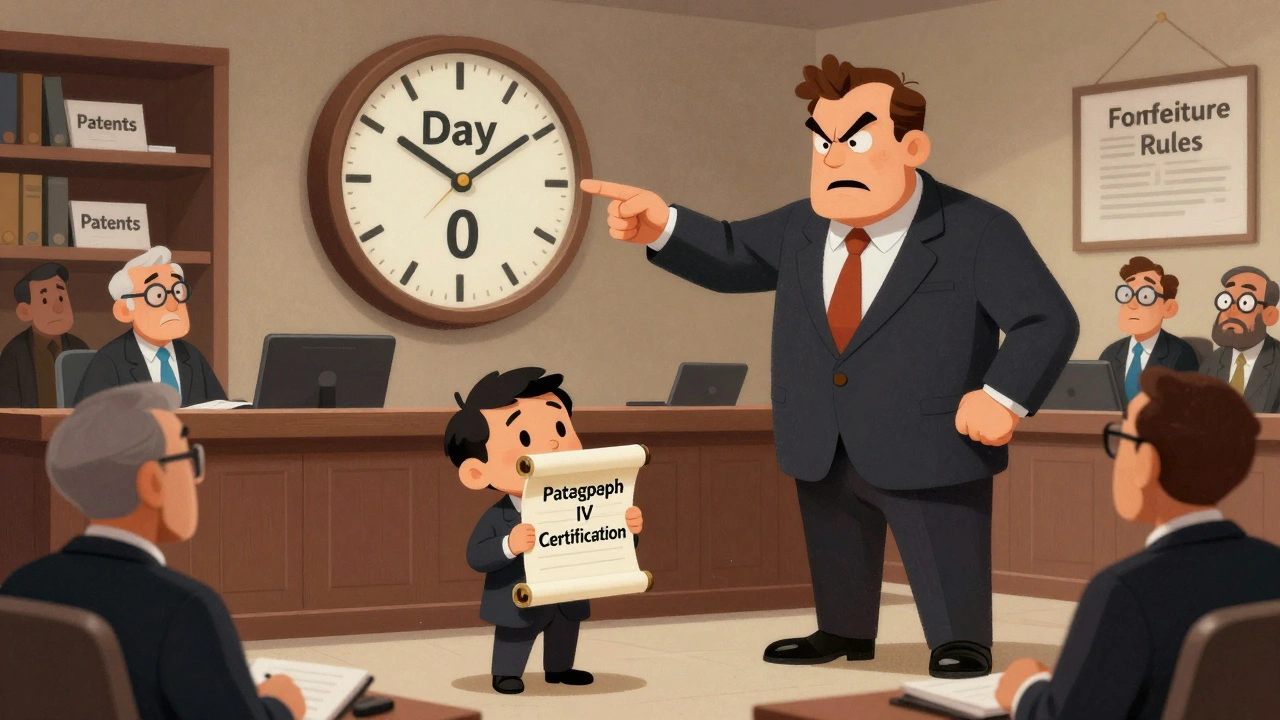
The 180-day prize isn’t guaranteed. The Medicare Modernization Act of 2003 added forfeiture rules. If you’re the first applicant, you can lose your exclusivity for three reasons:- You don’t market the drug within 75 days after a court rules in your favor
- You don’t market it within 30 months of your ANDA submission
- You withdraw your ANDA or agree to a settlement that blocks other generics
Why This System Fails Patients
The system was designed to encourage patent challenges. And it did - over 1,000 Paragraph IV certifications have been filed since 1984. But the results are mixed. On one hand, generics now make up over 90% of U.S. prescriptions. That’s a win. Billions saved every year. On the other hand, the 180-day exclusivity often delays competition longer than intended. In some cases, the first applicant waits years to launch. During that time, no other generic can enter. The brand-name drug keeps charging full price. Patients pay more. Pharmacies can’t negotiate. Insurers get stuck with higher costs. Worse, some companies file ANDAs just to block others - not to sell the drug at all. They call it "evergreening." They don’t launch. They just sit on the exclusivity. Then they sell the rights to another company for millions. The drug stays off the market. The patent expires. And still, no generics. The FDA admitted this in 2022. They proposed changing the law so the 180-day clock only runs from the day the drug is actually sold. No more waiting. No more games. If you don’t launch within 75 days of winning your case? You lose. Simple. Fair. But Congress hasn’t acted yet.How This Compares to Biosimilars and Other Systems
The 180-day exclusivity is unique to small-molecule drugs. It doesn’t apply to biologics. For those, the BPCIA gives the first interchangeable biosimilar 12 months of exclusivity. But here’s the difference: multiple biosimilars can enter at the same time. No winner-takes-all. In Europe, there’s no 180-day exclusivity at all. Generic companies can enter as soon as the patent expires. Competition kicks in immediately. Prices drop faster. In the U.S., it’s a bottleneck. One company holds the gate. Even other U.S. exclusivities don’t match this. New chemical entities get five years of data exclusivity. Pediatric extensions add six months. But those block ANDA submissions entirely. The 180-day exclusivity only blocks other generics after approval - and only if they challenged the same patent.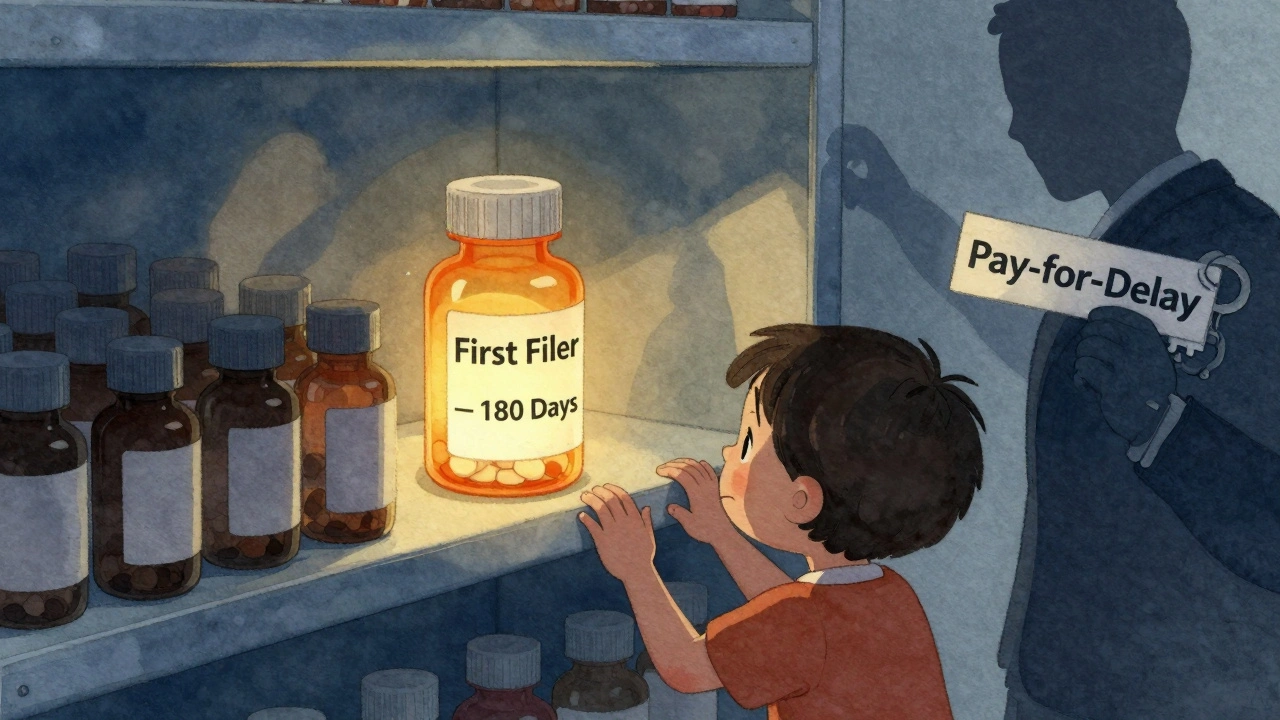
What’s Next for Generic Market Entry?
The FDA’s 2022 proposal is the most serious attempt to fix this in decades. If passed, it would:- Start the 180-day clock only when the drug is sold
- Extend exclusivity to 270 days if the first applicant launches more than five years before the patent expires
- Split exclusivity among multiple first applicants - 90 days for the first, then 180 for the rest
Real-World Impact: A Case Study
Take the drug OxyContin. When its patent expired in 2013, a generic company filed an ANDA with a Paragraph IV certification. They were the first. But the brand-name maker sued. The case dragged on for three years. The generic company won. But they didn’t launch right away. They waited six months. Why? To negotiate with pharmacies and insurers for better shelf space. During those six months, no other generic could enter. OxyContin kept its $120-per-pill price. The generic finally launched at $80. That’s still cheaper. But not as cheap as it could’ve been. And because the first applicant delayed, the market didn’t get the full benefit of competition. That’s the 180-day exclusivity in action. Not a tool for competition. A tool for control.Who qualifies as the "first applicant" for 180-day exclusivity?
The first company to submit a substantially complete ANDA that includes a Paragraph IV certification challenging a listed patent. The FDA determines "substantially complete" based on whether all required data and certifications are included at submission. Courts have ruled that even minor omissions can disqualify an applicant - so timing and accuracy matter more than speed alone.
Can a generic company lose its 180-day exclusivity?
Yes. A first applicant can forfeit exclusivity if they don’t market the drug within 75 days after a court rules the patent is invalid or not infringed, or if they don’t launch within 30 months of submitting their ANDA. They can also lose it if they enter into a settlement that blocks other generics from entering the market.
Why doesn’t the FDA approve other generics during the exclusivity period?
The Hatch-Waxman Act explicitly prohibits the FDA from approving any other ANDA with a Paragraph IV certification to the same patent until the 180-day exclusivity period ends. This is a legal restriction, not a regulatory choice. Even if the patent is weak or expired, the law blocks approval until the clock runs out.
Does 180-day exclusivity apply to all generic drugs?
No. It only applies to generic versions of brand-name drugs that have patents listed in the FDA’s Orange Book, and only if the generic company files a Paragraph IV certification. Drugs without listed patents, or those challenged under other certifications, don’t qualify. Biosimilars and over-the-counter generics are also excluded.
What’s the difference between 180-day exclusivity and patent term extension?
Patent term extension gives brand-name companies extra years of market protection to make up for time lost during FDA review. The 180-day exclusivity gives generic companies a temporary monopoly to reward them for challenging those patents. One extends protection; the other breaks it - but only for the first challenger.
Are there any alternatives to the 180-day exclusivity system?
Yes. In the EU and Canada, generics can enter immediately after patent expiration - no exclusivity period. The U.S. biosimilar pathway allows multiple companies to launch at once with a 12-month exclusivity for the first interchangeable product. Some experts argue the U.S. should adopt a similar model for small-molecule drugs to speed up competition and lower prices.
11 Comments
Saket Modi
Bro this system is just rigged lol. Why should one company get to sit on a drug for years and charge brand prices? 🤡
Chelsea Moore
This is absolutely disgusting. People are DYING because of this. Billion-dollar corporations playing chess with people’s insulin prices?!?! This isn’t capitalism-it’s criminal negligence. 😭
Girish Padia
The 180-day rule was meant to incentivize challenges, not create monopolies. But now it’s just a tool for legal gambling. The FDA’s attempts to fix it keep getting overturned. It’s like playing whack-a-mole with the law.
John Webber
so like if u file first u get 6 months to sell alone? but if u wait u lose? that sounds like a trap. why dont they just let everyone in at once??
Shubham Pandey
First filer wins. Everyone else waits. That’s it. No more, no less.
Sheryl Lynn
It’s not merely a loophole-it’s a systemic dereliction of public trust dressed up as legislative compromise. The Hatch-Waxman Act was a Faustian bargain: innovation at the cost of equity, and now we’re paying the compound interest in expired prescriptions and hollowed-out pharmacy shelves.
Paul Santos
It’s a classic tragedy of the commons inverted: instead of overuse, it’s underutilization of competition. The 180-day exclusivity creates a perverse incentive structure where the market’s most efficient actors-generic manufacturers-are incentivized to delay, not accelerate, access. 🤷♂️
Eddy Kimani
Interesting how the FDA’s 2022 proposal tries to reset the clock to launch date-not filing or court ruling. That’s the only way to close the strategic delay loophole. If you don’t launch, you don’t get the reward. Simple. Logical. Why hasn’t Congress moved on this?
John Biesecker
we’re all just pawns in a game where the board was drawn by lawyers and the pieces are lives. the patent system was supposed to help people… now it just helps profits. 🌱💊
Genesis Rubi
Europe does it better and we still let Big Pharma push this garbage? America should lead, not follow the rest of the world in doing the right thing. Fix this now.
Doug Hawk
the real question is who benefits when the clock is frozen? not patients. not pharmacies. not insurers. just the ones who hold the paperwork. and somehow that’s legal. i don’t get how we let this slide