
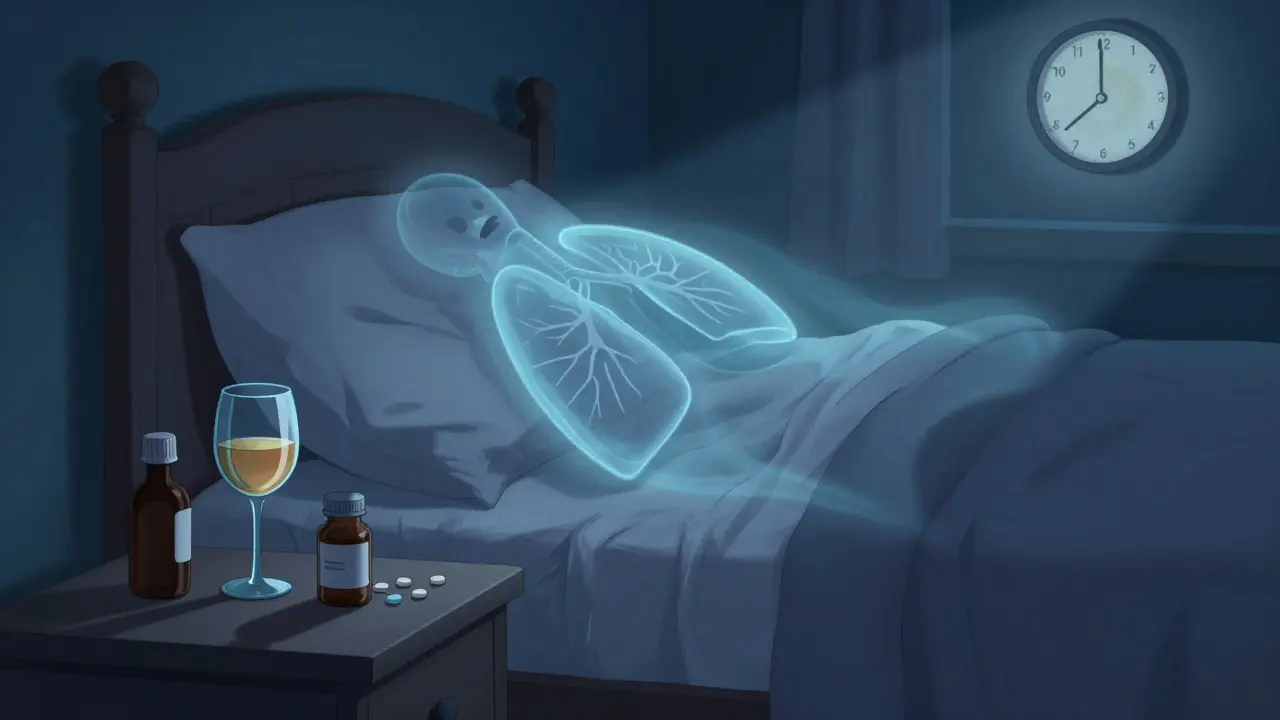
Putting alcohol and sleep medications together isn’t just a bad idea-it’s a life-threatening one. Many people don’t realize that a single glass of wine or a couple of beers can turn a prescribed sleep aid into a silent killer. The combination doesn’t just make you sleepy. It shuts down your breathing, scrambles your brain, and leaves you at risk of waking up in the hospital-or not waking up at all.
How Alcohol and Sleep Medications Work Together
Both alcohol and sleep medications like Ambien, Lunesta, and Klonopin slow down your central nervous system. They do this by boosting the effects of a brain chemical called GABA, which calms nerve activity. When you take them together, they don’t just add up-they multiply. This is called synergistic depression. Think of it like pressing the brake and the gas pedal at the same time: your body doesn’t know which signal to follow, and it ends up stalling.
Alcohol doesn’t just make sleep meds stronger-it changes how your body processes them. The liver uses the same enzyme system (CYP3A4) to break down both alcohol and many sleep drugs. When alcohol is present, it clogs up this system. That means the medication stays in your bloodstream longer. A normal half-life of 2.5 hours for zolpidem (Ambien) can stretch to over 6 hours when mixed with just one drink. That’s six extra hours of suppressed breathing, impaired coordination, and memory blackouts.
The Three Most Dangerous Types of Sleep Medications
Not all sleep aids are created equal when it comes to alcohol interactions. There are three main categories, and each carries its own level of risk.
- Z-drugs (like Ambien, Lunesta, Sonata): These are the most dangerous. They act fast, target specific brain receptors, and have a narrow safety window. The FDA added a Black Box Warning to all Z-drugs in 2022 because of how often they cause fatal overdoses when combined with alcohol. Even at low blood alcohol levels-0.05%, below the legal driving limit-these drugs can cause respiratory failure.
- Benzodiazepines (like Klonopin, Ativan, Restoril): These were the first widely prescribed sleep aids. While they’re less fast-acting than Z-drugs, they linger in the body longer. Mixing them with alcohol increases the risk of falls, confusion, and memory loss. Older adults are especially vulnerable.
- OTC sleep aids (like ZzzQuil and Unisom): These contain antihistamines-diphenhydramine or doxylamine. People think they’re “safe” because they’re sold over the counter. But they’re just as dangerous with alcohol. In adults over 65, combining these with even a small amount of alcohol triples the risk of falling and fracturing a hip. Emergency room visits for this combo have jumped 300% in the last five years.
Real Numbers, Real Consequences
Statistics don’t lie. Between 2018 and 2022, emergency room visits for alcohol-sedative interactions rose by 27%. In 2021 alone, over 1,800 people reported dangerous side effects to the FDA’s drug safety system. Over 60% of those cases involved complete memory loss-people woke up with no idea how they got there.
One study of 372 fatal cases involving Ambien and alcohol found the average blood alcohol level was 0.051%. That’s less than half the legal driving limit. These weren’t binge drinkers. These were people who had one drink after dinner. One glass of wine. One beer. Enough to tip the scale into catastrophe.
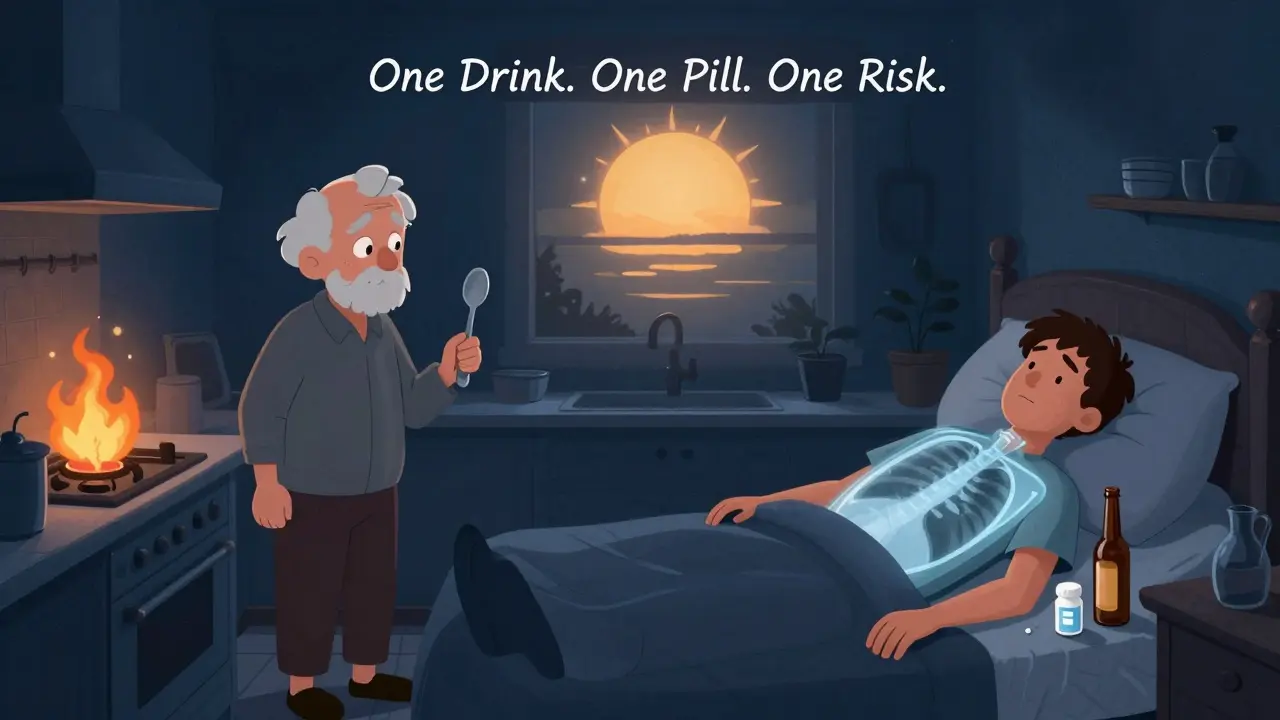
Driving simulator tests showed that mixing Ambien with alcohol made people 2.7 times worse at driving than alcohol alone. That’s worse than being legally drunk. And it’s not just about driving. People have woken up miles from home, standing in front of a stove with a pan on fire, or behind the wheel with no memory of starting the car. These aren’t rare stories-they’re documented clinical events.
Who’s Most at Risk?
While anyone who mixes alcohol and sleep meds is in danger, some groups are at far higher risk.
- Adults aged 35-54: This group accounts for over half of all ER visits involving these combinations. They’re often stressed, working long hours, and using sleep aids to keep up. They’re also more likely to drink socially.
- People over 65: As we age, our livers slow down. Alcohol and medications stay in the body longer. The American Geriatrics Society says mixing diphenhydramine (Unisom) with alcohol increases delirium risk by 400% in seniors. Many older adults don’t even realize their OTC sleep aid is risky.
- People with alcohol use patterns: Even occasional drinkers are at risk. You don’t have to be an alcoholic. One drink, once a week, can be enough to trigger a dangerous interaction.
What About Melatonin?
Many people turn to melatonin as a “natural” alternative. It’s true-melatonin doesn’t interact dangerously with alcohol like Z-drugs or antihistamines do. But that doesn’t mean it’s harmless. Studies show combining melatonin with alcohol increases next-day drowsiness by 35%. You might not crash, but you’ll feel groggy, foggy, and uncoordinated the next morning. It’s not lethal, but it’s still a risk you don’t need.
What Should You Do Instead?
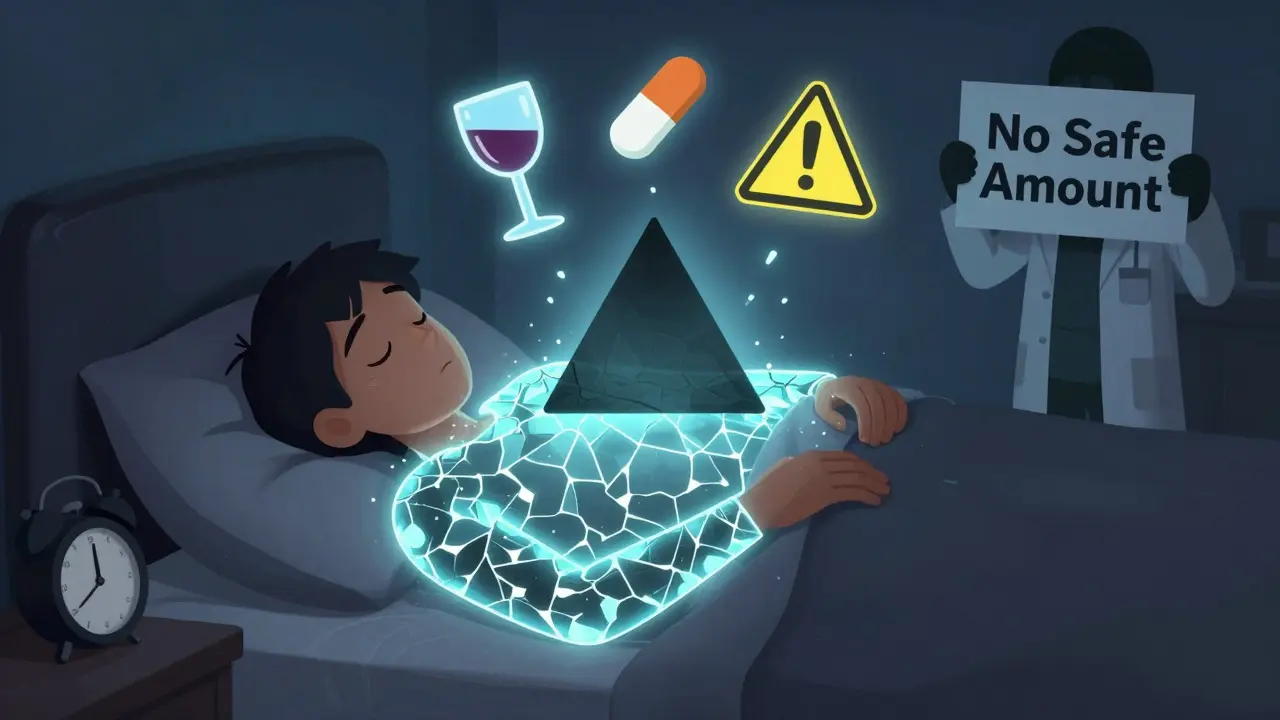
If you’re taking sleep medication and drinking, the safest choice is simple: stop drinking. The National Institute on Alcohol Abuse and Alcoholism says there’s no safe amount of alcohol with prescription sleep aids. Period.
But if you can’t quit alcohol, or if you’re already mixing them, here’s what to do:
- Wait at least 6 hours after drinking before taking a Z-drug. For benzodiazepines, wait 12 hours.
- If you’re over 65, avoid alcohol completely while on any sleep medication-prescription or OTC.
- Ask your doctor or pharmacist: “Is this medication safe with alcohol?” Don’t assume it is.
- Consider non-drug treatments. Cognitive Behavioral Therapy for Insomnia (CBT-I) is proven to work better than pills long-term, with no risk of interactions.
Pharmacists are now required to warn you about alcohol interactions when you pick up a sleep prescription. But a 2022 survey found that 68% of patients still say they weren’t warned. Don’t wait for them to speak up. Ask.
New Hope: Safer Alternatives Are Coming
The good news? Science is catching up. In 2023, the FDA approved a new sleep drug called Dayvigo (lemborexant). Unlike Z-drugs, it doesn’t work on GABA receptors. Instead, it blocks orexin-a brain signal that keeps you awake. In trials, combining Dayvigo with alcohol only increased its half-life by 15%. Compare that to Z-drugs, which see a 150-200% increase. This is a game-changer.
Seven of the 12 new sleep medications currently in clinical trials use non-sedative mechanisms. The future of sleep treatment is moving away from brain-stopping drugs and toward smarter, safer options. But until those are widely available, the risk remains.
Final Warning: This Isn’t a Myth
People think, “I’ve done it before and nothing happened.” That’s not luck. It’s probability. You might get away with it once, twice, even ten times. But the risk doesn’t go away. One drink. One pill. One night. That’s all it takes to stop breathing while asleep. And you won’t wake up to realize it.
If you’re using sleep medication and drinking-even just a little-stop. Talk to your doctor. There are safer ways to sleep. Your life depends on it.
Can I have one glass of wine with Ambien if I wait a few hours?
No. Even if you wait six hours after drinking, alcohol can still be in your system and interact with Ambien. The FDA and NIAAA state that no amount of alcohol is safe with Z-drugs like Ambien. The interaction isn’t predictable-it doesn’t matter how much you drank or when. The risk remains.
Are OTC sleep aids like Unisom safer than prescription ones?
No. OTC sleep aids like Unisom (doxylamine) and ZzzQuil (diphenhydramine) are just as dangerous with alcohol. In fact, they’re more risky for older adults. The combination triples the chance of falling and increases confusion and memory loss. Many people assume “over-the-counter” means “safe,” but that’s not true here.
Why do I feel so groggy the next day when I mix alcohol and sleep meds?
Alcohol slows down how your body breaks down the sleep medication, so it stays in your system much longer. Instead of wearing off in 6-8 hours, it can linger for 12 or more. That’s why you feel foggy, unsteady, and mentally sluggish the next day. It’s not just tiredness-it’s drug toxicity.
Is it safe to drink the night before I take my sleep pill?
Not if you’re taking a Z-drug or benzodiazepine. Alcohol can stay in your bloodstream for up to 12 hours, depending on how much you drank and your metabolism. Even if you feel fine, the drug can still interact with residual alcohol. For safety, avoid alcohol entirely while using these medications.
What should I do if I’ve already mixed alcohol and sleep medication?
If you’ve taken them together and feel extremely drowsy, confused, have trouble breathing, or can’t stay awake, call emergency services immediately. Do not try to sleep it off. These combinations can stop your breathing without warning. If you’re unsure, go to the ER. Better safe than dead.
11 Comments
Sanjaykumar Rabari
They don't tell you this but the FDA knows. Every sleep pill is a trap. The system is designed to keep you dependent. One drink and you're hooked. They profit from your silence. You think you're safe? You're not.
Kenzie Goode
I can't believe how many people still think 'just one glass' is fine. I used to be one of them. Then my cousin ended up in the ICU. It wasn't a nightmare. It was real. And it could've been prevented. Please, just stop. It's not worth it.
Dominic Punch
This is one of the most critical public health messages we're not talking about. The synergy between alcohol and sedatives isn't just additive-it's exponential. And the worst part? Most people don't even know their OTC meds are in the same danger zone. If you're taking anything for sleep and drinking, you're playing Russian roulette with your brainstem. Talk to your pharmacist. Now. Don't wait for a crisis.
Khaya Street
I read this and thought: okay, makes sense. But then I remembered my dad took Unisom every night and had a beer with dinner. He's 72. He's fine. Maybe the stats are skewed?
Christina VanOsdol
You're so naive. 🤡 The fact that your dad 'is fine' doesn't mean it's safe-it means he's been lucky so far. Statistically, 60% of people who mix these have memory blackouts. That means your dad probably doesn't even remember the nights he almost died. And you're celebrating that? 🤢
Brooke Exley
I just want to say-you're not alone if you're struggling with this. I used to rely on Ambien and wine to sleep. I thought I was in control. I wasn't. I hit rock bottom. Then I found CBT-I. It changed my life. No pills. No booze. Just me, my breath, and a lot of patience. You can do this. I believe in you.
Alfred Noble
i read this and thought 'wow' but then i remembered i had a glass of wine last night and took my zzzquil. oops. i'm gonna stop. thanks for the wake up call. i didn't know otc was this bad. my bad.
Matthew Brooker
The real win here is Dayvigo. Finally, a sleep med that doesn't turn your body into a slow-motion accident waiting to happen. The science is moving. The system is slow. But change is coming. Don't give up on better options. They're real. And they're better than the old dangerous junk.
Emily Wolff
This article is overblown. People have been drinking and sleeping for centuries. The real issue? People who can't regulate their behavior. Blame the user, not the drug.
Lou Suito
You say one drink is deadly but you ignore that alcohol metabolism varies. My liver processes it in 90 minutes. I wait 12 hours. I'm fine. Your fearmongering ignores biology. Also melatonin is fine. Stop scaring people with stats.
Joseph Cantu
They don't want you to know this-but the pharmaceutical companies paid off the regulators. The black box warnings? Too little, too late. They knew. They knew how many people would die. And they still pushed these drugs. You think your doctor cares? They get kickbacks. Your 'sleep aid' is a profit margin. Wake up. This isn't medicine. It's a racket.