
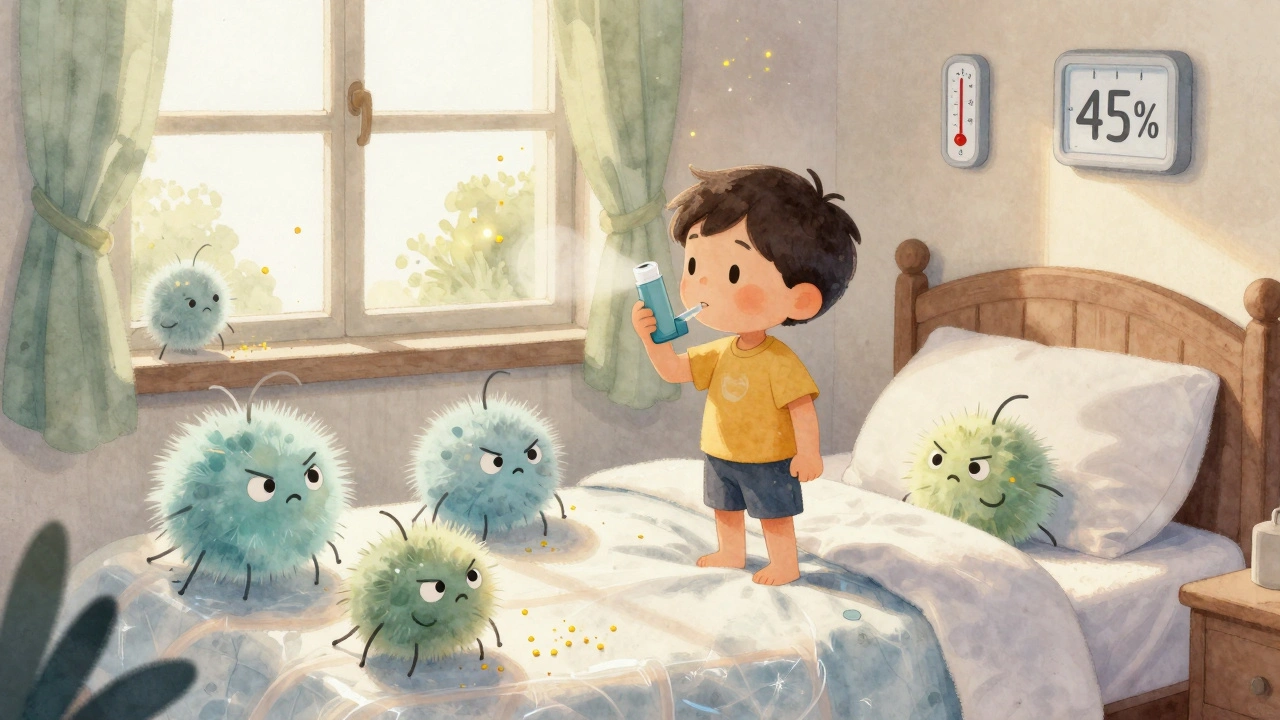
For over 15 million people in the U.S. alone, breathing isn’t just a habit-it’s a battle. Allergic asthma, the most common form of asthma, turns everyday things like pollen, pet dander, or dust mites into invisible enemies. Unlike non-allergic asthma, which can be triggered by cold air, exercise, or stress, allergic asthma has a clear trigger: your immune system overreacts to harmless substances, mistaking them for invaders. This reaction floods your airways with inflammation, tightening muscles around your bronchial tubes and making it hard to catch your breath. The good news? You don’t have to just live with it. Knowing your triggers, avoiding them smartly, and considering immunotherapy can change everything.
What Exactly Triggers Allergic Asthma?
Allergic asthma isn’t random. It’s tied to specific allergens that your body sees as threats. The most common ones are airborne and easy to miss because they’re everywhere-inside your home, outside your window, even on your clothes.
Tree pollen hits hardest in early spring. In March, levels in cities like Manchester can hit 15-20 grains per cubic meter, enough to set off symptoms in sensitive people. Grass pollen follows in June, sometimes peaking above 100 grains per cubic meter. Ragweed, which shows up in late summer, is the worst offender for many-its pollen counts can soar past 100 grains per cubic meter in September, and thunderstorms can make it worse by breaking pollen into smaller, deeper-penetrating pieces.
Indoors, the trouble doesn’t stop. Dust mites live in your mattress, pillows, and carpets. They thrive where humidity is above 50%, and in 84% of U.S. homes, levels are high enough to cause sensitization. A single gram of dust with more than 2 micrograms of dust mite allergen can trigger symptoms. Cat allergen (Fel d 1) is even more sneaky-it clings to clothes, spreads through ventilation, and shows up in 79% of homes, even if no cat lives there. Dog allergen (Can f 1) is less common but still present in two-thirds of households.
Mold is another silent player. Alternaria spores spike after summer rains and thunderstorms. When levels hit 500 spores per cubic meter, emergency visits for asthma jump by 3.5 times. And if you’ve ever noticed your asthma flaring up after cleaning the basement or opening a damp closet, that’s mold.
How to Avoid Allergens-Without Living in a Bubble
Avoiding allergens doesn’t mean giving up your life. It means making smart, measurable changes that cut exposure without turning your home into a lab.
Start with your bedroom. Dust mites love warm, humid bedding. Swap out regular pillows and mattress covers for allergen-proof ones made with tightly woven fabric (look for a pore size under 10 micrometers). Wash all bedding weekly in water hotter than 130°F-this kills mites and removes allergens. Studies show this single step reduces dust mite allergen by 90%.
Use a vacuum with a HEPA filter at least twice a week. Regular vacuums just kick dust back into the air. HEPA filters trap 99.97% of particles as small as 0.3 microns-including cat dander and mite feces. One 2021 study found this cut cat allergen levels in rooms by 42%.
Control humidity. Keep indoor humidity between 30% and 50%. Use a hygrometer to monitor it. If it’s too high, run a dehumidifier. At 45% RH, dust mite populations crash-from 20 micrograms per gram of dust down to under 0.5. That’s a game-changer.
When pollen counts are high, keep windows closed-even at night. Use air conditioning instead. If you go outside, especially during yard work, wear an N95 mask. It cuts pollen exposure by 85%. And when you come back in, shower and change clothes. Pollen sticks to hair and skin. One 2021 study showed this simple habit reduced allergen transfer to bedding by 70%.
For pet allergies, keep pets out of bedrooms and off upholstered furniture. Bathe them weekly with hypoallergenic shampoo. Even better, use an air purifier with a HEPA filter in the main living area. It won’t eliminate allergens, but it can reduce airborne levels by up to 60%.
Immunotherapy: Rewiring Your Immune System
If avoidance isn’t enough, and medications like inhalers only manage symptoms, immunotherapy offers something different: long-term change.
Immunotherapy trains your immune system to stop overreacting. It works by slowly exposing you to tiny, controlled doses of the allergen you’re sensitive to-until your body learns it’s not a threat.
There are two main types: subcutaneous immunotherapy (SCIT), or allergy shots, and sublingual immunotherapy (SLIT), or allergy tablets/drops. SCIT involves weekly injections for 4-6 months, then monthly for 3-5 years. SLIT uses daily tablets (like Grastek for grass) or drops placed under the tongue. Both are proven to reduce asthma symptoms by 30-50% compared to medication alone.
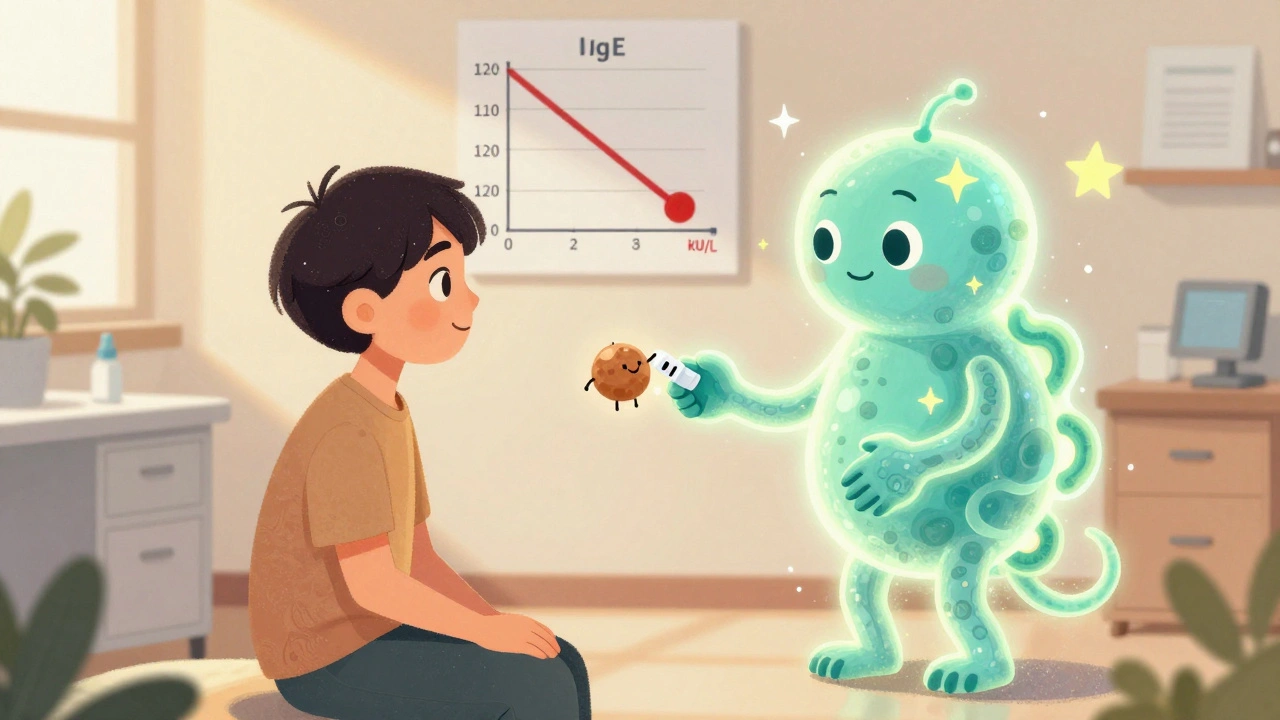
A 2021 Cochrane review of over 12,000 patients found immunotherapy reduced the need for asthma medications by up to 40%. In one case, a 12-year-old with severe cat allergy went from needing daily inhalers to being symptom-free after three years of cat dander immunotherapy. Their IgE levels dropped from 120 kU/L to just 15 kU/L.
But it’s not instant. Most people start seeing improvement after 12-18 months. And it requires consistency. About 28% of people quit SCIT because of injection discomfort. SLIT users often report mild oral itching in the first month-this usually fades, but 35% still stop because of it.
Not everyone is a candidate. Immunotherapy works best for people with clear, measurable allergies to one or two major triggers. If you’re allergic to five different things, it’s harder to target effectively. Also, if your asthma is poorly controlled, you need to stabilize it first with medication before starting immunotherapy.

How Allergic Asthma Differs From Non-Allergic Asthma
Not all asthma is the same. Allergic asthma usually starts in childhood. The average age of diagnosis is 12.3 years. Non-allergic asthma typically begins in adulthood, around 34.7 years. If your asthma runs in the family, it’s more likely to be allergic. The odds of a sibling also having allergic asthma are over three times higher.
Biologic medications like omalizumab (Xolair) target IgE, the antibody that drives allergic reactions. In allergic asthma, these drugs reduce flare-ups by nearly 50%. In non-allergic asthma, the same drug only cuts them by 22%. That’s why testing matters.
Doctors can check for allergic asthma using skin prick tests or blood tests for IgE. A wheal (raised bump) of 3mm or more on a skin test means you’re sensitized. Blood IgE levels above 100 kU/L are common; in severe cases, they can exceed 400 kU/L. Eosinophil levels in your blood or sputum-above 3%-also point to allergic inflammation.
Non-allergic asthma responds better to other treatments. Bronchial thermoplasty, a procedure that reduces airway muscle, helps non-allergic patients more. Macrolide antibiotics like azithromycin show stronger benefits for non-allergic types too. But for allergic asthma, the best long-term tool is still immunotherapy.
What’s New in Allergic Asthma Treatment?
Things are moving fast. In 2024, the FDA approved CAT-PAD, a new peptide-based immunotherapy for cat allergy that cuts the build-up phase from six months to just eight weeks. That’s a huge win for patients tired of weekly shots.
Another breakthrough is the Pollen-VLP vaccine. Early trials show four annual doses can reduce symptoms by 60%. It’s not yet available, but if it gets approved, it could replace yearly allergy shots for pollen allergies.
Technology is helping too. The Allergen Insight nasal sensor-recently granted FDA breakthrough status-detects allergens as low as 0.1 micrograms per cubic meter. It syncs with your phone and alerts you when levels are dangerous. AI platforms like AsthmaIQ use pollen forecasts, your medication logs, and even weather data to predict your next flare-up with 92% accuracy.
And new biomarkers are making diagnosis sharper. If you’re allergic to birch pollen and your IgE to Ara h 8 (a peanut protein) is above 0.35 kU/L, you’re likely to have oral allergy syndrome-itchy mouth when eating raw apples or carrots. If your Alternaria IgE is over 17.5 kU/L, you’re nearly five times more likely to have a severe asthma attack.
Is Immunotherapy Worth the Cost and Effort?
Immunotherapy isn’t cheap. SCIT costs about $18.90 per injection with Medicare coverage. Over three years, that adds up. SLIT tablets cost $1,000-$1,500 per year. But consider this: a single asthma emergency room visit can cost over $3,000. If immunotherapy cuts your flare-ups by half, it pays for itself.
And it’s not just about money. It’s about freedom. People who complete immunotherapy often report being able to go outside without fear, sleep through the night, and stop relying on daily inhalers. One Reddit user, after switching to allergen-proof bedding, a HEPA vacuum, and immunotherapy, saw their peak flow jump from 380 to 470 L/min-enough to run without wheezing for the first time in years.
Still, it’s not for everyone. If your allergies are vague, your asthma is uncontrolled, or you can’t stick with daily tablets or weekly shots, it won’t work. Talk to an allergist. Get tested. See what your triggers really are.
Final Thoughts: Take Control, Don’t Just Manage
Allergic asthma doesn’t have to rule your life. You don’t have to accept daily symptoms as normal. The tools to fight back are here-better testing, smarter avoidance, and treatments that actually change your immune system’s response.
Start by identifying your triggers. Don’t guess. Get tested. Then make one change this week: wash your bedding in hot water. Buy a hygrometer. Put on an N95 mask when you rake leaves. Talk to your doctor about immunotherapy.
There’s no magic cure. But for millions, allergic asthma went from a daily struggle to a manageable condition-not because they took more pills, but because they understood the enemy and fought it the right way.
Can allergic asthma be cured?
There’s no permanent cure for allergic asthma, but immunotherapy can lead to long-term remission. Many people who complete 3-5 years of treatment see symptoms disappear or become so mild they no longer need daily medication. Studies show up to 70% of patients stay symptom-free for years after stopping therapy.
How do I know if my asthma is allergic?
Your doctor can test you with skin prick tests or blood tests for IgE antibodies. If you react strongly to common allergens like pollen, dust mites, or pet dander-and you have symptoms like sneezing, itchy eyes, or nasal congestion along with wheezing-it’s likely allergic asthma. Blood eosinophils above 300 cells/µL and FeNO levels over 25 ppb also support this diagnosis.
Can I do immunotherapy at home?
Sublingual immunotherapy (SLIT) tablets or drops can be taken at home after the first dose is given under medical supervision. Allergy shots (SCIT) must be administered in a clinic because of the risk of severe reactions. Always follow your allergist’s instructions and keep an epinephrine auto-injector nearby during treatment.
How long does it take for immunotherapy to work?
Most people notice improvement after 6-12 months, but full benefits usually take 12-18 months. Some may take longer, especially if they’re allergic to multiple triggers. Consistency is key-missing doses or stopping early reduces effectiveness. The full course is typically 3-5 years.
Is immunotherapy safe for children?
Yes. Both sublingual and subcutaneous immunotherapy are approved for children as young as 5. SLIT is often preferred for kids because it’s needle-free and easier to manage at home. Studies show children respond well, with improved lung function and fewer school absences. Always consult a pediatric allergist before starting.
Can I still use my inhaler while doing immunotherapy?
Absolutely. You’ll continue using your inhaler, especially during the first year of immunotherapy. As your body builds tolerance, your doctor will gradually reduce your medication. Many patients end up needing less or even stopping rescue inhalers altogether after completing treatment.
What if immunotherapy doesn’t work for me?
It’s not a guarantee. About 10-15% of people don’t respond well. If that happens, your doctor may suggest biologic therapies like omalizumab, mepolizumab, or dupilumab, which target specific parts of the immune system. You might also need to retest for allergens-sometimes triggers change or were misidentified. Don’t give up-there are other options.
10 Comments
parth pandya
man i had no idea dust mites could be that bad even in my own bed
Chloe Madison
just switched to allergen-proof covers last month and my nighttime coughing? gone. no joke. also started washing sheets in hot water-my skin stopped itching like crazy. small changes, huge difference.
Charles Moore
the part about thunderstorms making pollen worse is wild-I always thought rain would help, but apparently it just shreds pollen into finer, more dangerous pieces. never thought to check the weather for asthma risk before. now i keep a pollen app on my phone. life-changing.
Myson Jones
for those considering immunotherapy: it’s not a magic bullet, but it’s the closest thing we’ve got to retraining your body. i did SCIT for four years. the shots were annoying, yes-but after year two, i stopped needing my rescue inhaler during spring. i even went hiking in the woods without panic. that’s freedom.
vinoth kumar
my mom has allergic asthma and she swears by the HEPA vacuum. she vacuums twice a week like clockwork and even cleans the filter every month. i thought she was being extreme until i saw her peak flow numbers. they jumped 20% in six months. also, she keeps her cat out of the bedroom and uses a nasal rinse after coming inside. simple, but it works.
Ignacio Pacheco
so let me get this straight-you’re telling me i can pay $1,500 a year for tiny pills under my tongue… just to avoid having to wipe cat fur off my couch? i mean, i love my cat, but…
Jim Schultz
Wow. Just… wow. Someone actually wrote a 2,000-word essay on asthma and didn’t mention that 80% of people who try immunotherapy quit before year two because it’s boring and expensive. And now you’re selling this like it’s the second coming? The real answer? Move to a desert. Or just buy a $20 air purifier and call it a day.
Vincent Soldja
Immunotherapy is effective but requires commitment. Many do not complete the course. Avoidance remains primary. Medications remain necessary for acute control.
Makenzie Keely
Just read the part about the new CAT-PAD therapy-eight weeks instead of six months?! That’s insane. My 7-year-old has a cat allergy and hates shots. If this gets approved, we’re first in line. Also, the AsthmaIQ app sounds like something out of sci-fi-predicting flares with 92% accuracy? I’m downloading it tonight.
Kidar Saleh
My grandmother in Ireland had asthma since the 50s. No tests, no meds, just a tin of eucalyptus oil and a window cracked open every morning. She lived to 92. I’m not saying we throw out science-but sometimes, the oldest remedies-fresh air, clean bedding, avoiding smoke-are the ones we forget. Simple isn’t weak. It’s wise.