
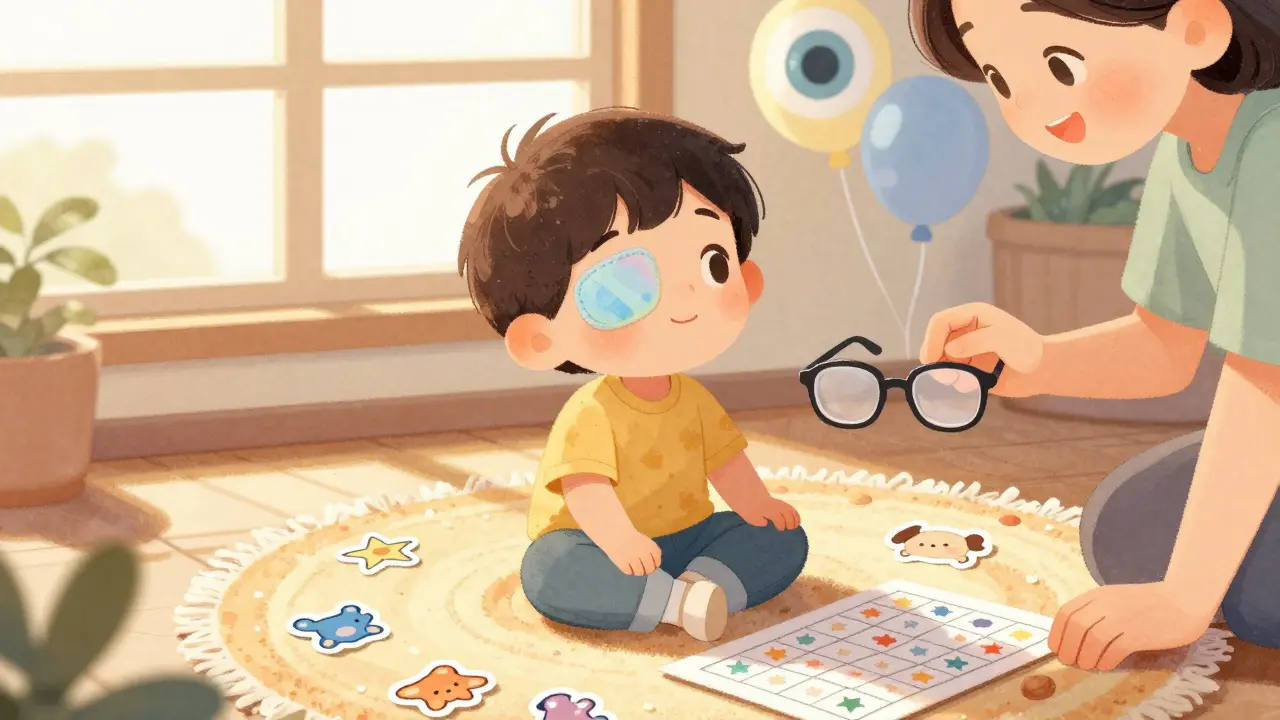
When a child’s brain starts ignoring one eye, it’s not just a vision problem-it’s a race against time. Amblyopia, often called lazy eye, is the most common cause of preventable vision loss in kids. It doesn’t mean the eye is damaged. The eye looks fine. But the brain refuses to listen to it. And if nothing is done before age 7, that lost vision may never fully come back.
How Amblyopia Starts
Amblyopia doesn’t appear overnight. It grows quietly during the first few years of life, when the brain is learning how to see. Every child’s visual system develops between birth and age 7. During this window, both eyes must send clear, aligned images to the brain. If one eye is blurry, crossed, or blocked, the brain starts to shut it out. It’s not lazy-it’s learning to survive by ignoring the weaker signal. There are three main types:- Strabismic amblyopia (about half of all cases): One eye turns inward, outward, up, or down. The brain ignores the misaligned eye to avoid double vision.
- Anisometropic amblyopia (about 30%): One eye has a much stronger glasses prescription than the other. The brain favors the clearer image and ignores the blurry one.
- Deprivation amblyopia (10-15%): Something physically blocks light from entering the eye-like a cataract, droopy eyelid, or scar on the cornea. This is the most serious type and needs urgent treatment.
Some kids even develop amblyopia in both eyes if both are very blurry from uncorrected nearsightedness, farsightedness, or astigmatism. Premature babies, kids with low birth weight, or those with a family history are at higher risk. Studies show children with a parent who had amblyopia are 30-40% more likely to develop it themselves.
Why Early Detection Matters
Most parents don’t notice amblyopia. Kids rarely complain. They don’t know what “normal” vision looks like. That’s why routine eye checks are non-negotiable. The American Academy of Pediatrics recommends vision screening by age 3. Waiting until school age can mean missing the critical window.Doctors check for amblyopia using simple tests: covering one eye at a time to see if the child reacts differently, using light to check alignment, and measuring how well each eye sees with and without glasses. A full eye exam with dilation rules out cataracts or other structural problems.
Here’s the hard truth: if amblyopia is caught before age 5, 85-90% of kids recover nearly normal vision. Between ages 5 and 7, that drops to 50-60%. After age 8, improvement is possible but much slower and often incomplete. The brain’s ability to rewire itself-called neuroplasticity-weakens with age. That’s why time isn’t just important. It’s everything.
Patching Therapy: The Gold Standard
Patching is the oldest and most proven treatment. It forces the brain to use the weaker eye by covering the stronger one. Sounds simple. But it’s not easy.The American Academy of Ophthalmology says most kids need 2 to 6 hours of daily patching, depending on severity. The landmark Amblyopia Treatment Study (ATS) found that for moderate cases-where vision is between 20/40 and 20/100-just 2 hours a day works just as well as 6. That’s a game-changer. Less time on the patch means more compliance.
But here’s the catch: only 40-60% of kids stick with it. Parents report resistance, skin irritation, teasing at school, and frustration. Some kids rip off patches during naptime. Others cry when they’re put on. That’s why success isn’t just about the patch-it’s about the strategy.
Effective programs use:
- Gradual start: Begin with 30 minutes a day, then build up.
- Fun reinforcement: Reward systems with stickers, points, or small prizes for each hour worn.
- Patching parties: Invite a friend to wear a patch too. Makes it feel less like punishment.
- Digital trackers: Apps like LazyEye Tracker help parents log hours and get reminders. Used in 22% of pediatric eye clinics.
Parents who get detailed counseling about how the brain rewires itself have 89% adherence. Those who just get a handout? Only 45%. Knowledge changes behavior.
Alternatives to Patching
Not every child can tolerate a patch. That’s where other options come in.Atropine drops are a popular alternative. One drop in the stronger eye once a day blurs near vision, making the child rely on the weaker eye for reading and close tasks. The ATS found atropine worked just as well as patching for moderate amblyopia. About 79% of kids reached 20/30 vision or better after six months. Plus, no skin irritation.
Bangerter filters are translucent stickers applied to spectacle lenses. They blur the strong eye slightly without being obvious. They’re great for older kids who feel self-conscious about patches. Studies show 60-70% effectiveness, though they’re less reliable for severe cases.
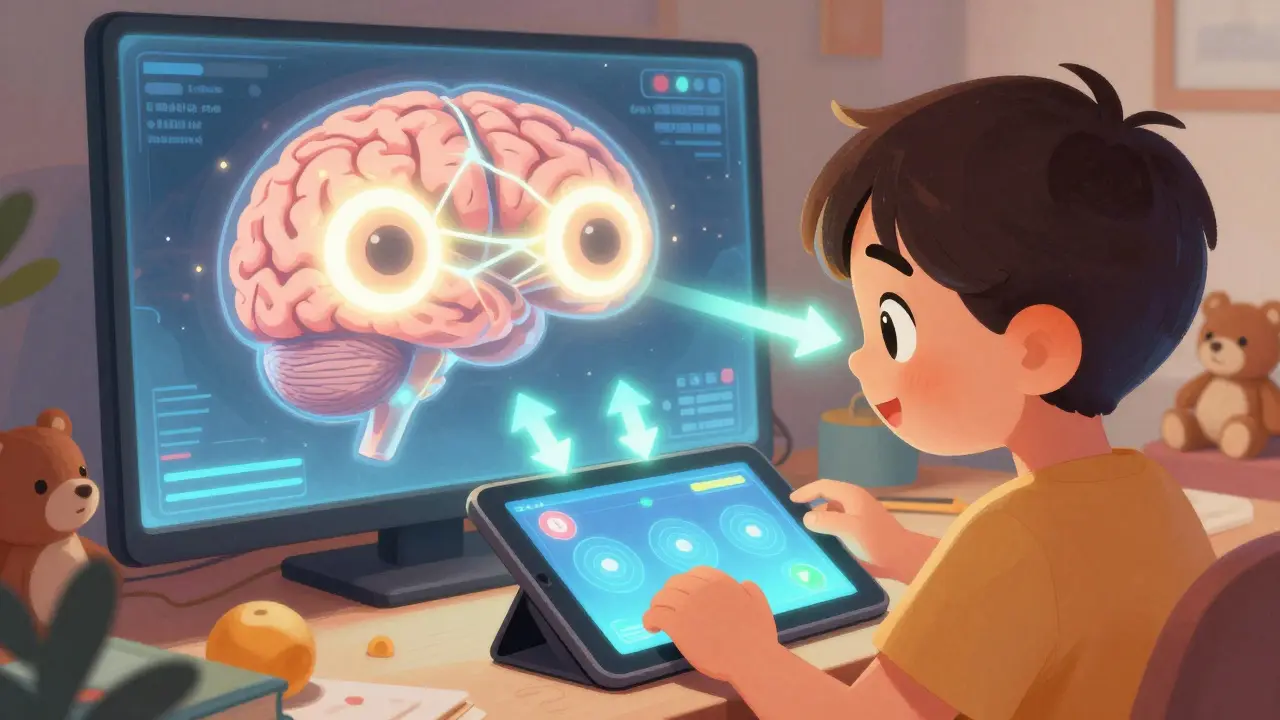
Active vision therapy combines patching with exercises: tracking moving objects, focusing on near and far targets, or using 3D games to train both eyes to work together. At Fox Eye Care Group, kids who did vision therapy alongside patching improved their depth perception by 15-20% more than those who patched alone. It’s not a replacement-it’s a booster.
When Surgery Is Needed
If amblyopia is caused by a droopy eyelid or cataract, surgery comes first. You can’t patch a blocked eye. Removing the obstruction is step one. But even after surgery, patching or atropine is still needed. The brain has to relearn how to use the eye. Studies show 70-80% of these kids still require patching for months afterward to get full vision recovery.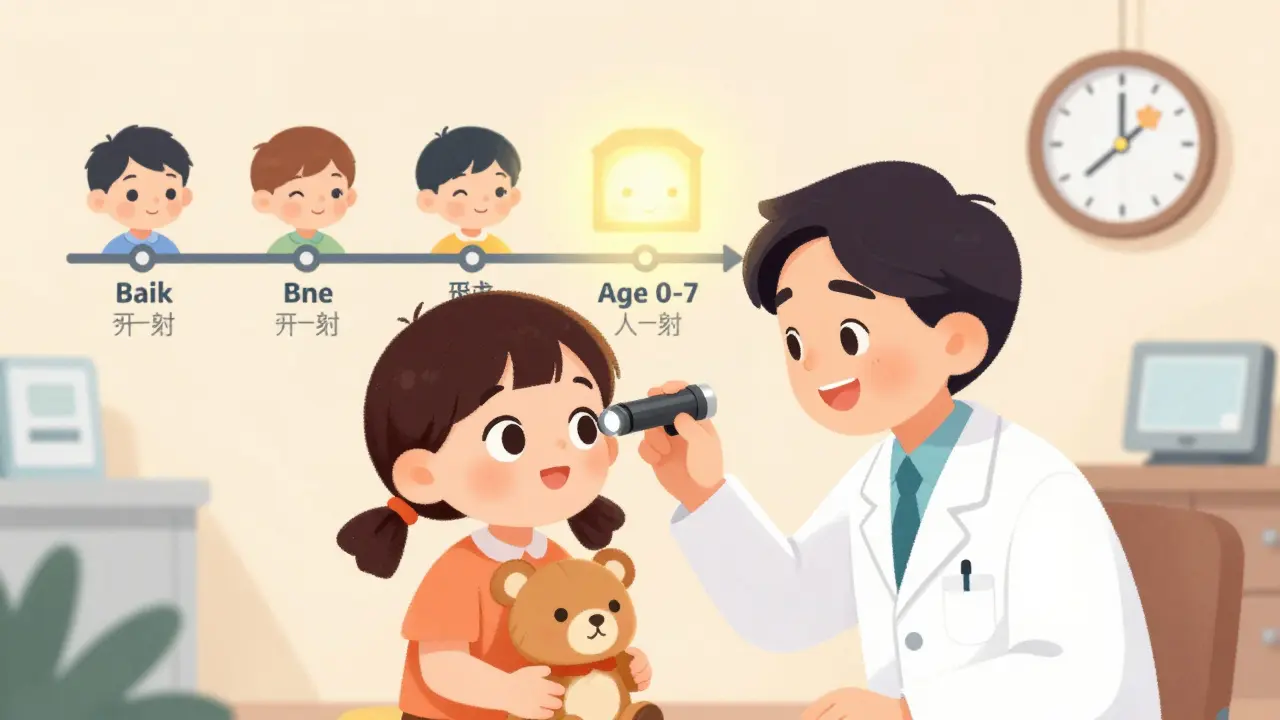
What About Older Kids and Adults?
For years, doctors thought treating amblyopia after age 8 was pointless. That’s changing.New research shows that even teens and adults can improve vision with intensive therapy. Digital platforms like AmblyoPlay, an FDA-cleared video game system, use perceptual learning tasks to train the brain. In European clinics, 75% of users stick with it-far higher than patching. In a 2023 study, adults using AmblyoPlay for 12 weeks improved visual acuity by an average of 2-3 lines on the eye chart.
But here’s the reality: adult gains are modest. They rarely reach 20/20. And the brain changes slower. That’s why childhood remains the ideal time. Still, it’s no longer a dead end. For the first time, adults with amblyopia have real hope.
What’s Next for Amblyopia Treatment?
The future is getting smarter. Researchers are testing:- Weekend-only atropine: One drop on Saturday and Sunday keeps vision gains stable without daily drops.
- Transcranial stimulation: A small device sends gentle electrical pulses to the visual cortex. Early trials show 40% more improvement when combined with patching.
- Virtual reality games: Custom VR experiences that force both eyes to work together in immersive environments.
The global market for amblyopia devices is expected to grow 6.2% each year through 2028. More awareness, better tech, and earlier screening are making a difference.
But no gadget replaces early detection. No app replaces a parent who knows the signs. The most powerful tool is still a pediatric eye exam before age 3.
What Parents Should Do
- Schedule a comprehensive eye exam by age 3-even if your child seems to see fine.
- Ask the doctor: “Could my child have amblyopia?” Don’t assume it’s just a refractive error.
- If patching is prescribed, don’t wait. Start immediately.
- Use rewards, not punishment. Make it a game.
- Track progress. Keep a log. Show it to the doctor at each visit.
- Don’t give up. Treatment often takes 6-12 months.
Most children with amblyopia will improve with treatment. About 97% see some gain. But only 65-75% reach perfect or near-perfect vision. The difference between those who fully recover and those who don’t? Timing.
Every day you wait is a day the brain keeps ignoring the weaker eye. Catch it early. Treat it consistently. And give your child the best chance to see the world clearly.
Is amblyopia the same as strabismus?
No. Strabismus is when the eyes are misaligned-one eye turns in or out. Amblyopia is when the brain ignores input from one eye, leading to poor vision. Strabismus can cause amblyopia, but not all kids with crossed eyes develop lazy eye. And not all amblyopia involves eye misalignment.
Can amblyopia come back after treatment?
Yes, especially if treatment stops too soon. About 25% of kids experience a relapse within the first year after stopping patching. That’s why doctors recommend gradual tapering-reducing patch time slowly-and regular follow-ups every 4-8 weeks. Some kids need maintenance patching for months or even years.
Does wearing glasses fix amblyopia?
Sometimes. If amblyopia is caused by uncorrected refractive error (like severe farsightedness), glasses alone can improve vision. But in most cases, especially with strabismic or anisometropic amblyopia, glasses are just the first step. Patching or atropine is still needed to train the brain.
How long does patching therapy usually last?
Most children need at least 6 months of daily patching, and many need 12 months or longer. Improvement often happens in the first 3-6 weeks, but full recovery takes time. Stopping too early risks losing progress. Doctors monitor vision every 4-8 weeks and adjust patch time based on results.
Are digital therapies like AmblyoPlay better than patching?
They’re not better-they’re different. AmblyoPlay and similar apps have higher compliance because kids enjoy them. Studies show 75% adherence with digital games versus 40-60% with patches. But they work best when combined with traditional methods. For severe cases, patching is still the gold standard. Digital tools are great for maintenance, older kids, or when patching isn’t possible.
Can amblyopia be treated in adults?
Yes, but results are limited. Adults can improve vision with intensive perceptual learning, VR training, or transcranial stimulation-but gains are usually modest. Most adults don’t reach 20/20. The best outcomes are still in children. That’s why early screening is critical. Adults should still seek treatment, though, because even small improvements can make daily life easier.
Every child deserves to see clearly. Amblyopia is not a life sentence. With the right tools and timely action, most kids can grow up with full vision. The key isn’t just treatment-it’s catching it before it’s too late.
8 Comments
Donna Macaranas
My niece had amblyopia and we started patching at 4.5. It was a nightmare at first-she’d scream, hide, throw the patch like it was poison. But we turned it into a pirate game. Every hour = a treasure chest. After 3 months, she started asking for her ‘eye patch’ before bedtime. The brain’s wild. It listens if you make it fun.
Rachel Liew
i just want to say thank you for writing this. my cousin’s kid got diagnosed last year and we were all so lost. this made it feel less scary. just keep going, parents. it’s hard but it’s worth it.
Angel Fitzpatrick
Let’s be real-this whole system is a pharmaceutical-industrial complex scam. Patching? Atropine? Digital games? They’re all just Band-Aids on a broken system. The real cause? Glyphosate in baby food. It disrupts retinal dopamine pathways. The AAP won’t tell you this because Big Pharma owns them. Look up Dr. Hargrove’s 2018 study on glyphosate-induced neurovisual suppression. It’s buried behind paywalls because they don’t want you to know the truth. Your kid’s lazy eye isn’t lazy-it’s poisoned.
And don’t even get me started on ‘vision therapy.’ That’s just a fancy word for placebo with a $200/hr price tag. The brain doesn’t need ‘training.’ It needs detox. Cold laser therapy, infrared saunas, and organic kale smoothies. That’s the real protocol. The FDA? Complicit.
I patched my son for 8 months. He improved. But I know it wasn’t the patch. It was the 14-day juice cleanse I put him on after. The eye doctors? They’re just selling you the illusion of control. Wake up.
Ed Di Cristofaro
So let me get this straight-we’re spending thousands on patches and apps when all you need is a good ol’ slap on the wrist when the kid tries to peek? My grandpa had amblyopia in the 50s. No patch. No app. Just his dad made him read books with one eye covered by a sock. He sees fine now. Why are we overcomplicating everything?
Lisa Rodriguez
My daughter’s 6 and we’ve been doing patching for 7 months. The app we use tracks hours and sends little confetti when she hits her goal. It’s ridiculous but it works. She thinks she’s winning a video game. The real win? Last week she saw the moon through her binoculars and said ‘Wow, it’s got craters!’ I cried. That’s the moment you fight for.
Also-don’t ignore the sibling factor. My older kid wore a patch too for a day just to be ‘cool.’ That helped so much. Kids mimic. Make it a team sport.
Deep Rank
Okay but honestly why are we even talking about this like it’s some miracle? I’ve seen so many parents panic over lazy eye like it’s the end of the world. My cousin’s kid had it and they did everything-patching, drops, VR games, even acupuncture. And guess what? The kid still can’t catch a ball properly at 10. The brain doesn’t fix itself just because you throw money at it. You’re all just chasing a fantasy. Some kids just see differently. Big deal. The world doesn’t need 20/20. It needs people who can think. Why are we so obsessed with perfect vision? It’s not a superpower. It’s biology.
Also I heard from a guy on Reddit who works at a clinic-he said 60% of the ‘improved’ cases are just placebo because parents report progress because they feel guilty they didn’t do enough. Don’t believe the hype. Your kid will be fine. Maybe not perfect. But fine.
Jamie Allan Brown
I’m a pediatric optometrist in Glasgow. I’ve seen this play out for 22 years. The truth? It’s not about the patch. It’s about the parent’s belief. The ones who treat it like a chore? The kid fights. The ones who treat it like a shared adventure? The kid thrives. I had a boy last year who wore his patch while doing parkour. His mom said, ‘If you can land a flip with one eye covered, you’re basically a ninja.’ He’s now 8, sees perfectly, and still calls it his ‘ninja eye.’
Don’t focus on the hours. Focus on the connection. That’s what rewires the brain.
Naomi Walsh
Frankly, this entire article is a watered-down PR piece for the pediatric vision industry. Anyone who believes patching is the ‘gold standard’ hasn’t read the 2022 Cochrane meta-analysis on perceptual learning in adults with amblyopia. The real breakthrough isn’t patching-it’s binocular training via contrast-rebalanced stimuli. The fact that this piece doesn’t mention dichoptic training or the role of GABAergic inhibition in cortical plasticity is a glaring omission. You’re all still stuck in the 1980s. The future is neural adaptation via adaptive filtering algorithms, not stickers and atropine.