
Boxed Warning Checker
Check if your drug has a boxed warning
Enter a drug name to see if it has an FDA boxed warning and understand the specific safety requirements based on 2025 updates.
Boxed Warning Status
Every year, the FDA updates its list of boxed warnings-the most serious safety alerts for prescription drugs. These aren’t just footnotes or fine print. They’re black borders on drug labels that scream: ‘This can kill you if used wrong.’ In 2025, 47 new or revised boxed warnings were issued, up from 42 in 2024. That’s not noise. That’s a pattern. And if you’re taking or prescribing any of these drugs, you need to know what changed-and why it matters.
What Exactly Is a Boxed Warning?
A boxed warning, sometimes called a black box warning, is the FDA’s strongest safety signal. It’s placed at the top of a drug’s prescribing information, surrounded by a thick black border. No other warning carries this weight. It’s reserved for risks that are proven, serious, and often preventable: liver failure, heart attacks, sudden death, birth defects, or fatal infections. These warnings aren’t added lightly. They come after real-world data shows harm that wasn’t caught in clinical trials. For example, in 2024, the FDA added a boxed warning to the diabetes drug semaglutide (Ozempic, Wegovy) after reports of severe pancreatitis in patients with prior gallbladder disease. That wasn’t seen in trials. But after millions of prescriptions, the signal emerged. The FDA requires manufacturers to update these warnings within 30 days of new safety data. Failure to do so can cost them up to $250,000 per violation. That’s not a slap on the wrist-it’s a financial hammer.What Changed in 2025?
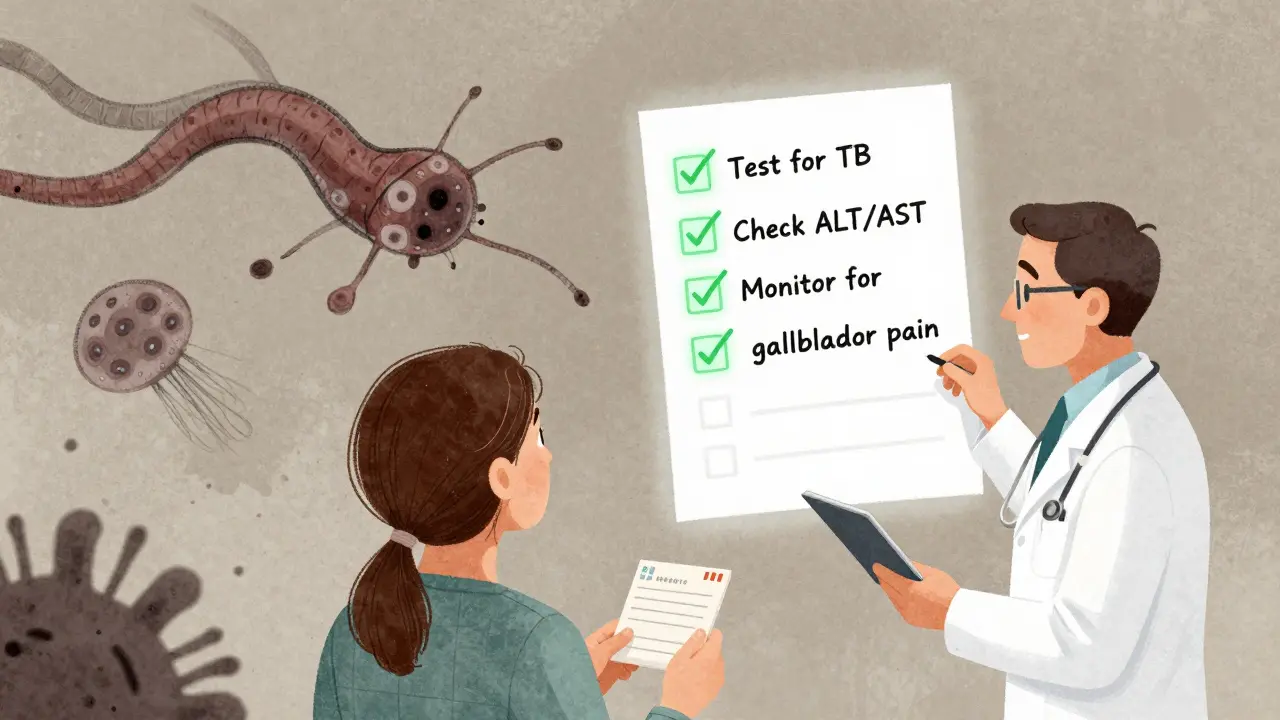
The 2025 updates weren’t random. They followed clear trends:- Immunomodulators led the list: 11 new warnings for drugs like dupilumab and ustekinumab. These are used for eczema, psoriasis, and Crohn’s disease. The new alerts focus on rare but deadly infections like tuberculosis reactivation and fungal meningitis. For the first time, the FDA now requires specific testing protocols: ‘Test for latent TB before starting. Repeat every 6 months if on therapy longer than 12 months.’
- GLP-1 agonists got tighter warnings: Drugs like tirzepatide (Mounjaro) now carry a warning for acute gallbladder disease with a quantified risk: ‘1.8% incidence within first 6 months in patients with BMI >40.’ This isn’t vague anymore. It’s data-driven.
- Antibiotics got updates: Moxifloxacin and levofloxacin now warn of increased risk of aortic aneurysm rupture in patients over 60 with a history of vascular disease. The FDA cited 127 cases from the Sentinel Initiative database over two years.
- Antidepressants saw a surprise change: Fluoxetine and sertraline now include a warning for serotonin syndrome in patients taking certain migraine drugs like triptans. This wasn’t on the radar before-but real-world EHR data flagged 89 cases in 2023.
Why Do These Changes Matter?
Because boxed warnings don’t just sit on paper-they change how doctors prescribe, how pharmacists dispense, and how patients take their meds. Take clozapine, a powerful antipsychotic with a decades-old boxed warning for agranulocytosis (a deadly drop in white blood cells). Since the FDA mandated absolute neutrophil count (ANC) testing every week for the first 18 weeks, deaths from this side effect dropped by 76%. That’s not theory. That’s lives saved. But it’s not all success. In 2024, a Medscape survey found that 44% of ER doctors still hesitated to give life-saving antibiotics like moxifloxacin to patients with heart conditions because of the boxed warning-even when the patient was septic and had no other options. The warning saved some. It delayed others. And here’s the ugly truth: many primary care doctors still don’t know about the updates. A 2025 AAFP survey showed only 63% of family physicians were aware of the new GLP-1 agonist gallbladder warning. Meanwhile, oncologists? 100% aware. The gap isn’t just knowledge-it’s risk.How Do These Warnings Affect Patients?
Patients don’t read the package insert. But they hear the warnings from their doctors-or they don’t. The FDA’s 2024 patient forum found that when warnings were explained clearly-like the iPledge program for isotretinoin (Accutane), which requires monthly pregnancy tests-adherence jumped by 78%. Patients understood the risk. They didn’t feel scared. They felt informed. But when warnings are vague-like “risk of liver injury”-patients tune out. Or worse, they stop taking the drug entirely. A 2023 study in JAMA Internal Medicine found that 31% of patients with type 2 diabetes discontinued metformin after seeing a boxed warning about lactic acidosis-even though the risk is less than 1 in 100,000 per year. The real impact? It’s in the pharmacy. Pharmacists now do triple-checks on drugs with boxed warnings. For fentanyl patches, they verify opioid tolerance. For methotrexate, they confirm the patient isn’t taking it daily. One hospital in Chicago reported a 62% drop in medication errors after implementing mandatory pharmacist sign-off for boxed warning drugs.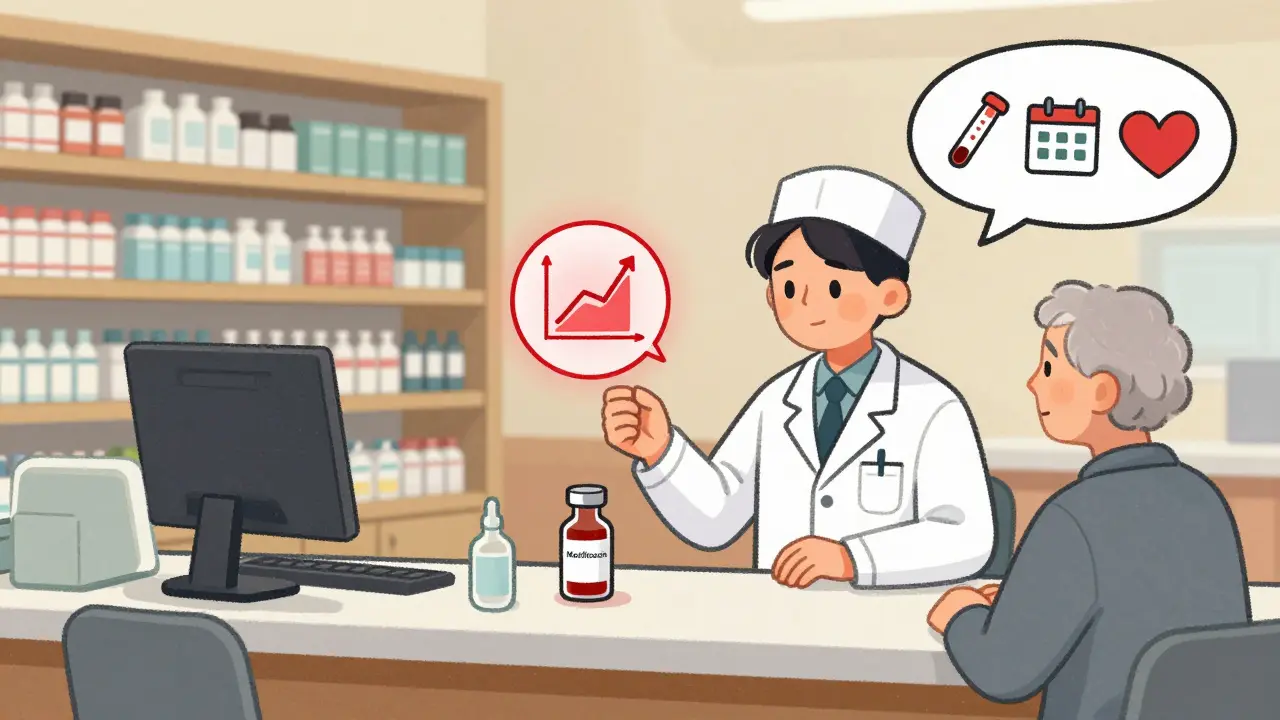
What’s Next? The Future of Boxed Warnings
The FDA isn’t done. By 2027, they plan to issue 25% more boxed warnings based on real-world data from their Sentinel Initiative, which now tracks 200 million patient records. That’s 20 times more data than in 2015. New pilots are testing “dynamic” boxed warnings-alerts that change based on your age, kidney function, or other meds. If you’re 72 with low creatinine clearance, your EHR might show a red alert for a certain drug. If you’re 30 and healthy? The same drug shows a yellow caution. This cuts alert fatigue and targets risk where it matters. And starting January 2024, every boxed warning must include a quantified risk number. No more “may cause.” It’s now: “1.2% risk of myocarditis in patients under 30.” That’s science. That’s transparency.The Bottom Line
Boxed warnings aren’t about scaring you. They’re about saving you. The changes in 2025 reflect a smarter, more precise approach to drug safety. The FDA is moving from vague warnings to clear, actionable steps. That’s progress. But progress only works if people use it. Doctors need to stay updated. Pharmacists need to double-check. Patients need to ask: “Is there a boxed warning for this? What does it mean for me?” The data is there. The rules are clearer. The stakes? Higher than ever.What is a boxed warning on a prescription drug?
A boxed warning, also called a black box warning, is the strongest safety alert the U.S. Food and Drug Administration (FDA) requires for prescription drugs. It appears in a thick black border at the start of the drug’s prescribing information and signals a risk of serious or life-threatening side effects that have been confirmed through real-world use. These warnings are not theoretical-they’re based on post-market data showing preventable harm.
How many drugs have boxed warnings in 2025?
As of 2025, over 420 prescription drugs in the U.S. carry active boxed warnings. That’s about 12% of all FDA-approved medications. The number increases each year as new safety data emerges, with 47 new or updated warnings issued in 2025 alone.
Why are boxed warnings getting more specific now?
In the past, warnings like ‘monitor for liver damage’ were too vague to guide action. Starting in 2024, the FDA requires all new boxed warnings to include exact, measurable steps: ‘Check ALT and AST at baseline, then monthly for six months.’ This shift turns warnings into clinical protocols, making them far more useful-and more enforceable.
Do boxed warnings actually reduce harm?
Yes, when they’re specific and followed. For example, after the FDA mandated weekly blood tests for patients on clozapine, deaths from agranulocytosis dropped by 76%. Similarly, the iPledge program for isotretinoin reduced birth defects by over 90%. But vague or outdated warnings often get ignored. Effectiveness depends on clarity and integration into clinical workflows.
Can I still take a drug with a boxed warning?
Absolutely. Many boxed warning drugs are essential-like warfarin for blood clots, methotrexate for autoimmune diseases, or insulin for diabetes. The warning doesn’t mean ‘don’t take it.’ It means ‘take it carefully.’ Your doctor will weigh the risks against your condition and set up monitoring to keep you safe. Never stop a medication without talking to your provider.
What should I do if my prescription has a boxed warning?
Ask your doctor or pharmacist three things: 1) What’s the specific risk? 2) What tests or checks do I need? 3) What signs should I watch for? Write them down. Keep a log of your lab results. If you’re on a new drug with a boxed warning, schedule a follow-up within 2-4 weeks. Being informed is your best protection.