
QT Prolongation Risk Calculator
How This Calculator Works
This tool helps assess your risk of QT prolongation when taking antipsychotics and other medications. Enter your specific factors below to get a personalized risk assessment based on clinical guidelines.
Risk Assessment
When you’re managing serious mental health conditions like schizophrenia or bipolar disorder, antipsychotic medications can be life-saving. But for many patients, especially those already taking heart medications, there’s a hidden danger lurking in the background: QT prolongation. This isn’t just a lab result-it’s a real, measurable risk that can lead to sudden cardiac arrest. And yet, most people-including some doctors-don’t fully understand how common or serious it is.
What Exactly Is QT Prolongation?
The QT interval on an ECG measures how long it takes your heart’s ventricles to recharge between beats. If that interval gets too long, your heart can slip into a dangerous rhythm called torsade de pointes, which can turn into sudden death if not caught in time. The corrected QT interval, or QTc, adjusts for heart rate. A QTc over 500 milliseconds is considered high risk. An increase of more than 60 ms from your baseline is also a red flag-even if it doesn’t hit 500 yet.This isn’t theoretical. In a 2023 study of 1,200 psychiatric inpatients, nearly 1 in 5 developed a QTc over 500 ms while on antipsychotics. And in over two-thirds of those cases, they were also taking at least one other drug that prolonged the QT interval-like certain antibiotics, antidepressants, or heart rhythm meds.
Which Antipsychotics Carry the Highest Risk?
Not all antipsychotics are created equal when it comes to heart risk. The difference between them is stark.- Thioridazine-once widely used-was pulled from the U.S. market in 2005 because it could lengthen QTc by up to 35 ms. It’s the worst offender.
- Haloperidol, a first-generation antipsychotic still used in hospitals, adds about 4-6 ms. That doesn’t sound like much, but in someone with low potassium, kidney problems, or on other QT-prolonging drugs, it’s enough to tip them over the edge.
- Ziprasidone has a mixed record. Some studies show it raises QTc by 10-15 ms. Others, like a 2023 ICU trial, found no significant increase in patients with baseline QTc under 550 ms. The discrepancy? Context matters. In sick, elderly, or polypharmacy patients, ziprasidone’s risk spikes.
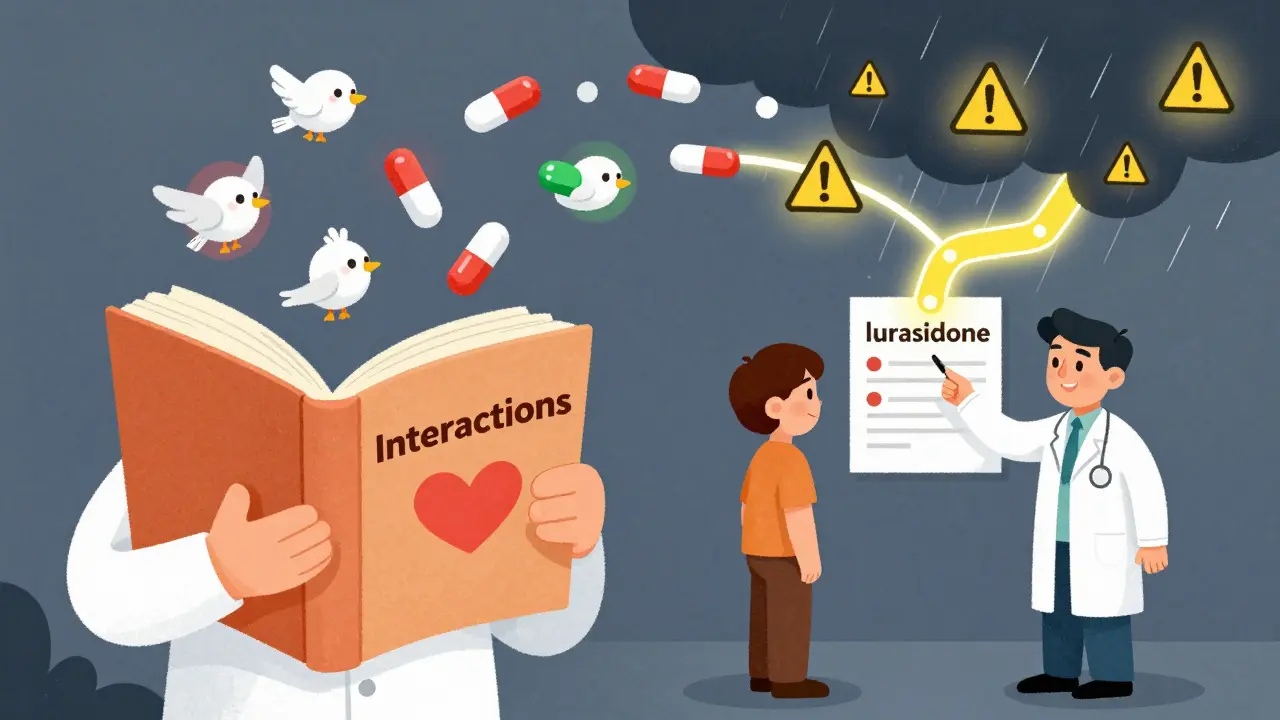
- Lurasidone is the standout. With a risk ratio near background levels (ROR 1.2), it’s the safest choice for patients with heart conditions or those on multiple cardiac meds.
According to CredibleMeds-a trusted source for drug safety-antipsychotics are grouped by risk:
- High risk: Thioridazine, haloperidol, ziprasidone
- Moderate risk: Iloperidone, quetiapine, risperidone
- Low risk: Aripiprazole, brexpiprazole, lurasidone, paliperidone
If you’re on heart medication-especially drugs like amiodarone, sotalol, or certain antibiotics-your doctor should avoid high-risk antipsychotics unless absolutely necessary.
Why Cardiac Medications Make This Worse
Many patients with serious mental illness also have heart disease, diabetes, or high blood pressure. That means they’re often on multiple medications-and many of those also prolong the QT interval.Common culprits include:
- Antiarrhythmics (amiodarone, sotalol)
- Antibiotics (macrolides like azithromycin, fluoroquinolones like moxifloxacin)
- Antidepressants (citalopram, escitalopram, tricyclics)
- Diuretics (which cause low potassium or magnesium)
- Opioids (methadone, fentanyl)
Studies show that 63% of QT prolongation cases involve two or more of these drugs. That’s not coincidence-it’s a perfect storm. Even a low-risk antipsychotic like risperidone can become dangerous if paired with azithromycin and a diuretic.
And here’s the kicker: many patients don’t realize they’re at risk. A 2021 survey found that only 32% of psychiatrists routinely check ECGs before starting moderate-risk antipsychotics. For high-risk ones, 73% do. But if a patient is already on heart meds, that 32% gap could be deadly.
Who’s Most at Risk?
It’s not just about the drugs. Certain people are more vulnerable:- Women-1.7 times more likely to develop QT prolongation than men
- People over 65-odds increase by 2.3 times
- Low potassium (< 3.5 mmol/L) or low magnesium (< 1.8 mg/dL)-present in 28% of cases
- Heart failure, kidney disease, or thyroid problems
- Genetic predisposition (like long QT syndrome)
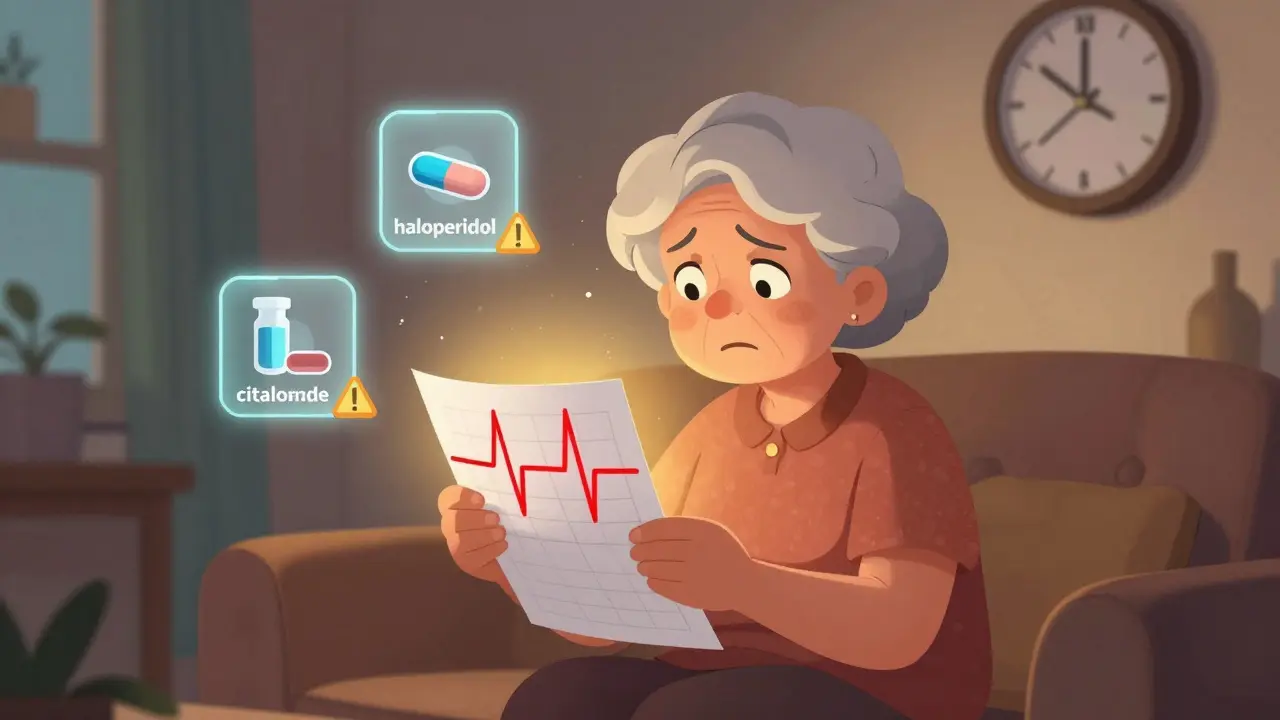
One patient might be a 72-year-old woman on haloperidol for psychosis, furosemide for heart failure, and citalopram for depression. Her potassium is 3.4. Her QTc is 490. She feels fine. But she’s sitting on a ticking clock.
How to Stay Safe: The Real-World Checklist
You don’t have to avoid antipsychotics. You just need to manage the risk.Baseline ECG: Get one before starting any antipsychotic-especially if you’re over 65, female, or on other QT-prolonging drugs.
Repeat ECG: Within one week of reaching your full dose. This is critical. Many dangerous changes happen early.
Check electrolytes: Potassium should be above 4.0 mmol/L. Magnesium above 1.8 mg/dL. If they’re low, fix them before or while starting the med.
Review all meds: Give your doctor a full list of everything you take-prescription, OTC, supplements. Even ginger tea and licorice root can affect potassium.
Choose wisely: If you have heart disease or are on multiple cardiac drugs, ask if lurasidone or aripiprazole could work instead of haloperidol or ziprasidone.
Monitor symptoms: Dizziness, fainting, palpitations, or sudden fatigue could be early signs. Don’t brush them off.
What If QT Prolongation Happens?
If your QTc jumps above 500 ms or increases by more than 60 ms from baseline:- Stop the antipsychotic immediately (unless your psychosis is life-threatening)
- Correct electrolytes-IV potassium and magnesium are often needed
- Switch to a lower-risk antipsychotic-lurasidone is the go-to
- Discontinue any other QT-prolonging drugs if possible
- Consider cardiac monitoring if you’re hospitalized
Studies show that 62% of cases improve with just a dose reduction. Another 28% respond to switching meds. Only a small fraction need to stop antipsychotics entirely.
The Bigger Picture: Why This Isn’t a Reason to Avoid Treatment
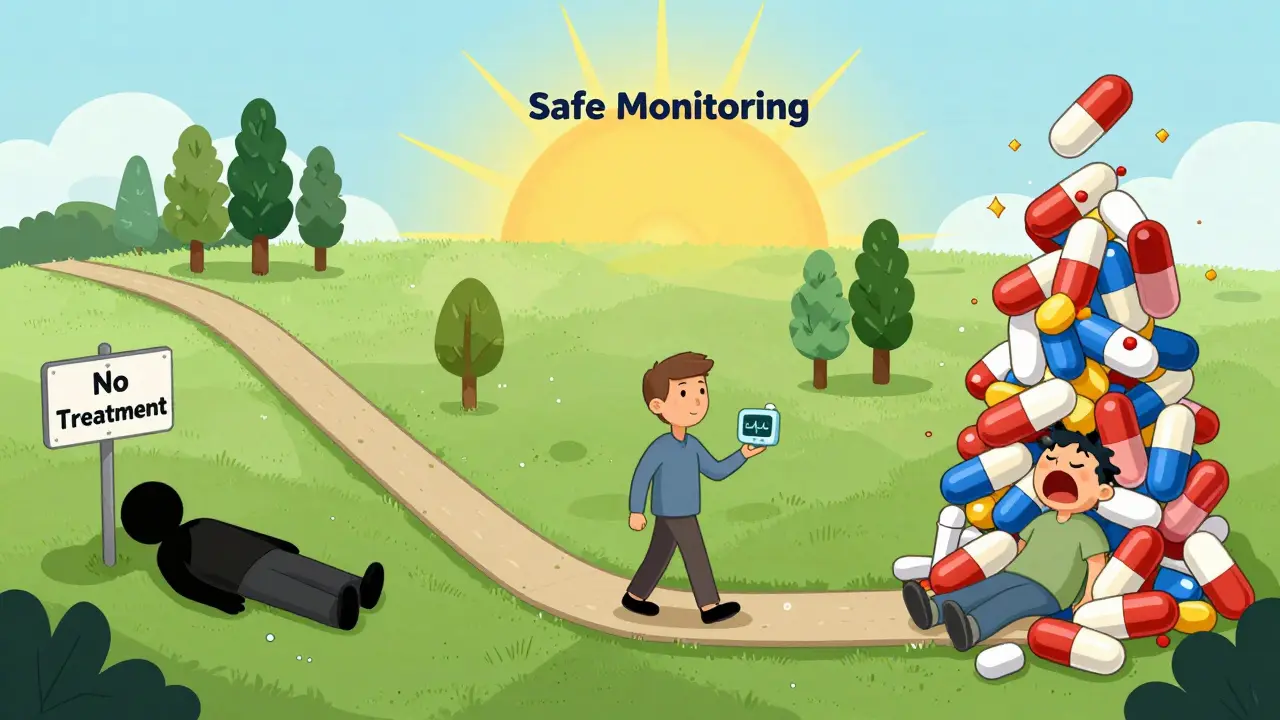
Some patients and families hear “QT prolongation” and think: “I’ll stop my meds.” That’s dangerous too.People with schizophrenia have a 5% lifetime risk of suicide and a 12% higher risk of accidental death. Studies show those who take antipsychotics have 40% lower overall mortality than those who don’t. Avoiding treatment kills more people than the drugs themselves.
The real goal isn’t to avoid antipsychotics-it’s to use them wisely. A U-shaped curve shows that both no treatment and very high doses carry the highest risk. The safest path is low-to-moderate doses, with careful monitoring.
As one expert put it: “Assume all antipsychotics carry risk-but they also save lives.” The key is balancing the two.
What’s Changing in 2025?
Regulations are catching up. Since 2005, the FDA has required all new antipsychotics to undergo thorough QT (TQT) studies. In 2023, they tightened the rules further-now requiring data from 100+ healthy volunteers.Hospitals are adapting too. As of early 2023, 63% of U.S. academic medical centers have formal QT risk-based prescribing protocols. Sales of low-risk drugs like lurasidone rose 14.2% in 2022, while haloperidol sales dropped 3.7%.
By 2026, ECG monitoring for antipsychotic users is expected to rise 22% as telemedicine makes it easier to get ECGs in primary care clinics. This isn’t just about safety-it’s becoming standard care.
The message is clear: You don’t have to choose between mental health and heart health. You just need to be informed-and proactive.
12 Comments
Cara C
This is one of those posts that should be printed and taped to every psych ward bulletin board. I work in outpatient mental health and see way too many patients on haloperidol with three other QT-prolonging meds. No one checks their ECGs until they’re already dizzy or passing out. We need better protocols, not just better drugs.
Also, lurasidone being the safest? Game changer. More prescribers need to know this.
Michael Ochieng
Man, I’m glad someone finally broke this down without the medical jargon soup. My aunt’s on ziprasidone and amiodarone and nobody ever told her the combo could kill her. She thought ‘heart problems’ just meant high blood pressure. This post could’ve saved her life. Sharing it with my whole family.
Also, 1 in 5 psychiatric inpatients with QTc over 500? That’s insane. We’re literally playing Russian roulette with meds sometimes.
Cameron Hoover
Okay, I’m not a doctor but I’ve been on antipsychotics for 12 years and this is the first time I’ve seen someone actually explain why my ECGs keep getting pushed back. I’m on lurasidone now and my cardiologist actually checks my potassium every month. That’s rare. Most shrinks treat ECGs like optional homework.
Also, if you’re on furosemide and citalopram and think you’re fine because you ‘feel okay’-you’re not. I’ve been there. That 490 ms? That’s not a number. That’s your heart screaming.
Grace Rehman
So we’re supposed to believe the FDA and Big Pharma actually care about us now? They pulled thioridazine because it was too dangerous but then flooded the market with ziprasidone which does the same thing but with a fancy label? And now they want us to trust lurasidone because the sales numbers went up?
They don’t want us safe. They want us compliant. And if we die quietly on a monitored ward? Well that’s just ROI.
Check your electrolytes? Sure. But who’s checking the people writing the guidelines?
Also potassium above 4.0? My grandma’s 78 and her potassium’s 3.9 and she’s still walking her dog. You’re not fooling anyone with these numbers.
Jerry Peterson
As someone who’s been on risperidone for 8 years and also takes metoprolol for AFib, I’m shocked no one ever warned me about the combo. My PCP just assumed my psychiatrist knew. My psychiatrist assumed my cardiologist knew. Everyone assumed someone else was handling it.
This is a systemic failure. Not a patient failure. We need better communication tools between specialties. And maybe a shared EHR flag for QT risk meds. Just a simple alert. That’s all.
Meina Taiwo
Lurasidone safest. Avoid haloperidol. Check ECG. Check K+ and Mg2+. Stop QT drugs if possible. That’s it. No fluff. Do this.
Adrian Thompson
QT prolongation? That’s just a cover for the government’s mind control program. They want you on meds so your heart gets weak and you die before you can remember what they did to you in 2008. The FDA doesn’t care about safety-they care about control. And they’re using your heart as the weapon.
They banned thioridazine because it was too effective at breaking people. Now they’re pushing lurasidone to make you docile but still alive enough to pay taxes.
And don’t get me started on how potassium is a government tracking chip. You think they want you to have normal electrolytes? They want you weak. They want you dependent.
Southern NH Pagan Pride
They say lurasidone is low risk but did you know it’s derived from a compound originally created by the CIA in the 70s for behavioral modification? The same lab that worked on MKUltra. And now they’re pushing it as the ‘safe’ option? No no no.
And the ECG monitoring? That’s just so they can track your heart rhythm remotely. They’re not keeping you safe-they’re mapping your bio-data for the neural network.
Also, magnesium is the real key. Not potassium. Magnesium is the body’s natural anti-arrhythmic. But the pharmaceutical industry doesn’t patent minerals so they don’t promote it.
Take magnesium citrate. 400mg daily. Ignore the doctors. Trust the earth.
Jackie Be
I just started lurasidone last month and my ECG came back perfect and my potassium is 4.2 and I’m actually sleeping through the night for the first time in 5 years and I’m not hallucinating and I didn’t even know I was on the verge of a cardiac event until I read this post and now I’m crying and hugging my cat and I just want to say THANK YOU to whoever wrote this because you saved my life and I’m not even kidding I’m gonna print this and frame it
also if you’re on ziprasidone and feel weird stop and get checked I promise you it’s not worth it
John Hay
People keep saying ‘just switch to lurasidone’ like it’s magic. But what if you’re treatment-resistant? What if your psychosis comes back if you leave haloperidol? Then what? Do you die from cardiac arrest or do you die from your brain shutting down? There’s no good answer here.
And yes, I know the stats say low-dose antipsychotics reduce mortality. But those are population stats. My sister was 42. She wasn’t a statistic. She was a person. And she died because no one connected the dots.
So don’t tell me to ‘be proactive.’ Tell the system to fix itself.
Stacey Smith
Why are we letting Big Pharma dictate our mental health care? They profit from high-risk drugs because they’re cheaper to make and easier to patent. Lurasidone? Expensive. Haloperidol? A nickel. Insurance won’t cover the safe ones unless you fight them for months.
And the FDA? They’re just rubber stamps for the pharma lobby. If you want real safety, stop trusting the system. Start demanding change. And stop blaming patients for not knowing enough. We’re not doctors. We’re just trying to survive.
Jason Silva
Bro I just found out my mom’s on haloperidol + azithromycin + furosemide and her QTc is 510 and she’s been on it for 6 months and no one said anything 😭
Just got her to the ER and they switched her to lurasidone and gave her IV mag and she’s doing way better now 🙏
Y’all need to check your meds. Like right now. Don’t wait till you’re dizzy. I’m crying typing this. Love you all.