
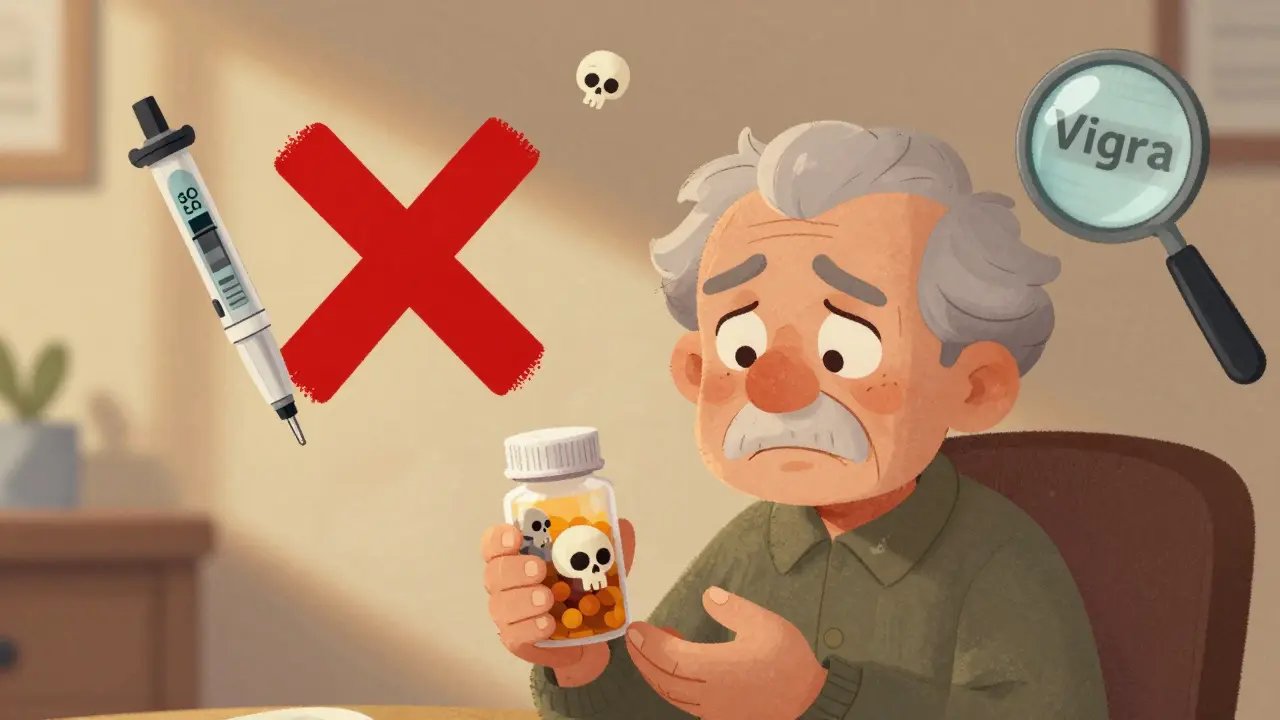
Every year, hundreds of thousands of people around the world take pills they think are real medicine - but aren’t. Counterfeit drugs look identical to the real thing. They come in the same bottles, with the same labels, even the same holograms. But inside? They could be chalk, rat poison, or deadly doses of fentanyl. And it’s happening more than you think.
Price That’s Too Good to Be True
If a pill costs half what it should, it’s not a deal. It’s a trap. Legitimate pharmaceuticals rarely drop more than 20% below market price. Why? Because manufacturing, testing, and distribution are expensive. Counterfeiters don’t pay those costs. They skip quality control, skip safety checks, and skip the law. So they can sell a $1,000 monthly insulin pen for $200 - or even $50. A 2024 Consumer Reports survey found that websites offering prices 60% below retail had an 87% counterfeit rate. That’s nearly 9 out of 10 bottles you buy there are fake. Even if the site looks professional, has fake reviews, and uses secure-looking payment icons - if the price feels too low, it is.Packaging That Doesn’t Add Up
The packaging is often the first place the fake shows up. Even the most advanced counterfeiters struggle to perfectly copy the fine details that real drugmakers spend millions perfecting. Look closely:- Spelling errors? Common. One in every 1.6 counterfeit packages has a typo - “Vigra” instead of “Viagra,” “Metfomin” instead of “Metformin.”
- Blurry printing? Yes. Real labels use high-resolution printing. Counterfeit ones pixelate when you zoom in.
- Missing or mismatched batch numbers? That’s a red flag. Pfizer says 37% of fake lot numbers don’t exist in their system.
- Expiry date in the wrong spot? Happens in 37% of cases.
- Seal that looks resealed? If the shrink wrap feels sticky, uneven, or doesn’t tear cleanly, it’s been opened and resealed.
Tablets That Don’t Look or Feel Right
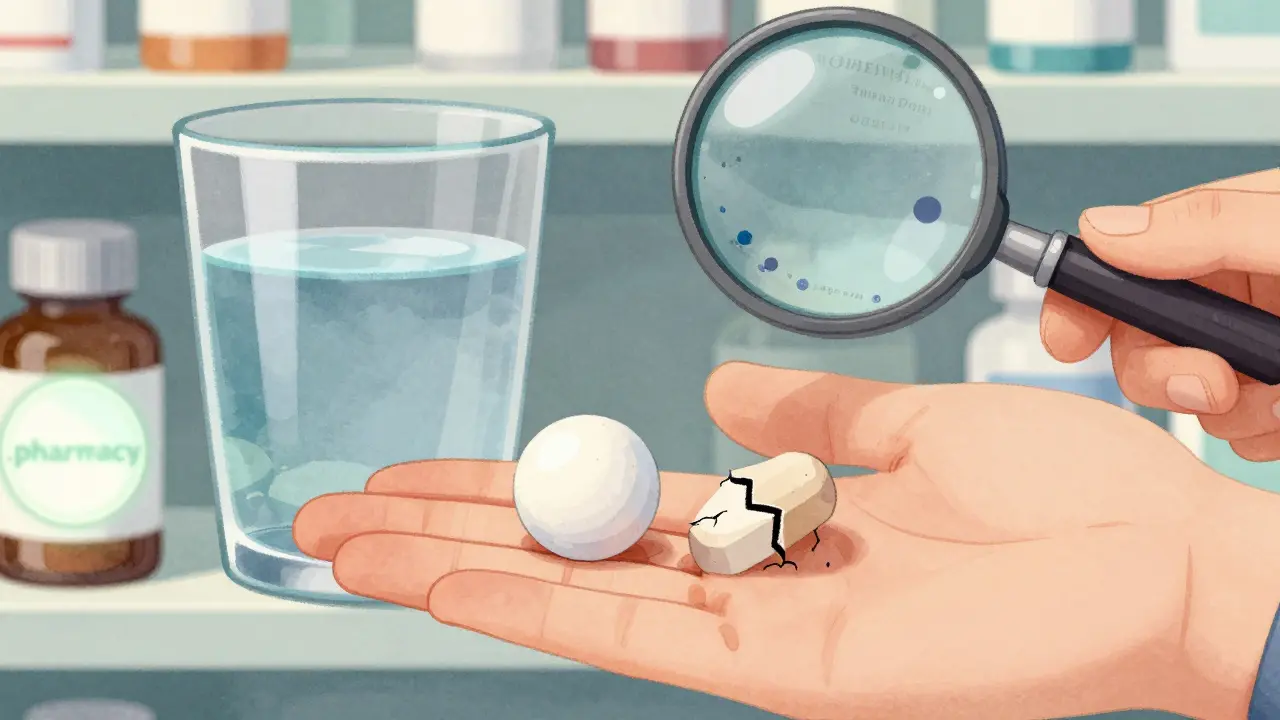
Hold the pill. Really look at it. Real tablets have consistent size, weight, and texture. They’re made under strict standards. The USP says tablets shouldn’t vary more than 5% in weight or 2% in diameter. If yours are thinner, thicker, or oddly shaped? That’s a warning. Check for:- Cracks or chips on the edges
- Uneven coloring - patches of white, blue, or green where there shouldn’t be
- Coating that looks bubbled or peeling
- Crumbly texture - if it breaks apart in your fingers, it’s not real
What’s Actually Inside?
This is where it gets terrifying. Counterfeiters don’t just leave out the active ingredient. They replace it with something worse. In 2004, the DEA seized counterfeit Viagra in Hungary that contained 15mg of amphetamine - a stimulant, not an erectile dysfunction drug. Patients reported heart palpitations, anxiety, and insomnia. More recently, Operation Press Your Luck (2024) found that 100% of counterfeit opioid pills contained fentanyl - at doses ranging from 0.5mg to 2.3mg per tablet. A real oxycodone pill has 5mg, 10mg, or 20mg. These fentanyl pills are strong enough to kill someone who’s never used opioids before. Even worse: counterfeit diabetes pills have been found with glyburide - a powerful insulin secretagogue - instead of metformin. Patients didn’t realize they were being overdosed with insulin. One case in the Journal of Clinical Pharmacy and Therapeutics described patients going into severe hypoglycemia - one nearly died. And don’t think biologics are safe. Fake Humira (a rheumatoid arthritis drug) has been found without proper cold-chain documentation. That means the drug was stored at room temperature for weeks. It’s not just fake - it’s inactive. And it’s killing people who need it to stay alive.Where Are These Drugs Coming From?
Most counterfeit drugs enter the U.S. through illegal online pharmacies. There are over 35,000 of them, according to Interpol. Only 6,214 are verified by the National Association of Boards of Pharmacy (NABP) and carry the .pharmacy domain. If a website doesn’t end in .pharmacy, it’s not verified. Period. Even if it looks like CVS or Walgreens. Even if it has a U.S. phone number. Fake sites clone real ones. They use fake licenses. They copy logos. But they won’t have the .pharmacy seal. The NABP’s verification tool checked 2.4 million sites in Q3 2024. Over 98% were flagged as unverified. Don’t trust a site just because it has a “secure checkout” button. That only means your credit card is encrypted - not that the drug is real.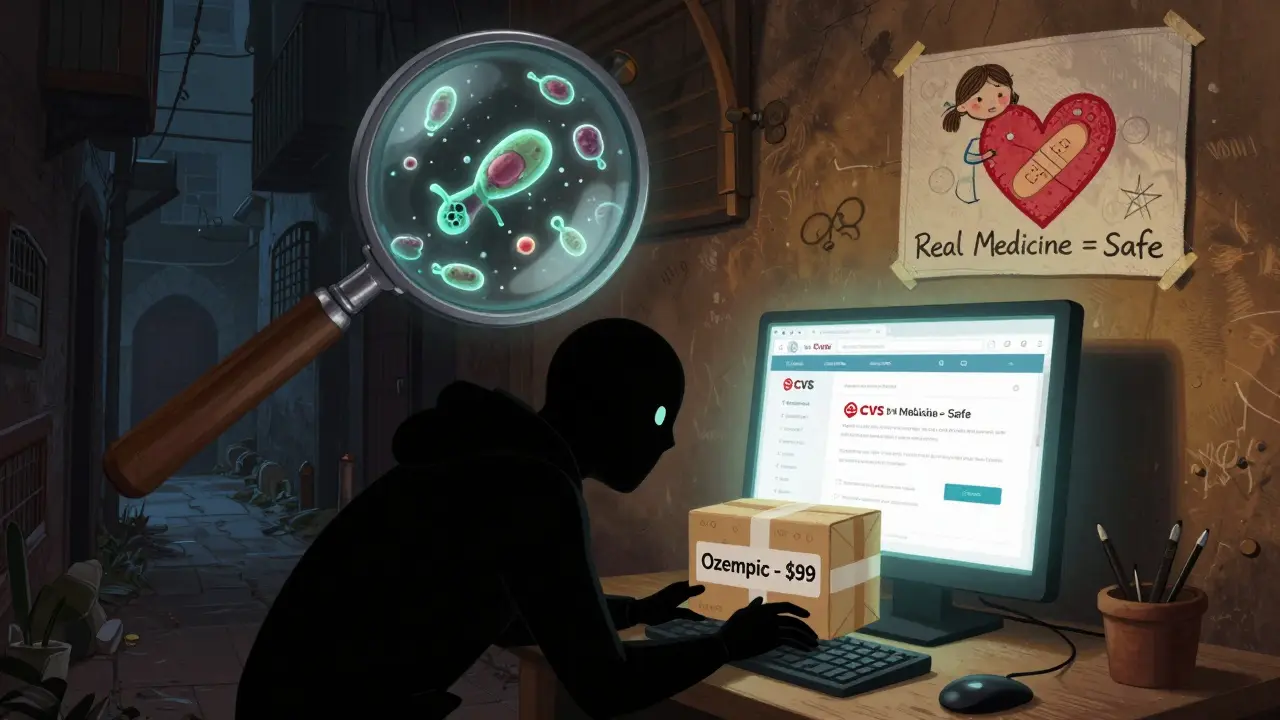
What to Do If You Suspect a Fake
If something feels off - trust your gut. Follow this six-step check:- Check the seal. Tamper-evident packaging should show visible damage if opened. No seal? Don’t take it.
- Verify the NDC code. Look up the National Drug Code on the FDA’s website. If it’s not listed, it’s not real.
- Call the manufacturer. Pfizer, Merck, and others have hotlines. Give them the lot number. If they say it doesn’t exist, you’ve got a fake.
- Compare to your last bottle. Even slight differences in color, shape, or imprint could mean a counterfeit. Real manufacturers don’t change their pills without notice.
- Do a solubility test. Put a tablet in a glass of water. Real pills take 20-30 minutes to break down. Fakes dissolve in under 2 minutes - sometimes in 30 seconds.
- Report it. File a report with FDA MedWatch within 24 hours. Your report helps protect others.
Emerging Threats You Can’t See
Counterfeiters are getting smarter. AI now generates fake packaging that fools 68% of people on first glance. These aren’t blurry prints - they’re near-perfect copies. But they still fail under UV light. The FDA’s new PharmMark system, launching in 2026, will embed microscopic luminescent nanoparticles into all controlled substances. Only special UV lights can see them. And the biggest target? GLP-1 agonists like Ozempic and Wegovy. They cost nearly $1,000 a month. That’s a $200 million profit margin for criminals. The DEA predicts a 200% spike in fake versions through 2026. Even holograms - once a gold standard - are now copied with 95% visual accuracy. But real ones contain microtext only visible at 50x magnification. You can’t see it. But labs can.Don’t Risk It
Counterfeit drugs aren’t just illegal. They’re lethal. They’re not a problem “over there.” They’re in your medicine cabinet. The WHO estimates that 500,000 deaths a year in Sub-Saharan Africa come from fake malaria and pneumonia drugs. In the U.S., we don’t track every death - but we know people are dying. From fake opioids. From fake insulin. From fake heart meds. If you buy medicine online, use only .pharmacy sites. If you get a new prescription, compare the pills to your last fill. If something looks, smells, or feels wrong - stop. Call your pharmacist. Report it. Save a life - maybe your own.Real medicine saves lives. Fake medicine kills. Don’t let a cheap price be the reason you take a risk.
9 Comments
doug b
Been there. Bought a bottle of 'generic' metformin off a shady site last year. Pills were lighter, tasted weird, and one crumbled in my fingers. Called my pharmacist - turned out it was fake. They reported it to the FDA. Don’t be the guy who thinks he’s saving money. You’re just gambling with your life.
Real talk: if it’s too cheap, it’s poison.
Phil Davis
Wow. So we’re now at the point where the only way to know if your insulin is real is to dissect it under UV light? Brilliant. Next they’ll be selling fake oxygen.
Meanwhile, my insurance hikes my copay $20 every year, but the ‘real’ stuff is still $800 a month. So yeah, I get why people take the gamble. Doesn’t make it right - just makes it tragic.
SRI GUNTORO
You people are so naive. You think fake medicine is just a US problem? In India, we’ve been dealing with this for decades. My uncle died because he took fake TB meds from a local shop that looked like a hospital. No holograms. No .pharmacy. Just a guy with a box and a smile.
Stop acting like this is new. It’s always been here. You just didn’t care until it touched you.
Bryan Fracchia
It’s wild how we’ve normalized risk in healthcare. We’ll spend $10 on a Netflix subscription but panic if a pill costs more than $50. We treat medicine like a commodity, not a lifeline.
And yet - the system’s designed this way. Pharma companies charge insane prices. Online pharmacies fill the gap. Criminals exploit it. We’re all just cogs in a broken machine.
Maybe the real problem isn’t the fakes - it’s that we’ve let real medicine become a luxury.
Katie Mccreary
Did you know 70% of people who buy fake meds never report it? They’re too embarrassed. Or worse - they don’t even realize they’re sick because the fake pill did nothing.
And yes, I’ve seen the ‘solubility test’ work. One guy put his ‘Viagra’ in water and it dissolved in 12 seconds. He was so proud he’d saved $900. He didn’t know he’d just swallowed chalk and caffeine.
People are idiots. And the system lets them be.
fiona vaz
For anyone reading this: if you’re on a chronic med, always check the NDC code on the FDA’s website. It takes 30 seconds. I work in a pharmacy - we catch at least one fake a week. Most patients don’t even look at the bottle until they’re sick.
Don’t wait until it’s too late. Your pharmacist is your best defense - ask them. They’re trained for this.
Lance Long
Let me tell you about my cousin. Took fake Ozempic for six months. Lost 15 pounds. Thought it was working. Then he collapsed at work. Turned out the ‘semaglutide’ was just sugar and laxatives. He ended up in the ER with ketoacidosis.
They didn’t even test his blood until he was in a coma.
Don’t be like him. Don’t be the person who says ‘I’ll be fine.’ You won’t be.
And if you’re buying online - just stop. Go to the pharmacy. Pay the price. Your life isn’t a coupon code.
Irebami Soyinka
USA thinks it’s the only country with fake meds? 😂 Nigeria has been fighting this since the 90s! We have men who sell fake insulin in plastic bags with stick-on labels - and people still buy it because they’re hungry for hope.
But you? You’re too busy scrolling TikTok to care. Your ‘$200 insulin’ is a death sentence. And you call *us* backward? 🤦♀️
Stop pretending you’re innocent. You’re just the next victim waiting to happen. 💀
Timothy Davis
Actually, the solubility test is unreliable. I’ve seen real pills dissolve in 45 seconds due to coating variations. And counterfeiters now use hydroxypropyl methylcellulose to mimic real dissolution profiles.
The only foolproof method is HPLC testing - which costs $200 per sample. So unless you’re a lab tech, your ‘6-step check’ is theater.
Also, the FDA’s database has a 72-hour lag. That means a batch could be fake *and* still show as valid for two days.
TL;DR: Don’t trust any of this. Trust nothing. And stop pretending you can outsmart criminals with a glass of water.