
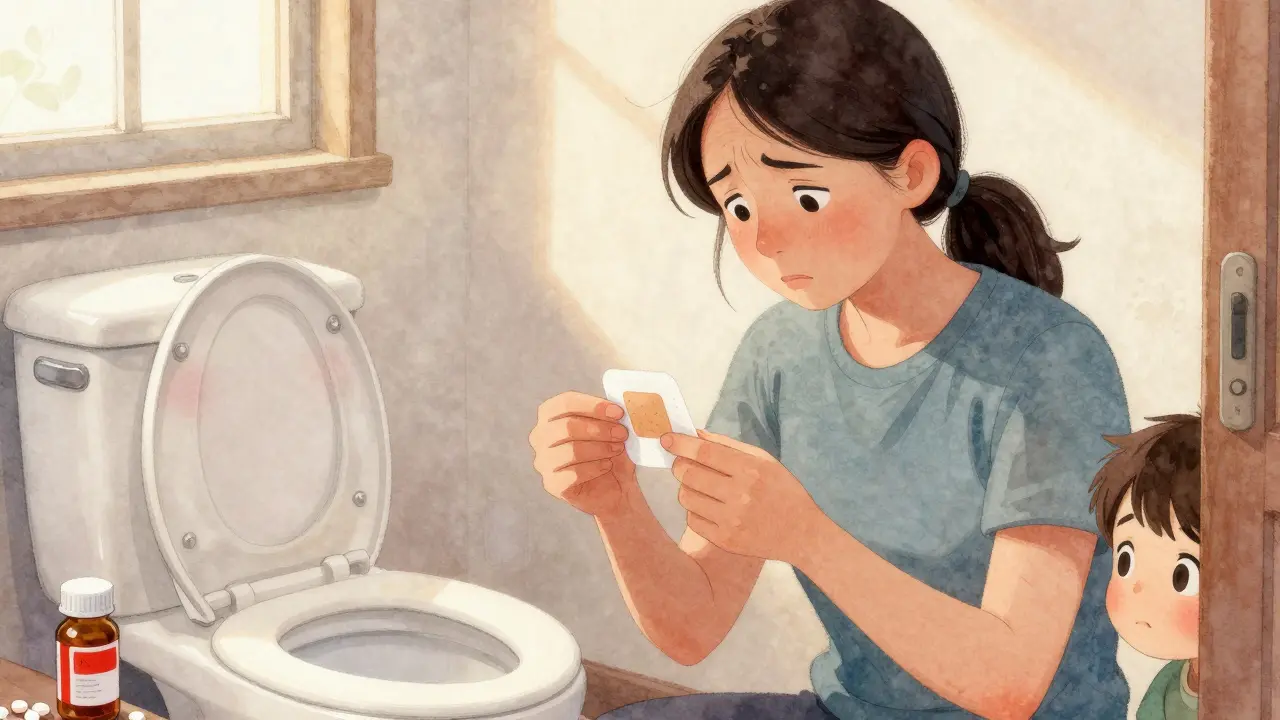
Most people think flushing pills down the toilet is bad for the environment - and they’re right. But there’s a small, critical exception. The FDA has approved a short list of medications that, under very specific conditions, should be flushed immediately - not thrown in the trash, not hidden in a coffee can, not left where a child or pet can find them. These aren’t random drugs. They’re the ones that can kill in one dose if misused.
Why Flushing Is Ever Allowed
The FDA doesn’t encourage flushing. Not even close. Their top recommendation is always: take it back. Drug take-back programs, pharmacy drop boxes, and DEA National Take Back Days are the safest, cleanest way to get rid of unused meds. But sometimes, those options aren’t available. Maybe you live in a rural area with no collection site nearby. Maybe you just found an old fentanyl patch in the back of a drawer, and you’re terrified a toddler will get to it. That’s when the FDA’s Flush List kicks in. It’s not a suggestion. It’s a last-resort safety rule. These medications are so dangerous that the risk of accidental overdose - especially in children or pets - outweighs the environmental risk of flushing. The FDA’s own environmental review in 2021 confirmed this: for these specific drugs, the human health risk is far greater than any water contamination concern.What’s on the FDA Flush List (2024 Update)
The list hasn’t changed much since 2023, but it’s tighter than ever. Only 15 active ingredients qualify. Here’s what’s included:- Buprenorphine - found in SUBOXONE, SUBUTEX, BELBUCA, BUTRANS, BUAVAIL, ZUBSOLV
- Fentanyl - ABSTRAL, ACTIQ, DURAGESIC patches, FENTORA, ONSOLIS
- Hydromorphone - EXALGO extended-release tablets
- Meperidine - DEMEROL
- Methadone - DOLOPHINE, METHADOSE
- Morphine - ARYMO ER, AVINZA, EMBEDA, KADIAN, MORPHABOND ER, MS CONTIN, ORAMPH SR
- Oxymorphone - OPANA, OPANA ER
- Tapentadol - NUCYNTA, NUCYNTA ER
- Sodium oxybate - XYREM, XYWAV
- Diazepam rectal gel - DIASTAT, DIASTAT ACUDIAL
- Methylphenidate transdermal system - DAYTRANA
That’s it. No antibiotics. No blood pressure pills. No antidepressants. Only drugs that can stop breathing in seconds if chewed, crushed, or accidentally ingested. Fentanyl patches, for example, still contain enough drug to kill an adult after just one use - and kids have died from licking or chewing a discarded patch.
How to Flush Safely (Step by Step)
If you’re holding a medication on this list and you can’t get to a take-back site, here’s how to flush correctly:- Check the label. Look for the FDA Flush List notice. If it’s not listed, don’t flush.
- Remove personal info. Scratch out your name and prescription number on the bottle before tossing it. Identity theft is a real risk with old pill bottles.
- For patches: fold them. Fentanyl, buprenorphine, and other transdermal patches must be folded in half with the sticky side inward. This prevents accidental contact and reduces environmental exposure.
- Flush immediately. Don’t wait. Don’t store it. Flush one tablet or one patch at a time. Don’t flush multiple doses together.
- Don’t flush anything else. Even if it’s expired. Even if you think it’s dangerous. Only what’s on the list.
And never, ever flush medications just because you’re lazy. That’s not safety - that’s negligence.
What Happens If You Flush the Wrong Drug?
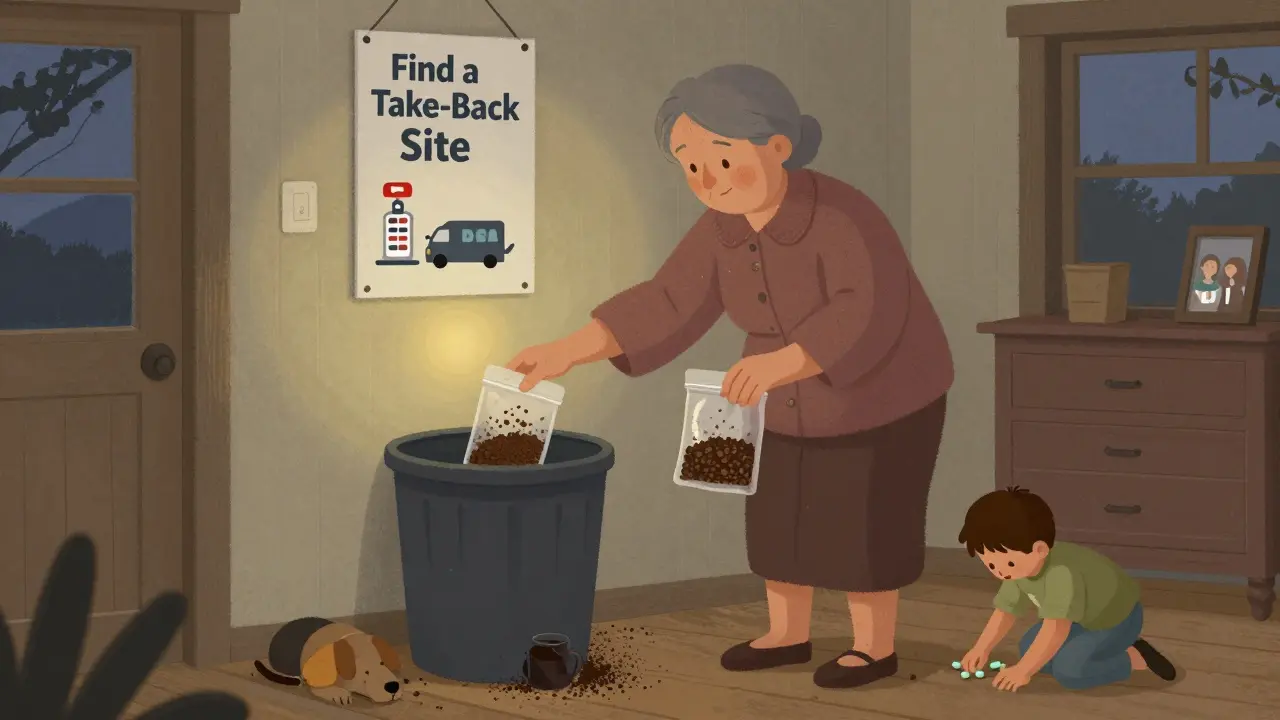
Flushing a medication not on the list doesn’t just hurt the environment - it puts your family at risk. A 2023 survey found that 42% of Americans have flushed pills that weren’t approved for flushing. That’s dangerous. Here’s what to do instead:- Mix it with something unappetizing. Crush pills or open capsules and mix them with used coffee grounds, kitty litter, or dirt. Put it in a sealed plastic bag before throwing it in the trash.
- Don’t rinse. Don’t pour pills down the sink. Don’t dissolve them in water. That just spreads the drug into your plumbing.
- Use a drug disposal kit. Some pharmacies sell FDA-approved disposal bags that deactivate medications. They’re cheap, easy, and safe.
And if you’re unsure? Call your pharmacist. They’re trained to help you dispose of meds safely - and they won’t judge you.
Why Take-Back Programs Are Still the Best Option
There are over 12,000 authorized take-back locations across the U.S. The DEA runs National Take Back Days twice a year - April and October - and many pharmacies offer year-round drop boxes. Yet, 78% of patients say they don’t know where to find them. That’s a problem. In 2022, the FDA reported 217 cases of accidental fentanyl exposure in children - 9 of them fatal. Most of those cases came from improperly stored or disposed patches. A Reddit user in January 2024 found a used fentanyl patch stuck to a playground slide. That could’ve been your kid. Take-back programs don’t just protect the environment. They protect your family. They keep drugs out of the hands of teens looking for a high. They prevent pets from eating pills they shouldn’t. They stop accidental poisonings.
What’s Changing in 2025?
The FDA is actively reviewing the Flush List. In early 2024, they announced they’re evaluating whether newer abuse-deterrent formulations of buprenorphine and oxymorphone might now be safe enough to remove from the list. Three drugs could be delisted by 2025 if they’re proven to be less dangerous if accidentally ingested. At the same time, the Bipartisan Infrastructure Law has poured $15 million into expanding take-back access, especially in rural areas. Between 2021 and 2023, the number of registered collection sites jumped 37%. That means fewer people will ever need to flush. The goal isn’t to make flushing easier. It’s to make it unnecessary.Final Rule: When in Doubt, Don’t Flush
The FDA’s Flush List is not a free pass. It’s a narrow exception for life-threatening situations. If you can get your meds to a take-back site - do it. If you can’t, and your medication is on the list - flush it. If you’re not sure? Call your pharmacist. Or visit the DEA’s website to find the nearest drop box. Remember: one wrong pill in the trash can kill. One flush can save a life.Can I flush any expired medication down the toilet?
No. Only medications specifically listed by the FDA as part of the Flush List should be flushed. Expired painkillers, antibiotics, or blood pressure pills should never be flushed. Instead, mix them with coffee grounds or kitty litter, seal them in a plastic bag, and throw them in the trash. Flushing non-approved drugs harms water systems and doesn’t improve safety.
Are fentanyl patches really dangerous if thrown in the trash?
Yes. A single used fentanyl patch still contains enough drug to kill an adult - and children have died from licking or chewing discarded patches. In 2022, the FDA documented 9 child deaths from accidental exposure to improperly disposed fentanyl patches. Folding the patch in half with sticky sides together and flushing it is the only way to prevent this risk when take-back isn’t available.
Where can I find a drug take-back location near me?
Visit the DEA’s Diversion Control Division website and use their collection site locator. You can also ask your local pharmacy - many have year-round drop boxes. National Take Back Days are held in April and October, but drop-off sites are available year-round in most cities. Rural areas have fewer options, but the number of sites has increased by 37% since 2021 thanks to federal funding.
What if I can’t find the FDA Flush List on my medication bottle?
If the label doesn’t say to flush, don’t flush. The FDA requires manufacturers to include disposal instructions on the packaging for controlled substances. If it’s missing, call your pharmacist or check the FDA’s official website for the current Flush List. Never guess. Flushing the wrong drug puts your family and the environment at risk.
Is it safe to flush medications if I have a septic system?
Yes - for medications on the FDA Flush List only. The FDA’s guidance applies regardless of your sewage system. The risk of accidental overdose from keeping these drugs in the home is far greater than any potential harm to your septic system. But again, only flush if it’s on the list and you have no other option. For all other medications, use take-back or trash disposal methods.
9 Comments
Erwin Kodiat
I never realized how many people just toss old pills in the trash like it’s nothing. I’ve got a kid who climbs on counters like a ninja-this post saved me from a potential nightmare. Thanks for laying it out so clearly.
Valerie DeLoach
It’s fascinating how public health policy balances environmental ethics with immediate human safety. The FDA’s stance isn’t contradictory-it’s pragmatic. We prioritize preventing death over abstract ecological concerns when the risk is quantifiably catastrophic. Still, we must push harder for accessible take-back infrastructure. Everyone deserves this option, not just those near urban centers.
Christi Steinbeck
Listen. If you’re holding a fentanyl patch and you don’t flush it? You’re playing Russian roulette with your toddler. No, you’re not being dramatic. The FDA didn’t make this list for fun. I’ve seen what happens when people ‘wait until tomorrow.’ Tomorrow doesn’t come. Flush it. Now. Then go find a drop box.
Jacob Hill
Just to clarify-fold the patch, sticky-side-in, flush one at a time, never mix with other meds, always check the label, and never flush unless it’s explicitly on the list-got it? And if you’re unsure? Call your pharmacist. They’re not going to judge you. They’ve seen it all. Seriously, just call them.
Lewis Yeaple
It is imperative to note that the FDA’s Flush List is not an endorsement of environmental negligence, but rather a calculated risk mitigation strategy predicated upon the principle of utilitarian harm reduction. The environmental impact of pharmaceutical contamination is, in aggregate, statistically negligible when compared to the morbidity and mortality associated with accidental ingestion of Schedule II opioids. Furthermore, the 2021 environmental review referenced in the article employed a life-cycle assessment methodology that accounted for bioaccumulation thresholds in aquatic organisms, confirming the validity of the exception.
Jackson Doughart
I used to think flushing was just lazy. Then I found a patch stuck to the bottom of my dog’s water bowl. He lived. But I didn’t sleep for three nights. Now I keep a small ziplock in my medicine cabinet-just for the ones on the list. I flush them the second I know I won’t be using them. No hesitation. No ‘maybe later.’ That’s not fear. That’s responsibility.
Malikah Rajap
Wait, so if I have a septic system, I can flush these? But what about my neighbor who lives downstream? And what if someone else’s meds are in the water? I mean, isn’t this just passing the problem along? Like, if I flush it, I’m not really solving it-I’m just making someone else’s problem. Also, have you considered the spiritual energy of the water? It carries intention, you know?
sujit paul
It is written in the ancient scrolls of the FDA that only these 15 substances may be flushed, yet I suspect this is a controlled narrative. Who truly benefits from this policy? Pharmaceutical corporations, of course. They profit from the fear of overdose, while quietly lobbying against better disposal tech. The real solution? Ban these drugs entirely. Or better yet-make them all taste like chalk and smell like burnt plastic. Then no one would ever want to take them. Or flush them. Or touch them. Ever.
Tracy Howard
Flushing pills? In America? How quaint. In Canada, we have drug return kiosks in every pharmacy, even in the Yukon. We don’t need to flush anything. We don’t have this problem. You Americans are so… reactive. We’re proactive. We don’t wait for a child to die before we fix the system. You should try it sometime. Maybe you’d stop treating your medicine cabinet like a haunted attic.