
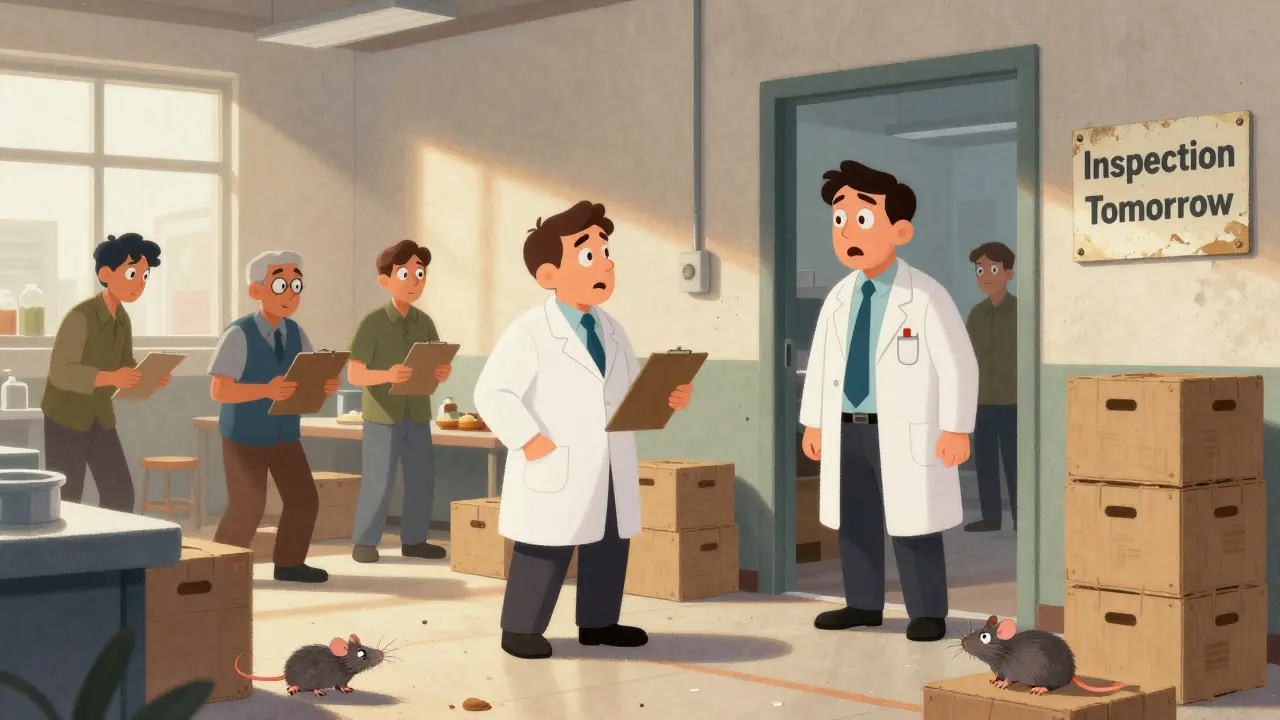
The U.S. Food and Drug Administration doesn’t just watch over food factories in Ohio or California. It also inspects over 300,000 food facilities in more than 150 countries that ship products to American shelves. About 15% of the food Americans eat comes from overseas - including 32% of fresh produce. And since 2024, the rules for these foreign plants have changed dramatically. No more advance notice. No more warning calls. If the FDA shows up, you’re being inspected - right then, no prep time.
Why the FDA Changed the Rules
For years, foreign food manufacturers got a heads-up before FDA inspectors arrived. They’d schedule inspections weeks in advance, hire translators, clean up the facility, and get staff ready. Meanwhile, American plants were often hit with surprise visits - no warning, no preparation. That wasn’t fair. It created a loophole. Facilities could look perfect during inspections while cutting corners the rest of the time. In May 2024, FDA Commissioner Martin A. Makary called it a "double standard." The agency announced it would start treating foreign facilities the same way it treats U.S. ones: unannounced inspections only. The goal? To catch real conditions, not staged ones. If a plant can’t maintain safe practices every day, it shouldn’t be allowed to export to the U.S. This isn’t just about fairness. It’s about safety. In 2018, ProPublica found that FDA inspections of foreign facilities had dropped to historic lows due to budget cuts. That meant dangerous products could slip through. Now, the FDA is trying to rebuild trust - and protect consumers - by making inspections unpredictable and strict.How the FDA Picks Which Plants to Inspect
The FDA doesn’t inspect every single foreign facility. With 300,000 registered plants and only a few hundred inspectors, they have to be smart about it. They use a risk-based system that looks at three things:- What’s being made? Raw seafood, sprouts, and powdered infant formula are high-risk. Canned beans or bottled water are lower risk.
- How’s it made? Processes that involve raw ingredients, multiple handling steps, or lack of pasteurization raise red flags.
- What’s the history? If a facility’s products have been refused entry into the U.S. before - especially multiple times - it’s top of the list.
What Happens During an Unannounced Inspection
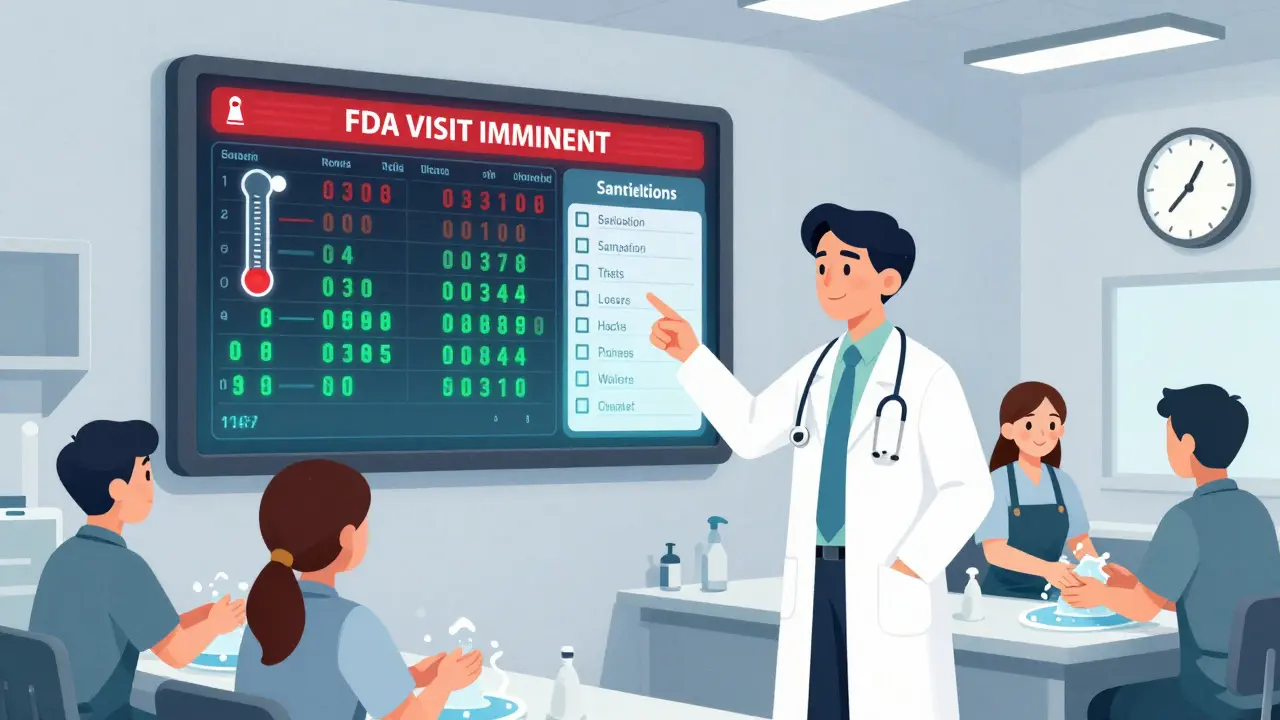
When FDA inspectors arrive at a foreign plant, they don’t ask for coffee. They show their credentials, state their purpose, and begin. Here’s what they look for:- Documentation: Records must be available immediately - no waiting for IT to retrieve files. That includes sanitation logs, supplier approvals, training records, and test results.
- Facility conditions: Cleanliness, pest control, proper storage temperatures, and separation of raw and finished products are checked on the spot.
- Process controls: Inspectors watch how food moves through the plant. Can they see the entire process? Are there blind spots?
- Employee behavior: Are workers following hygiene rules? Are they trained? Do they know what to do if something goes wrong?
What Gets You in Trouble - Even If You’re Not Breaking the Law
You might think if your facility is clean and your food is safe, you’re fine. But the FDA can shut you down even if you didn’t make a single mistake - if you obstruct the inspection. Here’s what counts as obstruction:- Refusing to let inspectors enter certain areas
- Delaying access to records for hours
- Redacting parts of documents they asked for
- Turning off cameras or lights during inspection
- Limiting who can speak to inspectors
How Foreign Facilities Are Adapting
Many factories, especially in India, China, and Southeast Asia, are scrambling to adjust. The ones that survived the transition did three things:- They hired bilingual quality staff full-time. No more calling translators from home. Now, every facility has at least one person on-site who speaks English and understands FDA expectations.
- They went digital. Paper records are dead. Cloud-based systems that store sanitation logs, training records, and test results - accessible 24/7 - are now mandatory. Some use platforms like SAP or specialized food safety software like FoodLogiQ or Safefood 360.
- They run mock inspections every month. One company in Vietnam does surprise internal audits every 30 days. They bring in a former FDA inspector to simulate a real visit. No one knows when it’s coming. If they fail, they shut down production until the issue is fixed.
What You Need to Do Right Now
If you run or supply a foreign food facility that exports to the U.S., here’s your checklist:- Verify your registration is current with FDA’s FURLS system. If it’s expired, you’re already in violation.
- Digitize all records. Make sure they’re searchable, backed up, and accessible without a login delay.
- Train your team. Every employee, from the cleaner to the plant manager, must know what to do if FDA shows up. No one should panic or hide anything.
- Run monthly mock inspections. Hire an independent auditor if you can’t do it yourself.
- Know your rights - and your limits. You can’t refuse access. You can’t delay. But you can ask for a copy of the inspection notice and record the visit with your own camera.
What’s Next for FDA Overseas Inspections
The FDA isn’t stopping here. They’re testing new tools:- Third-party inspectors: Licensed auditors in countries like Brazil and Indonesia are being trained to conduct inspections under FDA supervision. This could speed things up.
- AI-powered risk scoring: New software analyzes shipment data, refusal history, and supplier networks to predict which facilities are most likely to be unsafe.
- Real-time data sharing: Some exporters are now required to send lab results and temperature logs directly to FDA systems as they happen.
Do foreign food facilities have to pay for FDA inspections?
No, foreign facilities do not pay for FDA inspections. The U.S. government funds these inspections through taxpayer dollars. However, if a facility is found to be non-compliant and its products are refused entry, the company may face fees for storage, re-export, or destruction of the rejected goods. These are charged by U.S. Customs and Border Protection, not the FDA.
Can a foreign facility be inspected more than once a year?
Yes. High-risk facilities or those with a history of violations can be inspected multiple times a year. The FDA’s goal under FSMA is to increase inspection frequency - not limit it. Some facilities with repeated refusals have been inspected every 6 to 8 months. There’s no cap on how often the FDA can return.
What happens if a facility refuses an FDA inspection?
If a foreign facility refuses inspection, the FDA can automatically deny entry of all its products into the United States under Section 306 of FSMA. The facility will be placed on an import alert, meaning every future shipment will be detained without physical examination. Getting off that list requires a successful inspection and proof of long-term compliance - which can take months or years.
Are dietary supplements covered under these inspections?
Yes. Dietary supplements are regulated by the FDA as food products, not drugs. Foreign facilities producing supplements for the U.S. market are subject to the same unannounced inspection rules as other food facilities. The FDA has stepped up inspections of supplement plants since 2023, especially those making products with unapproved ingredients or misleading claims.
Can a U.S. company be held responsible for a foreign supplier’s inspection failure?
Yes. Under FSMA’s Foreign Supplier Verification Program (FSVP), U.S. importers are legally required to verify that their foreign suppliers meet U.S. food safety standards. If a supplier fails an inspection and the importer didn’t properly audit them, the importer can face enforcement actions - including import holds, fines, or even criminal liability in extreme cases.
12 Comments
Lisa Davies
This is HUGE. 🙌 I used to buy imported produce without a second thought, but now I’m actually checking labels like a hawk. If they’re passing FDA unannounced checks, I’m buying it. Safety first, always!
Melissa Taylor
Honestly, this is long overdue. The double standard was ridiculous. If we expect our own plants to be spotless every day, why should foreign ones get a pass? Fairness isn’t just nice-it’s necessary.
Jake Sinatra
The structural integrity of global food supply chains hinges on regulatory parity. The FDA’s shift toward unannounced inspections represents a paradigmatic realignment with the principles of risk-based oversight. This is not merely policy-it is public health infrastructure.
Mike Nordby
I’ve worked in food safety for 18 years. The fact that they’re now requiring real-time data sharing and digital records? That’s the future. Paper logs are a relic. Facilities that haven’t digitized are already behind.
Michelle M
It’s funny how we talk about fairness in inspections but rarely talk about the human cost. The Thai factory owner who said it’s like having a guard at the door 24/7? That’s not just compliance-it’s existential pressure. Are we asking too much? Or are we finally asking for what we’ve always deserved?
Nupur Vimal
India makes the best spices and ayurvedic products and now FDA wants us to use SAP and cloud logs like some Silicon Valley startup? We have been feeding the world for centuries without computers. This is cultural imperialism disguised as safety
Cassie Henriques
The FSMA risk-based scoring is a game-changer. Real-time temp logs + AI-driven refusal pattern analytics = predictive compliance. If your facility isn’t on FoodLogiQ or Safefood 360, you’re operating in the analog dark ages. Time to upgrade or get off the export train.
Benjamin Glover
Americans think they can impose their rules on the entire world. We’ve had safe food for millennia without FDA inspectors breathing down our necks. This isn’t safety-it’s overreach dressed up as virtue.
John Samuel
Let me paint you a picture: Imagine your grandmother’s kitchen-flour dust in the air, wooden spoons, fresh basil from the windowsill. Now imagine that same kitchen, but with a digital audit trail, encrypted cloud backups, and a bilingual QA officer watching every move. That’s the new normal. It’s not perfect-but it’s the price of trust.
Sai Nguyen
USA thinks they own food safety. We make millions of tons of safe food every year. You dont inspect us like this. You dont have right. We will not bow to your rules. This is colonialism with a badge
RONALD Randolph
Refusing inspection? That’s not just a violation-it’s an act of war against American consumers! And if you think a $1.2M fine is harsh, you haven’t seen the families who got sick from contaminated imports. The FDA should be seizing assets, jailing CEOs, and banning entire countries from exporting. No more warnings. No more mercy.
Raj Kumar
i agree with nupur and sai but also... we need to adapt. my factory in delhi just got a new software system. it cost a lot but now we pass every mock audit. the american buyers are happy. its not perfect but its working. we are learning. 🤝