
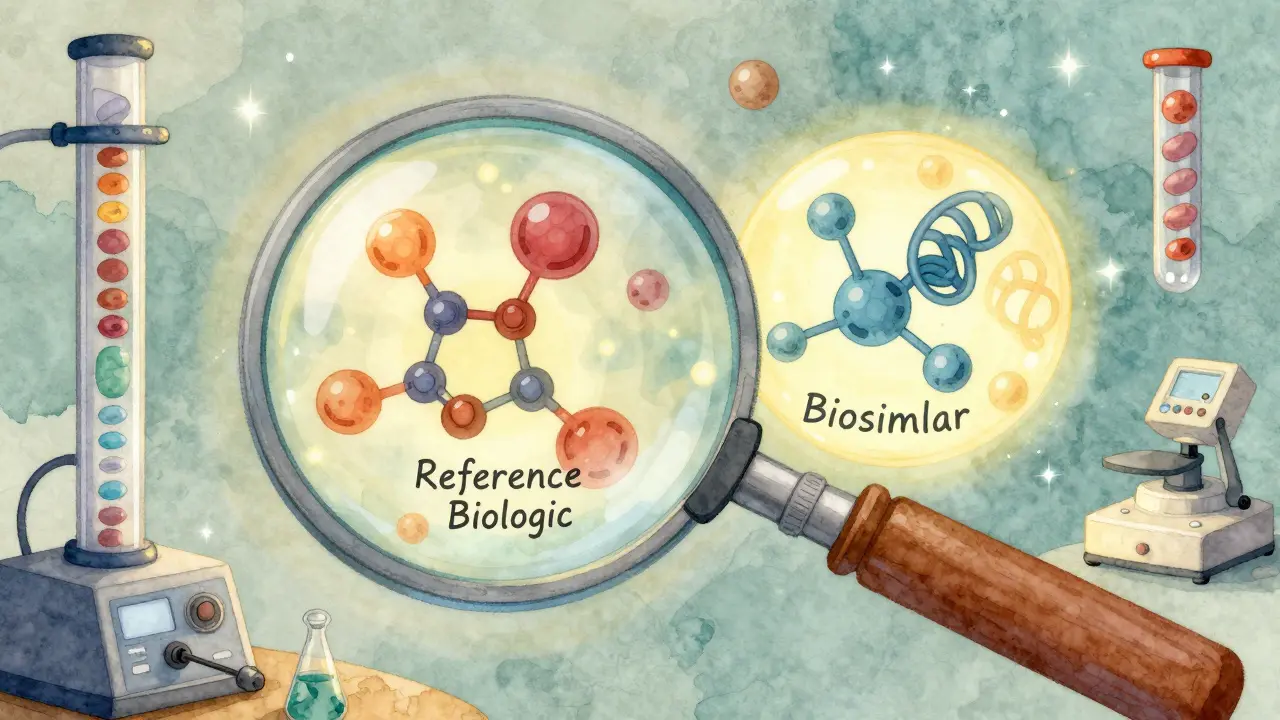
The FDA doesn’t rate biosimilars like you’d rate a movie or a restaurant. There’s no star system, no A+ or B- grades. Instead, the FDA uses a strict, science-driven process to decide if a biosimilar is safe and effective enough to be approved as a copy of a brand-name biologic drug. This isn’t like approving a generic pill. Biosimilars are made from living cells - think proteins, antibodies, or complex molecules - and even tiny changes in how they’re made can affect how they work in the body. That’s why the FDA’s process is far more detailed than what’s used for traditional generics.
What Makes a Biosimilar Different From a Generic?
Generics are exact chemical copies of small-molecule drugs, like aspirin or metformin. They’re made in labs using predictable chemical reactions. If the active ingredient matches the brand name, and the pill dissolves the same way, the FDA approves it. Simple.
Biosimilars? Not even close. They’re copies of biologics - drugs made from living organisms. Think Humira, Enbrel, or Herceptin. These drugs are made using living cells in bioreactors. The process is like brewing beer, but for medicine. Even if two companies use the same recipe, slight differences in temperature, pH, or cell lines can change the final product. That’s why a biosimilar isn’t an identical copy - it’s a highly similar version with no clinically meaningful differences in safety or effectiveness.
The FDA requires proof that the biosimilar matches the reference product in structure, function, and how the body responds to it. This isn’t guesswork. It’s measured down to the molecule.
The Step-by-Step FDA Evaluation Process
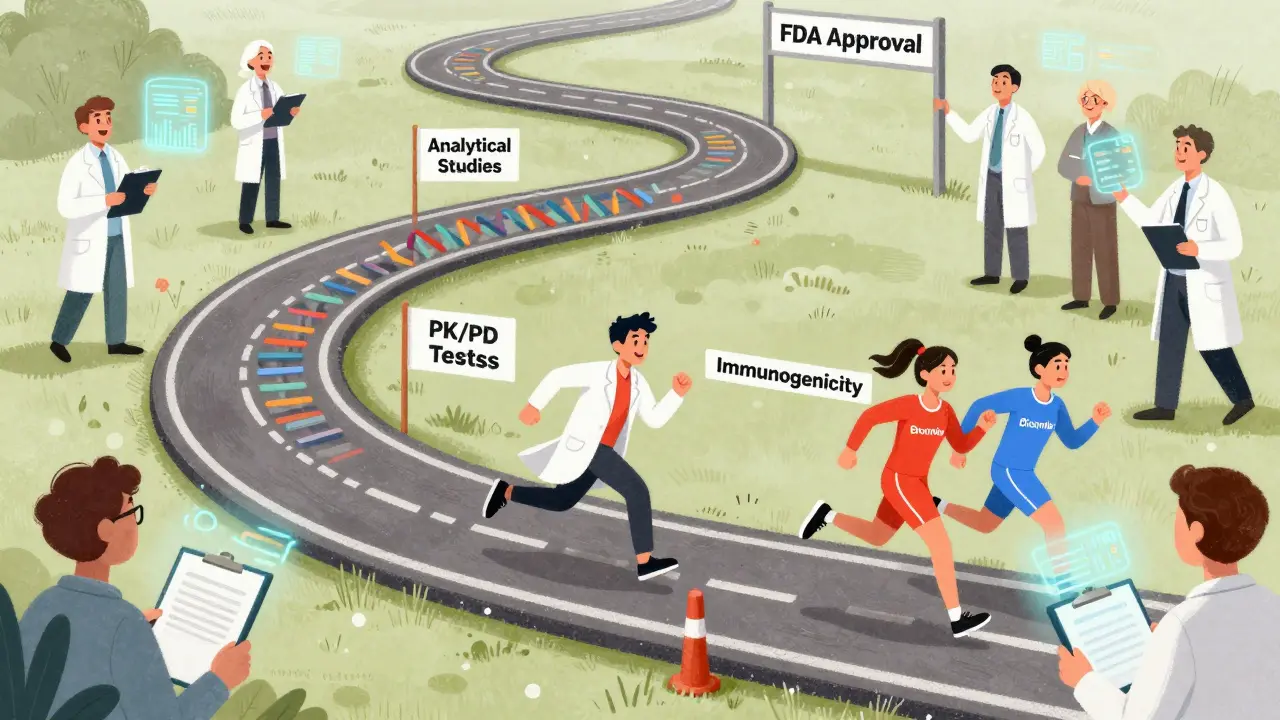
Getting a biosimilar approved isn’t a race. It’s a marathon with checkpoints. Here’s how it works:
- Analytical Studies: This is the foundation. Scientists use advanced tools - mass spectrometry, chromatography, capillary electrophoresis - to compare the biosimilar and reference product at the molecular level. They look at over 200 critical quality attributes: shape, charge, sugar attachments (glycosylation), purity, stability. The goal? 95-99% similarity across the board. If the data doesn’t show this level of match, the application stops right here.
- Animal Studies: The FDA may require toxicity tests in animals, but they often waive this if the analytical data is strong enough. This step isn’t about proving effectiveness - it’s about spotting unexpected side effects before human trials.
- Human Pharmacokinetic (PK) and Pharmacodynamic (PD) Studies: These studies measure how the body absorbs, distributes, metabolizes, and eliminates the drug. They also track how the drug affects the body - like how quickly it reduces inflammation or lowers tumor markers. These are usually done in 50-100 healthy volunteers or patients using a crossover design (you get the biosimilar, then the reference, or vice versa).
- Immunogenicity Assessment: This is critical. Biologics can trigger immune responses. Even a small change might cause the body to attack the drug - or worse, attack itself. Developers must monitor immune reactions over 24-52 weeks in clinical trials. The FDA looks for signs of increased antibodies or allergic reactions compared to the reference product.
- Comparative Clinical Trials: In the past, these were mandatory. Now, thanks to updated guidance from September 2024, the FDA may waive them if analytical and PK/PD data are exceptionally robust. This is a big deal. It cuts development time and cost - potentially saving $50-100 million per product.
The entire process relies on the totality of evidence. No single study is enough. It’s the full picture - from the lab bench to the patient’s bloodstream - that convinces the FDA.
The FDA Purple Book: Where Biosimilars Are Listed
Once approved, a biosimilar isn’t just quietly added to the market. It’s officially listed in the FDA’s Purple Book. Think of it as the government’s public directory of all approved biologics and their biosimilars. Unlike the Orange Book for generics, the Purple Book includes patent information, exclusivity periods, and licensure dates.
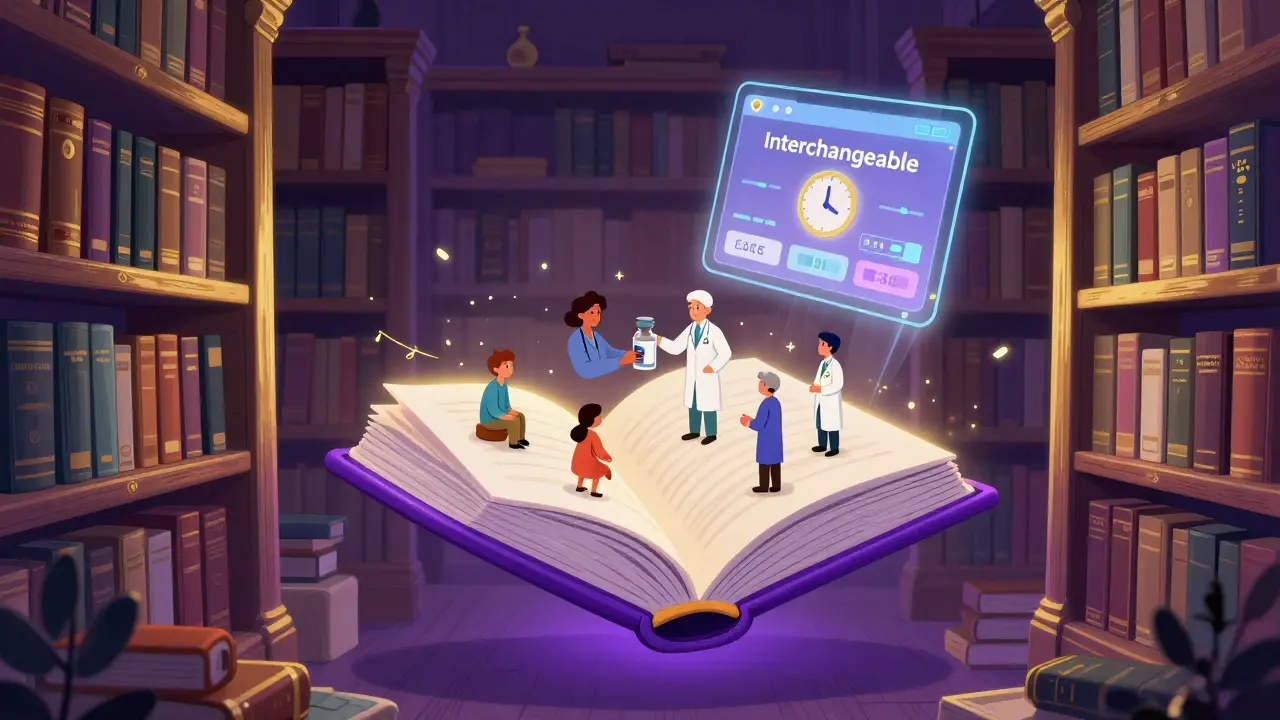
As of October 2025, the Purple Book lists 387 reference biologics and 43 approved biosimilars. Of those 43, only 17 are designated as interchangeable. That’s a higher bar. An interchangeable biosimilar can be substituted for the reference product by a pharmacist without the prescriber’s permission - just like a generic. To earn that label, developers must prove that switching back and forth between the biosimilar and the original doesn’t increase risk or reduce effectiveness. Only a handful have cleared this hurdle.
The Purple Book went fully digital in early 2025. It’s now searchable, API-accessible, and updated daily. This transparency helps doctors, pharmacists, and insurers make informed decisions.
Why Some Biosimilars Never Hit the Market
Just because the FDA approves a biosimilar doesn’t mean it’s available to patients. Between 2015 and 2025, the FDA approved 43 biosimilars - but only 29 have actually launched.
Why? Patent lawsuits. Biologic makers often file dozens of patents to protect their drugs, creating what’s called a “patent thicket.” Biosimilar companies can get stuck in court for years. The average time from FDA approval to market launch is 11.3 months - and some take over three years.
Another barrier? Payers. Insurance companies and pharmacy benefit managers sometimes drag their feet on covering biosimilars, especially in autoimmune diseases. For example, adalimumab biosimilars (copies of Humira) launched in 2023 but only reached 28% market share by mid-2025. In oncology, where cost savings are massive, biosimilars like rituximab and trastuzumab have captured 65-75% of the market within 18 months.
Real-World Safety: Do Biosimilars Work as Well?
One of the biggest concerns patients and doctors have is: “Is it safe?” The answer, based on nine years of data, is yes.
The FDA’s Sentinel Initiative tracks adverse events in real-world use. As of Q3 2025, biosimilars had 0.8 adverse events per 10,000 patients. The reference products? 0.7. No statistically significant difference. No new safety signals have emerged from any of the 43 approved biosimilars.
Patient advocacy groups like the Cancer Support Community have publicly backed the FDA’s approach. “The rigorous stepwise evaluation has ensured that all 43 approved biosimilars maintain the same safety profile as their reference products,” said Kim Thiboldeaux in March 2025 testimony.
What’s Changing in 2025 and Beyond
The FDA isn’t standing still. New guidance released in June 2025 allows for extrapolation of indications based solely on analytical data for well-characterized proteins. That means if a biosimilar is proven similar for one condition - say, rheumatoid arthritis - it can be approved for other conditions the original drug treats, without running separate clinical trials.
The agency is also testing AI tools to speed up analytical data review, with a pilot program launching in early 2026. And by 2027, they plan to create a formal framework for assessing interchangeability of combination products - like a biologic paired with a delivery device.
But challenges remain. Only three applications for complex biosimilars - like antibody-drug conjugates - have been submitted. None have been approved. The FDA admits this is a gap. “The lack of standardized methods for assessing biosimilarity of emerging modalities like gene therapies represents the most significant regulatory gap for future biosimilar development,” they noted in September 2025.
Bottom Line: It’s Not About Rating - It’s About Proof
The FDA doesn’t rate biosimilars. It demands proof. Proof at the molecular level. Proof in the lab. Proof in the body. And proof over time.
This system isn’t perfect. It’s slow. It’s expensive. And it’s not always easy for manufacturers to navigate. But it’s designed to protect patients. Every biosimilar on the market today has passed through this gauntlet. That’s why doctors can prescribe them with confidence - and why patients can trust them.
The goal isn’t just to cut costs. It’s to give more people access to life-changing treatments - without compromising safety. And so far, the system is working.
Are biosimilars the same as generics?
No. Generics are exact chemical copies of small-molecule drugs, made using standard synthesis. Biosimilars are highly similar versions of complex biologic drugs made from living cells. Even small changes in manufacturing can affect their structure and behavior, so biosimilars require far more testing than generics.
What does FDA’s ‘interchangeable’ designation mean?
An interchangeable biosimilar has met an even higher standard than a regular biosimilar. It must prove that switching between it and the reference product won’t increase risk or reduce effectiveness. Pharmacists can substitute it without asking the doctor - just like a generic. Only 17 of the 43 approved biosimilars in the U.S. have this status as of 2025.
Why are biosimilars cheaper than the original biologics?
Because they don’t need to repeat the full clinical trials that the original biologic went through. Biosimilar developers rely on the FDA’s existing safety and efficacy data for the reference product. They only need to prove similarity through analytical, animal, and limited human studies. This cuts development costs by 30-50%, which translates to 15-30% lower prices for patients.
How long does it take to get a biosimilar approved by the FDA?
The median time from IND submission to approval is 3.2 years - longer than in Europe, where it’s about 2.1 years. This is due to the FDA’s more rigorous analytical requirements. The approval process can be even longer if patent litigation delays market entry, which is common in the U.S.
Can biosimilars be used for all the same conditions as the original drug?
Yes - but only if the FDA approves it. Thanks to new 2025 guidance, manufacturers can now request approval for additional uses (indications) based on strong analytical data alone, without running new clinical trials for each one. This is called extrapolation. It’s already being used for several biosimilars, especially for cancer and autoimmune drugs.
Are biosimilars safe for long-term use?
Yes. Since the first biosimilar was approved in 2015, the FDA has tracked over 9 years of real-world data. Adverse event rates for biosimilars are statistically identical to those of the reference products. No new safety concerns have emerged. Patient registries and the FDA’s Sentinel Initiative continue to monitor outcomes closely.
8 Comments
Lori Anne Franklin
Wow, this actually made me understand biosimilars for the first time. I always thought they were just cheap knockoffs, but the molecular-level testing? That’s wild. The FDA’s not playing around.
Angela Spagnolo
I’m so glad someone finally explained this clearly… I’ve been scared to switch my Humira biosimilar, but now I get why it’s safe. The Purple Book is a lifesaver… I wish my pharmacist knew about it too…
Jeanette Jeffrey
Let’s be real-this whole ‘no rating system’ thing is just corporate PR. The FDA’s process is a joke. If they were truly rigorous, we’d have 100+ interchangeable biosimilars by now. Instead, we’re stuck with patent thicket theater and pharma lobbying. 17 interchangeable? Pathetic.
Ryan Cheng
Really appreciate how you broke down the analytical studies part. I work in biotech QA and the glycosylation profiles alone? Mind-blowing. We run HPLC and CE-SDS daily and even we get lost in the data sometimes. The fact that the FDA requires 95-99% similarity across 200+ attributes? That’s next-level diligence. Hats off.
Shreyash Gupta
bro why is the FDA so slow?? 🤡 I live in India and we get biosimilars here in 18 months. U.S. takes 3+ years? 😭 and then the insurance companies don’t cover them?? smh. this system is broken. 🤦♂️
Ellie Stretshberry
Just wanted to say thank you for writing this. My mom’s on a biosimilar for RA and we were terrified it wouldn’t work. Now I feel way better about it. The real-world data is what mattered most to us. You made it feel human.
wendy parrales fong
It’s not about being cheaper. It’s about being fair. Everyone deserves access to medicine that saves their life. The FDA’s process might be slow, but it’s the only thing standing between patients and dangerous copies. I’m proud of how careful they are. We don’t need speed-we need trust.
Bryan Woods
Thank you for the comprehensive breakdown. The extrapolation guidance update in June 2025 is a game-changer for complex indications like oncology. It reduces redundant trials without compromising safety-this is regulatory innovation at its best. The AI pilot in 2026 could further accelerate review cycles while maintaining rigor. The system isn’t perfect, but it’s evolving intelligently.