
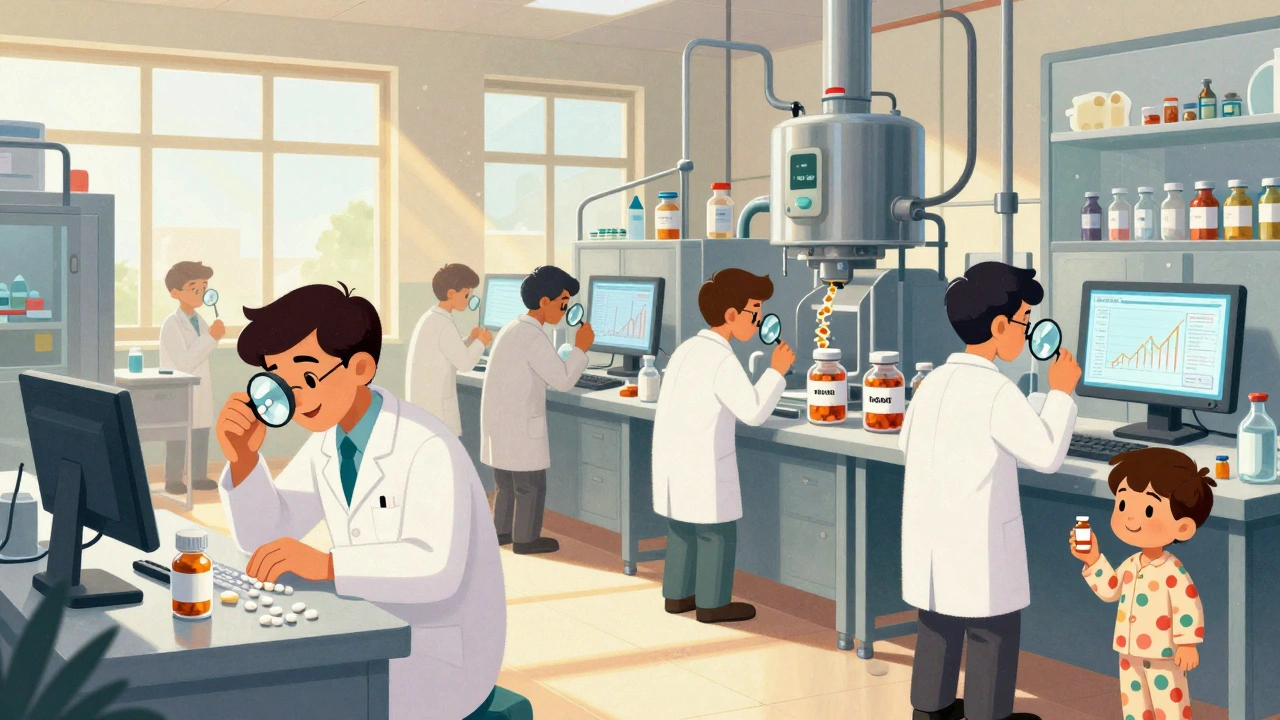
When you pick up a generic pill at the pharmacy, you expect it to work just like the brand-name version. You’re not just saving money-you’re trusting that the FDA has made sure it’s just as safe and effective. But how does the FDA actually make sure that a generic drug made in India, China, or Ohio meets the same standards as the original? It’s not magic. It’s a detailed, science-backed system built on inspections, strict rules, and constant monitoring.
Approval Isn’t Just a Stamp
Generic drugs don’t go through the same long clinical trials as brand-name drugs. That’s because the FDA already knows the original drug is safe and works. Instead, generic makers use a shortcut called the Abbreviated New Drug Application (ANDA). But don’t let the word “abbreviated” fool you. The process is still intense.
To get approved, a generic drug must prove it’s pharmaceutically equivalent-same active ingredient, strength, dosage form, and route of administration. But that’s only half the story. It also has to be bioequivalent. That means it releases the same amount of medicine into your bloodstream at the same rate as the brand-name drug. The FDA requires this range: 80% to 125% of the brand’s absorption. In practice, most generics fall within 90% to 110%. That’s not a guess. It’s measured through controlled studies in healthy volunteers.
And here’s the catch: if a generic drug doesn’t meet this standard, it gets rejected. No exceptions. In 2021, the FDA reviewed over 1,100 ANDAs. About 15% of them needed more data before approval. That’s because the FDA doesn’t just look at the numbers-they dig into how the drug was made.
The Factory Matters More Than You Think
Two identical pills can behave differently if they’re made in different factories. That’s why the FDA focuses just as hard on the manufacturing process as the final product.
Every generic drug maker must follow Current Good Manufacturing Practices (cGMP). These aren’t suggestions. They’re legal requirements. The rules cover everything:
- Where raw materials come from and how they’re stored
- How machines are cleaned between batches
- How every step of production is recorded and monitored
- How finished pills are tested for purity, strength, and stability
The FDA doesn’t trust paperwork alone. They send inspectors-sometimes unannounced-to factories. In 2021, they did 1,082 inspections worldwide. Nearly half of those were in foreign countries. Why? Because over 80% of the active ingredients in U.S. generic drugs come from outside the country.
Inspections aren’t just about checking boxes. They look for signs of contamination, data falsification, or rushed processes. In 2019, 15% of foreign facilities had serious quality issues. Domestic ones? Only 8%. That gap is why the FDA now prioritizes inspections based on risk. A factory with past violations? It gets visited more often.
What Happens After Approval?
Approval isn’t the end. It’s the beginning of ongoing surveillance.
The FDA doesn’t just sit back and wait for problems. They actively monitor what happens after the drug hits the shelf. How? Through MedWatch, the system that collects reports from doctors, pharmacists, and patients about side effects or problems with medications. Every year, they get around 1.3 million reports. About 25% of those involve generic drugs.
When a pattern emerges-say, multiple reports of a generic blood pressure pill causing unusual dizziness-the FDA’s Clinical Safety and Surveillance Committee steps in. They include doctors, chemists, and data analysts who dig into the data. They check: Is this a one-off? Or is there a manufacturing flaw? A bad batch? A change in the formula?
If they find a problem, they don’t wait. They can issue a recall. They can require updated labels. They can send letters to doctors warning them. In 2020, the FDA ordered recalls of several generic versions of the heart drug losartan after finding trace impurities linked to cancer risk. That’s oversight in action.
Why Foreign Factories Are a Big Deal
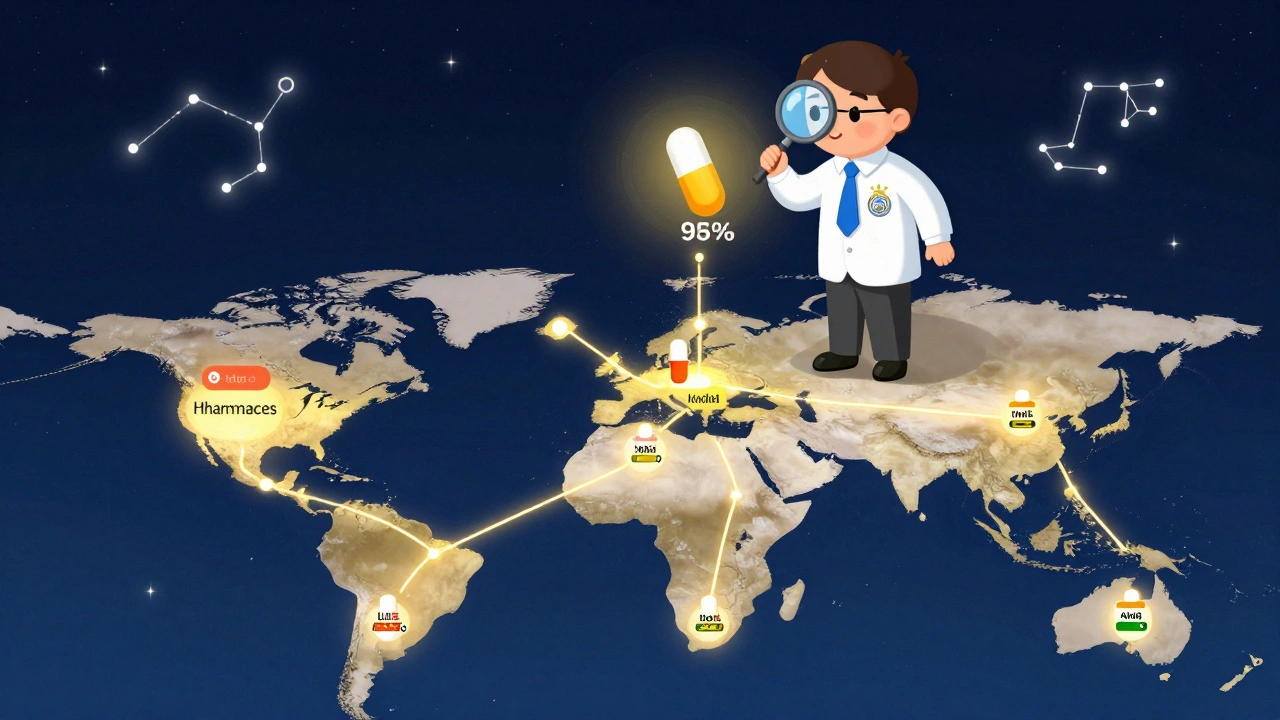
Most people don’t realize that the pills in their medicine cabinet might be made in a factory thousands of miles away. India and China produce the majority of the world’s generic drugs. That’s efficient. But it’s also risky.
Before 2012, the FDA inspected foreign factories less than half as often as U.S. ones. That changed with the Generic Drug User Fee Amendments (GDUFA). This program lets the FDA charge fees to drug companies, and use that money to hire more inspectors and improve technology.
Since GDUFA started, the FDA has increased its inspection capacity by 75%. By 2025, they plan to conduct 1,500 foreign inspections annually-up from 1,082 in 2021. They’re also using real-time data to flag factories that show signs of trouble before a problem becomes public.
One big improvement? The FDA now shares inspection data with regulators in other countries. If India’s drug agency finds a violation at a factory, the FDA gets notified. That kind of global cooperation is essential when 90% of prescriptions in the U.S. are filled with generics.
Cost vs. Control
Generic drugs save the U.S. healthcare system over $300 billion every year. That’s huge. But making them isn’t cheap or easy.
Developing a generic drug costs between $1 million and $5 million. That’s a fraction of the $2.6 billion it takes to bring a new brand-name drug to market. But the regulatory hurdles are still steep. A single application can take months-or even years-to get approved. The FDA can issue a “complete response letter” asking for more data, which delays approval by another year.
Manufacturers also have to follow the Drug Supply Chain Security Act (DSCSA), which requires electronic tracking of every drug from factory to pharmacy. That means every box has a digital ID. If a batch is recalled, they can trace it down to the specific pharmacy that received it.
It’s a complex system. But it’s designed to prevent fake, contaminated, or ineffective drugs from reaching patients.
What’s Next for Generic Drug Safety?
The FDA is constantly upgrading its tools. In 2023, they released new guidance for complex generics-drugs like inhalers, injectables, and topical creams that are harder to copy. These aren’t simple pills. They require specialized testing and manufacturing. The FDA now has specific rules for over 2,800 drug products, up from 2,000 in 2018.
GDUFA III, which started in 2022, is pouring $1.1 billion into the system through 2027. That money is funding:
- More foreign inspections
- Faster review times (95% of applications now reviewed in under 10 months)
- Real-time data monitoring systems
- Improved tools to detect impurities and contamination
The goal? No gaps. No exceptions. Every generic drug on the shelf should be as safe and effective as the brand-name version. And the FDA is building the systems to make sure that’s true.
What You Can Do
You don’t need to be a scientist to help keep generic drugs safe. If you notice something unusual-like a pill that looks different, or side effects you didn’t expect-report it. Use MedWatch. Tell your doctor. That report could be the clue that stops a bad batch from reaching thousands of people.
And remember: generic doesn’t mean low quality. It means the same medicine, at a lower price. The FDA’s system isn’t perfect, but it’s one of the most thorough in the world. And it’s getting better.
Are generic drugs really as safe as brand-name drugs?
Yes. The FDA requires generic drugs to be identical to brand-name drugs in active ingredient, strength, dosage form, and how they work in the body. They must meet the same strict manufacturing standards and undergo the same quality testing. Over 90% of U.S. prescriptions are filled with generics, and studies consistently show they perform the same way as brand-name versions.
Why do some generic pills look different from the brand name?
The law only requires the active ingredient to match. Color, shape, and inactive ingredients (like fillers or dyes) can differ. These changes don’t affect how the drug works. If you’re concerned, check the label or ask your pharmacist. The active ingredient name will always be the same.
How does the FDA know if a generic drug is contaminated?
Every batch of generic drugs is tested in a lab using validated methods. The FDA also inspects manufacturing sites to ensure proper controls are in place. They look for impurities like nitrosamines or heavy metals. If contamination is found, the FDA can recall the product, shut down a facility, or require changes to the manufacturing process.
Do generic drugs take longer to work than brand-name ones?
No. To be approved, a generic drug must be bioequivalent-meaning it enters your bloodstream at the same rate and amount as the brand-name version. If it didn’t, the FDA would reject it. Any difference in how fast you feel the effect is likely due to individual body chemistry, not the drug itself.
Can I trust generics made overseas?
Yes, if they’re sold in the U.S. The FDA inspects all facilities-domestic and foreign-that make drugs for the American market. Foreign factories are held to the same standards. In fact, over 80% of the active ingredients in U.S. generics come from overseas, and the FDA has increased foreign inspections by over 60% since 2012.
What should I do if I think a generic drug isn’t working?
Talk to your doctor or pharmacist. Don’t stop taking your medication without advice. Then, report the issue to the FDA through MedWatch. Your report helps them track potential problems. If others have had the same experience, it could trigger an investigation. Many recalls start with just one or two patient reports.
13 Comments
Taya Rtichsheva
So basically we're trusting pills made in a factory we've never seen with ingredients we can't name... cool.
Christian Landry
I used to be scared of generics til my doc switched me to one for blood pressure. Same效果, half the cost. 😊
Mona Schmidt
The FDA’s oversight is remarkably rigorous, particularly in its emphasis on bioequivalence thresholds and cGMP compliance. Many consumers underestimate the scientific and regulatory infrastructure that ensures therapeutic equivalence between branded and generic pharmaceuticals.
Andrea DeWinter
If you're worried about your generic meds, check the lot number and look up the manufacturer on the FDA's site. Most are fine, but knowing where it came from helps. And if you notice something off, report it. Seriously, it helps.
Morgan Tait
Let’s be real-the FDA’s got a 15% rejection rate? That’s just the tip of the iceberg. Half the factories in India are running on duct tape and hope. They’re just waiting for the next whistleblower to blow the lid off this whole charade. And don’t get me started on the ‘shared inspection data’-that’s just PR fluff. The real data? Buried. And you know why? Because if you knew how many batches get shipped anyway… you’d never take another pill.
Andrea Petrov
I’ve been on the same generic for 7 years. Last month, my pills changed color. Then my anxiety spiked. Coincidence? I don’t think so. The FDA says it’s ‘inactive ingredients’-but what if the new dye is interacting with my thyroid meds? No one’s testing that. They just want you to shut up and swallow.
Kathy Haverly
Oh wow, 80-125% bioequivalence? That’s a 45% swing. You’re telling me my blood pressure pill could be half as strong or 25% stronger? And you call that ‘safe’? This isn’t oversight-it’s a gamble with my life. And the fact that people cheer this as ‘affordable’ is terrifying.
Katie Harrison
I appreciate the detail, but I still wonder: if a generic is approved in the U.S., and the same factory ships the same batch to Canada, why does Health Canada flag it as ‘non-compliant’? Are we just luckier here? Or are we turning a blind eye?
Darcie Streeter-Oxland
The assertion that generics are ‘identical’ in efficacy is, strictly speaking, inaccurate. While pharmacokinetic equivalence is statistically demonstrated, inter-individual variability in metabolism, gut absorption, and hepatic processing may result in clinically significant deviations in therapeutic outcomes. The regulatory framework, while robust, cannot fully account for human biological heterogeneity.
Michael Robinson
People worry about pills made overseas. But think about it-every single thing we buy, from phones to shoes, comes from somewhere else. The FDA’s job isn’t to make everything perfect. It’s to make sure it’s good enough to not kill you. And honestly? They’re doing better than most.
Guylaine Lapointe
I can't believe people still fall for this. The FDA is just a puppet of Big Pharma. They let dangerous generics through because the companies pay them. And then they blame patients for not reporting side effects. Meanwhile, the same factories that make your pills are also making cheap antibiotics for Africa that kill people. But hey, at least we got our $300 billion savings, right?
Haley P Law
I switched to a generic last year and now I feel like a zombie. I reported it. Got an auto-reply. My doctor said ‘it’s probably stress.’ I’m not stressed. I’m on a pill that’s not the same. 😡
Sarah Gray
I’ve read the ANDA guidelines. The bioequivalence window is laughable. If you’re a pharmacologist, you’d be horrified. The FDA doesn’t test for long-term effects, drug interactions, or patient-specific metabolism. They test for peak concentration. That’s not medicine. That’s a spreadsheet. And yet, people treat this like gospel. Pathetic.