
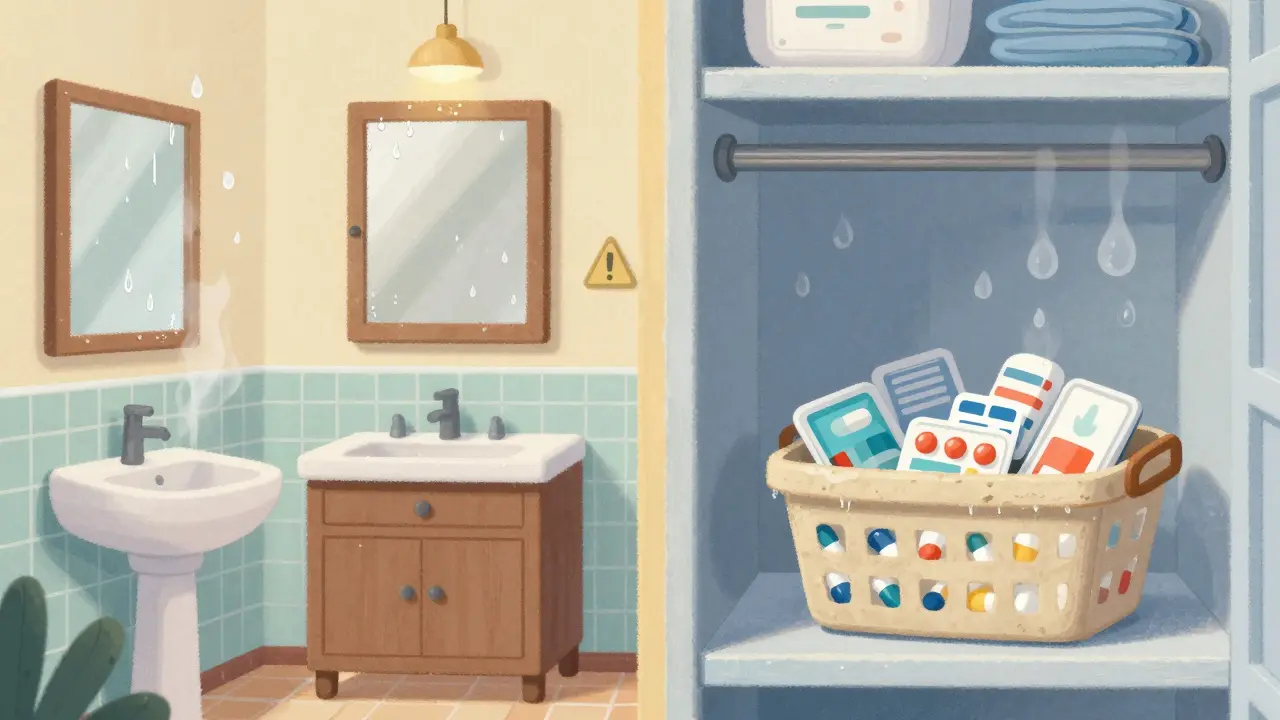
Think about where your medicine lives. For most of us, it's in a mirrored cabinet in the bathroom or a plastic bin under the sink. But here is the scary part: the bathroom is actually one of the worst places to store medication. The heat and humidity from your morning shower can cause drugs to degrade up to 50% faster, effectively turning your expensive prescriptions into useless pills. Even worse, 60% of accidental poisonings in children under six happen because medications were left within reach. A simple, structured home medication storage checklist is the best way to stop these risks before they happen.
When you organize your meds, you aren't just tidying up; you're ensuring that the chemistry of your medicine stays stable and that your kids or pets can't get into something dangerous. This guide will help you build a custom checklist to keep your household safe and your treatments effective.
The Golden Rules of Environmental Control
Medications are sensitive. They react to light, heat, and moisture, all of which can trigger a chemical breakdown. To keep your meds potent, your checklist needs to prioritize these specific environmental factors:
- Avoid the Bathroom: Move your meds to a cool, dry place like a linen closet or a dedicated powder room. Bathrooms often see humidity spikes up to 90%, which ruins drug stability.
- Temperature Stability: Aim for a spot where the temperature doesn't swing more than a few degrees. If you have refrigerated items, keep them between 36-46°F.
- Block the Light: Photodegradation is the chemical breakdown of a compound caused by light exposure. Use amber-colored bottles or opaque bins to prevent this, as some meds lose 40% of their potency in just 30 days of light exposure.
| Medication Type | Ideal Location | Temperature/Humidity Target | Risk if Ignored |
|---|---|---|---|
| General Pills/Capsules | Cool, dry closet | Low humidity (<50%) | Loss of potency |
| Insulin/Biologics | Refrigerator | 36-46°F | Drug instability |
| Light-Sensitive Liquids | Opaque container/Drawer | Away from sunlight | Chemical breakdown |
Organizing to Prevent Errors
Mistakes happen when things look similar. If you're rushing in the morning, it's easy to grab the wrong bottle. Your checklist should include a system for physical separation to reduce these risks:
First, separate medications by the person they belong to. Store your partner's meds on a different shelf or a different side of the bin than your own. This simple move can reduce accidental wrong-medication ingestion by over 60%. Next, organize them by how they are used-keep oral pills separate from topical creams and injectables. This prevents a dangerous scenario where a cream might be mistaken for an oral medication.
For those taking High-Alert Medications such as warfarin, insulin, or opioids, the stakes are higher. These should be in their own clearly labeled containers. Marking these as "High Alert" creates a mental pause that helps prevent dosing errors.
Locking Down Your Supply
If you have children, a "high shelf" is not a security system. Kids are climbers, and 70% of childhood poisonings happen in the few minutes a medication is left unattended on a counter. Your checklist must include a security audit:
- Invest in a Lockbox: Standard cabinets are a joke to a determined toddler. A dedicated medicine lockbox can reduce exposure incidents by 92%.
- The "Four-Foot" Rule: Ensure all medications are stored at least 4 feet off the ground and behind at least three closed doors (e.g., a drawer inside a cabinet inside a closet).
- Double-Lock Controlled Substances: If you have opioids or strong painkillers, they require "double-locked" storage-meaning a locked box inside a locked cabinet. This is critical since many teenagers obtain misused prescription drugs directly from home cabinets.
Managing Expiration and Freshness
Most people only check their meds when they're about to take them, but by then, the drug might be expired. An expired pill isn't always dangerous, but it is often useless. Your checklist should mandate a bi-annual "Medicine Purge," perhaps timed with daylight saving changes.
When reviewing your stock, look for more than just the date. Check for physical red flags. If a pill has changed color, developed a strange smell, or a liquid has become cloudy or chunky, toss it immediately. Also, for multi-dose vials or eye drops, write the "date opened" on the label. Some products lose significant stability 30 to 60 days after the seal is broken, regardless of the printed expiration date.
Safe Disposal: Stop the Flush
Tossing pills in the trash or flushing them down the toilet is a bad move. Flushing sends pharmaceutical compounds directly into our water systems, where they are incredibly hard to filter out. Instead, add these disposal steps to your checklist:
- Prioritize Take-Back Programs: Look for pharmacy-led or community drug take-back events. Professional incineration is the only way to ensure 99.9% of the drug is destroyed.
- The Coffee Ground Method: If you must use the trash, mix the meds with something unappealing, like used coffee grounds or kitty litter (in a 1:3 ratio), and seal them in a bag. This makes the pills less attractive to pets or people scavenging through trash.
- Schedule Your Purge: Mark April and October on your calendar, as these often align with national take-back events.
The Master Maintenance Checklist
To make this actionable, here is the summary of everything you need to track. Copy this into a document or onto a clipboard in your storage area.
- Daily: Check refrigerator temperature logs (for insulin/biologics).
- Monthly: Visual inspection for color/texture changes in high-use meds.
- Every 6 Months: Full inventory, expiration date check, and disposal of old meds.
- Ongoing: Ensure lockboxes are closed and keys/codes are kept away from children.
Can I store my meds in the bathroom if that's the only place I have?
It is not recommended. The humidity and temperature swings from showers cause medications to degrade much faster. If you have no other choice, use an airtight, waterproof plastic container with a tight seal to protect the pills from moisture.
Are expired medications dangerous to take?
Not always, but they are often less effective. While some meds stay potent for a year or two, others can break down into inactive or potentially irritating compounds. It is always safer to replace them, especially for life-critical meds like insulin or heart medication.
How do I know if a liquid medication has gone bad?
Look for changes in color, the appearance of "flakes" or sediment that wasn't there before, or a change in smell. If the liquid looks cloudy or has separated, it's likely compromised and should be disposed of.
Why do some meds need amber bottles?
Many drugs are photosensitive, meaning light triggers a chemical reaction that breaks them down. Amber glass filters out specific wavelengths of light that cause this degradation, keeping the medicine active for longer.
What is the safest way to dispose of opioids?
Because opioids have a high potential for misuse, the safest method is a professional drug take-back program or a pharmacy that offers secure disposal kiosks. If that's not available, use a secure drug-deactivation pouch that chemically neutralizes the medication.
Next Steps for Your Home
If you're starting from scratch, don't try to fix everything in one hour. Start by moving your medications out of the bathroom today. Next, buy a simple lockbox for any high-risk or prescription drugs. Once you've secured the environment, spend an afternoon going through every bottle to mark the "date opened" and identifying what needs to be taken to a disposal site. By turning these habits into a routine, you protect your family and ensure your health treatments actually work.