
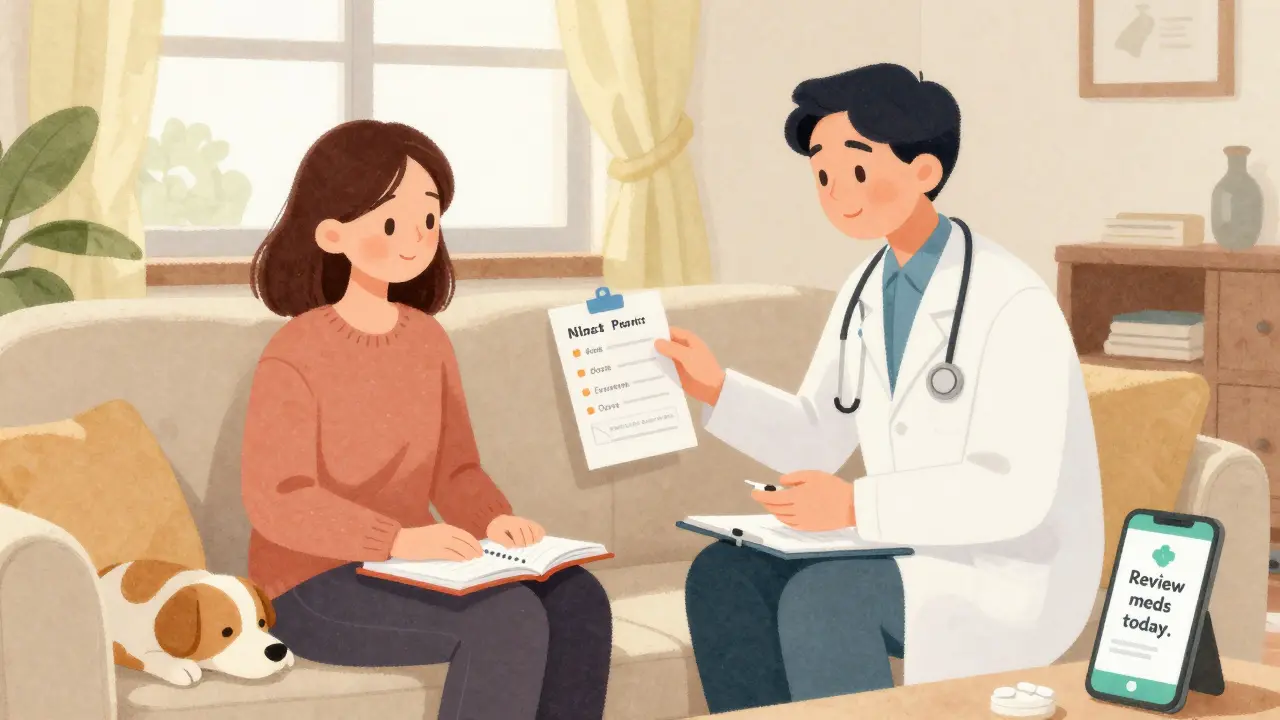
Why Documenting Provider Advice About Medications Matters
When your doctor or pharmacist tells you how to take a new medication, it’s easy to think you’ll remember it. But between stress, side effects, and multiple prescriptions, details slip away. That’s why writing down what they say isn’t just helpful-it’s necessary. Poor documentation leads to mistakes: wrong doses, missed refills, dangerous interactions. In the U.S., medication errors cause about 7,000 deaths every year. The good news? You can prevent most of them by keeping clear, accurate notes.
Healthcare providers are required to document medication advice for legal and safety reasons. But you’re not just a passive recipient-you’re part of the process. Your notes become part of your care history. If you switch doctors, go to the ER, or need a second opinion, your written record helps others make smarter decisions faster.
What to Write Down: The Essential Details
Don’t just jot down the drug name. You need enough detail so that someone else could understand your regimen-even years later. Here’s what to include for every medication:
- Drug name (brand and generic, if different)
- Dose (e.g., 10 mg, 500 mg)
- Frequency (e.g., once daily, every 8 hours, as needed)
- Route (swallowed, injected, applied to skin, inhaled)
- Duration (e.g., 14 days, until finished, long-term)
- Number of refills and how to request them
- Special instructions (take with food, avoid alcohol, don’t lie down for 30 minutes)
- Purpose (why you’re taking it-e.g., "for blood pressure," "for infection")
Also note any allergies or past reactions. If your provider said, "Don’t take ibuprofen if you have kidney issues," write that down too. These aren’t just reminders-they’re critical safety flags.
How to Record Verbal Advice Accurately
Providers often give advice quickly. To capture it correctly:
- Ask them to slow down. Say: "Can you repeat that? I want to make sure I get it right."
- Repeat it back to them: "So you’re saying take one tablet at 8 a.m. and 8 p.m., with food, for seven days?"
- Confirm any unclear points: "Does "as needed" mean if I have pain, or only if it’s above a certain level?"
- Write it down immediately after the appointment-don’t wait. Memory fades fast.
Use a consistent format. A simple table in your phone notes or a printed sheet works. Include the date and provider’s name. If you’re unsure about something, don’t guess. Call the pharmacy or clinic the same day. It’s better to ask twice than take it wrong once.
Documenting Patient Education and Questions
Good documentation isn’t just about the medication-it’s about the conversation. Did your provider explain side effects? Warn you about interactions? Tell you what to do if you miss a dose? Write it all down.
For example:
- "Dr. Lee said nausea is common for the first week. If I vomit within an hour of taking it, call the office."
- "Asked if I could take this with my multivitamin. She said yes, but not with calcium supplements."
- "Told I should avoid grapefruit. Didn’t know that before."
These notes matter because they show your understanding-and any gaps. If you later have a problem, your record proves you were informed. It also helps future providers spot patterns: "This patient consistently forgets to take meds with food," or "Patient asked about alcohol interaction twice."

What to Do When You Refuse or Skip Medication
It happens. You forget. You feel better and stop. You’re scared of side effects. That’s okay-but don’t leave it unrecorded.
If you decide not to take a medication, or you miss doses, write why. Examples:
- "Did not fill prescription-cost too high. Asked about generic."
- "Stopped after 3 days due to dizziness. Called clinic on 1/15."
- "Took only half dose because I was worried about stomach upset."
This isn’t about guilt-it’s about safety. Providers need to know if you’re not following advice. That way, they can adjust your plan, offer alternatives, or connect you with support. Skipping a pill once is normal. Not telling anyone? That’s the real risk.
Electronic vs. Paper: Which Works Better?
Most clinics now use electronic health records (EHRs). But your personal notes still matter. Why? Because you don’t always have access to the system. And not everything your provider says gets typed in.
Best practice? Use both.
- Keep a personal log on your phone or in a notebook. Use simple apps like Notes, Google Keep, or even a printable template.
- Check your patient portal after each visit. Many providers upload summaries. If something’s missing, message them: "I didn’t see the instructions for my new blood thinner. Can you confirm?"
- Print out your portal summary and add your handwritten notes. Keep it in a folder with all your meds.
By 2025, 95% of medication records will be digital and linked across systems. But until then, your personal copy is your backup-and your power.
Legal and Safety Risks of Poor Documentation
When things go wrong, paperwork tells the story. In 38% of medical malpractice cases involving medication errors, the records were incomplete or unclear. If you end up in court-or even just in a dispute with a provider-your notes can protect you.
Here’s what’s at stake:
- Insurance claims denied because "medication wasn’t documented as medically necessary."
- ER staff giving you the wrong drug because your history was missing.
- Being blamed for noncompliance when you never received clear instructions.
Providers are legally required to document what they say. But you’re not off the hook. If you don’t document what you were told, you lose leverage. Your notes aren’t just personal-they’re part of your legal right to safe care.

How to Store and Organize Your Medication Records
Keep your notes where you can find them. Not buried in a drawer. Not lost in a phone app you never open.
Try this system:
- Use a dedicated folder (physical or digital) called "My Medications."
- Update it after every visit, call, or pharmacy visit.
- Include: medication list, provider advice, side effects, refills, questions asked, answers received.
- Share a copy with your main caregiver or a trusted family member.
- Review it every 3 months. Remove old meds. Add new ones.
Some people use apps like Medisafe or MyTherapy. Others prefer a printed sheet taped to the fridge. Whatever works-just make sure it’s consistent and accessible.
What Happens When You Change Providers
Switching doctors? Don’t wait for them to ask. Bring your medication record with you.
It saves time. It prevents errors. It shows you’re engaged in your care. Many providers will say: "Can you bring a list of everything you’re taking?" Don’t say "I think..." or "I remember..." Give them your written list. That’s the difference between confusion and clarity.
Even if you’re using a patient portal, print a copy. Not all systems talk to each other. Your paper record bridges the gap.
Final Tip: Make It a Habit
Documentation isn’t a one-time task. It’s part of managing your health. Think of it like brushing your teeth-you don’t wait until your mouth hurts. You do it every day.
Set a reminder on your phone: "Review meds every Sunday." Or leave a sticky note on your bathroom mirror. The goal isn’t perfection. It’s consistency. Even a few lines after each visit makes a huge difference.
When you document provider advice, you’re not just writing down instructions. You’re taking control. You’re protecting yourself. You’re ensuring that no matter who treats you next, they have the full picture. That’s not just smart-it’s essential.
What if I forget what my provider told me about my medication?
Call the clinic or pharmacy as soon as you realize you’re unsure. Don’t guess. Most offices have a nurse line you can call. If you can’t reach them, check your patient portal for a summary. If nothing’s there, ask for a written copy. Your safety depends on accuracy-not memory.
Do I need to document advice from a pharmacist too?
Yes. Pharmacists are medication experts. They often give you critical details your doctor didn’t have time to cover-like how to store the drug, what foods to avoid, or how to use an inhaler correctly. Write down what they say, including their name and the date. This info is just as important as your doctor’s advice.
Can I use voice recordings instead of writing?
Voice recordings can help, but they’re not a substitute for written notes. You can’t quickly scan a 10-minute recording to find the dose of your blood pressure pill. Write down the key facts: drug name, dose, timing, warnings. Use recordings only as backup-like if you’re unsure about a long explanation.
How long should I keep my medication records?
Keep them for at least 7 years, or as long as you’re taking any of the medications. Some states require providers to keep records for 10 years. Your personal copy should last longer than that. Even after stopping a drug, keep notes on it-side effects or reactions could matter years later if you need the same medication again.
What if my provider won’t give me clear instructions?
Ask again. If they still aren’t clear, say: "I want to make sure I take this correctly. Can you write it down or give me a handout?" If they refuse, go to another provider or pharmacy. You have the right to understand your treatment. If cost or language is a barrier, ask about free patient education resources. Many clinics offer translators or printed materials in multiple languages.