
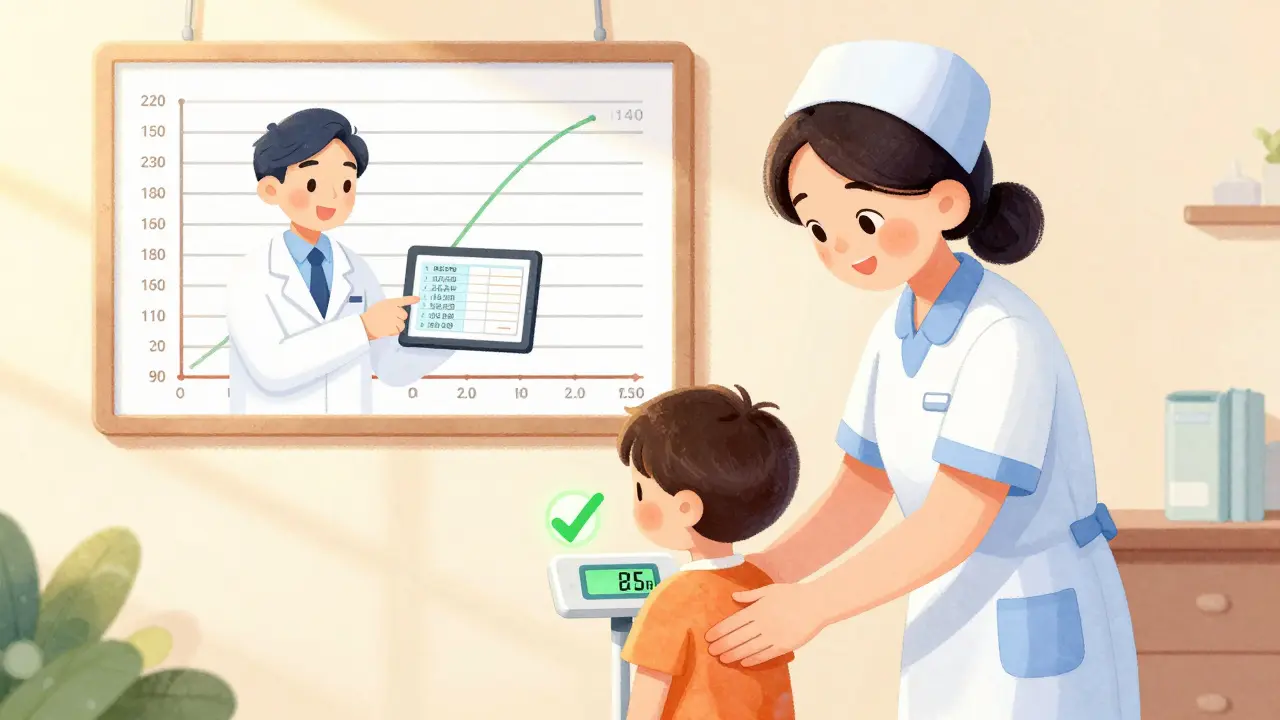
Every year, thousands of children in the U.S. and UK receive the wrong dose of medicine-not because someone was careless, but because a simple number was off. A child’s weight, measured in pounds instead of kilograms, or recorded last year instead of today, can turn a life-saving drug into a dangerous one. Pediatric medication errors are three times more common than in adults, and nearly one in five of those mistakes comes from a wrong weight-to-dose calculation. The fix isn’t complicated, but it’s not optional either: weight-based verification must be built into every step of the process.
Why Weight Matters More in Kids
Adults often get fixed doses: one tablet, one capsule, one teaspoon. Kids don’t. Their bodies are smaller, their organs are still growing, and their metabolism works differently. A dose that’s safe for a 60-pound child could be deadly for a 20-pound infant. That’s why every pediatric medication is calculated in milligrams per kilogram (mg/kg) or milligrams per square meter (mg/m²). Get the weight wrong, and you get the dose wrong.It’s not just about math. It’s about units. In 2022, the CDC found that 40% of liquid medication errors in children under four happened because someone confused pounds with kilograms. A parent might say their child weighs 30 pounds. A nurse writes down 30 kg. The pharmacy dispenses three times the intended dose. That’s not a rare mistake. It’s a systemic flaw.
The Three Critical Points of Verification
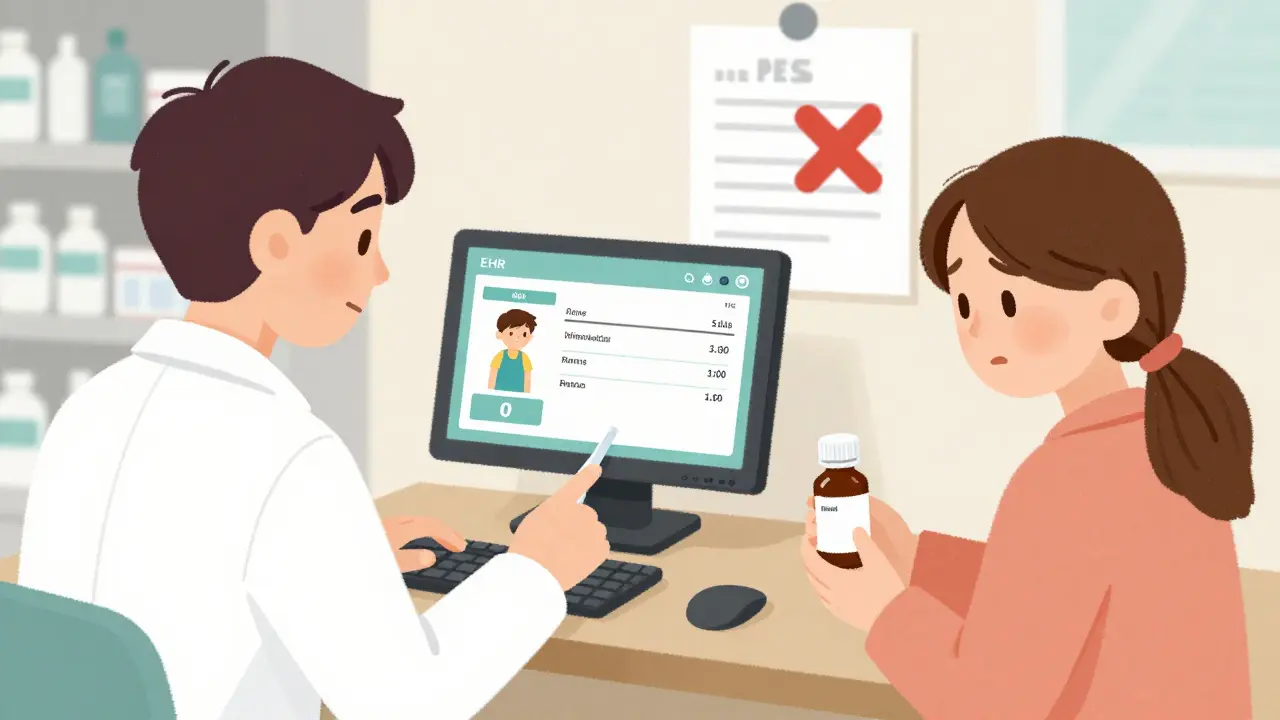
Experts agree: you don’t just check weight once. You check it at three key moments-before the order is written, before the drug is dispensed, and before it’s given to the child.- Prescription entry: If the electronic health record (EHR) doesn’t require a current weight before allowing a pediatric order, the system is broken. Many hospitals now block prescribing until weight is entered-and even better, they require it in kilograms only. No pounds. No conversions. No room for error.
- Pharmacy verification: Pharmacists aren’t just filling bottles. They’re the final safety net. A 2021 study showed that pharmacist-led weight checks reduced administration errors by 15.8 percentage points. That’s not a small win. That’s life or death. Every pediatric prescription must be double-checked against the patient’s most recent weight, documented in the EHR.
- Bedside administration: Even if the order and the pill bottle are perfect, the nurse giving the medicine must verify the weight one last time. Barcode systems that link the child’s ID, their weight, and the medication label reduce errors by 74%. If the system says the dose doesn’t match the weight, it should stop the process. No exceptions.
Technology That Actually Works
Software alone won’t fix this. But the right software, used correctly, cuts errors by nearly 90%.Computerized Provider Order Entry (CPOE) systems with built-in clinical decision support (CDSS) are the gold standard. These aren’t just alerts that pop up and get ignored. They’re smart rules: if a child weighs 12 kg and the prescribed dose of amoxicillin is 800 mg, the system calculates the correct dose (40 mg/kg) and flags anything above 100 mg/kg as potentially dangerous. A 2022 study showed that when properly tuned, these systems reduced dosing errors by 87.3%.
Automated dispensing cabinets (ADCs) that require weight verification before releasing a drug cut errors by almost 70%. But they’re not perfect. Some systems flag doses as “too high” for teenagers who are growing fast, leading to alert fatigue. Clinicians start clicking through warnings without reading them. That’s why newer systems like Epic’s Pediatric Safety Module 4.0 (released in January 2024) use growth percentiles-not just weight-to set safe limits. If a child’s dose falls outside their expected range based on age and height, the system asks: “Are you sure?”
What Doesn’t Work
Paper charts. Preprinted sheets. Handwritten weights. These are relics-and dangerous ones.A 2019 study compared hospitals using paper-based weight checks with those using digital systems. The paper group saw only a 36.5% reduction in errors. The digital group? 87%. That’s not a difference in effort. That’s a difference in safety.
Even worse are community pharmacies without access to hospital EHRs. A 2023 survey found that 28.4% of community pharmacists had at least one near-miss in the past month because they couldn’t verify the child’s weight. They had to guess. They had to call the clinic. They had to delay the prescription. That’s not good enough.
Standards That Save Lives
There are clear rules now-and they’re being enforced.- Kilograms only: The American Society of Health-System Pharmacists (ASHP) says no pounds in pediatric records. Period. All scales in pediatric units must display only kilograms, with precision to 0.1 kg for infants and 0.5 kg for older kids.
- Milliliters only: The American Academy of Pediatrics mandates that all liquid pediatric medications be labeled in milliliters, not teaspoons or tablespoons. A teaspoon can vary from 4 to 6 mL. That’s a 50% error right there.
- Weight must be current: The Institute for Safe Medication Practices says weight must be measured within 24 hours for hospitalized kids and within 30 days for outpatient visits. If a child was weighed six months ago, it doesn’t count.
- Standardized concentrations: Instead of having 10 different strengths of vancomycin or morphine, hospitals are moving to one standard concentration (e.g., 5 mg/mL). Fewer options mean fewer mistakes.
Real-World Results
Boston Children’s Hospital made these changes in 2021. Before: 14.3 weight-related errors per 10,000 doses. After 18 months: 0.8. That’s a 94% drop. But it wasn’t easy. Pharmacists spent 37% more time verifying doses at first. Nurses had to change how they documented weights. Doctors had to stop using pounds in notes.Some resisted. “It slows us down,” one pediatrician said. But when a toddler nearly died from a 10x overdose because of a pounds-to-kilograms mistake, the resistance stopped.

The Hidden Problem: Outdated Weights
Even the best system fails if the weight is wrong.A 2022 survey of 1,247 pediatric nurses found that 63.2% had seen weight documentation errors in the past year. In 41.7% of those cases, the child’s dose was delayed because no one knew how much they weighed. That’s not just a paperwork issue. It’s a safety delay.
Some hospitals now use smart scales that auto-upload weight to the EHR. Others have “weight teams” that check every new admission. In rural clinics without that tech, staff are trained to ask: “When was the last time you weighed your child?” and to write it down-right then, in kilograms.
What’s Next?
The future is smarter, not just faster. The FDA is pushing for EHRs to integrate growth charts so they can flag doses that don’t match a child’s expected weight for age. AI tools are being tested to predict a child’s weight based on age, height, and past data-catching errors before they’re entered.But the biggest change isn’t technological. It’s cultural. As Dr. Robert Wachter from UCSF said: “Technology alone cannot prevent errors. A culture of safety with non-punitive error reporting is essential.”
That means if a nurse catches a wrong weight before it causes harm, they’re praised-not punished. If a pharmacist overrides a warning and it turns out to be a real error, they’re coached-not fired. Safety isn’t about blame. It’s about learning.
What You Can Do
If you’re a parent: Always know your child’s weight in kilograms. Ask for it at every visit. Write it down. Bring it to the pharmacy.If you’re a clinician: Never skip the weight check. Even if the child “looks about right.” Even if you’ve seen them before. Even if you’re busy. That one extra second could save a life.
If you’re a pharmacist: Verify, verify, verify. Don’t trust the screen. Don’t assume the nurse got it right. Ask. Double-check. Speak up.
Every child deserves the right dose. Not the dose that’s easy to give. Not the dose that fits the old chart. The right one. Based on their weight. Today.
Why is weight so important in pediatric dosing?
Children’s bodies process medicine differently than adults. Their weight determines how much drug their system can safely handle. A dose that’s safe for a 50-pound child could be toxic for a 15-pound infant. Medications are calculated in mg/kg or mg/m², so even a small error in weight can lead to a dangerous overdose or underdose.
What’s the most common cause of pediatric dosing errors?
The most common cause is mixing up pounds and kilograms. Many caregivers report weight in pounds, but medical systems need kilograms. A simple mistake like writing 30 instead of 13.6 kg leads to a 2.2x overdose. This accounts for 40% of liquid medication errors in young children, according to the CDC.
Should pediatric weights be recorded in pounds or kilograms?
Always in kilograms. The American Society of Health-System Pharmacists (ASHP) and the American Academy of Pediatrics (AAP) both mandate that all pediatric weights be documented in kilograms only. Eliminating pounds removes the risk of conversion errors. Scales in pediatric units should display only kilograms.
How often should a child’s weight be rechecked in a hospital?
For hospitalized children, weight must be measured and documented within 24 hours of admission or any significant change in condition. For outpatient visits, it should be updated at least every 30 days. The Institute for Safe Medication Practices (ISMP) considers outdated weight one of the biggest risks in pediatric safety.
Can technology really prevent these errors?
Yes-when it’s designed well. EHR systems with clinical decision support that require weight entry before prescribing, use kilogram-only units, and flag unsafe doses can reduce errors by up to 87%. But alerts must be smart, not overwhelming. Systems like Epic’s Pediatric Safety Module 4.0 use growth percentiles to reduce false alarms, making them more effective.
What should parents do to help prevent dosing errors?
Know your child’s current weight in kilograms. Ask for it at every doctor’s visit and write it down. Bring that number to the pharmacy. Always ask how the dose was calculated and confirm the medication is labeled in milliliters, not teaspoons. If something doesn’t seem right, speak up.
Why are community pharmacies at higher risk for these errors?
Many community pharmacies don’t have access to the child’s medical record or recent weight data. Without that, pharmacists have to rely on caregiver memory or outdated records. A 2023 survey found 28.4% of community pharmacists had at least one weight-related near-miss each month because they couldn’t verify the child’s current weight.
Are there legal or regulatory requirements for weight verification?
Yes. The Leapfrog Group now requires weight verification for hospitals to earn an ‘A’ safety grade. CMS mandates weight documentation for all pediatric Medicare/Medicaid prescriptions. The FDA is also drafting new standards requiring EHRs to integrate growth charts and flag abnormal dosing. These aren’t suggestions-they’re becoming standards of care.
9 Comments
Heather McCubbin
So let me get this right we’re putting all our faith in machines to not kill kids because humans can’t count or read a scale properly? I mean wow what a world we live in where the only thing keeping a child alive is a software update and someone remembered to turn on the kilogram setting. I’m not mad I’m just impressed at how we turned medicine into a video game where you lose if you type the wrong number
Viola Li
Actually I’ve seen this work the other way. A nurse once used pounds on purpose because the system kept flagging the dose as too high for a 90-pound kid who was just big for his age. Turned out he was on steroids and needed more. The system didn’t know. The nurse did. Sometimes rules are dumb
Kevin Waters
This is one of those posts that makes you feel hopeful. I work in a pediatric ER and we implemented the kilogram-only rule last year. At first everyone groaned. Now? We don’t even think about it. The auto-upload scales and the EHR blocking prescriptions until weight is entered? Game changer. I’ve seen nurses stop a dose because the system flagged it and it turned out the mom had written down last year’s weight. One extra second saved a kid from a seizure. This stuff works if we just stick to it
Gina Beard
Weight is not a number. It’s a story. A child’s weight changes with grief. With hunger. With illness. With joy. A machine doesn’t see that. It sees a decimal point. And that’s the tragedy
Don Foster
Anyone who still uses pounds in a medical setting should be banned from touching a clipboard. The CDC data is clear. 40 percent of errors come from this one dumbass habit. Its like driving with your eyes closed and blaming the road. Epic’s new module? Finally. Took them long enough. Why are we still having this conversation in 2024
siva lingam
So you want us to spend 10x more time checking weights so the system doesn’t kill kids. Cool. Meanwhile in India we just give the same dose to every kid under 10. Works fine. Probably more efficient
Luke Davidson
I’ve seen this up close. My niece got a 5x overdose because the clinic had her weight from two years ago. She was in the PICU for three days. We were lucky. But here’s the thing: the nurse who caught it? She didn’t get a medal. She got a sigh and a ‘we’ll update the chart later.’ That’s the real problem. We fix the tech but we don’t fix the culture. If we rewarded people for speaking up instead of punishing them for slowing things down… we wouldn’t need all these alerts. We’d just have better humans
Karen Conlin
Let’s not forget the parents. I used to think this was all about hospitals and pharmacists. Then I started asking for my kids’ weight in kg at every visit. I write it on my phone. I bring it to the pharmacy. I ask the pharmacist to double-check the ml amount. I used to feel like a nuisance. Now I feel like a lifeline. And guess what? Other parents are starting to do it too. It’s not just the system. It’s us. We’re part of the safety net. And we’re not powerless
Sharon Biggins
just wanted to say thank you for writing this. my son had a near miss last year and i didnt know what to do. now i always ask for the weight in kg and i make sure the label says ml not tsp. its small things but they matter. i hope more people read this