
When you’ve had a serious allergic reaction to a medication-like hives, swelling, trouble breathing, or anaphylaxis-it’s natural to assume you’ll never be able to take that drug again. But what if that drug is the only one that can treat your cancer, your autoimmune disease, or a life-threatening infection? For many people, quitting the medication isn’t an option. That’s where drug desensitization comes in.
What Is Drug Desensitization?
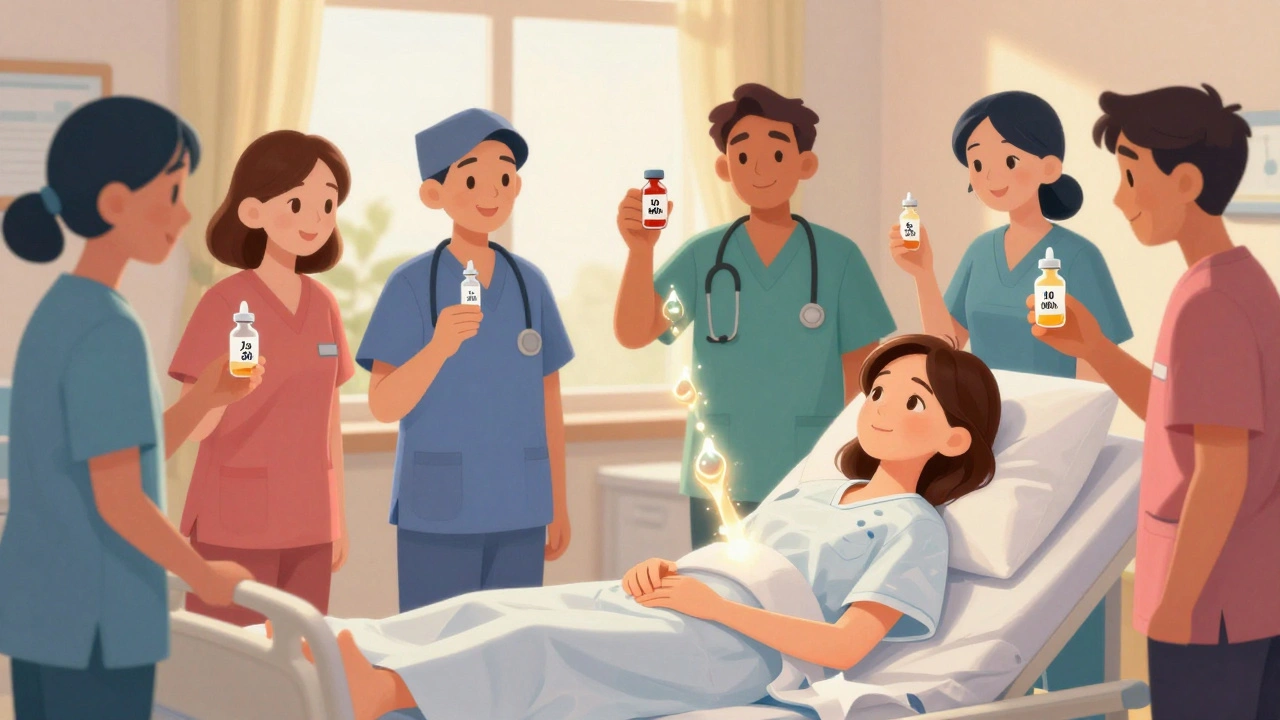
Drug desensitization is a carefully controlled medical procedure that lets people with confirmed drug allergies safely receive the very medication they reacted to. It’s not a cure. It doesn’t change your immune system permanently. But it creates a temporary window where your body can tolerate the drug, step by step, under close supervision. This isn’t something you try at home. It’s done only in hospitals or specialized allergy clinics with trained teams ready to handle emergencies. The goal? To get you to your full therapeutic dose without triggering a dangerous reaction. It’s been used successfully for decades, especially in oncology, rheumatology, and infectious disease care.When Is It Used?
Desensitization isn’t for every allergic reaction. It’s reserved for situations where:- There are no safe alternative medications
- The drug is essential for survival or effective treatment
- The reaction was IgE-mediated (like anaphylaxis, hives, or swelling) or non-IgE-mediated but severe (like severe asthma flare-ups from aspirin)
- Chemotherapy drugs like carboplatin or paclitaxel for cancer patients
- Antibiotics like penicillin or vancomycin for people with cystic fibrosis or resistant infections
- Monoclonal antibodies like rituximab, infliximab, or cetuximab for autoimmune diseases
- Aspirin and other NSAIDs for people with asthma or chronic sinusitis
- Iron infusions for severe anemia
How Does It Work?
The process is like slowly turning up a volume knob until you can hear the music without it blasting. You start with a tiny fraction of the dose-sometimes as low as one ten-thousandth of the full amount-and gradually increase it over hours. For intravenous drugs (like chemo or antibiotics), the most common method is a 12-step protocol:- Start with a dose of 1/10,000th of the full therapeutic dose
- Double the dose every 15 to 30 minutes
- Use three different concentrations: 1:100, 1:10, and undiluted
- Reach the full dose in about 5 to 6 hours
- Blood pressure
- Heart rate
- Oxygen levels (via pulse oximeter)
- Respiratory status (especially if you have asthma)
- Skin for rashes or swelling
What Happens If You Have a Reaction?
Reactions during desensitization aren’t rare, but they’re manageable. That’s why the procedure must be done in a setting with immediate access to emergency drugs: epinephrine, antihistamines, corticosteroids, and IV fluids. If a mild reaction happens-like a rash or mild wheezing-the team might:- Pause the procedure
- Give antihistamines or steroids
- Wait 30 to 60 minutes
- Resume at a lower dose increment
Who Should NOT Undergo Desensitization?
Not everyone is a candidate. Desensitization is dangerous-and sometimes deadly-if done on the wrong person. You should NOT be desensitized if you’ve had:- Stevens-Johnson syndrome
- Toxic epidermal necrolysis
- Erythema multiforme with blistering or skin peeling
- Drug-induced hepatitis or kidney inflammation (nephritis)
- Serum sickness reactions
Is the Tolerance Permanent?
No. That’s the biggest thing to understand. Desensitization creates temporary tolerance. Once you stop taking the drug for more than a few days, your immune system can “forget” the tolerance-and react again the next time you take it. That’s why:- If you miss a dose by more than 48 hours, you may need to restart the entire desensitization process
- If you’re on daily therapy (like aspirin for heart disease), you must take it every day without skipping
- If you’re on a course of antibiotics, you complete the full course without interruption
What Does the Process Look Like in Practice?
Here’s a real-world example: A 58-year-old woman with ovarian cancer develops a severe rash and low blood pressure after her first dose of carboplatin. She’s told she must stop chemotherapy. Her oncologist refers her to a specialized allergy clinic. After confirming the allergy with skin testing and blood tests, a desensitization protocol is planned. She’s admitted to the hospital. Nurses monitor her continuously. The team starts with a 0.1 mg dose of carboplatin diluted in saline. Every 20 minutes, the dose doubles. By hour 5, she’s received the full 300 mg dose without another reaction. She completes her full course of chemotherapy. Her cancer goes into remission. She’s alive today because desensitization gave her a chance. Another case: A 32-year-old man with Crohn’s disease needs infliximab, but he broke out in hives after his first infusion. His rheumatologist and allergist team design a 12-step IV protocol. He’s monitored for six hours. He completes the dose. He’s now been on infliximab for three years without issue-because he never skips a dose.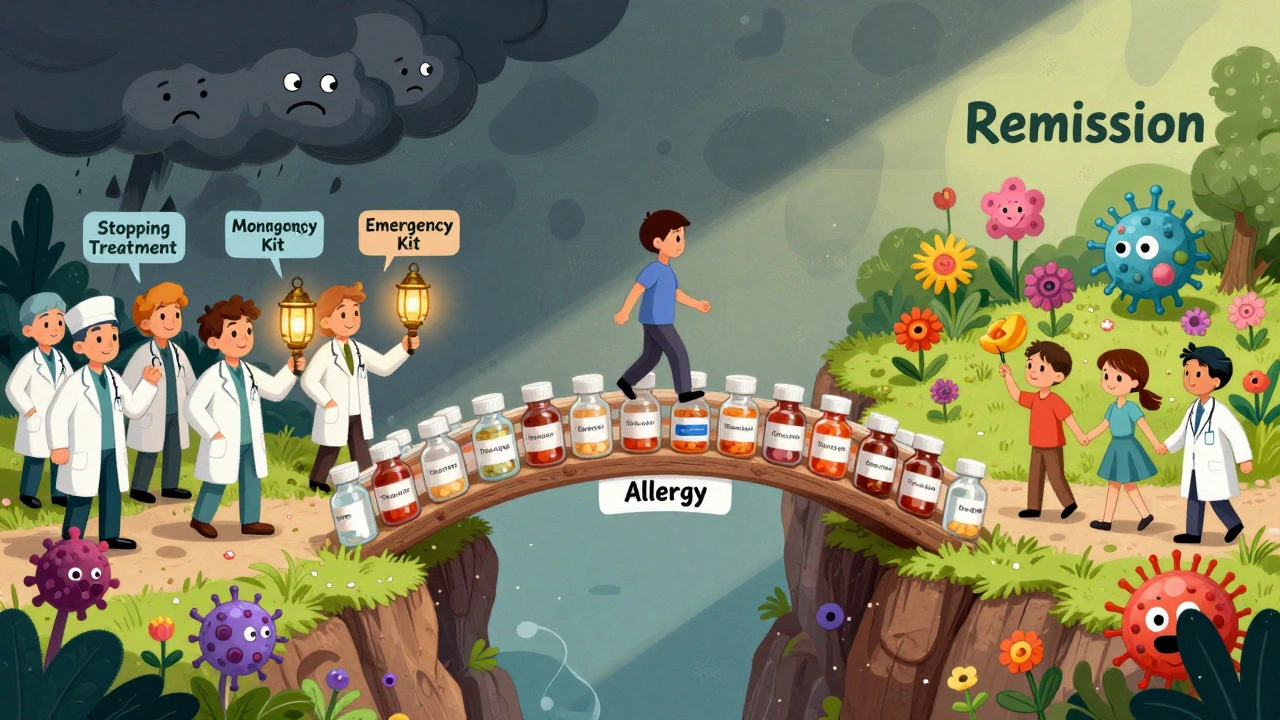
Where Can You Get This Done?
This isn’t available at every clinic. You need access to:- An allergy/immunology specialist trained in desensitization
- A hospital or outpatient center with emergency equipment
- A team that includes nurses, physicians, and pharmacists experienced in the protocol
What’s New in 2025?
The field is evolving fast. New targeted therapies-like immune checkpoint inhibitors for cancer or tyrosine kinase inhibitors-are causing more allergic reactions. The American Academy of Allergy, Asthma & Immunology updated its guidelines in 2022 to include protocols for these newer drugs. Researchers are also studying whether pre-medication with antihistamines or steroids can reduce reaction risk during desensitization. Early data suggests it helps, but the core protocol remains unchanged: slow, controlled, monitored dosing. The trend is clear: as medicine becomes more personalized, more drugs will be powerful but allergenic. Desensitization is becoming a standard tool, not a last resort.Final Thoughts
If you’ve been told you can never take a drug again because of an allergy, don’t accept that as the final answer. Ask: Is there a safe alternative? If not, is desensitization an option? This isn’t experimental. It’s evidence-based, life-saving, and widely used in top hospitals around the world. It requires expertise, planning, and patience-but for many, it’s the difference between life and death. You don’t have to give up your treatment. You just need the right team to help you get back on track.Can I try drug desensitization at home?
No. Drug desensitization must be done under direct medical supervision in a facility equipped to handle anaphylaxis. Attempting this at home is extremely dangerous and can be fatal. Only trained allergy specialists with access to emergency medications like epinephrine should perform this procedure.
How long does a drug desensitization take?
It depends on the drug and route. Intravenous desensitization for antibiotics or chemotherapy usually takes 5 to 6 hours. Oral desensitization for aspirin or NSAIDs can take days, with doses given every hour or longer. The goal is to reach the full therapeutic dose safely, not to rush.
Is drug desensitization safe?
Yes, when performed by experienced teams using standardized protocols. Success rates exceed 90% for IgE-mediated reactions. However, there are risks-mild reactions like hives are common, and severe reactions like anaphylaxis can occur. That’s why it’s only done in controlled settings with emergency equipment ready.
Will I be allergic to the drug forever after desensitization?
No. Desensitization creates temporary tolerance. If you stop taking the drug for more than 48 hours, your body may lose tolerance and react again. That’s why you must take the medication daily without interruption if you’re on long-term therapy.
What if I miss a dose during desensitization?
If you miss a dose by more than 48 hours, you’ll likely need to restart the entire desensitization process. The tolerance doesn’t last. Skipping doses can cause your allergy to return quickly, putting you at risk for a severe reaction if you resume without restarting the protocol.
Can children undergo drug desensitization?
Yes. Children with severe allergies to antibiotics, chemotherapy, or monoclonal antibodies can be desensitized under the same strict protocols as adults. Pediatric allergy centers have adapted dosing schedules and monitoring to suit younger patients. The success rates are similar to those in adults.
Are there any alternatives to desensitization?
Sometimes. If there’s another drug in the same class that doesn’t cause a reaction, that’s preferred. But for many medications-especially chemotherapy, monoclonal antibodies, and certain antibiotics-there are no effective alternatives. In those cases, desensitization is the only option to continue treatment.
How do I know if my reaction was truly allergic?
Not all reactions are allergic. A rash could be a side effect. Nausea or headache usually isn’t allergic. True drug allergies involve the immune system and include symptoms like hives, swelling, wheezing, or anaphylaxis. Skin tests and blood tests (like IgE levels) can help confirm it. Always get evaluated by an allergy specialist before assuming a reaction is allergic.
11 Comments
Louis Llaine
So let me get this straight... you're telling me I can survive cancer by slowly injecting poison into my veins while a team of nurses watches me like a hawk? Sounds like a bad episode of House. I'll stick with my herbal tea and hope for the best.
Ted Rosenwasser
The 12-step IV protocol referenced is based on the 2010 JACI guidelines, but newer data from the 2023 JACI meta-analysis (DOI: 10.1016/j.jaci.2023.01.027) suggests that modified stepwise protocols with 15-minute intervals yield higher success rates in IgE-mediated reactions, particularly with monoclonal antibodies. The key variable is the pharmacokinetic half-life of the drug, not just the dilution ratio. Most community clinics still use outdated protocols because they lack access to real-time basophil activation testing.
Ashley Farmer
I know someone who went through this with carboplatin after her second round gave her anaphylaxis. She’s been in remission for 5 years now. It’s terrifying to think about, but having a team that knows exactly what they’re doing makes all the difference. If you’re scared, ask for a social worker or patient advocate-they’ll help you navigate the system. You’re not alone in this.
Kyle Flores
i had to do this for vancomycin after i got sick with c diff and they had no other options. it was the most terrifying 6 hours of my life. they started with like a drop of the stuff and i kept thinking ‘this is it, im gonna die’ but i made it. now i take it every 2 weeks like clockwork. dont let fear stop you from asking your doc about it. its scary but it works.
Ryan Sullivan
The fundamental flaw in this article is the conflation of IgE-mediated hypersensitivity with T-cell-mediated reactions. Desensitization is not indicated for SJS/TEN, yet the author fails to emphasize that these are distinct immunological pathways requiring entirely different management paradigms. Furthermore, the term ‘temporary tolerance’ is misleading-it’s pharmacodynamic modulation, not immunological reprogramming. This piece reads like a marketing brochure for hospital allergy departments.
Wesley Phillips
So basically... you're saying if you're allergic to chemo, you just slowly drink the poison until your body goes ‘ohhh okay i guess this is fine now’? 🤯 I mean... that's either genius or the plot of a sci-fi horror movie. Either way, I'm glad someone's doing it. 🙌
Olivia Hand
I’ve been reading about this for weeks now. What’s the actual data on long-term immune memory after desensitization? Is there any research tracking whether repeated exposure alters the immune system’s baseline reactivity over time? Or is it just a mechanical bypass with zero biological adaptation?
Desmond Khoo
This gave me chills. My cousin did this for her infliximab and now she’s hiking again. If you’re scared, you’re not wrong-but you’re also not out of options. Talk to your doctor. Ask for a referral. Don’t let fear make you give up. 💪❤️
Sam Mathew Cheriyan
Wait... so you're telling me the government and Big Pharma don't want you to know you can just take tiny doses of your allergic drug to 'trick' your body? Sounds like a cover-up. I bet they're hiding the real cure: CBD oil and moon dust. Also, why do they always use IV? Maybe the real issue is the preservatives in the solution?
Ernie Blevins
This is just a fancy way to say ‘you’re gonna die anyway so let’s torture you a little longer’. Why not just give them the drug and let them die? Less paperwork.
Nancy Carlsen
I work in a pediatric oncology unit. We’ve done this with kids as young as 3. The parents are terrified, but the kids? They just want to watch cartoons. We turn it into a game-each step is a level. They get a sticker. They feel like heroes. And they are. 💛