
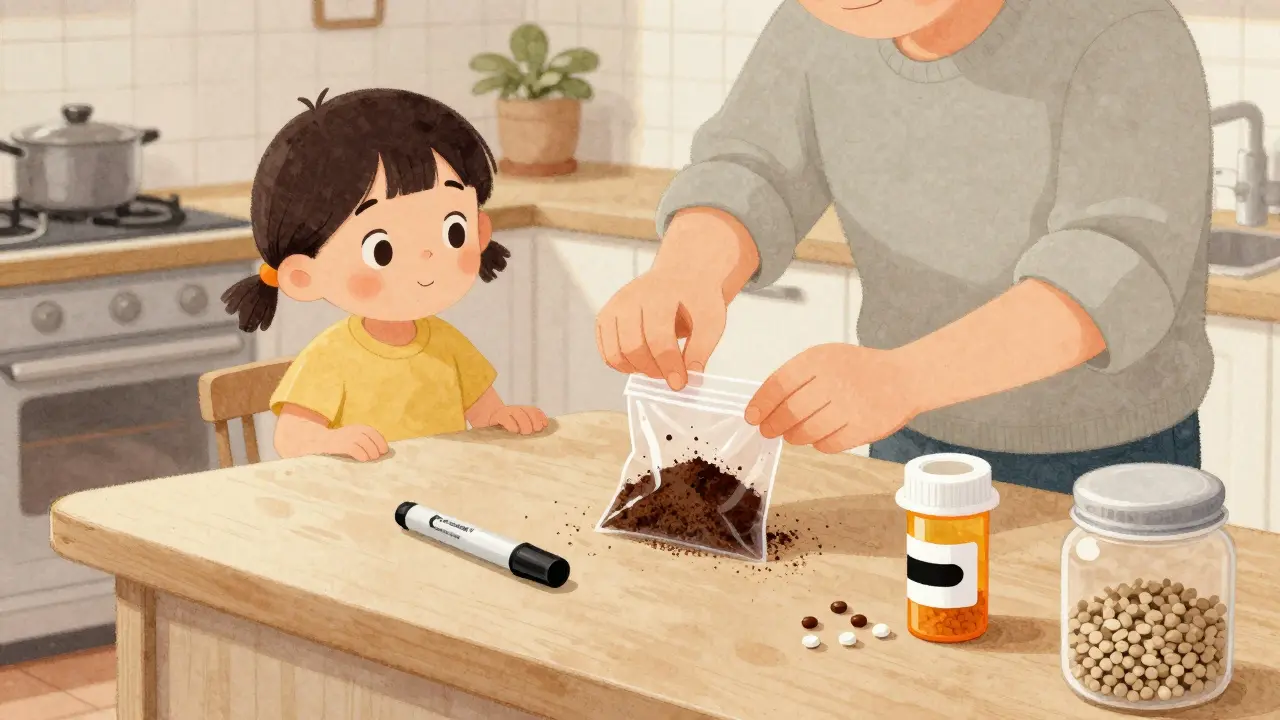
Keeping unused or expired medications in your medicine cabinet isn’t just messy-it’s dangerous. Every year, thousands of children accidentally swallow pills they find at home. Thousands more misuse prescription drugs pulled from family cabinets. And every time someone flushes a pill down the toilet or tosses it straight into the trash, tiny traces of drugs end up in our water and soil. The good news? You can stop this. If you don’t have access to a drug take-back program, disposing of medications in household trash the right way is your safest, most practical option.
Why You Can’t Just Toss Pills in the Trash
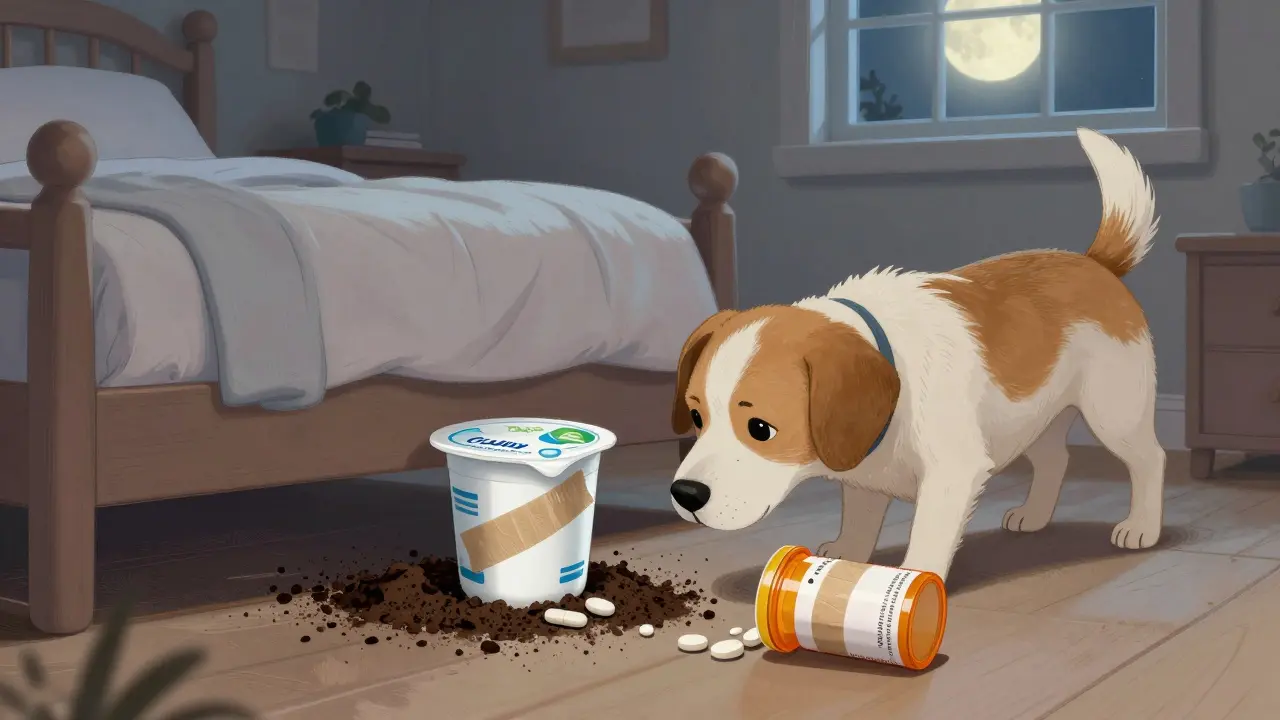
Throwing pills straight into the garbage might seem harmless, but it’s not. Prescription bottles with your name and dosage still visible can be picked up by someone looking for drugs. Children, pets, or even curious teens can get into unsealed containers. Even if the bottle is empty, leftover powder or liquid can leak and contaminate landfill runoff. The FDA estimates that 15% to 30% of prescribed medications go unused. That’s millions of pills sitting in homes, waiting to cause harm.The FDA’s Official Protocol for Trash Disposal
The U.S. Food and Drug Administration (FDA) has clear, step-by-step rules for disposing of medications in household trash when take-back programs aren’t available. This method reduces the risk of misuse and environmental harm by up to 75%. Here’s exactly how to do it:- Check if your medication is on the FDA’s Flush List. There are only 15 medications approved for flushing, mostly powerful opioids like fentanyl patches and oxycodone. If your drug isn’t on this list, do NOT flush it. You can find the current list on the FDA’s website or ask your pharmacist.
- Remove pills from their original bottles. Don’t leave them in the prescription vial. Those bottles have your name, address, and prescription number-personal information protected under HIPAA. Leaving them visible risks identity theft or drug diversion.
- Mix pills with something unappealing. Use used coffee grounds, cat litter, dirt, or even peanut butter. The goal is to make the mixture look and smell disgusting. Use at least a 1:1 ratio-equal parts medicine and substance. The FDA specifically warns against crushing tablets or capsules. Crushing can release dangerous fumes or make the drug easier to extract.
- Seal the mixture in a container. Use a resealable plastic bag, an empty yogurt tub, or a small plastic container with a tight lid. This prevents leaks and keeps curious hands (or noses) away. A sealed container is non-negotiable.
- Hide your personal info on the empty bottle. Take a permanent marker and black out your name, address, and prescription number. If you don’t have a marker, cover the label with duct tape or scratch it off with a knife. Then throw the bottle in the recycling-if your local program accepts #5 plastic. Most don’t. If in doubt, toss it in the trash.
- Put the sealed container in your regular household trash. Don’t put it in recycling. Don’t compost it. Just send it to the landfill, safely contained.
What Not to Do
Many people make simple mistakes that undo all the safety steps:- Don’t flush unless it’s on the FDA’s list. Flushing sends drugs straight into water systems. Even small amounts build up over time and harm aquatic life. In 2020, the USGS found pharmaceutical compounds in 80% of U.S. waterways.
- Don’t just dump pills in the trash. No mixing? No sealing? That’s how accidental poisonings happen. The FDA’s 2021 data shows 37% of improper disposal cases involved unobscured labels.
- Don’t crush tablets. Some medications are designed to release slowly. Crushing them can make them dangerous to inhale or absorb through skin.
- Don’t rely on “flushable” bags sold online. Most are unnecessary. Coffee grounds and cat litter work just as well-and cost nothing.
What If You Can Find a Take-Back Program?
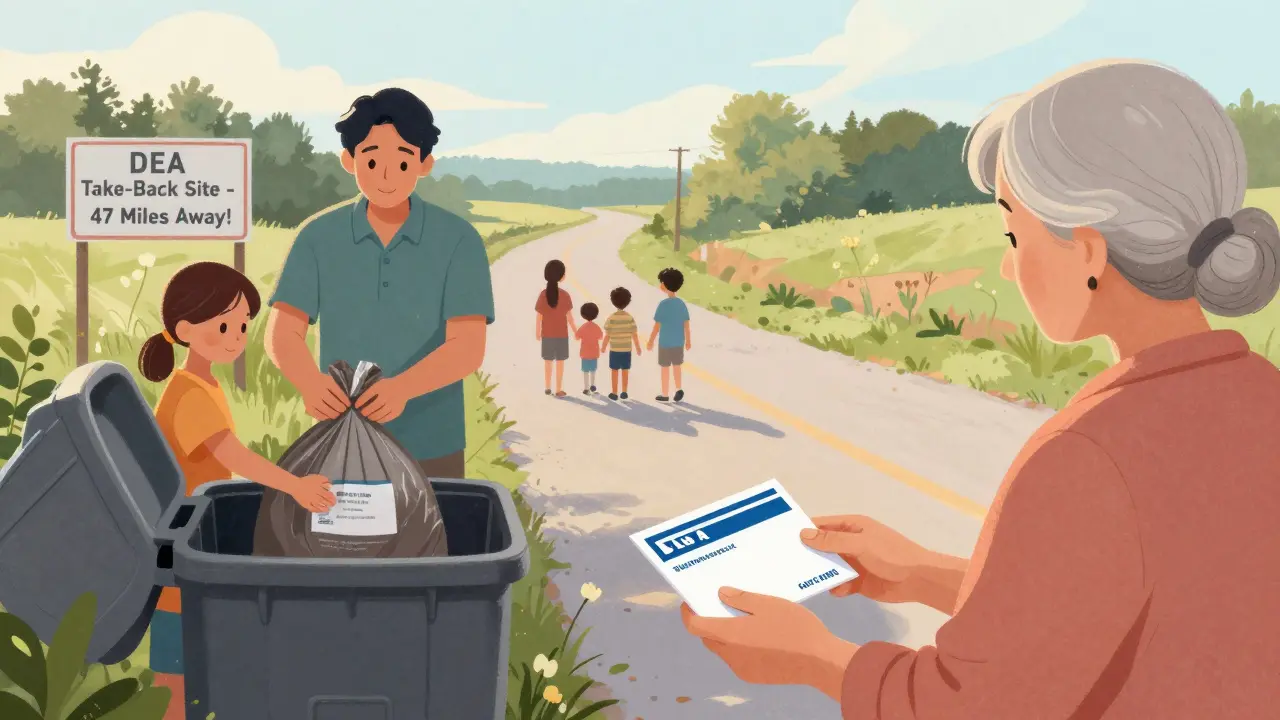
Drug take-back programs are the gold standard. They collect medications from homes and destroy them in high-temperature incinerators, eliminating 99.8% of diversion risk. The DEA runs over 14,600 collection sites across the country, including most Walgreens, CVS, and Walmart pharmacies. You can find the nearest one using the DEA’s online locator or by calling 1-800-882-9539. But here’s the reality: in rural areas, only 42% of counties have consistent access. If you live far from a drop-off point, the FDA’s trash method is your best and legally accepted alternative.Special Cases: Liquids, Patches, and Injectables
Not all medications are pills. Here’s how to handle others:- Liquid medications: Pour them into a sealable container with coffee grounds or cat litter. Add water to dilute, then seal and toss. Don’t pour down the sink.
- Fentanyl patches: These are on the FDA’s Flush List because even a used patch can deliver a lethal dose. Fold the sticky side inward, flush it immediately, then throw the empty packet in the trash.
- Injectables (syringes, pens): These go in a sharps container. If you don’t have one, use a sturdy plastic bottle (like a laundry detergent bottle), seal it tightly, label it “SHARPS,” and put it in the trash. Never recycle sharps containers.
State Laws Can Override Federal Rules
California has stricter rules than the federal government. Since January 1, 2024, SB 212 requires all pharmacies with four or more locations in the state to offer free medication disposal kiosks. And under California law, you are NOT allowed to flush any medication-even those on the FDA’s list. If you live in California, always use a take-back kiosk or dispose in trash using the FDA’s mixing method. Never flush. Other states may have similar rules. Check your state’s health department website if you’re unsure.Why This Matters Beyond Your Home
Improper disposal isn’t just a personal risk-it’s a public health crisis. In 2022, the EPA reported that pharmaceutical contamination affects 41 million Americans through drinking water sources. Studies show that 12-18% of certain drugs still leach into landfill leachate, even when properly mixed and sealed. That’s why your actions matter. The good news? When done right, household disposal reduces diversion risk by 90%. That means fewer overdoses, fewer poisonings, and less pollution. You’re not just cleaning out your cabinet-you’re protecting your community.What’s Changing in 2026?
The FDA is testing curbside medication pickup in 12 communities. If successful, this could become a nationwide service by 2027. Meanwhile, mail-back disposal envelopes are growing in popularity-especially since Medicare Part D now covers them for seniors. And new water-soluble packaging is in clinical trials. In the future, you might never need to dispose of pills at all. But for now, the method hasn’t changed. If you can’t get to a drop-off site, mix, seal, obscure, and trash. It’s simple. It’s safe. And it’s the law.Can I flush any medication if I don’t have trash bags?
No. Only 15 specific medications on the FDA’s Flush List should ever be flushed, and that’s because they’re extremely dangerous if misused-even by accident. If you don’t have trash bags, use a plastic container, jar, or even a sealed food container. Mix the pills with coffee grounds or dirt, seal it, and place it in your bin. Never flush unless it’s on the official list.
What if I mix medications with food like peanut butter? Will pets still eat it?
Pets are less likely to eat a mixture of pills and peanut butter if it’s sealed in a container and placed in the trash. But the real goal is to make it unappealing and inaccessible. Mixing with used coffee grounds or cat litter is even better-these have strong smells that deter animals. Never leave the mixture in an open bowl or on the counter.
Do I need to remove the pills from blister packs?
Yes. Blister packs are still containers with your name on them. Remove the pills and mix them with the unappealing substance. You can throw the empty blister pack in the recycling if your local program accepts #5 plastic. If not, cut out the pill section and toss the rest in the trash after obscuring any labels.
Is it safe to dispose of expired vitamins and supplements in the trash?
Yes. Vitamins and supplements aren’t regulated like prescription drugs, but they still pose risks if children or pets get into them. Mix them with coffee grounds or cat litter, seal them in a container, and throw them in the trash. Don’t just toss the bottle-obscure your name and address first.
Can I recycle the empty prescription bottles?
Most curbside recycling programs don’t accept #5 amber prescription bottles because they’re contaminated with residual medication and hard to clean. The American Chemistry Council found that 87% of U.S. municipalities reject them. If your local program accepts them, make sure the label is completely removed or blacked out. Otherwise, toss them in the trash.
8 Comments
TooAfraid ToSay
So let me get this straight-you’re telling me I should mix my Adderall with cat litter and throw it in the trash like it’s a dead hamster? What’s next, burying my Xanax in the backyard with a little cross made of toothpicks? I’m not disposing of meds, I’m staging a performance art piece called ‘The Sadness of Modern Healthcare.’
Dylan Livingston
How profoundly naive of you to assume that the average American household even HAS cat litter or coffee grounds lying around-let alone the emotional bandwidth to engage in this performative ritual of responsible disposal. The real tragedy isn’t pharmaceutical pollution-it’s the systemic failure to provide accessible, dignified disposal infrastructure. And yet, here we are, asking single mothers working two jobs to become amateur toxicologists while pharmaceutical CEOs vacation in the Maldives. How very… American.
Anna Hunger
Thank you for this meticulously researched and clearly articulated guide. The FDA’s protocol is not only scientifically sound but ethically imperative. I have distributed this information to my senior care group, and we have implemented a monthly medication disposal day using the mixing and obscuring method you outlined. Proper disposal is not a suggestion-it is a civic duty. Please continue advocating for public health with this level of precision and care.
Vicky Zhang
OMG I just read this and I’m crying. I had so many old pills in my bathroom cabinet and I never knew what to do with them. I thought flushing was fine. I feel so guilty. But now I’m gonna do it right-coffee grounds, seal it up, black out the label. I’m gonna tell my whole family. This is so important. We gotta protect our kids. Thank you thank you thank you.
Allison Deming
It is deeply irresponsible to suggest that household disposal is an acceptable alternative to centralized take-back programs. The environmental degradation caused by even properly sealed pharmaceutical waste is not negligible. Landfills are not inert repositories-they are dynamic ecosystems where leachate migrates, bioaccumulates, and contaminates aquifers. To normalize this practice is to normalize negligence. If you are not within a 10-mile radius of a DEA-authorized collection site, you are not living in a just society.
Susie Deer
Y’all are overcomplicating this. If you dont have a take back dont flush. Just throw the damn pills in the trash. Who cares if a raccoon gets into it? Its not like theyre gonna start a meth lab. And dont waste time blacking out labels. The government already knows who you are anyway. Just be practical.
Andrew Freeman
lol why do we even have rules for this. I just dump em in the trash. If a kid gets into em thats on the parents. If the water gets polluted thats on the pharma companies. Im not mixing my tylenol with coffee grounds like some kind of survivalist. Also why are we still using #5 plastic bottles? They should be biodegradable. Also why is the FDA even involved in this? Sounds like overreach to me.
says haze
There’s a deeper metaphysical question here: when you dissolve your anxiety into coffee grounds and bury it in the landfill, are you erasing the pill-or the self that needed it? The ritual of disposal becomes a secular sacrament: we perform our compliance to a system that profits from our dependence, then pretend we’ve cleansed ourselves by sealing it in a yogurt tub. The real crisis isn’t pharmaceutical runoff-it’s the existential void that makes us need the drugs in the first place. We are not disposing of medicine. We are disposing of our collective despair.