
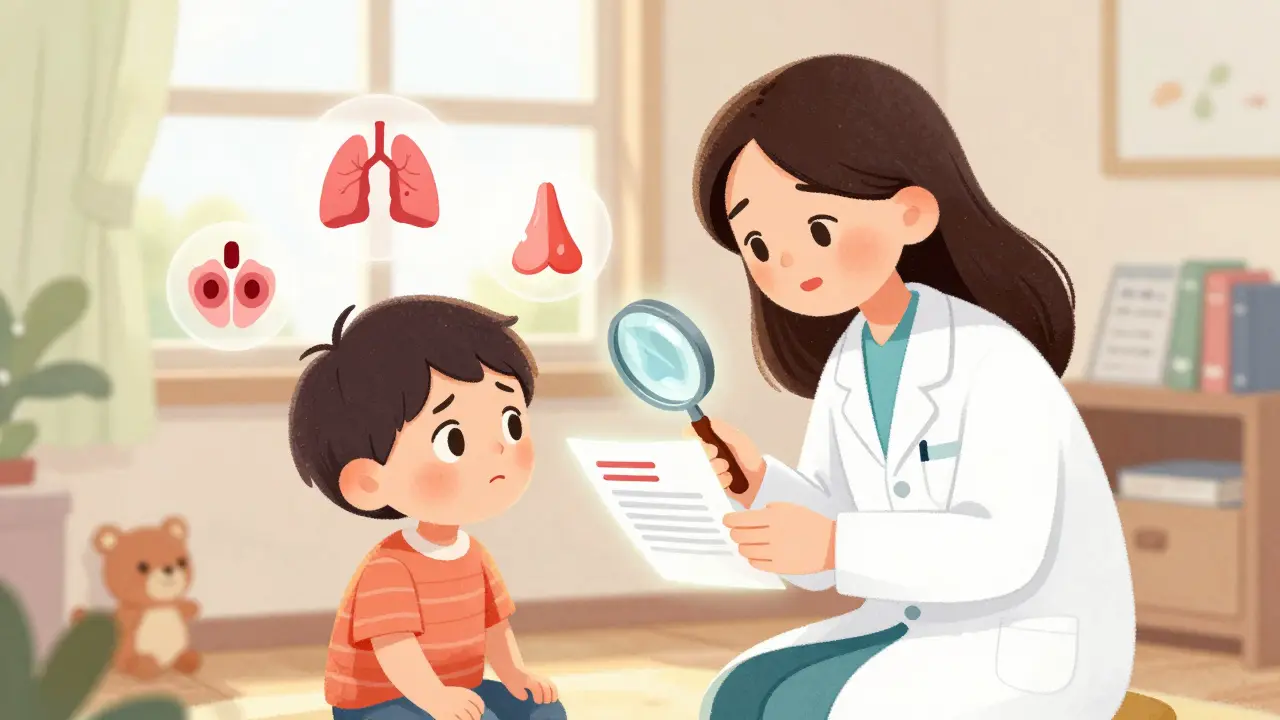
Most kids get sick. A cold here, an ear infection there - it’s normal. But when infections keep coming back, no matter how many antibiotics you try, something deeper might be going on. Recurrent infections aren’t just bad luck. They could be the first sign of a hidden immune system problem - one that, if caught early, can change a child’s life.
When Is a Recurrent Infection a Red Flag?
Healthy children can have up to 12 respiratory infections a year, especially if they’re in daycare or school. That’s normal. But if your child has four or more ear infections in a year, two or more serious sinus infections, or two or more pneumonias, it’s time to look beyond typical viruses. These aren’t just colds - they’re signals.
Other warning signs include:
- Deep skin or organ abscesses that won’t heal
- Oral thrush (white patches in the mouth) that lasts past age 1
- Infections that don’t improve after two months of antibiotics
- Needing IV antibiotics just to clear a simple infection
- Two or more deep-seated infections like septicemia or meningitis
- Failure to gain weight or grow normally
- A family history of early deaths from infections or known immune disorders
One of the most telling signs? Infections caused by organisms that rarely affect healthy people - like Pneumocystis jirovecii pneumonia or persistent candida in the lungs. These are called opportunistic infections. If they show up, it’s not a coincidence. It’s a red flag.
What Does the Body Show Beyond Infections?
Physical clues matter just as much as infection patterns. During a check-up, a doctor might notice:
- Absent tonsils or lymph nodes - seen in nearly 80% of severe combined immunodeficiency (SCID) cases
- Spider-like blood vessels on the skin (telangiectasias) - a hallmark of ataxia-telangiectasia
- Chronic diarrhea with poor weight gain - often tied to antibody deficiencies
- Autoimmune conditions like low platelets or anemia - which can accompany immune disorders like CVID
These signs don’t always show up together. Sometimes, the only clue is a child who’s always sick but doesn’t look obviously ill. That’s why doctors need to connect the dots - not just treat each infection as it comes.
Basic Blood Tests: The First Step
If red flags are present, the workup starts with simple blood tests. A complete blood count (CBC) with manual differential is the first step. In children over one year, a lymphocyte count below 1,500 cells/μL raises concern. In babies under one, anything below 3,000 cells/μL needs attention.
Next come immunoglobulin levels: IgG, IgA, and IgM. But here’s the catch - these numbers change with age. A 3-month-old with an IgG of 243 mg/dL is normal. An 8-year-old with the same level is severely deficient. Many pediatricians miss this. I’ve seen cases where a child’s IgG was 420 mg/dL - just above the “normal” cutoff - but way below what’s expected for their age. That child had Common Variable Immunodeficiency (CVID), but it was missed for over a year.
Normal IgG levels rise with age:
- 3 months: ~243 mg/dL
- 6 months: ~558 mg/dL
- By age 5: adult range - 700 to 1,600 mg/dL
Low IgG alone isn’t enough. You need to see if the body can make antibodies when challenged. That’s where vaccine testing comes in.
Testing Antibody Function: The Gold Standard
A low IgG level doesn’t always mean the immune system is broken. Maybe it’s just slow to mature. The real test is whether the body can respond to vaccines.
After giving a tetanus or diphtheria shot, doctors wait 4 to 6 weeks and check IgG levels. A protective level is at least 0.1 IU/mL. For pneumococcal vaccines (which use polysaccharides), the target is 1.3 μg/mL or higher. If the response is weak or absent, it’s not just low antibodies - it’s faulty function.
This step is often skipped. Too many patients get IV immunoglobulin (IVIG) without ever proving they can’t make their own antibodies. That’s risky and unnecessary. Studies show 22% of people on IVIG don’t actually need it.
Looking Deeper: Flow Cytometry and Genetic Testing
If basic tests suggest a problem, the next step is flow cytometry. This test counts different types of immune cells - T cells (CD3, CD4, CD8), B cells (CD19), and natural killer cells (CD56). A CD3+ T-cell count below 1,000 cells/μL in a child over two years is abnormal. It points to T-cell deficiencies like SCID or DiGeorge syndrome.
Now, genetic testing is changing the game. In 2023, the FDA approved next-generation panels that scan 484 immune-related genes. These tests find the exact genetic cause in 35% of suspected cases - nearly double the rate of older methods. For kids with SCID, finding the mutation early means faster treatment and a 94% survival rate if treated before 3.5 months of age. Delay diagnosis, and survival drops to 69%.
But these tests aren’t always easy to get. In many places, access is limited. That’s why experts stress starting with the basics - CBC, immunoglobulins, vaccine response - before jumping to expensive genetic panels.
Ruling Out Other Causes First
Not every recurrent infection is due to immunodeficiency. In fact, nearly half the time, something else is going on. Anatomical problems like a deviated septum, cystic fibrosis, or chronic sinus blockages can mimic immune disorders. Inhaled foreign bodies - like a small toy part - cause recurrent pneumonia in 18% of cases.
And then there are secondary causes. Up to 30% of adults diagnosed with CVID actually have another condition: lupus, lymphoma, or medications like long-term steroids or chemotherapy. Treating the immune system when the real problem is cancer? That’s dangerous.
That’s why the diagnostic process isn’t linear. You don’t just test for immunodeficiency. You rule out everything else first. A chest X-ray. A sweat test for cystic fibrosis. A CT scan of the sinuses. You don’t skip these steps.
What Happens After Diagnosis?
Once a diagnosis is confirmed, treatment is targeted. For antibody deficiencies like CVID or X-linked agammaglobulinemia, regular IVIG or subcutaneous infusions replace missing antibodies. For T-cell defects, bone marrow transplants can be curative - especially in infants.
But prevention matters just as much. Patients need live vaccines avoided (like MMR or varicella) until their immune status is confirmed. They need pneumococcal and flu shots every year. And they need to avoid environments with high infection risk - until they’re protected.
Early diagnosis doesn’t just prevent infections. It prevents lung damage, liver disease, and even cancer. People with untreated CVID have a 25% lifetime risk of developing lymphoma. Catch it early, and that risk drops dramatically.
Why So Many Cases Are Still Missed
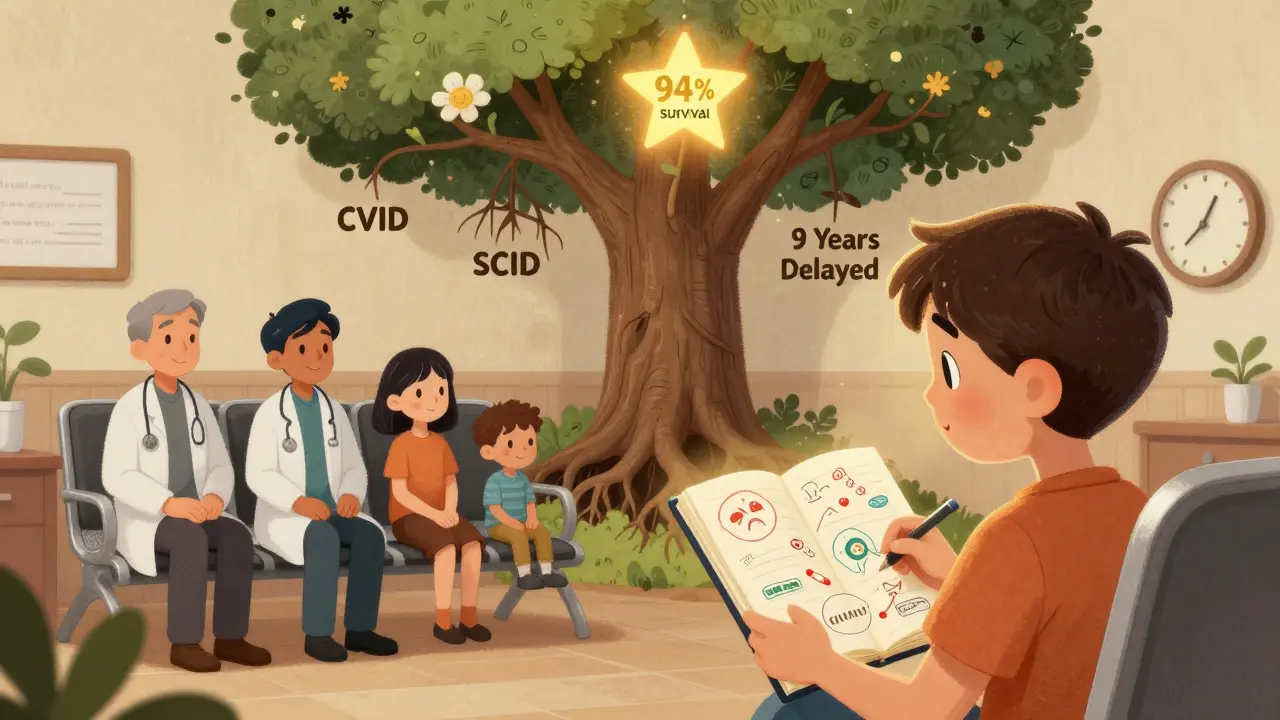
Despite all the guidelines, most patients wait years for a diagnosis. The average delay? Nine years. That’s nine years of missed school, hospital visits, and antibiotics that don’t work.
Why? Because many doctors don’t know the red flags. Or they think, “It’s just a kid - they get sick.” Or they misread lab values. One study found 41% of pediatricians started IVIG for transient hypogammaglobulinemia of infancy - a harmless, temporary condition that resolves on its own.
Tools like the Jeffrey Modell Foundation’s “10 Warning Signs” campaign have helped. Since 2015, PID diagnoses have risen 37% in the U.S. because more parents and doctors are asking the right questions.
But the gap remains. In low-income countries, basic immunoglobulin testing isn’t available. In the U.S., access to functional antibody testing is still limited in rural areas. That’s why every primary care provider needs to know: if a child has recurrent infections and doesn’t respond to standard care - don’t wait. Refer early.
What Parents Should Do
If your child has multiple infections and isn’t improving:
- Keep a detailed log: type of infection, how often, how long it lasted, what treatments were tried
- Ask your doctor: “Could this be an immune problem?”
- Request a CBC, immunoglobulin levels, and vaccine response testing
- If the answer is no - ask for a referral to an immunologist
- Don’t accept “it’s just growing up” if the pattern is severe
There’s no shame in asking. You’re not overreacting. You’re protecting your child’s future.
What’s Next for Immunodeficiency Diagnosis?
The future is faster. The NIH is launching a 5,000-patient study to build AI tools that predict immune disorders from routine blood work - with 92% accuracy in early trials. Whole exome sequencing may become the first test within five years, cutting diagnosis time from years to weeks.
But until then, the tools we have work - if we use them right. The science is clear. The signs are known. What’s missing isn’t knowledge. It’s action.
How many ear infections are too many for a child?
Four or more ear infections in 12 months is a red flag for possible immunodeficiency. Healthy children may have up to 12 respiratory infections a year, but repeated ear infections - especially if they lead to hearing loss or require tubes - should prompt further investigation.
Can a child outgrow an immunodeficiency?
Some mild antibody deficiencies, like transient hypogammaglobulinemia of infancy, resolve by age 2 to 4. But true primary immunodeficiencies - such as CVID or X-linked agammaglobulinemia - are lifelong. They don’t go away on their own. Early diagnosis helps manage them effectively, but they require ongoing care.
Is IVIG always needed for low IgG levels?
No. IVIG is only recommended if the child has low IgG and can’t make antibodies in response to vaccines. Giving IVIG without proof of functional deficiency is unnecessary and carries risks, including allergic reactions and kidney strain. About 22% of patients on IVIG don’t actually need it.
What’s the difference between primary and secondary immunodeficiency?
Primary immunodeficiency is inherited - caused by genetic mutations present from birth. Secondary immunodeficiency is acquired - caused by other conditions like cancer, HIV, malnutrition, or long-term steroid use. Treatment differs: primary often needs replacement therapy or transplant; secondary requires treating the underlying cause.
Should I get my other children tested if one has an immunodeficiency?
Yes. Many immunodeficiencies are inherited. If one child has a confirmed genetic disorder like SCID or X-linked agammaglobulinemia, siblings should be evaluated, even if they’re not sick yet. Early detection saves lives. Genetic counseling is recommended for families with known immune disorders.
10 Comments
Sarah Triphahn
My kid had 5 ear infections in 8 months. Doctor said it was normal. I insisted on bloodwork. IgG was 380. They laughed. Turned out CVID. Now he gets infusions every 3 weeks. Don't wait for them to say it's 'just growing up'. You know your kid better than any pediatrician who's seen 20 kids that day.
Also, if your kid has thrush past age 1? That's not a yeast infection. That's your immune system screaming.
shiv singh
People in India don't even have access to basic IgG tests. My cousin's son died at 4 from pneumonia because no one knew what to look for. We just gave him antibiotics until they stopped working. Then he was gone. This post is rich white people stuff. In my country, we pray and hope the fever breaks.
Stop acting like immunodeficiency is some new mystery. We've been burying kids like this for generations.
Robert Way
wait so if my kid gets 3 ear infections a year and a cold every 2 months its fine? but if its 4 ear infections its like OMG IMMUNE DEFICIENCY???
my son had 4 ear infections last year and a sinus infection and a pneumonia and a strep throat and the doc said he was just exposed to too many kids at daycare. why are we overmedicalizing normal childhood?
also i think ivig is overused but i dont think the 22% stat is real. where's the study?
Allison Deming
It is profoundly concerning that primary care physicians continue to rely on age-inappropriate immunoglobulin reference ranges. The clinical consequence of such negligence is not merely diagnostic delay-it is irreversible organ damage, increased cancer risk, and tragically, preventable mortality. A 7-year-old with an IgG of 420 mg/dL is not 'borderline normal'; they are functionally hypogammaglobulinemic. The failure to recognize this is not an oversight-it is systemic medical incompetence.
Furthermore, the normalization of recurrent infections as 'developmental' reflects a cultural aversion to confronting chronic illness in children. We tolerate suffering because it is inconvenient to diagnose. This is not medicine. This is negligence dressed in white coats.
Susie Deer
USA has the best doctors in the world why are we even talking about this
other countries have no access to labs sure but we got the tech
if your kid is sick all the time get a specialist stop listening to random internet posts
my cousin's kid had SCID and they caught it at birth now he's 8 and plays soccer
problem solved
TooAfraid ToSay
you know what's worse than immunodeficiency? Parents who panic over every sniffle and demand genetic tests because they don't want to deal with the fact that their kid is just weak
my nephew had 7 ear infections by age 2 and his mom was convinced he had SCID
turns out he had a deviated septum and a mom who watched too many medical dramas
stop turning every cough into a Hollywood movie
Dylan Livingston
Oh wow. Another article about how rich people's kids are special snowflakes who deserve expensive genetic testing while the rest of us are just supposed to 'pray and hope'.
Let me guess-your kid got IVIG and now you think you're a warrior mom. Meanwhile, my neighbor's daughter died of pneumonia because her family couldn't afford the copay for a single blood test.
And yes, I know the 22% stat. I work in a hospital. We see it every day. People on IVIG who never had a vaccine response test. Because insurance won't cover it unless you have 'enough' infections. So we give them the drug and pretend we did our job.
This isn't medicine. It's a profit-driven circus with children as the clowns.
Andrew Freeman
my brother got 4 ear infections and a pneumonia and they put tubes in his ears and he's fine now
he's 10 and never had another issue
so what if the IgG was low? maybe his body was just learning
why are we jumping to SCID like its the plague
also who even knows what CD3 counts are i dont even know what CD3 means
my kid gets sick i give him tylenol and wait it out
stop making normal childhood sound like a medical emergency
says haze
The tragedy isn't that we lack the science-it's that we lack the moral imagination to act on it. We have the tools to detect immunodeficiency in infancy, yet we wait for children to develop bronchiectasis, liver fibrosis, or lymphoma before we intervene. We call it 'watchful waiting.' I call it moral cowardice.
And don't get me started on the commodification of diagnosis. IVIG is a $100,000/year drug. The pharmaceutical industry doesn't want you to know that 22% of recipients don't need it-they want you to believe every sick child deserves a vial. But here's the uncomfortable truth: sometimes, what looks like a medical emergency is just the cost of being born into a system that profits from fear.
Real healing isn't in a vial. It's in a system that values life before it becomes profitable.
Alvin Bregman
i think this is important but also maybe we need to think about how much stress we put on parents
my sister was so scared every time her kid sneezed she took him to three different doctors in two weeks
turns out he just had allergies and a bad daycare
we need to balance being careful with not turning every sniffle into a crisis
also i dont think most parents know how to log infections properly
maybe the real problem is we dont teach parents how to be their kids advocate without feeling like they have to be doctors too