
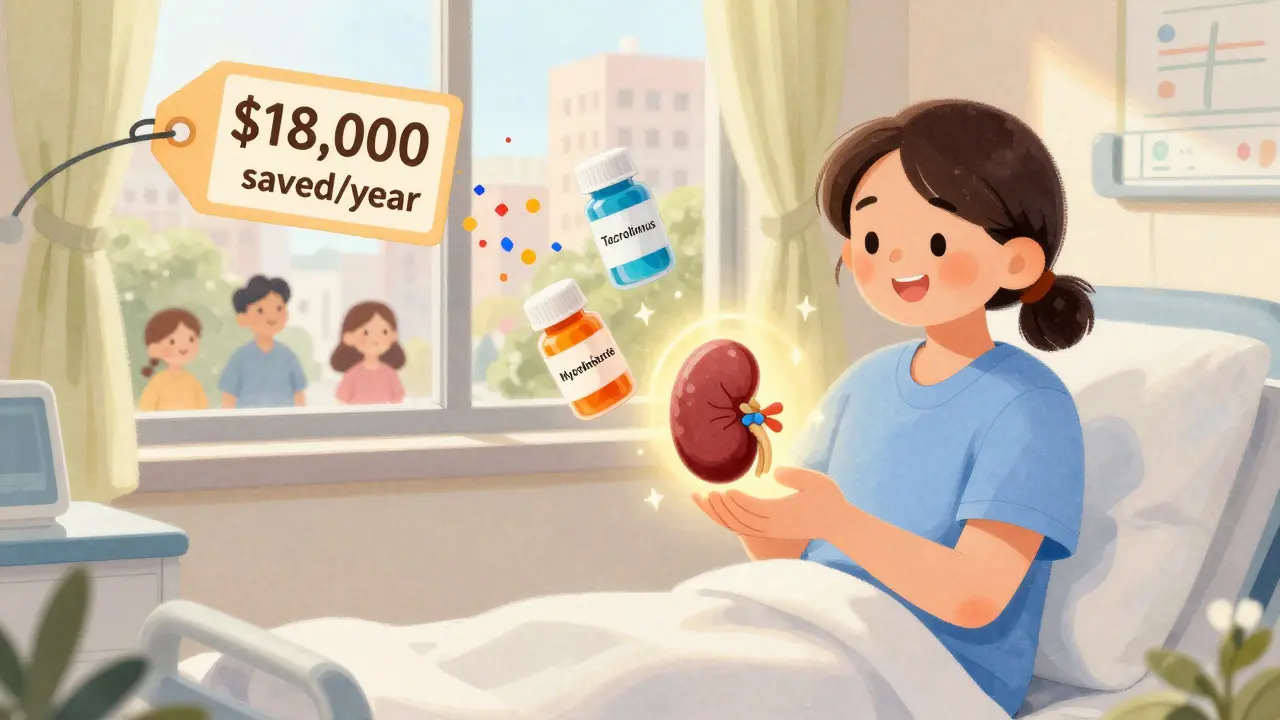
When someone gets a kidney, liver, heart, or lung transplant, their body doesn’t just accept the new organ - it fights it. That’s why transplant patients need to take immunosuppressive drugs for the rest of their lives. These drugs stop the immune system from attacking the transplanted organ. But the cost? It’s brutal. Brand-name medications like Prograf or CellCept can run $1,500 to $2,500 a month. For many, that’s not just expensive - it’s impossible to afford.
That’s where generic immunosuppressants come in. They’re not second-rate. They’re the same drugs, proven to work just as well, but at a fraction of the price. Today, most transplant centers in the U.S. start new patients on generics. And for good reason. A kidney transplant patient switching from brand-name tacrolimus to the generic version can save $1,500 a month. That’s over $18,000 a year. For someone on a fixed income or without full insurance, that kind of savings isn’t just helpful - it’s life-changing.
How Generic Immunosuppressants Work
Transplant patients usually take a combination of three drugs - a triple therapy. This isn’t random. Each drug hits the immune system in a different way, making it harder for rejection to happen. The most common combo? Tacrolimus (a calcineurin inhibitor), mycophenolate (an antimetabolite), and a low-dose corticosteroid like prednisone.
Here’s the good news: all three have generic versions now. Tacrolimus became generic in 2015. Mycophenolate mofetil (MMF) followed in 2019. Mycophenolic acid (MPA), the active form, got generic approval in 2020. Even sirolimus, used in high-risk patients, is available as a generic since 2020. These aren’t just copies. They’re FDA-approved to be bioequivalent - meaning they deliver the same amount of drug into your bloodstream as the brand-name version, within a strict range.
But here’s the catch: the range is wide. FDA allows generic drugs to be 80% to 125% as effective as the brand. For most pills, that’s fine. For immunosuppressants? Not so much. These drugs have a narrow therapeutic index. That means the difference between a dose that works and one that causes rejection or toxicity is tiny. A tacrolimus level of 4 ng/mL might lead to rejection. A level of 16 ng/mL could cause kidney damage or nerve problems. So even a small difference in absorption between generic brands can throw things off.
Cost Savings That Make a Real Difference
Let’s break down the numbers. A month of brand-name Prograf (tacrolimus) costs between $1,800 and $2,200. The generic? Around $300 to $400. That’s an 80% drop. CellCept (MMF) runs $1,200 to $1,500 a month. Generic MMF? $150 to $250. Same with sirolimus - Zortress costs over $2,000 monthly. Generic sirolimus? Under $350.
When you add them all up, a patient on a full generic triple therapy can cut their monthly drug bill from $3,000+ to under $800. That’s $2,500 saved every month. Over five years? That’s $150,000. And that’s not hypothetical. A 2023 study in Transplant International showed that 78% of new kidney transplant prescriptions in the U.S. are now for generics. Why? Because patients can’t afford the brand names. And hospitals can’t afford the liability of patients skipping doses because they can’t pay.
Even Medicare Part D plans now cover all immunosuppressants - thanks to a 2021 policy change - but they still push generics first. Why? Because they’re cheaper. And if a patient can’t afford their meds, they’re more likely to lose their transplant. That’s a far bigger cost than the drug price tag.
When Generics Work - and When They Don’t
Most patients do fine on generics. A 2022 analysis in the American Journal of Transplantation found that one-year kidney graft survival was 94.7% with generic tacrolimus - nearly identical to 95.1% with the brand. That’s not a fluke. It’s data from over 10,000 patients.
But here’s what happens behind the scenes: about 12% of patients need a dose adjustment in the first three months after switching. Why? Because not all generic manufacturers make the pill the same way. One batch might dissolve faster than another. One might have a slightly different coating. For a drug like tacrolimus, that’s enough to change blood levels.
That’s why transplant centers now require strict monitoring. When a patient switches to a generic, their blood levels are checked every two weeks for the first month, then monthly for three to six months. If levels dip too low, rejection risk goes up. If they spike, side effects like tremors, high blood pressure, or kidney damage can follow.
Some combinations work better than others. For example, using generic tacrolimus with generic sirolimus (instead of mycophenolate) has been shown in University of Maryland research to extend lung transplant survival by nearly two years. But sirolimus isn’t for everyone. It slows wound healing - a problem for patients who’ve had recent surgery or have diabetes. And it can cause mouth sores and high cholesterol.
Another big win? Steroid-sparing regimens. Cutting out prednisone (a corticosteroid) reduces the risk of post-transplant diabetes by 31%, according to a 2024 review. Generic tacrolimus plus generic sirolimus can replace steroids in many patients - and that’s a huge quality-of-life improvement. No more weight gain, no more bone thinning, no more mood swings.
The Hidden Challenges
It’s not all smooth sailing. About 18% of transplant centers reported a spike in rejection episodes during the early days of generic adoption, according to a 2021 survey. Why? Because some patients were switched without proper monitoring. Or they were given a different generic brand every month. That’s a disaster.
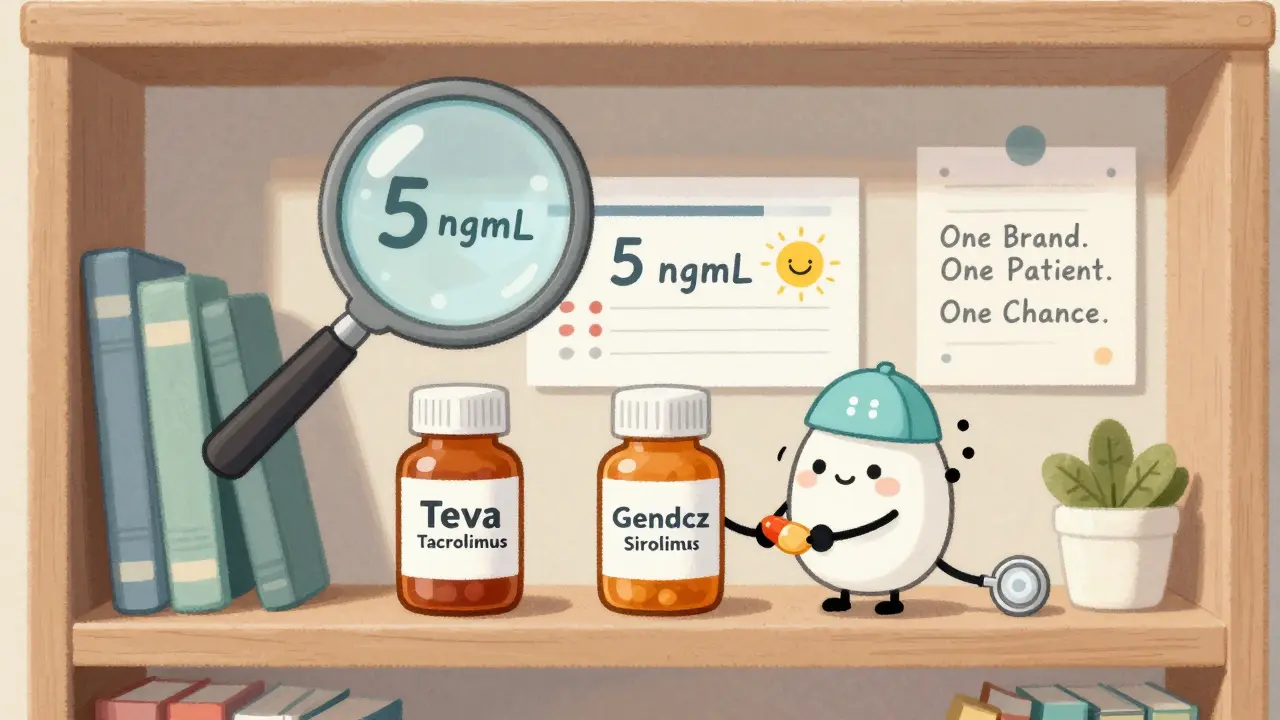
Transplant pharmacists now insist on one thing: stick with one generic manufacturer. If you start on the Teva version of tacrolimus, don’t switch to the Sandoz version unless your doctor and pharmacist are fully on board. Even small differences in how the drug is absorbed can cause problems. In fact, 85% of transplant centers have policies that require them to source generics from a single supplier for each patient.
Another issue? Drug interactions. Over two-thirds of transplant patients on multiple generics have at least one dangerous interaction. Antibiotics, antifungals, even grapefruit juice can spike tacrolimus levels. That’s why every new prescription is reviewed by a transplant pharmacist - not just the doctor.
And then there’s the human side. On patient forums, stories are mixed. One person on Reddit saved $18,000 over three years with generic MMF - no issues. Another switched to generic tacrolimus and had three rejection episodes in a year. They had to go back to the brand. That’s heartbreaking. But here’s the thing: those cases are rare - and often linked to poor monitoring, not the drug itself.

What You Need to Know If You’re on Generics
If you’re taking generic immunosuppressants, here’s what matters most:
- Don’t switch brands without talking to your team. Even if it’s the same drug, different manufacturers can behave differently.
- Get your blood levels checked regularly. Don’t skip your TDM (therapeutic drug monitoring) appointments. These aren’t optional.
- Keep a log. Write down any new symptoms - headaches, diarrhea, swelling, fever. Even small changes matter.
- Ask about interactions. Tell every doctor you see - even your dentist - that you’re on immunosuppressants. Many common meds can be dangerous.
- Know your options. If you’re struggling with side effects, ask if a different combo (like sirolimus instead of MMF) might work better for you.
Most transplant centers now have dedicated pharmacists just for immunosuppressant management. They’re your best ally. Use them. They know the ins and outs of each generic brand, each interaction, each level target.
The Future Is Generic
The trend is clear. In 2016, only 15% of new kidney transplant patients started on generic tacrolimus. By 2023, that number jumped to 82%. And 95% of transplant centers plan to increase generic use even more. Why? Because the data supports it. The savings are massive. And with better monitoring protocols, outcomes are just as good.
There’s even more on the horizon. The FDA approved the first interchangeable biosimilar for belatacept (Nulojix) in May 2023. That’s a new class of drug - and it’s expected to cut costs by 40%. Meanwhile, KDIGO guidelines now recommend generic sirolimus as a first-line option for high-risk kidney transplant patients.
Long-term, researchers are even studying whether some patients can eventually stop immunosuppressants entirely. One trial (NCT00078559) used a powerful induction drug (alemtuzumab) followed by generic tacrolimus and sirolimus - and some patients have gone years without any meds. It’s early, but it’s promising.
For now, though, the message is simple: generics are safe, effective, and essential. They’re not a compromise. They’re the standard of care. And for transplant patients, they’re the difference between keeping their organ - and losing it.
Are generic immunosuppressants as effective as brand-name drugs?
Yes, when used correctly. Large studies show no significant difference in graft survival between generic and brand-name immunosuppressants. For example, one-year kidney transplant survival rates are nearly identical: 94.7% with generic tacrolimus versus 95.1% with Prograf. The key is consistent dosing and regular blood level monitoring. Switching between generic brands without supervision can cause problems, but staying on one manufacturer’s version with proper monitoring delivers the same results as the brand.
Why do I need blood tests if I’m on generic drugs?
Because immunosuppressants have a narrow therapeutic index - the difference between a safe dose and a dangerous one is very small. Even small variations in how your body absorbs the drug can push your levels too high or too low. Generic versions are required to be bioequivalent, but they’re not identical. Blood tests (trough levels) tell your team if your dose needs adjusting. For tacrolimus, the target is 5-10 ng/mL. For sirolimus, it’s 4-12 ng/mL. Skipping tests increases your risk of rejection or toxicity.
Can I switch between different generic brands?
Not without talking to your transplant team. Even though all generics are FDA-approved, different manufacturers use different fillers, coatings, and manufacturing processes. These can affect how quickly the drug is absorbed. One patient might do fine on Teva’s tacrolimus but have rejection episodes after switching to Sandoz. Most transplant centers require you to stay on one generic brand for consistency. If a switch is needed, it’s done with close monitoring and repeat blood tests.
Do generic immunosuppressants cause more side effects?
Not inherently. The side effects come from the drug itself - not whether it’s generic or brand. Tacrolimus can cause tremors, high blood pressure, or kidney issues. Mycophenolate can cause nausea or diarrhea. But if you switch brands without monitoring, your blood levels might fluctuate, making side effects worse. That’s why regular blood tests are critical. If you notice new or worsening symptoms after switching, tell your doctor immediately - it’s likely a dose issue, not the drug.
What if I can’t afford even the generic version?
You’re not alone. Many generic manufacturers now offer copay assistance programs - 65% of them do, according to the Generic Pharmaceutical Association. Ask your transplant pharmacy. Also, Medicare Part D and Medicaid cover all immunosuppressants for transplant recipients. Some nonprofit organizations, like the National Kidney Foundation, offer financial aid. Never skip doses because of cost. Talk to your care team. There are options. Missing doses puts your transplant at risk.
Is sirolimus a better option than mycophenolate with generics?
It depends. Sirolimus (generic Zortress) is often used for high-risk patients or those who need to avoid steroids. Studies show it can extend survival in lung transplants and reduce post-transplant diabetes risk by 31%. But it’s not for everyone. It slows wound healing, causes mouth sores, and raises cholesterol. Mycophenolate is better tolerated for most kidney transplant patients and is still the most common choice. Your team will pick based on your health, risk factors, and side effect profile - not just cost.
13 Comments
Darren McGuff
As a transplant pharmacist in the UK, I’ve seen this play out for years. Generics aren’t just cheaper-they’re lifesavers. But the real win? When patients stick with one manufacturer. Switching brands like socks? That’s how you get rejection. We’ve got protocols: same brand, same batch, same monitoring. No exceptions. It’s not magic-it’s pharmacology.
Jeffrey Hu
Let’s cut through the fluff. FDA’s 80-125% bioequivalence range is a joke for immunosuppressants. You wouldn’t let a pilot fly with a 25% margin of error on fuel. Why are we okay with it for drugs that keep people alive? The system’s broken. We need tighter standards-or stop pretending generics are interchangeable.
Meghan Hammack
My cousin got a kidney transplant last year. Switched to generics and saved $2,100/month. No issues. She checks her levels every month like clockwork. The real enemy isn’t the generic-it’s skipping appointments or changing brands without telling your team. Don’t let fear cost you your organ.
RAJAT KD
India makes 80% of the world’s generic drugs. We know quality. If the FDA approves it, it’s safe. Stop fearing what you don’t understand.
Alicia Hasö
Every time I see someone say ‘generics are risky,’ I want to hug them and hand them a copy of the 2022 AJT study. 10,000 patients. 94.7% survival. Same as brand. This isn’t theory-it’s lived reality. You’re not saving money by staying on Prograf. You’re gambling your life on corporate pricing. Please. Talk to your pharmacist. They’re your heroes.
Micheal Murdoch
I’ve been on tacrolimus since my liver transplant in 2018. Started on brand. Switched to generic when my insurance forced it. Scared out of my mind. But my team monitored me like a hawk-blood draws every two weeks for three months. My levels stabilized. No tremors. No rejection. I’m alive today because someone decided to prioritize cost and science over profit. I’m not just grateful-I’m a believer. If you’re on generics and scared? You’re not alone. But you’re also not alone in being okay.
And if you’re a provider? Don’t just switch. Educate. Track. Communicate. This isn’t a cost-cutting measure. It’s a public health imperative.
One patient, one dose, one brand. That’s the mantra. Not because generics are perfect-but because we’re human, and humans need consistency to survive.
Heather Wilson
18% of centers saw rejection spikes? That’s not ‘poor monitoring.’ That’s evidence generics are inherently unreliable. Why risk it? If you can afford brand-name, don’t gamble. Your organ isn’t a lab experiment.
Ian Long
Look. I get the fear. I’ve seen patients cry because they can’t afford the brand. I’ve also seen them die because they skipped doses. Generics aren’t perfect-but the alternative is worse. Let’s stop pretending this is about drugs. It’s about dignity. About access. About not forcing someone to choose between rent and survival. We can do better. We’re just too lazy to fix the system.
Chris Kauwe
Generic immunosuppressants are a socialist plot to undermine American pharmaceutical innovation. The FDA’s lax standards are a betrayal of medical integrity. We need to protect the American-made standard-or risk losing our global dominance in transplant medicine.
Lindsey Wellmann
OMG I just read this and I’m crying 😭 My brother got his heart transplant in 2021 and switched to generics and he’s been fine!! I didn’t know the science behind it but now I’m so proud of him and his team 💪❤️ #TransplantLife #GenericsSaveLives
Drew Pearlman
Here’s what no one talks about: the emotional toll of switching. It’s not just about blood levels-it’s about trust. You’ve been told for years that Prograf is the gold standard. Then your pharmacy hands you a little blue pill with a different logo and you feel like you’re being swapped out for a cheaper version of yourself. That fear? Real. But here’s the truth: the drug inside? Identical. The system’s flawed, but the medicine? Solid. You’re not less worthy because you take a generic. You’re a warrior who outsmarted the system.
And if you’re scared? Ask your pharmacist for a handout. Ask for a chart. Ask for a timeline. Knowledge is the antidote to fear. You’ve survived a transplant. You can handle this.
Aron Veldhuizen
So what? Generics are cheaper. Big deal. The real issue is that we’ve turned organ survival into a spreadsheet. We’re not healing people-we’re optimizing cost-per-outcome. And if you’re okay with that, you’ve already lost the soul of medicine.
Matthew Maxwell
Anyone who takes generics without insisting on brand-name equivalents is complicit in the degradation of medical standards. If you can’t afford the gold standard, you shouldn’t be a transplant recipient. Medicine isn’t a charity.