
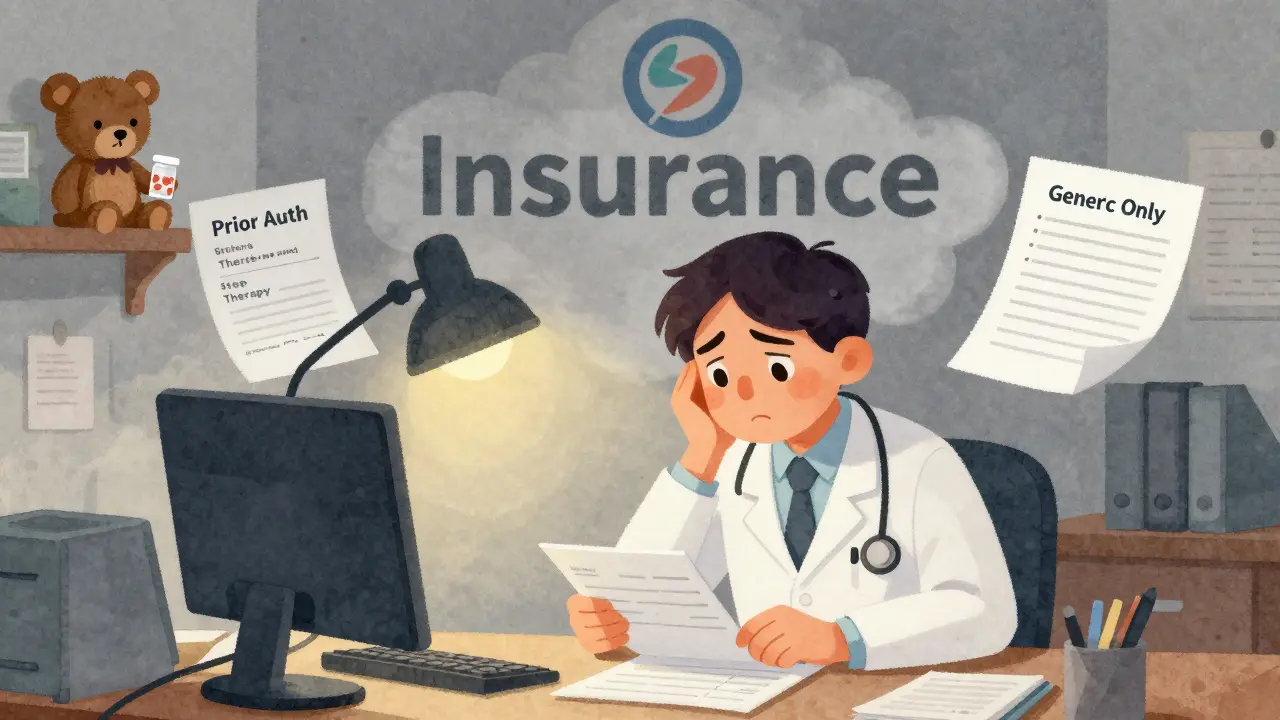
When your doctor prescribes a brand-name medication, and the pharmacy says it’s not covered unless you switch to the generic version, it’s not just a billing issue-it’s a clinical one. Insurers are pushing hard for generic drug substitution, not because they’re trying to be difficult, but because it saves them billions. And providers? They’re caught in the middle.
Why Insurers Push for Generics
Insurers don’t make these rules out of thin air. It’s pure economics. Generic drugs cost 80 to 85% less than their brand-name equivalents, according to the FDA. That’s not a small margin-it’s the difference between a $15 copay and a $90 one. In 2022, 90% of all prescriptions in the U.S. were filled with generics. That’s up from 65% in 2005. Insurers like UnitedHealthcare, CVS Health/Aetna, and Cigna have built entire formulary systems around this. Generics sit in Tier 1-lowest cost. Brand-name drugs? Tier 3 or 4, with coinsurance that can hit 40% of the drug’s price. It’s not just about cost. It’s about control. Insurers use tiered formularies, prior authorization, and step therapy to steer patients toward generics. Step therapy means you have to try the generic first. If it doesn’t work-or causes side effects-you can appeal. But that appeal takes time. And in the meantime, patients might go without treatment.How Providers Are Forced to Adapt
Doctors aren’t just writing prescriptions anymore. They’re filling out forms, arguing with insurers, and documenting every detail to justify why a brand-name drug is necessary. A 2023 MGMA survey found physicians spend an average of 16.9 minutes per prior authorization request. That’s nearly three hours a week just on paperwork. For a busy practice, that’s hours lost with patients. Many providers now pre-emptively include clinical justification in every prescription for brand-name drugs. One cardiologist on Reddit said he now adds notes like “patient had severe GI reaction to generic clopidogrel” on every script. It’s not ideal-it’s a workaround. But it cuts down on denials. The AMA reports 78% of providers say prior authorization leads to patients abandoning treatment entirely. One case from Minnesota involved a patient with a history of bleeding who was denied the brand-name anticoagulant. It took 22 days and three appeals before coverage was approved. During that time, the patient had two ER visits.The Administrative Nightmare
Each insurer has its own rules. UnitedHealthcare’s requirements aren’t the same as Cigna’s. And neither matches what Medicare Advantage demands. A 2023 MGMA survey found 89% of physicians have to learn different criteria for each major insurer. That’s not efficient. It’s exhausting. To cope, many practices now hire dedicated prior authorization staff. Medium-sized clinics (10-50 providers) spend an average of $112,400 per year on one full-time employee just to handle these requests. Smaller practices? They either burn out their front desk staff or let claims get delayed. Electronic prior authorization (ePA) systems have helped-cutting approval times by 55% according to a 2024 JAMIA study. But even ePA isn’t perfect. The systems often don’t talk to each other. One EHR might send data in HL7 FHIR format. Another uses a proprietary interface. And when the insurer’s system rejects the form? There’s no clear reason why. The NAIC white paper calls this “a lack of standardized clinical criteria for medical necessity.” In plain terms: you don’t know what you’re missing until your patient gets sicker.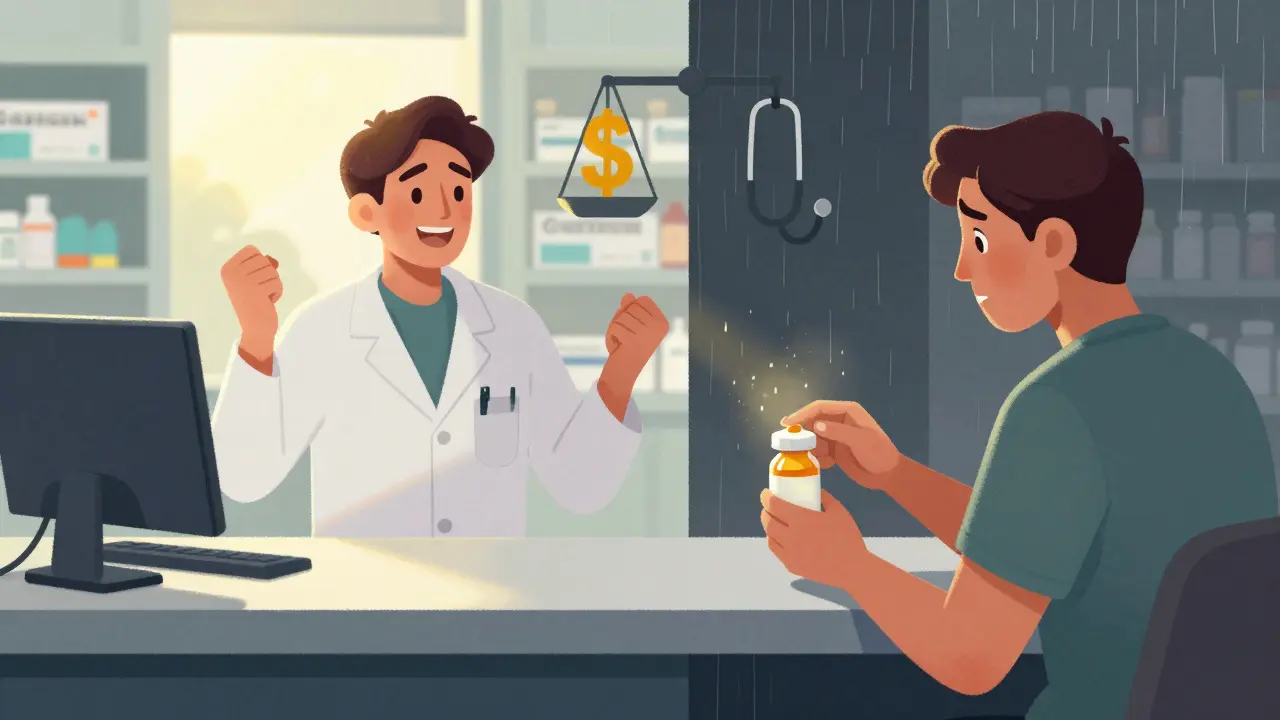
State Laws Are Changing the Game
Some states are stepping in to protect patients. California’s AB 347, effective January 2024, requires insurers to approve step therapy exceptions within 72 hours for urgent cases and five business days for standard ones. The approval rate jumped to 92% on first submission. A psychiatrist in Los Angeles said it went from “a 14-day nightmare” to “a 72-hour formality.” Arizona took it further with HB 2175, signed in May 2025. It bans insurers from using AI alone to deny care based on medical necessity. A human medical director must review every denial. Implementation is required by June 30, 2026. That’s a direct response to cases where automated systems flagged a patient’s need for a brand-name drug as “non-essential” because the generic was “clinically equivalent.” Other states are following. In 2024 and 2025, 34 states introduced legislation to regulate prior authorization. The federal Improving Seniors’ Timely Access to Care Act already mandates 72-hour turnaround times for Medicare Advantage plans. And by January 1, 2027, CMS will require all Medicare Advantage and Medicaid managed care plans to use standardized ePA systems.The Clinical Risks Are Real
Generics are safe-for most people. The FDA requires them to be bioequivalent within 80-125% of the brand-name drug’s absorption rate. That’s a wide range. For drugs like levothyroxine, warfarin, or certain epilepsy medications, even small differences can matter. The AMA reports 28% of physicians have seen adverse outcomes after switching patients to generics in these categories. One endocrinologist in Chicago told a story about a patient who’d been stable on brand-name levothyroxine for eight years. After an insurer switch, her TSH levels spiked. She developed fatigue, weight gain, and depression. It took three months to get the original drug back. Her thyroid function didn’t normalize until she was back on the brand. Dr. Arthur Caplan from NYU argues these bioequivalence margins are too loose for narrow therapeutic index drugs. “It’s not about generics being bad,” he says. “It’s about treating all drugs like they’re interchangeable. They’re not.”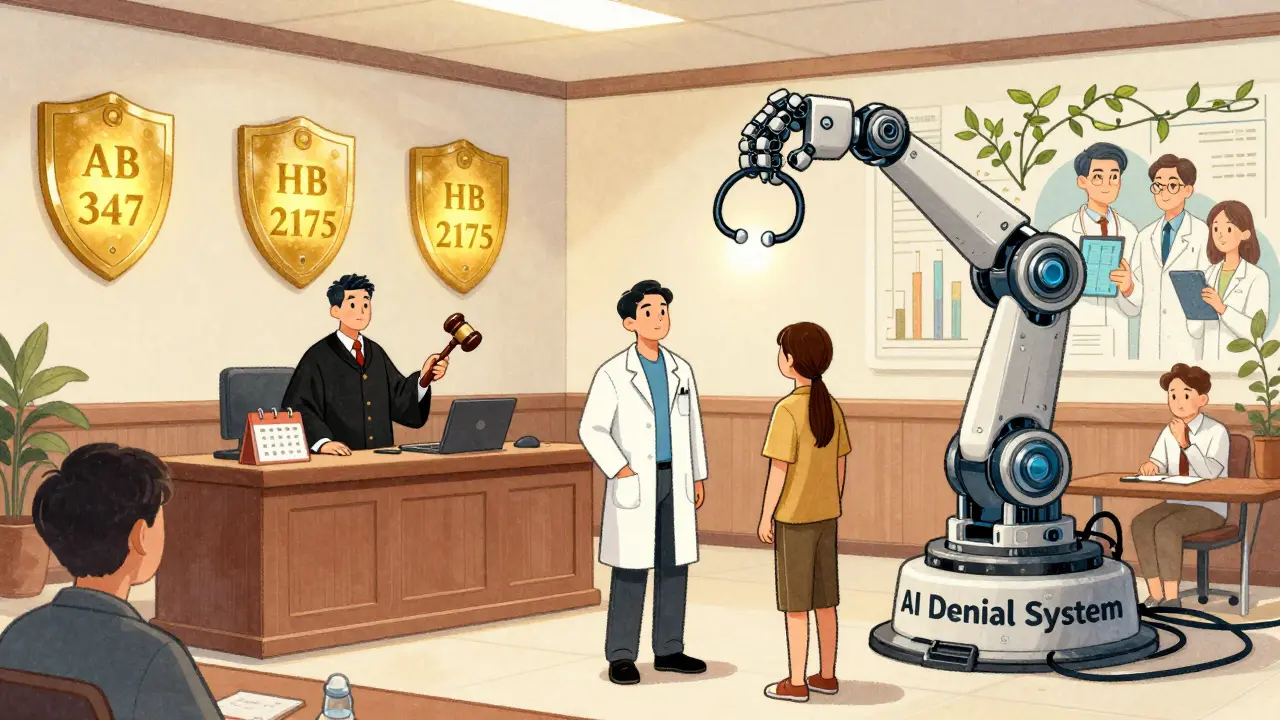
What Works for Providers
Successful providers don’t fight the system. They navigate it.- Use templates: 68% of physicians use standardized letters for common exceptions-like “patient has documented intolerance to generic X.”
- Know the insurer’s rules: Keep a cheat sheet for each payer. What’s a “medical necessity” for UnitedHealthcare might not be enough for Aetna.
- Build relationships: Talk to the insurer’s case managers. Get their names. Call them directly. It cuts through the noise.
- Use data: Don’t say “the patient didn’t feel well.” Say “TSH increased from 2.1 to 8.9 after switch, with symptoms of hypothyroidism.” Objective data boosts approval rates by 37%.
- Go electronic: If your EHR has integrated ePA, use it. It’s faster, trackable, and less prone to human error.
The Bigger Picture
The push for generics isn’t going away. Insurers are targeting 95% generic utilization by 2030. PBMs like OptumRx and CVS Caremark control 85% of prescription benefits in the U.S. They’re not just middlemen-they’re decision-makers. And they’re part of the same companies that sell insurance. The real tension? Cost savings vs. patient outcomes. Insurers say 98.7% of generic switches go smoothly. Providers say the 1.3% who suffer are the ones who end up in the ER. The system isn’t broken-it’s unbalanced. Generics save money. But forcing a switch without clinical context? That’s where harm happens.What’s Next?
Look for two big shifts in the next two years:- Value-based formularies: Instead of just pushing generics, insurers will start preferring brand-name drugs that have better outcomes data. Think: fewer hospitalizations, better adherence.
- More state laws: Expect more states to follow California and Arizona. If patients keep getting hurt, lawmakers will act.
Are generic drugs always safe to substitute?
For most medications, yes. Generic drugs must meet FDA bioequivalence standards, meaning they deliver the same active ingredient at the same rate and amount as the brand-name version. But for drugs with a narrow therapeutic index-like levothyroxine, warfarin, or certain seizure medications-even small differences in absorption can cause harm. Many physicians report adverse outcomes after switching patients on these drugs, and some insurers now require special documentation before substitution.
Why do insurers require step therapy?
Step therapy forces patients to try cheaper, generic alternatives first before moving to more expensive brand-name drugs. Insurers use it to control costs. But it’s not just about price-it’s about control. By requiring a documented failure on the generic, insurers shift the burden of proof to the provider. This reduces their payout but can delay treatment and lead to patient abandonment.
How long does prior authorization usually take?
It varies. For urgent cases, federal law requires Medicare Advantage plans to respond within 72 hours. For non-urgent requests, it can take up to five business days under California’s AB 347. But without state protections, some insurers take 10-14 days. Electronic prior authorization (ePA) has cut this time by over half in practices that use it properly.
Can I appeal a denied prior authorization?
Yes. Every insurer has an appeals process, but success depends on documentation. The AMA says appeals with objective clinical data-like lab results, prior treatment failures, or documented side effects-are 37% more likely to be approved. Subjective statements like “I think this drug works better” rarely succeed. Always include test results, medication history, and patient-reported outcomes.
Are there states where insurers can’t force generic substitution?
No state bans generic substitution entirely. But some, like California and Arizona, have strong protections. California requires fast approval of exceptions and mandates that insurers accept clinical documentation. Arizona bans AI-only denials and requires human review. These laws don’t stop substitution-they just make it harder for insurers to override medical judgment without good reason.
11 Comments
Ashok Sakra
This is why I hate insurance companies. They don't care if you live or die, as long as the numbers look good on their spreadsheet. My aunt died because they made her wait 3 weeks for a brand-name heart med. She was fine on it for 10 years. Then they switched her. Boom. Gone. No remorse. Just paperwork.
They're monsters in suits.
Kelly McRainey Moore
My dad’s a pharmacist and he told me generics are usually fine - but he also says the ones for thyroid and epilepsy? He won’t even fill them unless the doctor specifically says ‘brand only.’ He’s seen too many people crash after the switch. It’s not about money, it’s about knowing when to push back.
Also, why do insurers act like they’re doing us a favor? They’re just protecting their bottom line. We’re the ones paying the real price.
Sangeeta Isaac
so like... i just got denied for my migraine med because ‘generic is equivalent’ and i’ve been on the brand since 2019 and it’s the only thing that works??
now i have to write a novel to prove i’m not lying??
also why does my doctor have to do 37 forms just to get me a pill??
we’re not animals. we’re not data points. we’re people who just want to not feel like garbage.
also why is this even a thing??
Andrew Rinaldi
There’s a tension here that’s rarely acknowledged: cost containment isn’t inherently evil. It’s necessary. But when systems are designed to optimize for profit over person, we lose something essential.
Generics aren’t the enemy. The lack of nuance is. The idea that a single algorithm or tiered formulary can replace clinical judgment is a dangerous illusion. Medicine isn’t a spreadsheet. Patients aren’t line items.
Maybe the real question isn’t ‘should we use generics?’ but ‘how do we build systems that honor both efficiency and humanity?’
michelle Brownsea
Let’s be clear: this isn’t ‘insurance’-it’s corporate extortion disguised as healthcare. The FDA’s 80–125% bioequivalence range? That’s not science-it’s a loophole designed by lobbyists. And now doctors are forced to become bureaucrats? What happened to ‘do no harm’? Now it’s ‘do no paperwork’.
And don’t even get me started on the fact that PBMs are owned by the same companies that run the insurers. It’s not a system-it’s a monopoly. And we’re the ones paying with our health.
There’s nothing ‘innovative’ about this. It’s greed, dressed up in EHR templates and HL7 protocols.
Barbara Mahone
As someone who’s worked in public health for 20 years, I’ve seen this play out in rural clinics and urban ERs alike. The real tragedy isn’t the cost-it’s the silence. Patients don’t know they’re being pushed around. They think the doctor just doesn’t care.
And when they stop taking their meds because the process is too exhausting? That’s not adherence failure. That’s system failure.
Maybe we need a national standard-not just for ePA, but for what counts as ‘clinically necessary.’
Because right now, it’s a lottery.
Stephen Rock
Everyone’s mad at insurers but no one’s mad at the doctors who still prescribe brand-name drugs for no reason other than habit.
Generics work 98% of the time. The 2% who have issues? They’re outliers. But now every doc has to write a novel for every script because of them.
Stop pretending this is a moral crisis. It’s a logistical one. And you’re all just screaming into the void.
Philip Williams
The data is undeniable: electronic prior authorization reduces approval times by over 50%. Yet many practices still rely on fax machines and handwritten notes.
Why? Because change is hard. But the solution isn’t to ban generics or demand more human review-it’s to invest in interoperable systems that work across all payers.
Standardization isn’t a luxury. It’s a necessity. And until we treat administrative efficiency as a core component of patient care, this will keep happening.
Uju Megafu
You think this is bad? In Nigeria, we don’t even have generics. We have fake drugs. Counterfeit pills sold in markets. People die from those. And here you’re complaining because you can’t get your brand-name migraine pill?
Stop being so entitled. At least you have a system. We have nothing.
Maybe you should be grateful you’re not begging for medicine in a village with no electricity.
Jarrod Flesch
Just had a patient cry in my office because her thyroid med was switched and she felt like a zombie for 6 weeks. She’s back on brand now. Her TSH dropped from 12 to 3.5 in 3 weeks.
Genetics? Maybe. But also? The generic had a different filler. Not the active ingredient. The binder.
And yeah, that’s enough to wreck someone’s life.
Insurers need to stop treating pills like cereal boxes.
Also, I’m just glad Arizona’s finally doing something. 👍
Melanie Pearson
Let’s not forget: this entire system exists because American healthcare is a profit-driven enterprise, not a public good. The fact that we tolerate this level of bureaucratic cruelty is a national disgrace.
Other developed nations don’t have prior authorization for generics. Why? Because they don’t treat medicine like a commodity.
Until we dismantle the insurance-industrial complex, this will continue. And no amount of templates or ePA will fix the core rot.
Stop negotiating with the devil. Abolish the system.