
Kombucha Medication Interaction Checker
This tool helps you determine if kombucha is safe to consume based on your medications. Kombucha contains trace amounts of alcohol (up to 2.5% ABV for homemade), which can interact dangerously with certain medications.
Results will appear here
After clicking 'Check Interaction Risk'
Many people drink kombucha for its probiotics, tangy flavor, and supposed health benefits. But if you're on medication that reacts to alcohol, that little bottle of fizzy tea could be more dangerous than you think. Even if it says "non-alcoholic," kombucha can contain enough alcohol to cause serious side effects - especially if it’s homemade or if you're taking certain drugs.
What’s in Kombucha That Could Hurt You?
Kombucha is made by fermenting sweet tea with a culture of bacteria and yeast, called a SCOBY. During this process, the yeast turns sugar into alcohol and carbon dioxide. That’s normal. But here’s the catch: the amount of alcohol produced isn’t fixed. It depends on how long you ferment it, how warm it is, and whether you added extra sugar later. Commercial brands in the U.S. are legally required to keep alcohol under 0.5% ABV (alcohol by volume). That’s the same as a ripe banana or a glass of orange juice left out overnight. But that doesn’t mean it’s harmless - especially if you're on medication. Homemade kombucha? That’s a different story. Lab tests show homebrewed versions can hit 1.8% to 2.5% ABV. That’s close to a light beer. And most people making it at home never test it.Which Medications Are at Risk?
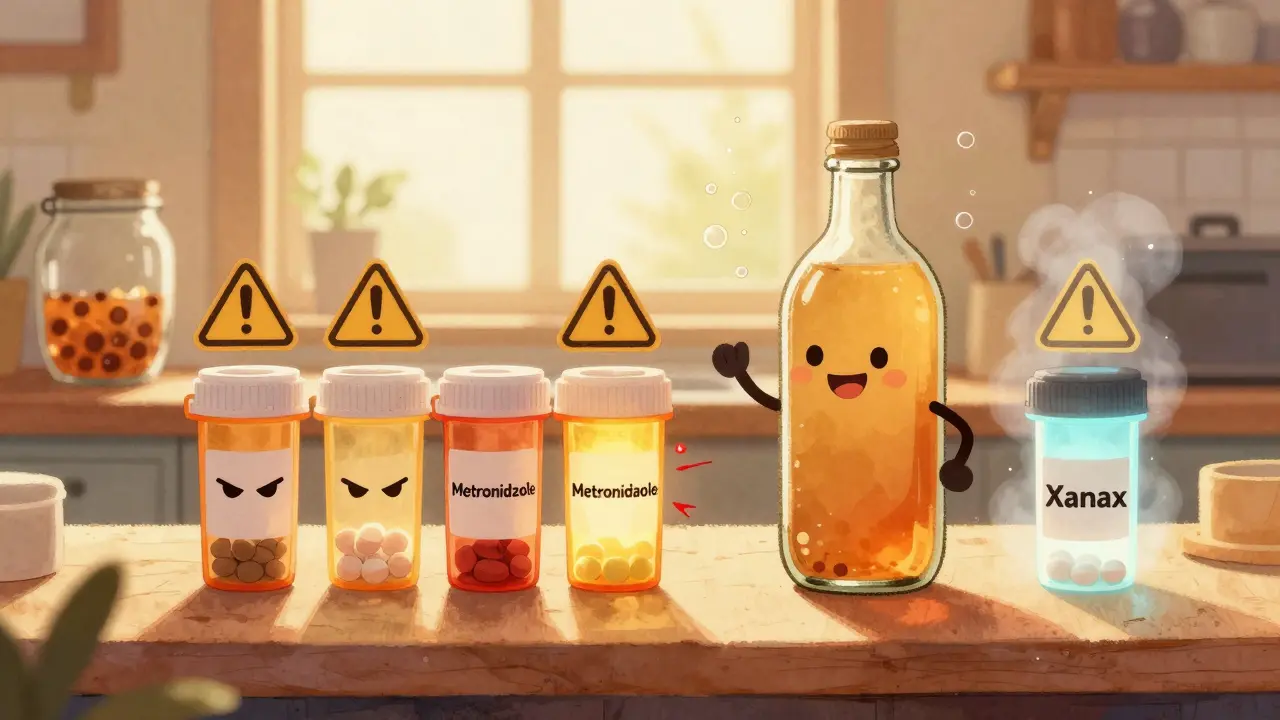
Some drugs don’t just "mix badly" with alcohol - they react violently. Kombucha’s trace alcohol can trigger the same reactions as a full drink. Here are the big ones:- Metronidazole and tinidazole - Antibiotics used for infections like UTIs and bacterial vaginosis. Even small amounts of alcohol with these can cause vomiting, rapid heartbeat, flushing, and severe nausea. There are documented cases of ER visits after people drank kombucha while on these drugs.
- SSRIs and other antidepressants - Drugs like sertraline or fluoxetine can become less effective or cause dizziness, drowsiness, or worse when combined with even small amounts of alcohol. One pharmacist reported multiple patients getting dizzy after drinking kombucha while on antidepressants.
- Diabetes medications - Chlorpropamide and some others can cause dangerous drops in blood sugar when mixed with alcohol. One patient had a 15-point blood sugar crash after drinking kombucha with metformin - and ended up in the ER.
- Benzodiazepines - Medications like Xanax or Valium slow down your nervous system. Alcohol does the same. Together, even 0.5% ABV can make you dangerously sleepy or dizzy.
- Nitrates - Used for heart conditions like angina. Alcohol can cause a sudden, dangerous drop in blood pressure when taken with these.
That’s not a short list. The American Pharmacists Association says kombucha can interact with at least 17 major classes of medications. And most people have no idea.
Commercial vs. Homemade: The Real Difference
Not all kombucha is created equal. Big brands like GT’s and Health-Ade test every batch using lab equipment like HPLC machines to make sure alcohol stays under 0.5%. They also pasteurize or filter the drink to stop fermentation. That’s why their labels say "non-alcoholic." But here’s the problem: even these brands don’t always warn you. Only 63% of commercial products say "Contains Trace Alcohol" on the label. And if you’re buying from a small health store or farmer’s market, there’s no guarantee they’re testing anything. Homemade kombucha? It’s a gamble. A 2024 Harvard study found 43% of homebrewed batches exceeded 0.5% ABV. Twelve percent hit 3.2% - the level of a light beer. And most homebrewers don’t own an alcoholmeter. They taste it, guess it’s "fine," and drink it daily. If you’re on medication, that’s not fine.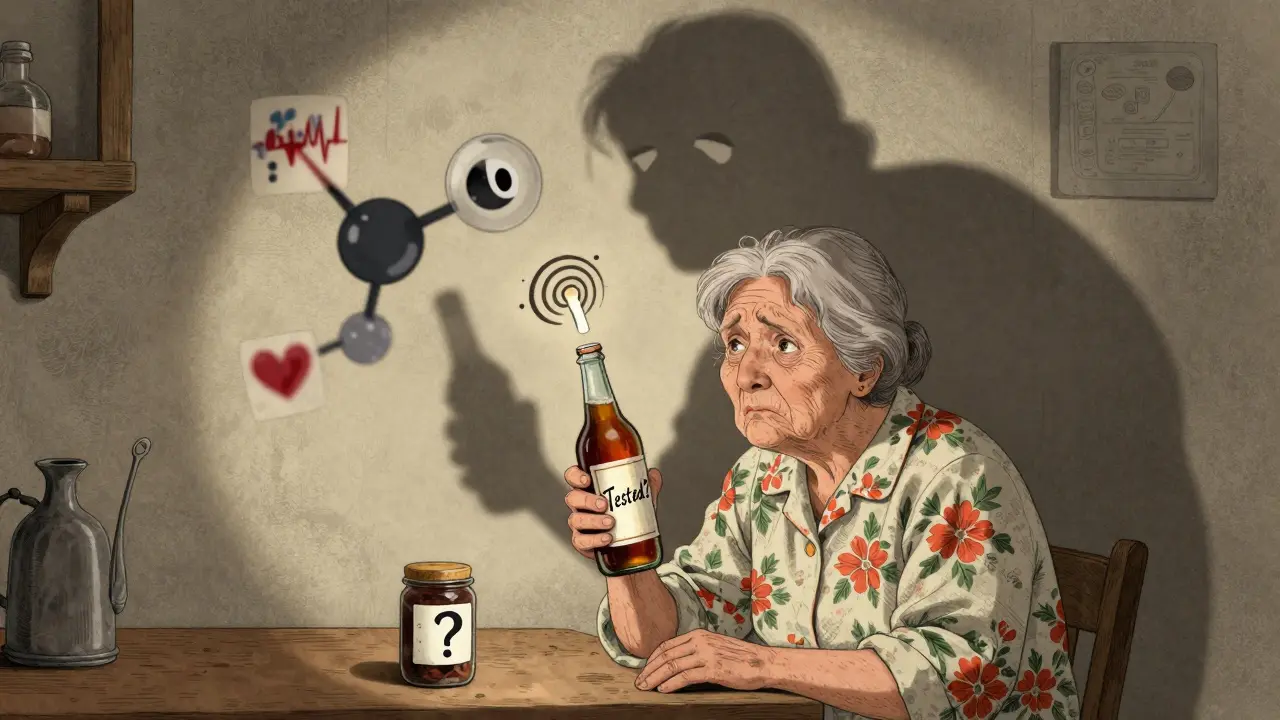
What Happens When You Mix Them?
Real people are getting hurt. On Reddit, hundreds of users have posted about bad reactions. One woman, u/SarahJ2021, drank Health-Ade kombucha while on metronidazole for a UTI. She threw up violently within 20 minutes. Another, u/PharmD_Mark, says he’s seen multiple patients get dizzy and confused after drinking kombucha with sertraline. One man on a diabetes forum had his blood sugar drop so fast he needed emergency treatment. A 2023 survey of over 1,200 kombucha drinkers found 18% had experienced side effects linked to their medications. Two-thirds of those cases involved antidepressants. Only 32% of pharmacists even recognize kombucha as a potential alcohol source. It’s not a myth. It’s not "overblown." It’s happening right now - and most people don’t know why.What Should You Do?
If you take any of the medications listed above, here’s what you need to do:- Check your meds. Look at the label or ask your pharmacist: "Does this interact with alcohol?" If yes, treat kombucha like alcohol.
- Stop drinking kombucha. Even if it’s "under 0.5%" - you don’t know how much is actually in that bottle. And if you’re drinking it every day, those tiny amounts add up. One expert calculated daily 0.5% ABV kombucha equals 1.75 standard drinks per week.
- If you brew at home, test it. Get a simple alcoholmeter like the HM Digital HA-520. It costs under $50. It’s not perfect, but it’s better than guessing. Practice on 3-5 batches to learn how to read it right.
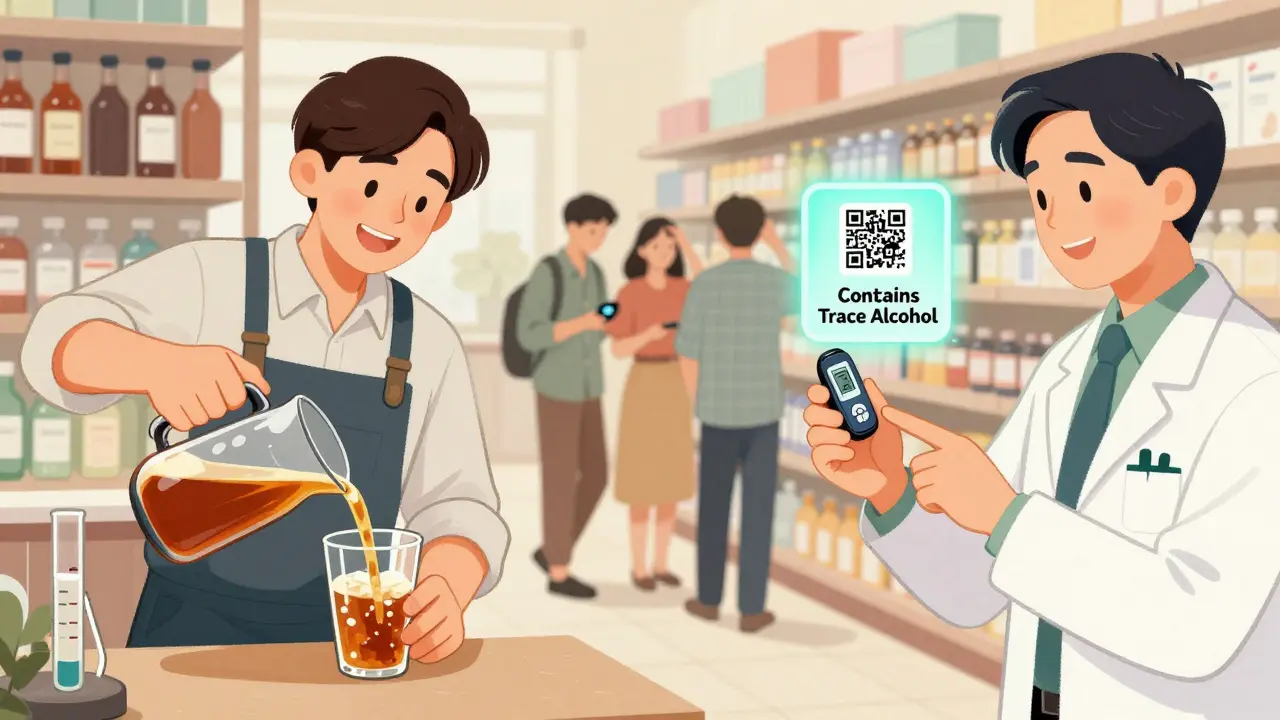
- Look for the label. Since January 2024, U.S. law requires all commercial kombucha to say "Contains Trace Alcohol." If it doesn’t, it’s either not legal or not tested. Avoid it.
- Wait 48 hours. If you accidentally drank kombucha while on metronidazole or another risky med, wait two full days before taking your next dose. Talk to your doctor.
Why Is This Still a Secret?
The kombucha industry is booming - worth over $3 billion in 2023. But safety hasn’t kept up. Most marketing focuses on "gut health" and "natural energy." No one talks about the alcohol. Pharmacies are slowly adding warnings, but only 78% of CVS and Walgreens stores have them up. And many pharmacists still don’t know to ask about kombucha. The FDA launched a "Hidden Alcohol Sources" initiative in 2022. New labeling rules started in January 2024. Brands like Health-Ade now use QR codes to show exact alcohol levels per batch. That’s progress. But the biggest risk? People who think "it’s just tea." If you’re older, on multiple medications, or managing chronic illness, you’re the most vulnerable. One Johns Hopkins survey found 38% of adults over 50 drink kombucha daily - and nearly none know the risks.What’s Next?
The National Institutes of Health started a $2.3 million study in March 2024 to look at kombucha and medication interactions. Results are expected in 2025. Until then, assume it’s risky. If you’re healthy and not on meds? Kombucha is probably fine. But if you take any prescription - even one you’ve been on for years - don’t assume it’s safe. Alcohol is alcohol, no matter how small the dose. And kombucha? It’s not just a trendy drink. It’s a hidden variable in your health equation.When in doubt, skip it. Your body - and your meds - will thank you.
14 Comments
Cassie Henriques
Just read this and my jaw dropped. I’ve been drinking GT’s daily for my gut health - and I’m on sertraline. 😳 I had no idea kombucha could trigger dizziness like this. My pharmacist never mentioned it. Time to check my bottle’s label… and maybe stop for a bit. Thanks for the wake-up call.
Also, 0.5% ABV isn’t nothing if you’re consuming it 3x/day. That’s like 1.5 beers a week. Who’s counting? Not me. 🤦♀️
Nupur Vimal
Why are Americans so paranoid about everything now Like in India we drink fermented drinks daily and no one dies from it You think your body can’t handle 0.5 percent alcohol Get real
Michelle M
There’s something beautiful about how we’ve turned a simple fermentation process into a medical risk assessment. We’re so afraid of tiny things now - trace alcohol, natural sugars, microbial activity - that we forget our bodies evolved to handle complexity.
But… I also get it. When you’re on meds that are already tipping your biochemistry, even a whisper of ethanol can be a shout. Maybe the real issue isn’t kombucha - it’s how little we’re taught about drug-microbe interactions.
Let’s not demonize the tea. Let’s educate the people.
And yes - if you’re on metronidazole? Skip it. No shame. Your liver will thank you.
Mike Nordby
While the article is well-researched and clinically accurate, it fails to contextualize risk magnitude. The probability of adverse reaction from commercial kombucha at 0.5% ABV while on SSRIs is statistically negligible for the average consumer. The documented cases cited are anecdotal and lack controlled variables.
That said, the lack of labeling transparency and inconsistent regulatory enforcement across retail channels is a legitimate public health concern. The FDA’s 2024 labeling mandate is a necessary step, but education must precede regulation.
Recommendation: Pharmacies should integrate kombucha into their medication counseling protocols - not as a threat, but as a variable.
John Samuel
OMG. I just had a mini existential crisis reading this. 🤯 I’ve been sipping kombucha like it’s water while on metformin for 2 years. I thought I was being *so* healthy. Turns out I was basically doing a slow-motion blood sugar rollercoaster.
Went straight to my fridge - yep, Health-Ade. No ‘Contains Trace Alcohol’ on the label. 🚨
Ordered an alcoholmeter today. $50 well spent if it saves me from an ER trip. Also, I’m telling my entire book club. This is the most important tea talk we’ve ever had.
Lisa Davies
Hey everyone - I’m a pharmacist in Colorado and I see this ALL THE TIME. People think kombucha is ‘just tea’ and don’t tell us they’re drinking it daily. I’ve had three patients come in with flushing and tachycardia after starting kombucha while on metronidazole.
Here’s the thing: we don’t ask because we assume it’s safe. But we should. Like we ask about wine or beer.
If you’re on meds - tell your pharmacist about your kombucha habit. And if your pharmacist doesn’t know? They’re not alone. We’re catching up.
You’re not overreacting. You’re being smart. 💪
Melissa Taylor
I love kombucha. I’ve been brewing it for 5 years. But I never tested it until I read this. Now I have a digital alcoholmeter on my counter. It’s changed everything.
My first batch tested at 2.1%. I poured it down the drain. Felt sad, but also proud. My body isn’t a lab experiment. And neither is yours.
If you’re brewing - test. If you’re buying - read the label. If you’re on meds - pause. You’ve got time. Your health doesn’t.
John Brown
Look, I get the fear. But let’s not turn a fermented tea into a villain. People have been drinking low-alcohol fermented drinks for thousands of years. The real problem isn’t kombucha - it’s that we’ve forgotten how to talk to our doctors.
And yes, homemade batches can be wild. But so can your sourdough starter. We don’t panic about that.
Just be mindful. Check your meds. Ask your pharmacist. Don’t assume. Don’t fear. Just know.
And if you’re on metronidazole? Yeah, skip it. That one’s a hard no.
Jocelyn Lachapelle
My grandma drinks kombucha every morning with her pills. She’s 74. No side effects. Maybe this is just fear-mongering dressed up as science.
Also I think the FDA should stop making us read labels like we’re in court
Sai Nguyen
India makes better fermented drinks than this weak tea You Americans are weak and overmedicated
Jake Sinatra
This is an excellent summary. I appreciate the data-driven approach and the clear delineation between commercial and homebrew risks.
One point I’d add: the cumulative effect of daily low-dose alcohol exposure is understudied. Even 0.3% ABV daily for 365 days equals 1.095 standard drinks annually - not a lot, but for someone with hepatic impairment or polypharmacy, it’s a persistent stressor.
Also, the 2023 survey’s finding that 68% of kombucha drinkers with depression never disclosed consumption to their provider is alarming. We need better screening tools.
Thank you for this.
RONALD Randolph
THIS IS WHY WE CAN’T HAVE NICE THINGS!!
Somebody’s going to sue a kombucha company because their uncle got dizzy after drinking tea!!
IT’S 0.5%!! IT’S NOT WINE!!
And now we need QR codes?!?!
What’s next? Warning labels on bananas because they contain natural sugars that might interact with insulin?!
WE’RE BECOMING A NATION OF COWARDS!!
Benjamin Glover
How quaint. An American health panic over a beverage that in Europe would be considered a mild probiotic tonic - not a pharmaceutical hazard. The over-medicalization of everyday life is truly a cultural artifact of late-stage capitalism.
Also, the FDA’s labeling mandate? A bureaucratic overreach masquerading as consumer protection.
Perhaps instead of policing kombucha, one might consider educating the populace on the pharmacokinetics of ethanol. But then again - that would require intellectual rigor, wouldn’t it?
Michelle M
Reading all this… I think the real takeaway isn’t about kombucha.
It’s about how we’ve outsourced our health literacy to labels, influencers, and fear-based headlines.
What if the real danger isn’t the 0.5% alcohol - but the fact that we don’t know how to ask our doctors the right questions?
Maybe we need to stop treating every drink like a chemical hazard, and start treating every patient like a person who deserves to understand their own body.
Just saying.
Also - if you’re on metronidazole? Still skip the kombucha. That one’s not up for debate.