
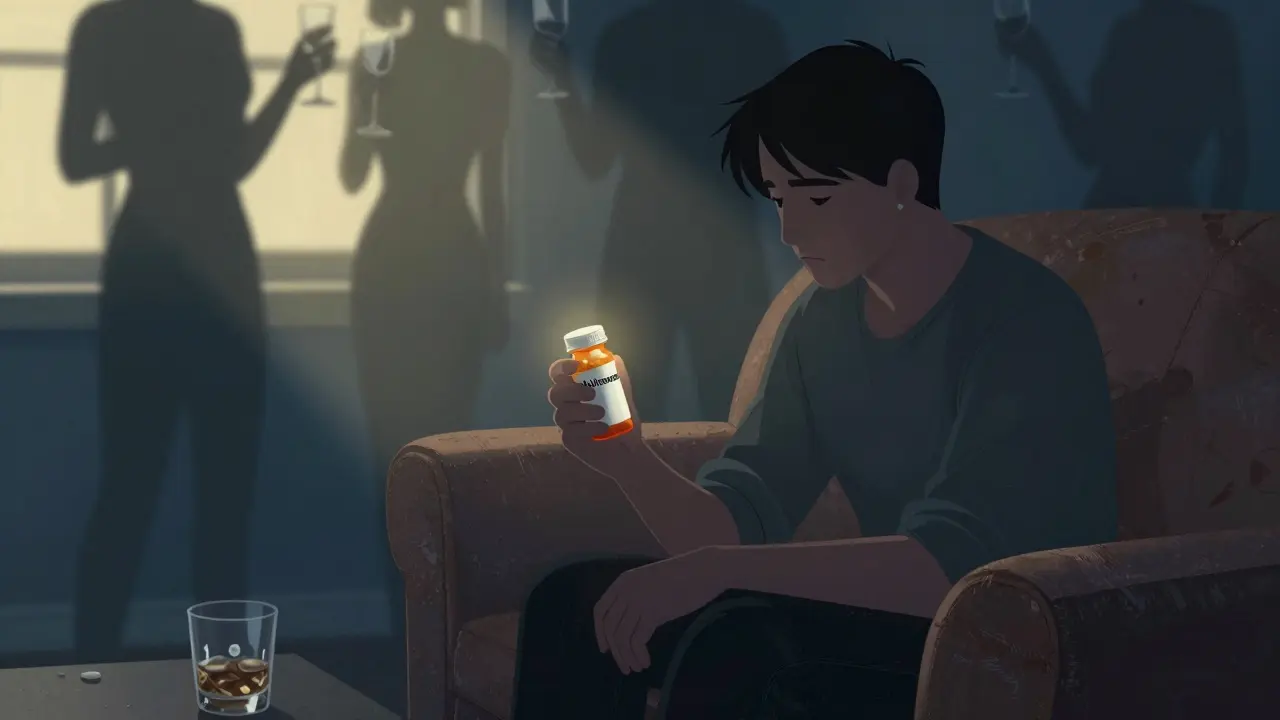
When someone is trying to stop drinking, the right medication can make a real difference. But here’s the hard truth: even when people take their prescribed meds for alcohol use disorder (AUD), many still end up back in old patterns. It’s not because they’re weak or unmotivated. It’s because the interaction between these drugs and real-life triggers is far more complex than most people realize.
How AUD Medications Actually Work
There are three FDA-approved medications for AUD, each with a different job. Naltrexone blocks the brain’s opioid receptors. That means when someone drinks, they don’t get the same rewarding buzz. It doesn’t make you sick-it just takes the pleasure out of drinking. Studies show it cuts heavy drinking days by nearly half for people who stick with it.
Acamprosate works differently. It doesn’t touch cravings. Instead, it tries to steady the brain’s chemistry after someone stops drinking. Think of it like a buffer against the anxiety, restlessness, and sleep problems that often follow detox. It’s most effective for people who’ve already quit and want to stay stopped.
Disulfiram is the oldest-and the most dramatic. It makes your body react badly to alcohol. If you drink while on it, you get severe flushing, nausea, vomiting, and even dangerous drops in blood pressure. It’s designed as a deterrent. But here’s the catch: it only works if you take it every day and never touch alcohol. And that’s where it falls apart for most people.
The Relapse Trap: Why Meds Don’t Always Work
Here’s what most treatment programs don’t tell you: medications don’t fix your life. They just take the edge off the physical urge. If you’re still living in the same environment, surrounded by the same people, and dealing with the same stressors, the meds alone won’t hold you back.
Take naltrexone. A 2023 study of 956 people found that while it reduced heavy drinking days, it didn’t stop people from drinking at all. Many users reported, "It helped me cut back, but I still had a drink now and then." And when they did, the guilt and shame often led to a full relapse.
Acamprosate has a similar issue. You need to be completely sober for at least three to five days before starting it. That’s a big barrier for someone still drinking daily. If they slip during the first week, they stop taking it-and the chance of recovery drops sharply.
Disulfiram? It’s a gamble. People stop taking it because of side effects-metallic taste, drowsiness, fatigue. Others quit because they’re scared of accidentally drinking. One patient in a recovery forum wrote: "I was on it for two weeks. Then I had a glass of wine at a party. I panicked. I threw away the whole bottle. I didn’t go back." That’s not recovery. That’s fear.
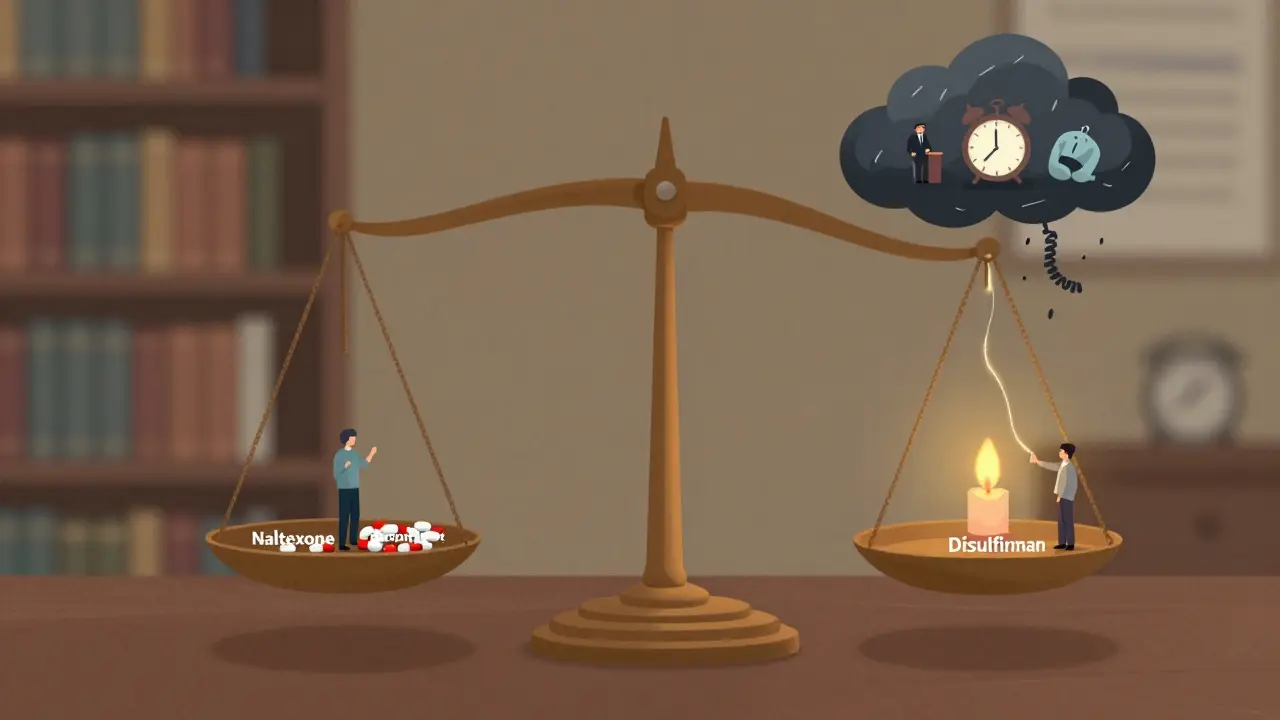
Who Benefits Most-and Who Doesn’t
Not everyone responds the same way. Research shows your history matters more than you think.
If you’ve had severe withdrawal symptoms before-seizures, hallucinations, delirium tremens-gabapentin (not FDA-approved for AUD, but widely used off-label) might be your best bet. A 2020 trial found 45% of people with high withdrawal history stayed abstinent on gabapentin, compared to 28% on placebo. It’s gentle on the liver, which is huge if you’ve got alcohol-related liver damage.
But if you’ve never had serious withdrawal? Gabapentin barely helps. In the same study, only 32% of low-symptom users stayed sober on it-almost the same as placebo.
And genetics play a role too. A 2022 study found that people with a specific serotonin gene variant responded 2.3 times better to ondansetron (an anti-nausea drug being tested for AUD). That’s not a coincidence. It’s science.
Meanwhile, people with liver disease should avoid naltrexone. It’s processed by the liver. If your liver is already struggling, the drug can build up and cause more harm. Acamprosate? It’s cleared by the kidneys. If your kidney function is low, you need a lower dose-or to skip it altogether.
The Hidden Cost of Non-Adherence
Most people don’t realize how quickly they stop taking their meds.
NIAAA data shows only 34.7% of people prescribed AUD medications are still taking them after three months. Why? Cost. Even though most are generic, monthly prices range from $20 for disulfiram to $400 for naltrexone injections. For someone living paycheck to paycheck, that’s a luxury they can’t afford.
Side effects matter too. Acamprosate causes diarrhea in over 10% of users. Naltrexone can make you nauseous. Disulfiram? It’s a daily reminder of what you lost. And for many, that’s too much.
And then there’s the stigma. People don’t tell their doctors they stopped taking the pill. They say they’re "fine." Meanwhile, they’re back to drinking, and their liver is taking the hit.
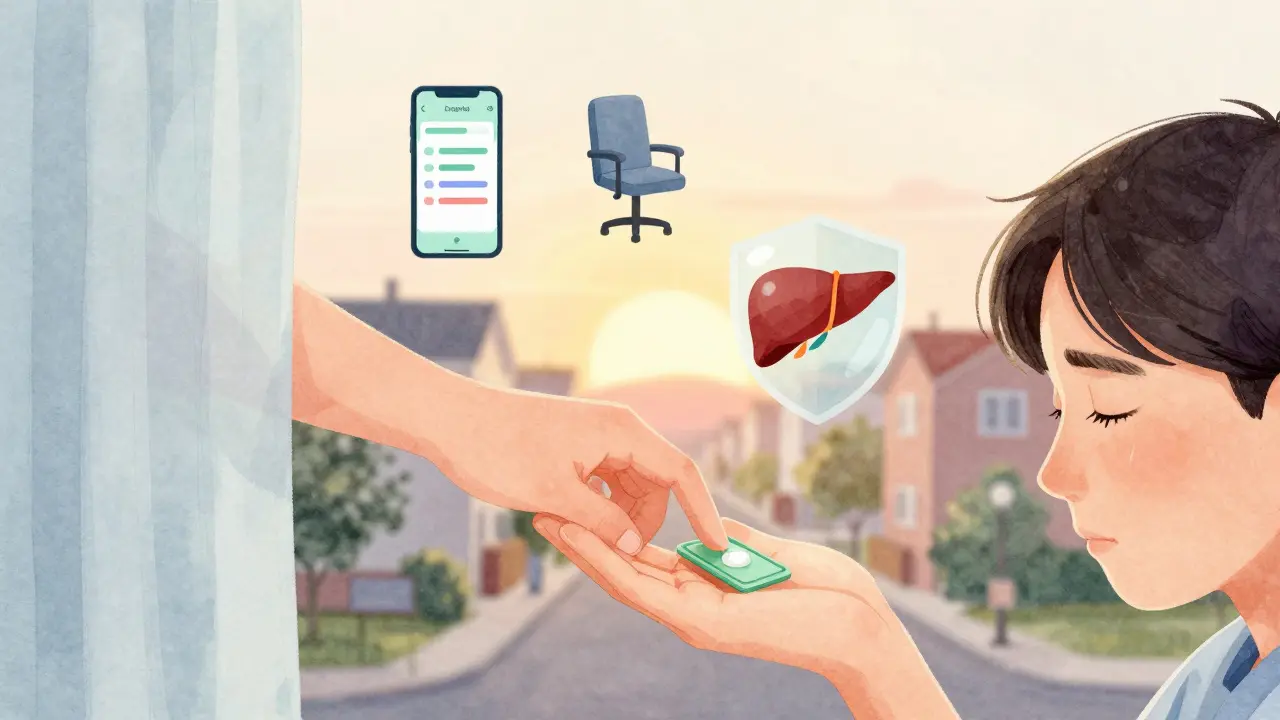
What Actually Reduces Relapse Risk
The data is clear: medication alone isn’t enough. But medication with therapy? That’s powerful.
The landmark COMBINE study found that naltrexone plus counseling reduced heavy drinking by 40% more than naltrexone alone. Same with acamprosate. The meds create space. Therapy fills it.
And it’s not just talk therapy. Digital tools are stepping in. A 2023 Lancet study showed that using a smartphone app to track cravings and get real-time coping tips cut relapse risk by 33%. Combine that with naltrexone? The results were even better.
For people with liver disease, gabapentin plus regular liver checks cut cirrhosis decompensation events by over 50%. That’s not just about drinking-it’s about survival.
The Big Picture: Why So Few Get Help
There are 14.5 million Americans with AUD. Only 8.6% get any medication. That’s not a treatment gap. That’s a system failure.
Primary care doctors don’t feel trained to prescribe these drugs. Pharmacies don’t stock them. Insurance doesn’t always cover them. Patients don’t know they exist.
And when they do know, they’re told to "just quit." No meds. No support. Just willpower.
The truth? AUD is a medical condition. It’s not a moral failing. It’s not a lack of discipline. It’s a brain disease. And like diabetes or hypertension, it needs ongoing treatment.
The best outcome isn’t perfection. It’s progress. One less drink. One fewer blackout. One more day sober. Medications can help with that. But only if they’re used right-and only if the whole system shows up for the person trying to heal.
Can I drink while taking naltrexone?
Yes, you can drink while on naltrexone-but you won’t get the same high. The medication reduces the pleasurable effects of alcohol, which helps most people drink less. However, drinking at all still carries risk, especially if you’re trying to quit entirely. Naltrexone doesn’t protect you from alcohol’s damage to your liver, brain, or heart. It only reduces the reward. If you’re using it to cut back, that’s fine. If you’re using it to "safely" drink, you’re setting yourself up for relapse.
Why is acamprosate only for people who are already sober?
Acamprosate works by restoring balance in brain chemicals that get thrown off after heavy, long-term drinking. If you’re still drinking, those chemicals stay chaotic, and the drug can’t do its job. Starting acamprosate while drinking can make side effects like diarrhea and anxiety worse. Most guidelines require 3-5 days of complete abstinence before starting. This isn’t a quirk-it’s science. The drug needs a stable baseline to work.
Is disulfiram still worth considering?
Only for a very specific group: people who are highly motivated, have a strong support system, and understand the risks. Disulfiram creates a physical consequence for drinking-flushing, vomiting, low blood pressure. That can deter someone who’s been drinking daily. But if you’re likely to forget a dose, have a slip, or live alone, it’s dangerous. Many studies show high dropout rates because of side effects or fear. It’s not a first-line choice anymore, but for some, it’s the last resort that works.
Can I take gabapentin if I have liver damage from alcohol?
Yes, and it may be one of the safest options. Gabapentin is cleared by the kidneys, not the liver, so it doesn’t stress a damaged liver. Studies show people with cirrhosis who take gabapentin are 37-53% less likely to have life-threatening complications from liver disease. It also helps with anxiety and sleep-common issues after stopping alcohol. For someone with advanced liver damage, gabapentin can be a lifeline.
Why don’t more doctors prescribe these medications?
Most primary care doctors aren’t trained in addiction medicine. They learn about blood pressure and diabetes in med school-but not how to prescribe naltrexone or assess AUD severity. There’s also stigma. Many still see AUD as a behavioral issue, not a medical one. Plus, insurance reimbursement is patchy, and time is limited. Only 28% of primary care physicians feel confident prescribing AUD meds. Until training and policy change, this gap will keep people from getting help.
11 Comments
Diane Croft
This post hits hard. I've seen too many people told to just "stop drinking" like it's a choice. AUD is a medical condition, not a character flaw. Medications aren't magic, but they're tools. When paired with real support, they change lives. No one should be shamed for needing help.
Donna Zurick
I was on naltrexone for 8 months. It didn't stop me from drinking but it made me drink less. The real turning point was therapy. Not the meds. The talking. The accountability. The daily check-ins. That's what kept me sober.
Renee Jackson
The data presented here is both compelling and clinically significant. It underscores the necessity of integrating pharmacological interventions with evidence-based behavioral therapies. Medication-assisted treatment for alcohol use disorder must be viewed through a biopsychosocial lens, not as a standalone solution. Systemic barriers to access remain a critical public health concern.
RacRac Rachel
GABAPENTIN FOR THE WIN 🙌 I had liver damage and was terrified to even think about quitting until my doctor suggested it. No nausea. No crash. Just calm. I slept for the first time in years. Now I’m 14 months sober. It’s not glamorous. But it saved me. If you have liver issues, ask for it. Don’t wait.
Jane Ryan Ryder
So we’re giving people pills so they can drink a little less? That’s not recovery. That’s damage control. Real recovery means quitting cold turkey. No meds. No excuses. Just willpower. Stop coddling people and tell them to grow a spine.
Chris Beckman
i read this whole thing and i think the real issue is people dont take their meds. like at all. i know a guy who was on disulfiram and he drank anyway just to see if it would work. like dude. its not a dare. its a life sentence. also why is everyone so scared of side effects? its not like we dont have side effects from everything else we take.
Levi Viloria
I work in primary care. We get maybe one AUD patient a month. Most don’t even know these meds exist. Doctors don’t bring it up because they’re not trained. Insurance won’t cover naltrexone unless you’ve tried three other things first. It’s broken. We’re not failing people because they’re weak. We’re failing them because the system doesn’t care enough to fix this.
Jeff Card
I’ve been sober 5 years. I took naltrexone for 6 months. It helped. But the thing that kept me from relapsing was my sponsor. The daily calls. The 3 a.m. texts. The fact that someone knew my name and still showed up. Medications help with the body. Community helps with the soul.
Matt Alexander
If you have liver damage, don’t take naltrexone. It can hurt you more. Gabapentin is better. It’s safe for your liver. Also, if you’re still drinking, don’t start acamprosate. Wait until you’re clean for 3-5 days. Otherwise it won’t work. Simple. Just follow the rules.
Gretchen Rivas
The COMBINE study is the gold standard. Medication + counseling = 40% better outcomes. Yet we still treat AUD like it’s a personal failure. We need policy changes. Not just better pills. Better access. Better training. Better compassion.
John Cyrus
People think they can just take a pill and go back to parties. That’s not recovery. That’s cheating. Real sobriety means cutting out the triggers. The people. The places. The excuses. If you’re still hanging out at bars, no medication is going to save you. You need to change your life. Not your prescription.