
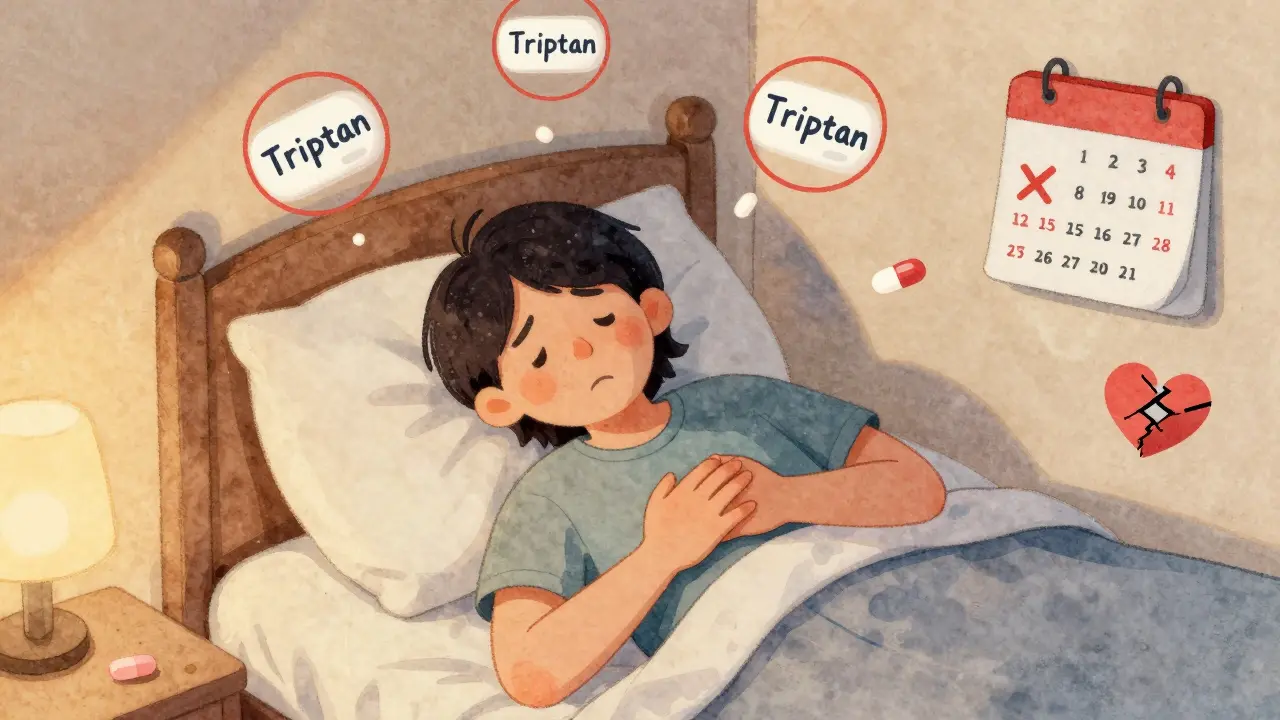
When a migraine hits, you don’t just want relief-you want it fast, without making things worse. But not all migraine meds are created equal when it comes to safety. Triptans, gepants, and ditans all treat migraine attacks, but their side effect profiles are wildly different. If you’ve had to stop a medication because of chest tightness, dizziness, or feeling too groggy to drive, you’re not alone. The truth is, the safest option for you depends on your health history, lifestyle, and how your body reacts.
Triptans: Fast Relief, But With a Cost
Triptans like sumatriptan, rizatriptan, and almotriptan have been the go-to for decades. They work fast-often cutting pain in half within an hour. But their mechanism comes with a trade-off. Triptans activate serotonin receptors that narrow blood vessels, which helps stop migraine pain but can also affect the heart and arteries. That’s why they’re off-limits if you have heart disease, uncontrolled high blood pressure, or a history of stroke.
Side effects are common. About 8-15% of users feel tingling or numbness. Around 5-12% get flushing or warmth in the face or chest. One of the most unsettling reactions? A heavy, squeezing feeling in the chest. It’s not a heart attack, but it feels like one. In fact, 3-8% of people report this sensation after taking a triptan. Subcutaneous sumatriptan causes injection-site pain in 40% of users. Nasal sprays leave a bitter, lingering taste for about a quarter of people.
Despite these side effects, serious risks are rare. A 2016 meta-analysis found no significant increase in heart attacks or strokes with triptans. Still, the American Academy of Family Physicians advises against using them within 24 hours of dihydroergotamine-another vasoconstrictor-because the combo can dangerously tighten blood vessels.
Real-world feedback matches the data. On Drugs.com, triptans average a 6.4 out of 10. Many users praise how quickly they work. But nearly half of the negative reviews mention chest pressure. One user wrote: "Experienced severe chest pressure with first dose of Imitrex-never using it again." For people with cardiovascular risks, triptans are often not worth the gamble.
Gepants: The Safer Alternative for Sensitive Patients
Gepants-like ubrogepant (Ubrelvy) and rimegepant (Nurtec ODT)-changed the game because they don’t touch blood vessels. Instead, they block CGRP, a molecule involved in migraine pain, without causing vasoconstriction. This makes them the first choice for people with heart disease, high blood pressure, or those who’ve had bad reactions to triptans.
Their side effects are mild. Nausea happens in just 4-6% of users. Drowsiness affects 2-4%. A rare allergic reaction occurred in 0.1% of rimegepant users. No chest tightness. No dizziness that knocks you out. And unlike triptans, you can take them with other medications more safely.
One downside? They’re slower. Triptans often work in 30-60 minutes. Gepants take 1-2 hours. But they last longer. Ubrogepant sticks around for 5-7 hours; rimegepant lasts 10-12. That means fewer return attacks. In fact, rimegepant is also approved for daily preventive use, which is unique among acute migraine meds.
User reviews reflect this. Rimegepant scores 7.1 out of 10 on Drugs.com. Users say: "No chest pressure like with triptans, just takes longer to work." The American Headache Society now recommends gepants over triptans for patients with cardiovascular risks. Prescription data shows gepants jumped from 2% of the market in 2020 to 28% by late 2023. They’re not perfect, but for safety, they’re hard to beat.

Ditans: Effective, But Too Sedating for Most
Lasmiditan (Reyvow) is the only ditan on the market. It targets a different serotonin receptor (5-HT1F) that works in the brain without affecting blood vessels. So, it’s safe for people with heart conditions. But here’s the catch: it hits the central nervous system hard.
Side effects are frequent and noticeable. In clinical trials, 18.8% of users on the 100mg dose felt dizzy-compared to 8.5% on placebo. Paresthesia (tingling or numbness) hit 9.4%. Sedation? 7.8%. Vertigo? 5.6%. Incoordination? 3.2%. Even cognitive changes like brain fog showed up in 2.8% of users. Fatigue and muscle weakness were also common.
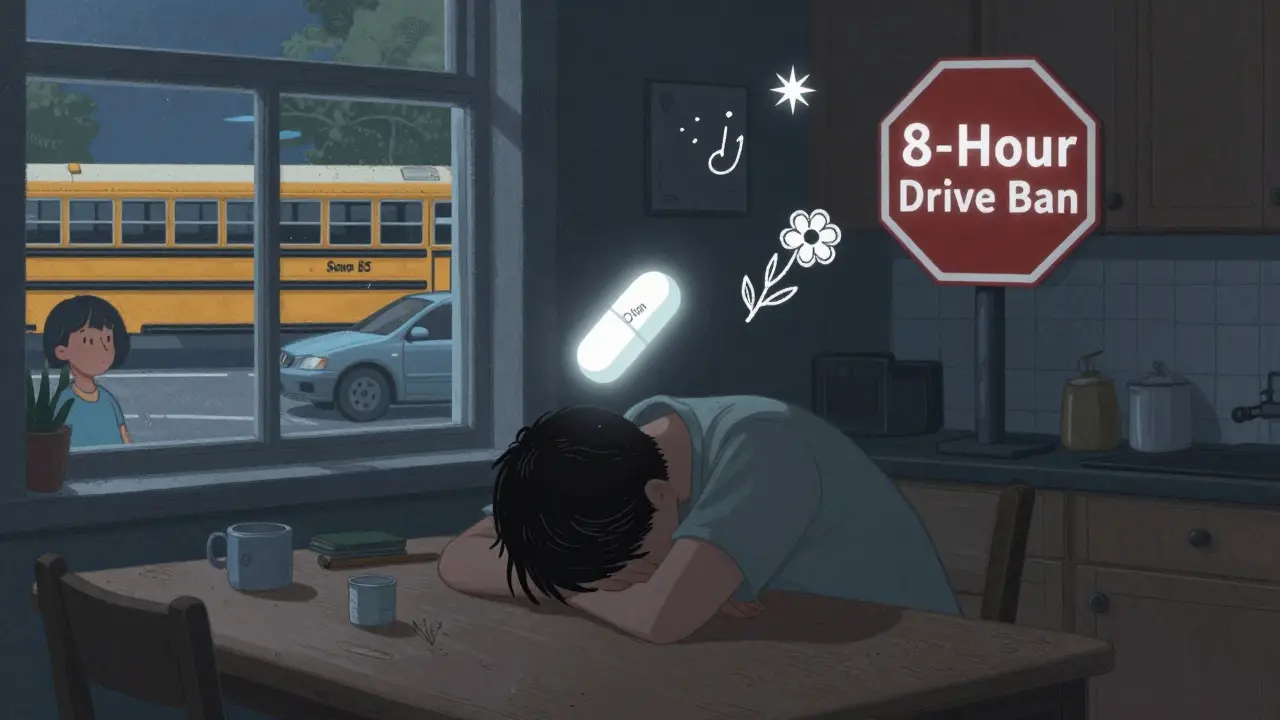
These aren’t minor. The FDA label says you must wait 8 hours before driving or operating machinery. A 2021 study found significant impairment at 5 hours post-dose. People on Reddit describe feeling "drunk without alcohol." One user wrote: "Felt completely out of it for 6 hours after taking Reyvow-I can’t function at work." That’s why it averages just 5.8 out of 10 on Drugs.com, with 63% of negative reviews citing dizziness or sedation.
Dr. Rami Burstein from Harvard says the CNS effects limit its use as a first-line option. It’s not dangerous in the way triptans can be, but it’s too impairing for people who need to get back to work, school, or caring for kids. It’s also not recommended for those with seizure risks, though evidence of increased seizures is weak.
Comparing Safety: The Numbers Don’t Lie
A 2021 analysis of 64 trials involving over 46,000 people gives us the clearest picture yet. Here’s how the three classes stack up:
| Medication Class | Any Adverse Event Risk (vs Placebo) | Cardiovascular Risk | Common Side Effects | Driving Impairment |
|---|---|---|---|---|
| Triptans | 1.5x higher | High (vasoconstriction) | Chest tightness, tingling, dizziness, fatigue | Mild (not restricted) |
| Gepants | 1.1x higher | Very Low | Nausea, drowsiness | None |
| Ditans (Lasmiditan) | 2.9x higher | None | Dizziness, sedation, vertigo, cognitive changes | Severe (8-hour restriction) |
The takeaway? Gepants have the cleanest profile. Ditans have the worst. Triptans sit in the middle-effective, but risky for some. The JAMA Network Open study confirmed that ditans carry the highest risk of side effects overall. Triptans are more likely to cause problems than gepants. But they still outperform ditans in pain relief speed.
What Should You Choose?
If you have heart disease, high blood pressure, or a family history of stroke: skip triptans. Go with a gepant. You get effective relief without the vascular risk.
If you need to drive, work, or care for kids right after taking your medicine: avoid ditans. The dizziness and sedation aren’t worth it.
If you’ve never tried triptans and have no heart issues: they’re still the fastest option. Many people tolerate them well. Almotriptan and frovatriptan tend to have fewer side effects than others in the class.
For those who’ve tried everything: gepants offer a real alternative. Rimegepant even doubles as a preventive. And new options are coming. Zavegepant, an intranasal gepant, just completed Phase 3 trials with a safety profile similar to its oral cousins.
Long-term data is still limited. Only rimegepant has 2-year safety data. We’re still learning how these drugs behave over years, not just hours. But for now, the evidence is clear: safety isn’t one-size-fits-all. Your best choice depends on your body, your life, and your priorities.
Frequently Asked Questions
Are triptans safe if I have high blood pressure?
No. Triptans cause blood vessels to narrow, which can raise blood pressure further or trigger a heart event in people with uncontrolled hypertension. If your blood pressure isn’t well-managed, avoid triptans. Gepants are a safer alternative because they don’t affect blood vessels.
Why do gepants take longer to work than triptans?
Triptans act directly on blood vessels and nerves in the brain, producing a fast response. Gepants block CGRP, a chemical that spreads migraine pain, but this process is slower. Most people feel relief in 1-2 hours, compared to 30-60 minutes for triptans. However, gepants often provide longer-lasting relief and fewer return attacks.
Can I drive after taking lasmiditan?
No. The FDA requires a warning that you must not drive or operate machinery for at least 8 hours after taking lasmiditan. Clinical studies show significant impairment in coordination and alertness even 5 hours after dosing. Many users report feeling "drunk" or "zombie-like." If your job or daily routine requires mental sharpness, this drug is likely not suitable.
Is there a migraine medicine with no side effects?
No. All medications have side effects. But gepants come closest. Their most common side effects-nausea and drowsiness-are mild and occur in fewer than 6% of users. Many people tolerate them with no noticeable issues. They’re the best option if you want effective relief with minimal disruption to your day.
Why are gepants becoming more popular than triptans?
Because safety matters more than speed for many people. Triptans work fast, but they’re risky for those with heart conditions or who experience chest tightness. Gepants don’t carry those risks. They’re also approved for both acute and preventive use. Prescription data shows gepants went from 2% of the market in 2020 to 28% by late 2023. Doctors are shifting toward them because they’re safer, longer-lasting, and better tolerated.
15 Comments
Casey Tenney
Triptans are a scam. You think you're getting relief, but you're just gambling with your heart. I had chest pressure so bad I thought I was dying. Never again. Gepants? That's the only way to go. No drama, no risk, just peace.
Timothy Olcott
Lasmiditan is the real MVP 😎 I felt like a zombie but at least my migraine was GONE. Who cares if I can't drive? I'm just happy I didn't die. 🤷♂️
Desiree LaPointe
Oh sweet mercy. Another person who thinks 'safety' means 'no side effects.' Gepants take 2 hours? That's not safety-that's patience. And you call that a breakthrough? The real breakthrough is not being a whiny hypochondriac who can't tolerate a little dizziness. Lasmiditan is a gift for those who can handle it. You just lack discipline.
Shaun Wakashige
I tried all three. Triptans gave me panic attacks. Gepants did nothing. Lasmiditan made me nap for 4 hours. I just use ibuprofen and cry now. 😴
Paul Cuccurullo
It's important to recognize that while speed matters, long-term health matters more. Choosing a medication based on immediate relief without considering downstream consequences is not just irresponsible-it's dangerous. Gepants represent a paradigm shift toward patient-centered care.
Allison Priole
I used to be a triptan girl until I got that chest squeeze after my third dose. Felt like someone was sitting on my sternum. I switched to rimegepant and honestly? It's slower but I can actually function. I took it at 8am, went to work, didn't nap, didn't feel like I'd been hit by a truck. I even made coffee. That's the win. Also, I love that it's approved for prevention now. It's like a two-for-one deal for migraine warriors. 🙌
Sandy Wells
The data shows ditans have the highest risk yet people still take them because they're desperate. Triptans are outdated. Gepants are the future. End of story. No one needs to be sedated to be pain-free
Bryan Woody
Let me break this down for you like you're five: Triptans = heart attack vibes. Gepants = chill vibes. Ditans = zombie vibes. You want fast? Triptan. You want to live? Gepant. You want to miss your kid's soccer game? Ditan. The numbers don't lie. Stop being stubborn. Gepants are the new gold standard. And yes, they cost more. But so does a hospital bill. And your dignity. And your ability to walk without feeling like you're underwater.
Chris Dwyer
I used to think triptans were the answer until I got dizzy after one and fell down my stairs. That's when I found gepants. No chest pressure. No dizziness. Just relief. And honestly? The fact that rimegepant can be used preventively changed my life. I don't have to live in fear anymore. You're not weak for choosing safety. You're smart.
Natali Shevchenko
It's fascinating how we've built entire medical paradigms around the idea that pain must be obliterated immediately. But what if the real problem isn't the migraine-it's our intolerance of discomfort? We've pathologized normal human suffering. Maybe the real solution isn't a new drug, but a new relationship with pain. Gepants are safer, yes. But are we just trading one form of dependency for another? The body has its own rhythms. Maybe we should listen more and inject less.
Johny Prayogi
I'm a nurse and I've seen patients on all three. Triptans? Scary for older folks. Ditans? Don't even let them near a steering wheel. Gepants? Zero issues. My mom's on rimegepant now and she says it's the first thing that didn't make her feel like a ghost. I'm telling everyone I know to ask for it. It's not magic-it's just better.
Nicole James
Who really controls the migraine drug market? Big Pharma. Who profits from your fear? The same people. Gepants are expensive. Ditans are labeled 'dangerous.' Triptans are old but cheap. Coincidence? Or is this a calculated move to keep you dependent on the most profitable option? They want you to believe safety is a choice. It's not. It's a privilege. And they're pricing it out of reach.
Nishan Basnet
In India, triptans are still the most prescribed because they're cheap and accessible. But I've seen too many patients with chest pain after taking them. I started recommending gepants whenever possible-even if it means paying out of pocket. One patient told me, 'I didn't know I could feel normal again.' That's worth every rupee. Safety isn't a luxury. It's a right.
Jackie Tucker
Oh, so now we're pretending that 'no vasoconstriction' equals 'no risk.' How quaint. The brain is not a separate organ from the heart. You think blocking CGRP doesn't have downstream effects? We're still learning. And yet, you're all acting like this is settled science. Please. The only thing that's settled is your willingness to believe whatever the pharmaceutical ads tell you.
Thomas Jensen
I think the government is hiding something. They don't want us to know that gepants are just a cover-up for something worse. Why else would they push them so hard? The FDA is in bed with Big Pharma. I had a dream last night where my triptan bottle turned into a snake. I'm not taking anything anymore. I'm going raw food and meditation. And maybe a crystal. I'm not sure which one yet.