
Statin Muscle Symptoms Checker
This tool helps you identify whether your muscle symptoms could be statin myopathy or neuropathy. Based on your responses, it will provide an assessment of which condition is more likely, along with guidance on next steps.
When you start taking a statin to lower your cholesterol, you expect fewer heart attacks-not new aches and pains. But for many people, muscle cramps, stiffness, or weakness show up soon after starting the pill. The big question isn’t just whether it’s the statin-it’s what kind of problem it is. Is it your muscles breaking down? Or are your nerves sending wrong signals? Mixing up myopathy and neuropathy can lead to the wrong treatment, unnecessary stopping of lifesaving medication, or worse, missed diagnosis.
Statin Myopathy: When Your Muscles Are the Problem
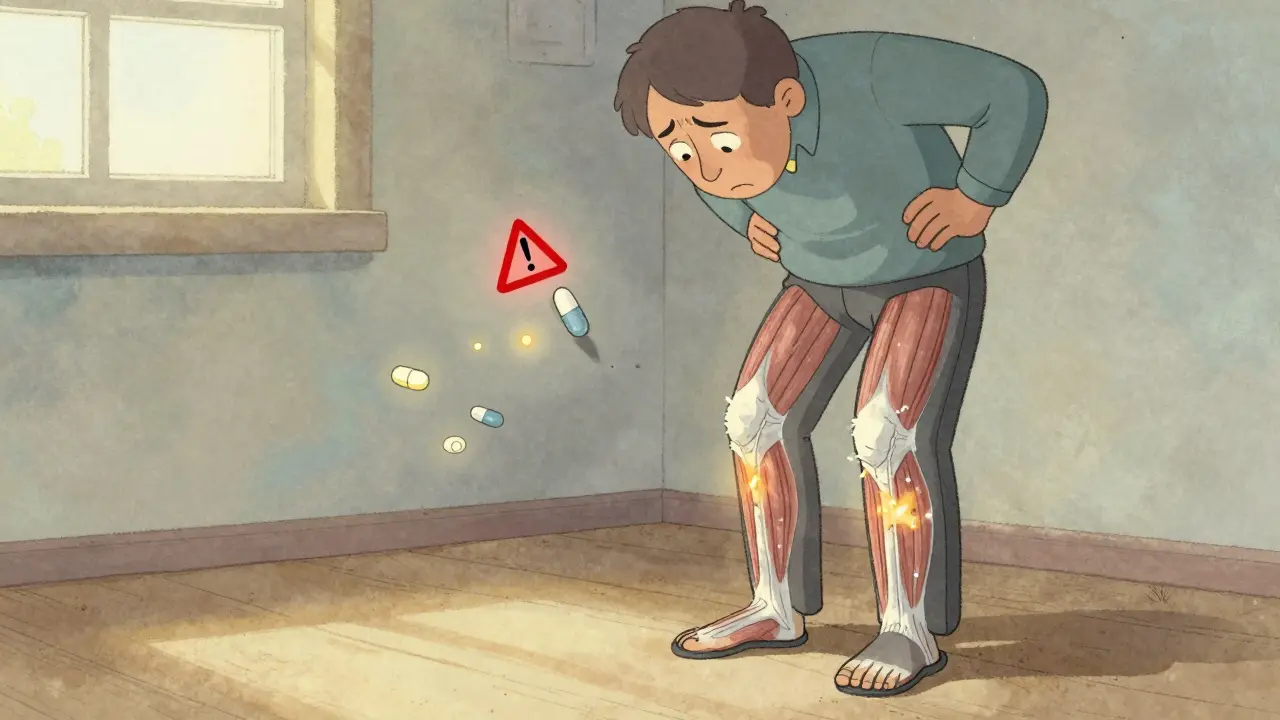
Statin-associated myopathy isn’t rare. In real-world use, 7% to 29% of people report muscle symptoms. But most of these aren’t dangerous. True myopathy-with muscle damage and high creatine kinase (CK) levels-happens in only about 1 out of every 1,000 to 10,000 people on standard doses. Still, it’s serious when it happens. The classic signs are clear: both legs feel weak, especially when climbing stairs or getting up from a chair. You might feel a deep, dull ache-not sharp pain, not burning. There’s no swelling, no redness. You don’t feel like you’ve overdone it at the gym. You just feel… heavier. And it gets worse over weeks or months, not hours. What’s going on inside? Statins block HMG-CoA reductase, an enzyme your liver uses to make cholesterol. But your muscles use that same enzyme too-and they’re 40 times more sensitive to it than your liver. When you take a statin, your muscles make less coenzyme Q10 (CoQ10), which powers your mitochondria. Without enough energy, muscle cells start to struggle. Calcium leaks out of storage, proteins don’t get built right, and muscle fibers begin to break down. Doctors look for three things to confirm it’s statin-related:- Symptoms started after you began the statin
- They got better after you stopped it
- They came back when you tried the same statin again
Neuropathy: When Your Nerves Are Misfiring
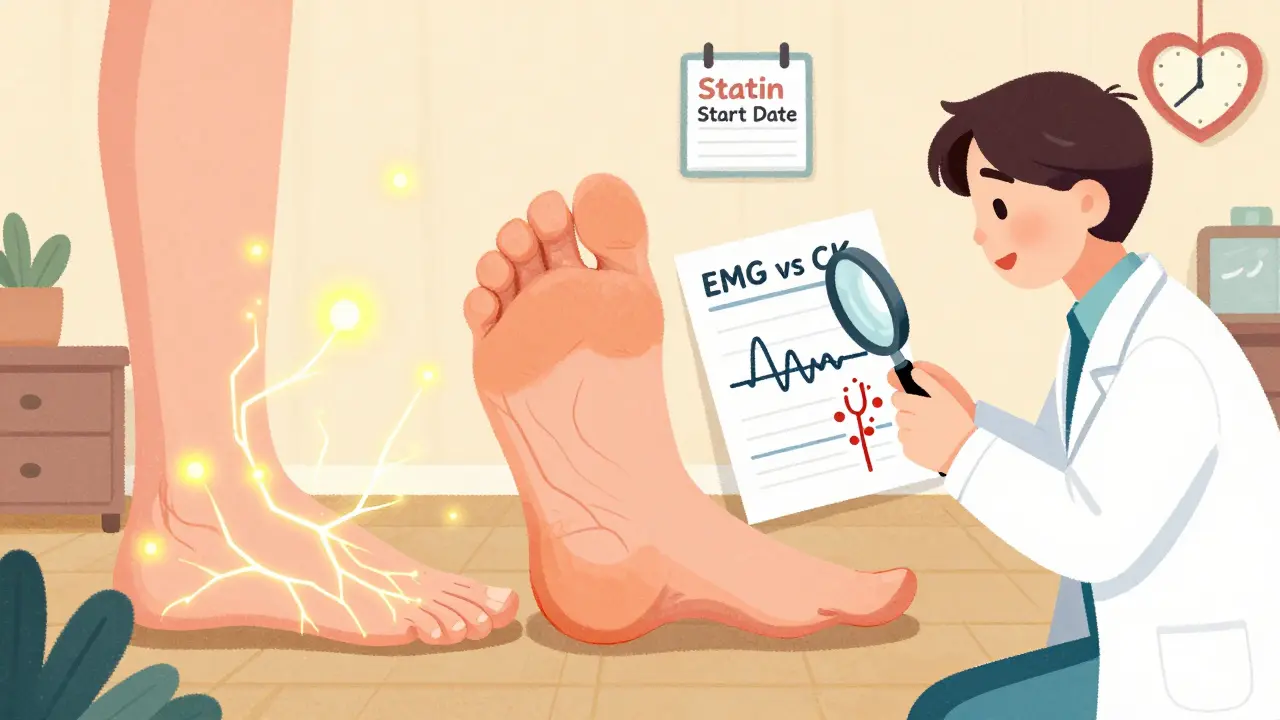
Now, here’s where things get messy. Some people on statins report tingling, burning, or numbness in their feet or hands. It feels like pins and needles, like your socks are bunched up, or your fingers are asleep. This sounds like peripheral neuropathy-and yes, some studies have linked it to statins. But here’s the twist: other studies show the opposite. One major 2019 study found people taking statins had lower odds of developing polyneuropathy. The reason? Statins lower LDL cholesterol, which carries vitamin E. Vitamin E protects nerves. Less LDL might mean less vitamin E delivered to nerves-but it might also mean less inflammation overall. The science isn’t settled. If neuropathy is real in your case, it looks different from myopathy:- Symptoms start in the feet and hands, not the thighs or hips
- You feel tingling, burning, or electric shocks-not weakness
- You might lose balance because you can’t feel the ground
- CK levels are normal
Key Differences: Myopathy vs. Neuropathy at a Glance
| Feature | Statin Myopathy | Statin Neuropathy |
|---|---|---|
| Symptom location | Proximal muscles: thighs, hips, shoulders | Distal limbs: feet, hands (stocking-glove pattern) |
| Primary sensation | Aching, heaviness, weakness | Tingling, burning, numbness |
| CK levels | Often elevated (>4x ULN in true cases) | Normal |
| Electrodiagnostic findings | Abnormal EMG (muscle damage) | Reduced sensory nerve action potentials |
| Improves after stopping statin? | Usually yes, within weeks | Unclear-may not improve or could worsen |
| Common triggers | Aging, female sex, fibrate use, SLCO1B1 gene variant | Diabetes, B12 deficiency, alcohol, long-term statin use |
What to Do If You Have Cramps on Statins
Don’t stop your statin on your own. Cardiovascular risk doesn’t disappear just because your legs ache. The goal is to keep your cholesterol low without hurting your muscles or nerves. Start with your doctor. Rule out other causes first:- Thyroid problems (hypothyroidism mimics myopathy)
- Low vitamin D or B12
- Alcohol use
- Diabetes
- Stop the statin for 4-6 weeks
- Recheck CK and muscle strength
- If symptoms improve, try a different statin-preferably a hydrophilic one like pravastatin or rosuvastatin. About 60% of people can tolerate a switch.
- If it happens again, consider non-statin options: ezetimibe, PCSK9 inhibitors, or bempedoic acid.
- Get nerve conduction tests before assuming it’s the statin
- Check blood sugar, B12, and thyroid levels
- Don’t assume statins are the cause-many people have neuropathy from other reasons
- If statins are ruled out as the cause, keep them. Stopping might raise your heart attack risk more than the nerve symptoms hurt you.
Why This Matters More Than You Think
A 2014 study found that many patients with statin myopathy go undiagnosed because doctors don’t test muscle strength. Patients think their slow walking or trouble climbing stairs is just getting older. But it’s not. And if you’re one of the 1 in 1,000 who develops true myopathy, missing it could lead to rhabdomyolysis-where muscle breaks down so badly it damages your kidneys. On the flip side, stopping statins because of tingling feet-when the real cause is diabetes-could cost you your heart. One study showed that every 1 mmol/L drop in LDL cholesterol reduces heart attack risk by 25%. That’s huge. The bottom line? Don’t panic. Don’t quit. Get tested. Know the difference. Your muscles and your heart both need the right answer.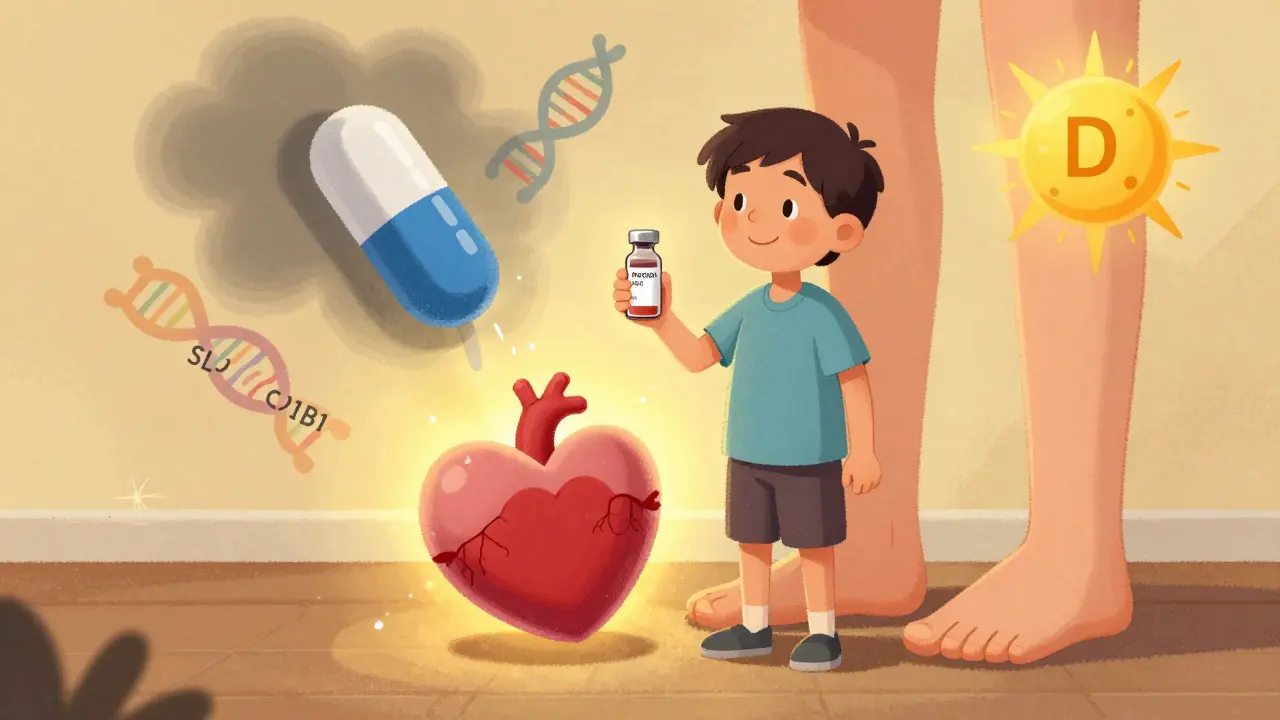
What’s New in Research
Scientists are getting better at predicting who’s at risk. The SLCO1B1 gene variant increases simvastatin myopathy risk by 4.5 times at high doses. Testing for this isn’t routine yet, but it’s coming. CoQ10 supplements? A 2015 JAMA trial gave 44 statin-intolerant patients CoQ10 or placebo. No difference in symptoms. So don’t waste your money on it. New drugs like bempedoic acid and inclisiran (a twice-yearly injection) are now options for people who can’t tolerate statins. They lower LDL without touching muscle cells.Final Thought
Muscle cramps on statins aren’t a reason to stop treatment-they’re a reason to ask better questions. Is it your muscles? Your nerves? Something else? The answer changes everything. With the right tests and a smart plan, you can protect your heart without hurting your body.Can statins cause muscle cramps without high CK levels?
Yes. Many people with statin-associated muscle symptoms have normal or only slightly elevated CK levels. The diagnosis relies more on symptoms-like weakness in the hips or thighs-and whether they improve after stopping the statin. CK levels are helpful but not required for diagnosis.
Is tingling in my feet from my statin?
Possibly, but not likely. Studies conflict on whether statins cause neuropathy. Some show increased risk, others show protection. Tingling in the feet is far more often caused by diabetes, low B12, or alcohol use. Get tested for those before assuming it’s the statin.
Should I stop my statin if I have muscle pain?
Don’t stop without talking to your doctor. Muscle pain doesn’t always mean damage. If your pain is mild and doesn’t affect your strength, you may just need a lower dose or a different statin. Stopping statins without a plan raises your risk of heart attack or stroke.
Can I ever take statins again after having myopathy?
About 60% of people can successfully restart statins after a break, especially if they switch to a hydrophilic statin like pravastatin or rosuvastatin. These are less likely to enter muscle cells. Always restart under medical supervision.
What are my options if I can’t take statins at all?
You still need to lower your cholesterol. Options include ezetimibe, PCSK9 inhibitors (injections every 2-4 weeks), bempedoic acid (a daily pill), or inclisiran (a twice-yearly shot). These reduce LDL without affecting muscles the same way statins do.
Does CoQ10 help with statin muscle pain?
No. A major 2015 study in JAMA tested CoQ10 supplements in 44 people with statin-related muscle pain. Those taking CoQ10 had no better results than those taking a placebo. It’s not recommended as a treatment.
12 Comments
Amy Ehinger
Okay so I started statins last year and got these weird leg cramps at night-thought it was just me being old or sitting too much. Turns out it was statin myopathy. I didn’t have high CK either, which is wild because everyone says you need that to prove it. My doc just had me stop for a month, then switched me to pravastatin. No more cramps. I didn’t even need CoQ10, which I bought like three bottles of because of YouTube ads. Funny how the science says no, but the internet says yes. Anyway, if you’re reading this and scared-don’t panic. Talk to your doctor. It’s fixable.
RUTH DE OLIVEIRA ALVES
It is imperative to underscore the clinical distinction between statin-associated myopathy and peripheral neuropathy, as misattribution may result in suboptimal therapeutic outcomes. The diagnostic criteria outlined herein are consistent with current guidelines from the American College of Cardiology and the European Society of Cardiology. Furthermore, the absence of elevated creatine kinase levels does not preclude a diagnosis of myopathy, as muscle fiber dysfunction may precede biochemical markers. Electrodiagnostic studies remain the gold standard for neuropathic evaluation, and clinicians are advised to rule out metabolic etiologies prior to attributing symptoms to statin therapy.
Niki Van den Bossche
Let’s be real-statins are just corporate chemistry designed to make you dependent on pills while the real cause of heart disease-chronic inflammation from processed foods, emotional repression, and the spiritual decay of modern life-is ignored. You think your LDL is the villain? Nah. It’s the system. Your body’s just trying to tell you to eat real food, walk barefoot, and stop scrolling. CoQ10 doesn’t work because Big Pharma doesn’t patent it. And those PCSK9 inhibitors? $14,000 a year. That’s not medicine-that’s a luxury tax on the sick. Wake up. Your heart isn’t broken. Your life is.
Jami Reynolds
Did you know the FDA has been quietly suppressing data on statin-induced neuropathy since 2012? There’s a whistleblower report from a clinical trial in Ohio where 17% of patients developed severe neuropathy-but the study was buried because statins are too profitable. The SLCO1B1 gene? That’s just a distraction. They’re testing you so they can sell you more drugs. Your tingling feet? It’s not diabetes. It’s not B12. It’s the statin. And they don’t want you to know. Check the VAERS database. Look up ‘statin neuropathy.’ You’ll see the pattern. They’re killing people slowly. And you’re still taking it?
Jan Hess
Man I had the same thing. Thought I was just getting old till I couldn’t get up from the couch without using my hands. Went to my doc, he said stop the statin for a bit. Two weeks later I was climbing stairs like I was 25 again. Switched to rosuvastatin and no issues. Don’t quit cold turkey but don’t ignore it either. Your body talks-you just gotta listen. And no CoQ10 crap. Waste of cash. Just switch meds and move on.
Iona Jane
They told me it was just aging. But I know. I KNOW. My feet burned like fire. My legs turned to jelly. I cried in the shower. I didn’t tell anyone because they’d say I’m dramatic. But then I found a forum. 37 women. All on statins. All with the same symptoms. All ignored. Now I’m off them. My skin tingles less. My mind is clearer. They want you afraid of heart attacks so you’ll take the pills. But what if your nerves are dying? Who cares about your LDL when your whole body’s screaming? I’m not crazy. I’m awake.
Jaspreet Kaur Chana
Bro I’m from India and my uncle was on statins for 10 years. He got cramps, thought it was normal. Then one day he couldn’t walk. Turned out his CK was through the roof. He ended up in ICU with kidney damage. After that, we switched him to ezetimibe. No more problems. Point is-don’t wait till it’s bad. Get your CK checked. Talk to your doc. And yeah, CoQ10? Useless. I tried it. Nothing. But bempedoic acid? That’s the future. One pill, no muscle pain. And it’s cheap here. You don’t need to suffer.
ellen adamina
I had the tingling feet. Thought it was neuropathy. Got tested. Normal nerves. Turns out I was just low on B12. Took a supplement for two weeks and it was gone. I still take my statin. I’m 62 and I’ve had two stents. I’m not giving that up for a little numbness. But I wish someone had told me to check B12 first. So many people blame the pill when it’s just a vitamin.
Gloria Montero Puertas
Oh, so now we’re just supposed to ‘trust the system’? You think your doctor actually knows the difference between myopathy and neuropathy? Please. Most of them read a two-page summary from a pharma rep and call it a day. And CoQ10? Of course it doesn’t work-because the study was funded by the same company that makes the statin. The real question is: why are we even giving people drugs that damage mitochondria? Why not fix the diet? Why not fix the stress? Why not fix the life? Instead, we slap on a pill, call it science, and pretend we’re helping. You’re not healing. You’re just delaying the inevitable with chemistry.
Tom Doan
So let me get this straight: you’re telling me that a drug that lowers LDL by 50%-and reduces heart attack risk by 25% per mmol-is somehow less safe than the alternative? The alternative being… what? A placebo? A diet? A prayer? The fact that people would rather believe in CoQ10 supplements or conspiracy theories than actual clinical data is both tragic and hilarious. You don’t get to pick and choose which science you believe. Either you trust peer-reviewed trials or you start eating raw meat and hoping for the best.
Arjun Seth
Statins are poison. They kill your muscles. They kill your brain. They kill your soul. Look at the studies-every one of them is paid for by big pharma. The FDA is corrupt. Your doctor is a puppet. You think your heart is safe? It’s not. You’re just numb. The real cure is fasting. Cold showers. Sunlight. And quitting sugar. Stop taking the pill. Your body knows what to do. You just forgot how to listen. I saved 12 people this year by telling them to quit statins. You’re next.
Ayush Pareek
Hey, if you’re reading this and you’re worried about cramps-don’t beat yourself up. This stuff is confusing. I’ve been there. Took me six months to figure out my symptoms weren’t ‘just aging.’ But here’s the good news: you’re not alone, and there’s a path forward. Talk to your doc. Get tested. Switch statins if you need to. There are other options. And if it’s not the statin? Great-you keep taking it and protect your heart. Either way, you’re doing something right by asking. That’s huge. Keep going. You’ve got this.