
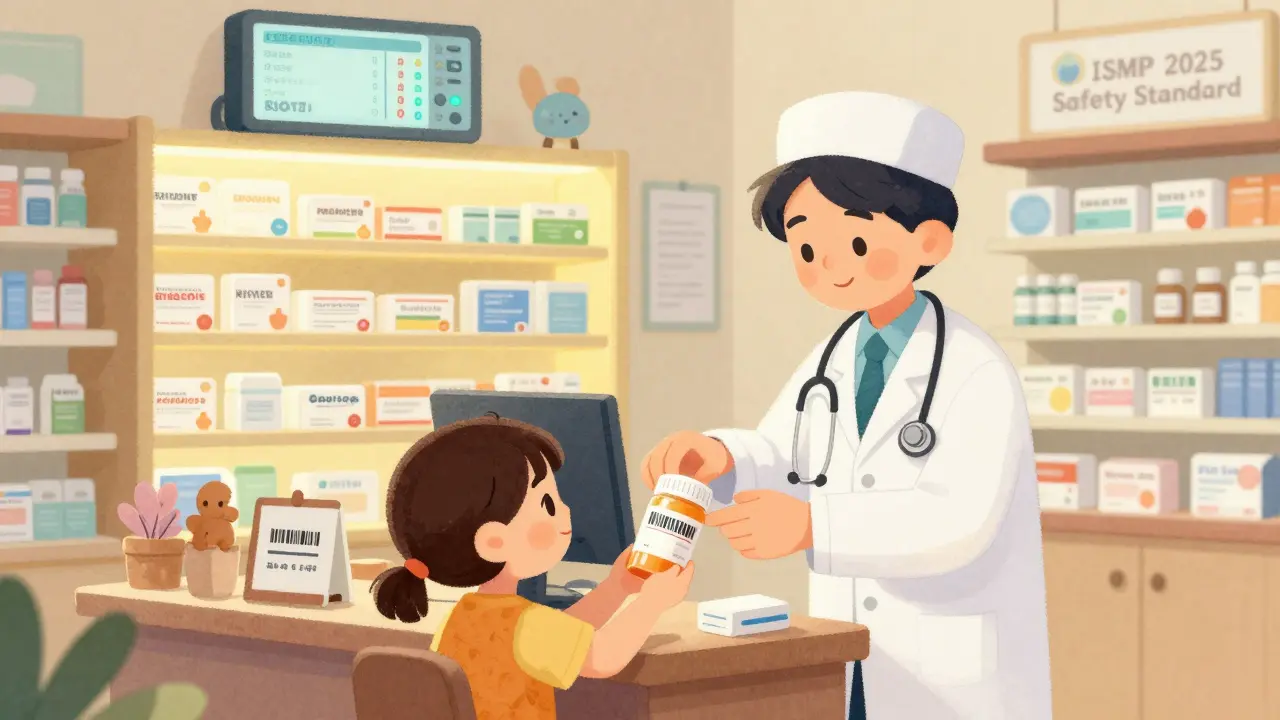
Medication errors are no longer just rare mistakes-they’re preventable crises. In 2025, new safety data forced healthcare systems worldwide to rewrite the rules. From community pharmacies to hospital wards, the changes aren’t minor tweaks. They’re full system overhauls designed to stop harm before it happens. If you’re taking medication, prescribing it, or managing it in any way, you need to know what’s changed-and why it matters.
What’s Actually Changed in 2025?
The biggest shift came from the World Health Organization (WHO) a global health authority that released its first comprehensive framework for balancing access to controlled medicines with misuse prevention. Their September 2025 guideline replaced a 14-year-old policy and now requires countries to do eight specific things: use data to decide which drugs are available, track supply chains with digital tools, protect patients’ legal right to their prescriptions, train staff properly, educate the public, protect privacy while monitoring use, link drug access to national insurance, and manage substance use disorders as part of routine care.
Meanwhile, the Institute for Safe Medication Practices (ISMP) a nonprofit organization that publishes evidence-based medication safety best practices for pharmacies rolled out its 2025-2026 community pharmacy guidelines. These aren’t suggestions. They’re clear, actionable steps. For example, pharmacies must now use patient weight to double-check pediatric doses, not guess. They must scan barcodes on every single medication before giving it out. And they must have independent double-checks for high-risk drugs like insulin or blood thinners.
The Centers for Medicare & Medicaid Services (CMS) a U.S. federal agency that administers Medicare and works with states to manage Medicaid didn’t just update-they rewired incentives. Their 2025 Patient Safety measures now directly affect how much Medicare pays pharmacies. If a plan doesn’t hit targets for medication adherence (like statins for cholesterol) or avoids high-dose opioid prescriptions for non-cancer patients, it loses money. That’s not theoretical. It’s real dollars. Pharmacies that ignored these metrics in 2024 are now scrambling to fix their systems.
The Hazardous Drugs List Got a Major Update
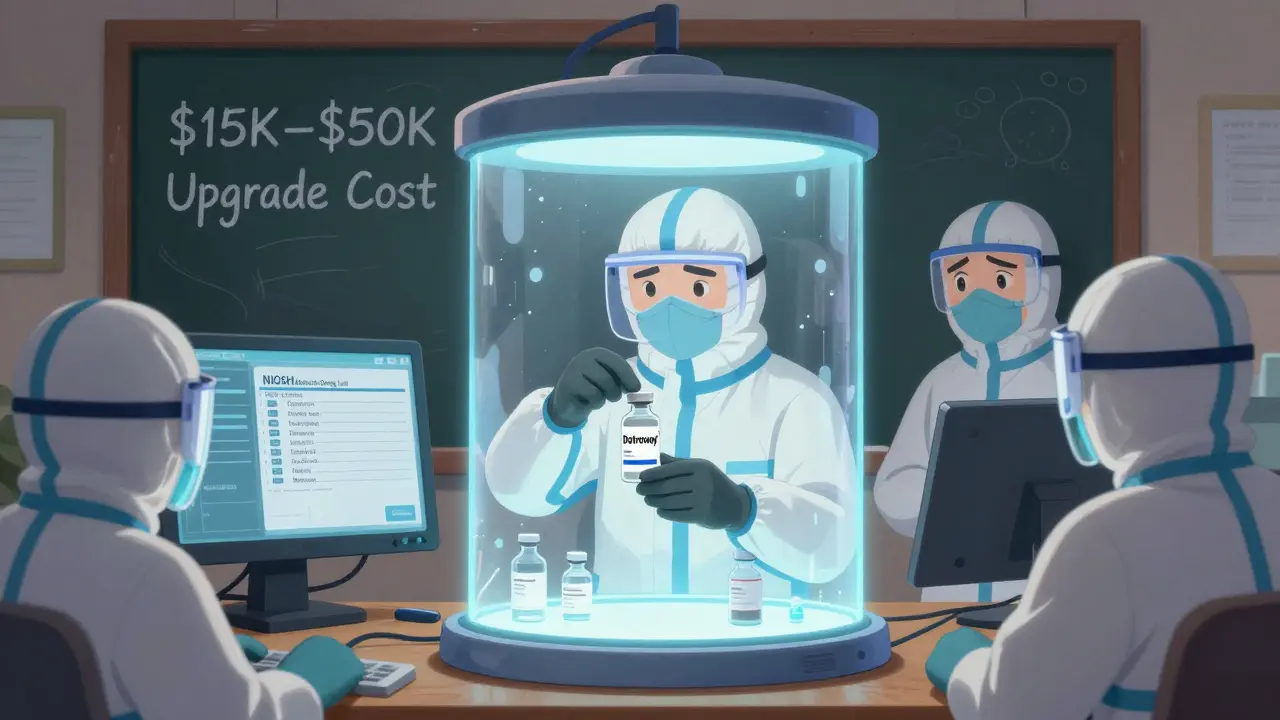
On July 17, 2025, the NIOSH the National Institute for Occupational Safety and Health, a U.S. federal agency focused on workplace safety added three new cancer drugs to its Hazardous Drugs List: Datopotamab deruxtecan (Datroway®), Treosulfan (Grafapex™), and Telisotuzumab vedotin (Emrelis™). These are antibody-drug conjugates-powerful, targeted therapies that are also highly toxic. If a pharmacist or nurse handles them without proper protection, they risk exposure that can lead to organ damage, infertility, or even cancer.
Pharmacies now need containment equipment. That means special ventilated hoods, gloves rated for chemotherapy, and spill kits. The cost? Between $15,000 and $50,000 per pharmacy. Many small clinics didn’t have this. Now they’re forced to choose: upgrade or risk worker safety.
One pharmacist in Ohio told a colleague: “We didn’t even know these drugs were hazardous until the list updated. We’d been compounding them for months. We had to shut down operations for two weeks while we got the right gear.”
How These Rules Are Being Measured
It’s not enough to say you’re following the rules. You have to prove it.
CMS now tracks performance using real data from pharmacy claims. For example:
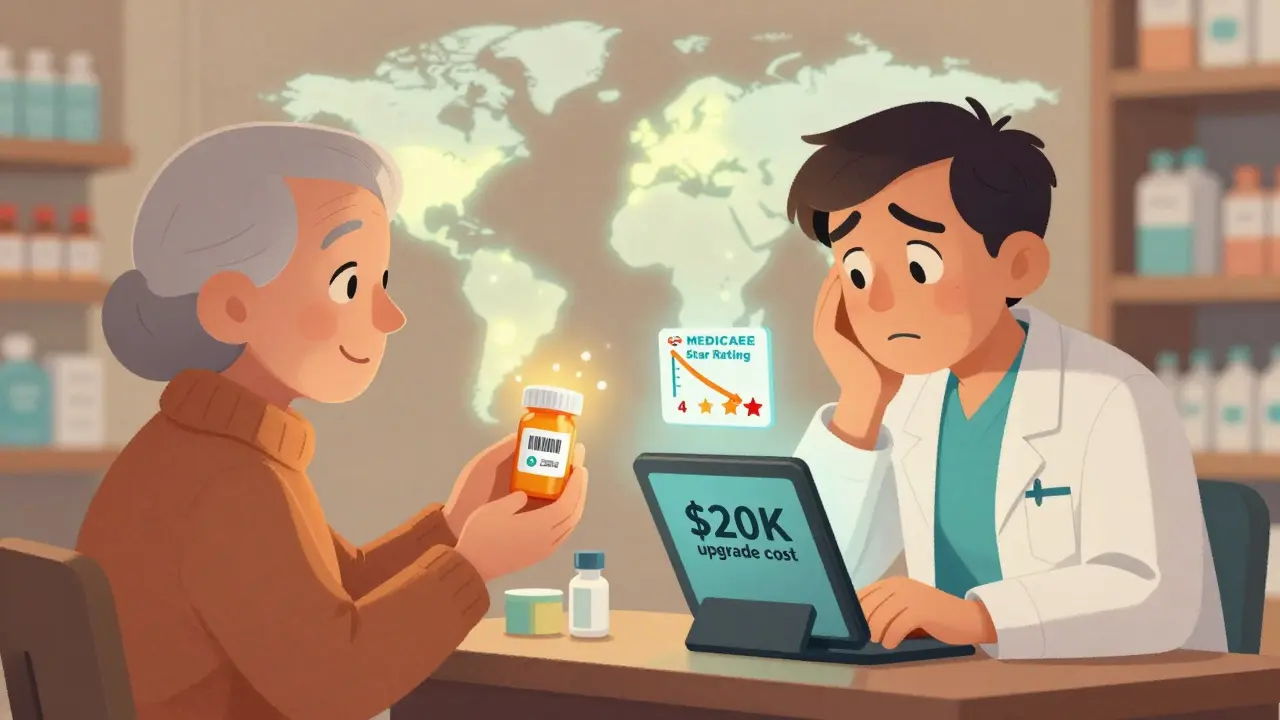
- ADH-Statins: Are patients on cholesterol-lowering drugs actually filling their refills? If less than 80% do, the pharmacy’s Medicare Star Rating drops.
- OHD: Are opioid prescriptions being given at dangerous doses to patients without cancer? If yes, penalties apply.
- APD: Are long-term care residents getting appropriate dementia medications? This one improved outcomes by 72% in facilities that tracked it closely.
These aren’t abstract goals. They’re tied to funding. A Medicare Part D plan with a 4-star rating can gain thousands of new enrollees. A 3-star plan? It loses business. That’s why some pharmacies hired dedicated safety officers just to manage these metrics.
What’s Working-And What’s Not
Some changes are making a huge difference. A Texas pharmacy chain that implemented ISMP’s weight-based dosing protocol cut pediatric dosing errors by 63% in six months. Another pharmacy that started barcode scanning saw a 40% drop in wrong-drug errors.
But not everything is smooth. Many independent pharmacies say they can’t afford the tech upgrades. One owner in Michigan posted on a pharmacy forum: “We’re expected to spend $20,000 on scanners and software, but our profit margin is $15,000 a year. What are we supposed to do?”
Staff burnout is another issue. Pharmacists are already short-staffed. Adding new protocols, training, documentation, and audits without extra help leads to fatigue-and more mistakes.
And while the WHO’s global framework sounds ideal, many low-income countries still lack the infrastructure to implement it. A pharmacist in Kenya said: “We can’t even get basic medicines. How are we supposed to track digital supply chains?”
What You Need to Do Now
If you’re a patient: Ask your pharmacist if they follow ISMP’s safety checklist. Do they scan your prescriptions? Do they check your weight before giving you a dose? If they don’t, ask why.
If you’re a provider: Review the NIOSH hazardous drugs list. Are you handling any of the new agents? If yes, make sure your team has the right training and equipment. Don’t wait for an exposure to happen.
If you’re running a pharmacy: Start with one change. Don’t try to do everything at once. Pick the easiest win-maybe switching to barcode scanning or improving how you communicate test results. Use ISMP’s free 2025-2026 Implementation Toolkit. It’s online, no cost, and step-by-step.
The bottom line: Medication safety isn’t about rules. It’s about survival. Every year, over 2.3 million serious medication errors happen worldwide. Most are preventable. These updates are the clearest signal yet that the system is finally trying to fix itself.
What’s Coming in 2026
ISMP is already working on new hospital guidelines for early 2026, with a focus on artificial intelligence. Expect AI tools that flag dangerous drug interactions before a prescription is even filled. The FDA has signaled it will issue at least two major safety alerts per month in 2026. And the WHO is pushing 47 countries to start tracking medication errors-only 12 have plans so far.
The message is clear: Safety is no longer optional. It’s the new standard.
13 Comments
Jeremy Van Veelen
This is the most important public health update in a decade. I mean, seriously-2.3 MILLION preventable errors? We’re not talking about minor slips here. We’re talking about people dying because we let bureaucracy win. The NIOSH update alone? Game changer. Datroway®? Treosulfan? We’ve been handling these like candy. Now we have to wear hazmat gear just to fill a script. It’s insane. And yet… necessary.
Someone’s gotta say it: if your pharmacy hasn’t upgraded since 2019, you’re a liability.
Laura Gabel
I’m tired of this performative safety crap. Pharmacies are already drowning. Now we want them to spend $50K on hoods while Medicare cuts their reimbursement? Classic. The system’s rigged. People need meds. Not more audits.
jerome Reverdy
Honestly? This is the first time I’ve seen real alignment between policy and frontline reality. The ISMP weight-based dosing stat? 63% drop in errors? That’s not a number-it’s lives. And the barcode thing? It’s basic. Like, seatbelt-level basic. Why wasn’t this mandatory 10 years ago?
Yes, small shops are struggling. But the toolkit is free. The training is online. The answer isn’t to roll back safety-it’s to fund the fix. Maybe Congress should stop funding drones and start funding pharmacists.
Andrew Mamone
The WHO framework is beautiful in theory. 🌍 But let’s be real-Kenya’s pharmacist isn’t gonna get digital supply chains if they can’t even get clean water. We’re asking low-resource countries to leapfrog 30 years of infrastructure development. That’s not equity. That’s colonialism with a safety manual. We need tiered implementation, not one-size-fits-all mandates.
MALYN RICABLANCA
Ohhhhhhh YES!!! Finally!! I’ve been screaming this since 2021!! The hazardous drug list update? I KNEW IT!! My cousin’s a nurse in Chicago-she got a rash from handling one of those new ADCs and they told her it was ‘allergic reaction’-NOPE. IT WAS TOXIC EXPOSURE!! THEY COVERED IT UP!! THIS IS A COVER-UP!! WE NEED A CONGRESSional INVESTIGATION!! 🔥💣💥
gemeika hernandez
I work at a pharmacy. We can’t afford scanners. We have one person doing three jobs. We’re not lazy. We’re just tired. And now they want us to be data entry clerks too? What’s next? Are we gonna be expected to code our own prescriptions?
Nicole Blain
I’m just glad someone’s finally listening. 🙌 My grandma almost died because they gave her the wrong dose. She’s fine now, but… I never trusted pharmacies after that. If this saves even one person? Worth it.
Kathy Underhill
The underlying assumption here-that safety can be legislated-is flawed. Systems change behavior, but they don’t change culture. You can mandate barcodes, but if the pharmacist is exhausted, anxious, and disrespected, the system will still fail. The real fix isn’t in policy-it’s in dignity. Treat the people who give us medicine like professionals, not cogs. Everything else follows.
Srividhya Srinivasan
This is all a distraction. The real issue? Big Pharma is hiding the side effects. These ‘new guidelines’? Just a smokescreen. They want us to think we’re safe while they keep pricing drugs at $5000 a pill. They’re using NIOSH to scare us into compliance. I’ve seen the documents. The truth is buried under jargon. Wake up, sheeple.
Stephen Habegger
Solid update. Small wins matter. Start with barcode scanning. Then weight checks. Then double-checks. Don’t try to boil the ocean. Progress > perfection.
Gaurav Kumar
Finally! India needs to adopt these standards yesterday. Our pharmacies are still giving out insulin without checking weight. I’ve seen children given adult doses because ‘it’s close enough’. This isn’t healthcare-it’s Russian roulette. The WHO framework is a gift. We’re not even using our own national data. Shameful. We need a national mandate. Now. 🇮🇳
Kyle Young
I find it fascinating how the language of safety has evolved from ‘error prevention’ to ‘systemic survival’. It implies a moral imperative rather than a technical fix. Are we now obligated, ethically, to upgrade? Or is this just another cost-shifting mechanism disguised as progress? The tension between equity and efficacy here is profound.
Aileen Nasywa Shabira
Oh wow. Another ‘revolution’ that only benefits hospitals with $10M budgets. Meanwhile, rural pharmacies are being told to ‘adapt’ while their employees work 12-hour shifts without raises. Brilliant. Let’s just punish the people who are already overworked. Classic. 🙄