
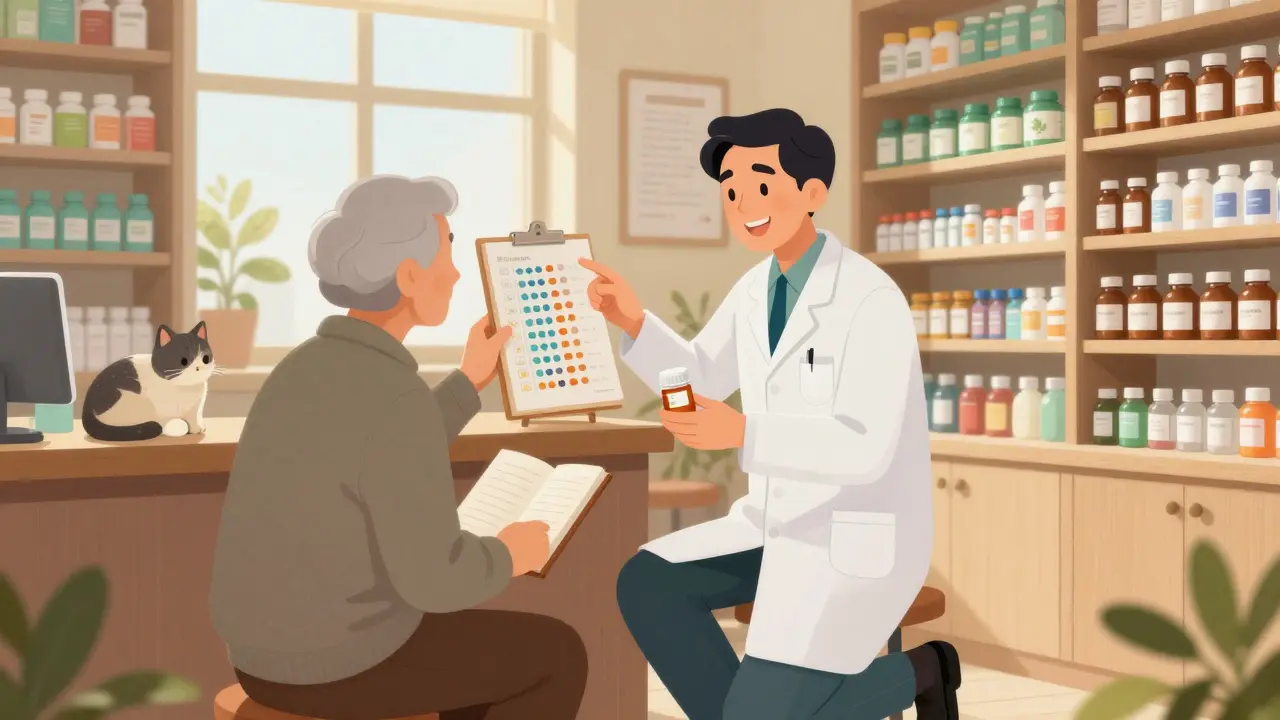
Don’t Just Pick Up Your Prescription-Ask These Questions
Every year, over 1.3 million people in the U.S. end up in the emergency room because of mistakes with their medications. Many of these errors happen because patients don’t know what they’re taking, why they’re taking it, or how it might interact with other things they use. Your pharmacist isn’t just the person who hands you the bottle-they’re a trained medication expert, and you have every right to ask them anything. In fact, the best way to stay safe and get the most out of your treatment is to ask the right questions before you leave the pharmacy.
What Is This Medicine For, and How Will It Help Me?
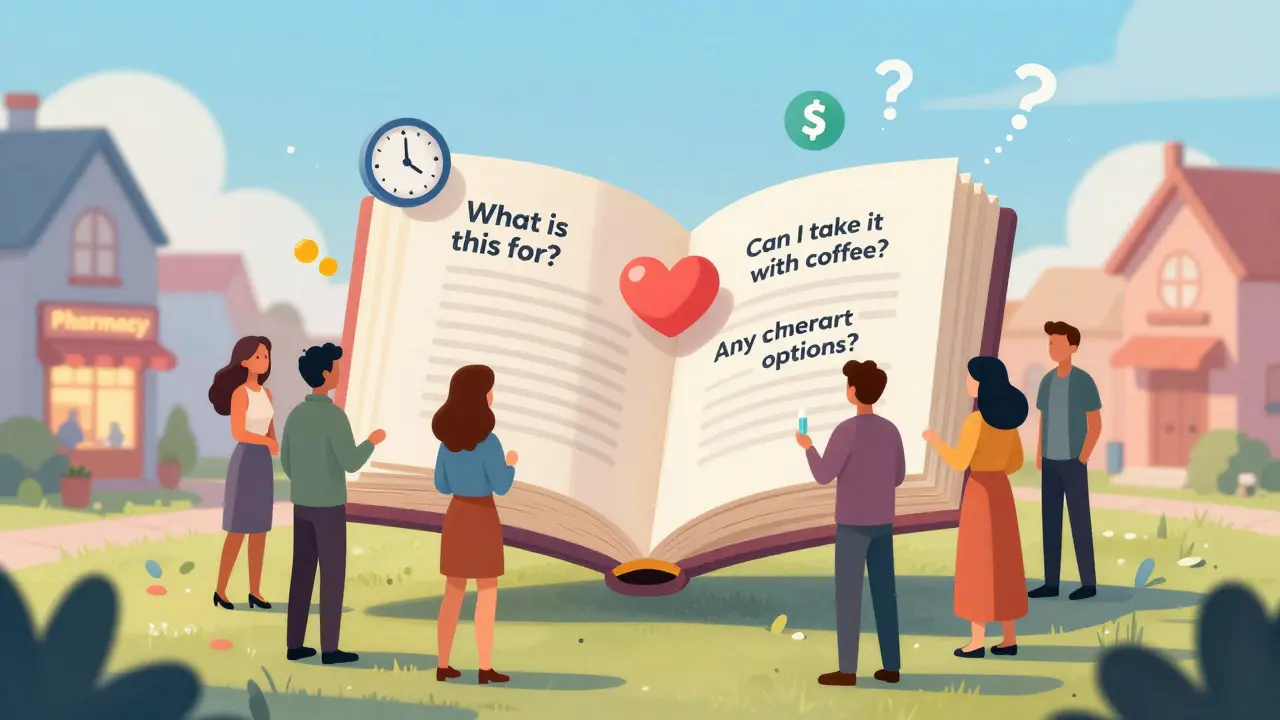
It sounds simple, but 30% of medication errors happen because patients don’t understand why they’re taking a drug. You might get a prescription for something like metformin or lisinopril and assume it’s for your blood sugar or blood pressure-but what if it’s being used off-label for something else? Always ask: "What is this medication for?" and "How will I know if it’s working?" If you’re taking it for high cholesterol, you won’t feel different right away. But your pharmacist can tell you what lab tests your doctor will check and when to expect results. This isn’t just about understanding the name-it’s about knowing your own health goals.
How and When Should I Take This?
Getting the timing right matters more than you think. Some pills need to be taken on an empty stomach. Others work better with food to avoid nausea. A few can’t be taken with grapefruit juice, dairy, or even coffee. Ask: "Should I take this with or without food?" "What time of day is best?" and "Can I take it with my other meds?" One patient in Manchester took their blood pressure pill at night because they thought "morning" meant after breakfast. Turns out, the drug works best when taken in the morning on an empty stomach. Their blood pressure didn’t improve until they changed the timing. Pharmacists see this every day. Don’t guess-ask.
What Side Effects Should I Watch For?
Not all side effects are dangerous, but some are. Ask: "What are the most common side effects?" and "Which ones mean I need to call my doctor right away?" For example, if you’re on a statin, muscle pain might be normal at first-but if it’s severe or accompanied by dark urine, that’s a red flag for a rare but serious condition called rhabdomyolysis. If you’re on antidepressants, dizziness or nausea might fade after a week. But if you feel suddenly agitated, have racing thoughts, or start having suicidal thoughts, you need to act fast. Pharmacists know which side effects are typical and which are emergencies. They can also suggest ways to manage them-like taking a pill with a snack to reduce stomach upset, or using a humidifier if dry mouth is an issue.
Could This Interact With Anything Else I’m Taking?
This is one of the most overlooked questions. You might think your pharmacist only cares about your prescription drugs. But they need to know about everything: over-the-counter painkillers, herbal supplements, vitamins, even CBD oil. The FDA says 15% of hospital admissions are caused by drug interactions that could have been avoided. A man in Manchester was taking St. John’s Wort for mild depression and was prescribed tramadol for back pain. Neither his doctor nor his pharmacist knew about the supplement until he asked. The combination triggered serotonin syndrome-a potentially deadly condition. He survived, but only because he asked. Bring a list of everything you take, including doses and how often. Use the FDA’s free "My Medicine Record" form if you need help organizing it.
What If I Miss a Dose?
Life happens. You forget. You’re traveling. You’re sick. You run out early. That’s normal. But what you do next matters. Ask: "What should I do if I miss a dose?" Some pills you can take right away. Others you should skip and wait for the next scheduled time. Taking a double dose can be dangerous. For example, if you miss a dose of warfarin (a blood thinner), taking two pills the next day could cause dangerous bleeding. But if you miss a dose of birth control, the rules are completely different. Pharmacists know the exact guidelines for each drug-and they can help you avoid mistakes that could land you in the hospital.
Is There a Cheaper or Generic Version?
Brand-name drugs can cost 80-85% more than their generic equivalents-and they work the same way. The FDA requires generics to have the same active ingredients, strength, and effectiveness. Ask: "Is there a generic version available?" and "Are there any cost-saving programs or coupons?" Many pharmacies offer $4 generic lists for common medications like metformin, levothyroxine, or atorvastatin. Some manufacturers have patient assistance programs. Pharmacists can often help you apply on the spot. One woman in Manchester saved $120 a month just by switching from a brand-name thyroid pill to its generic. She didn’t know it was an option until she asked.
Are There Other Ways to Manage My Condition?
Medication isn’t always the only answer. Ask: "Are there non-drug alternatives?" For example, if you’re on medication for high blood pressure, your pharmacist might mention that losing 5-10% of your body weight, cutting back on salt, or walking 30 minutes a day can lower your numbers as much as some pills. If you’re on sleeping pills, they might suggest cognitive behavioral therapy for insomnia (CBT-I), which studies show works better long-term than medication. Even for chronic pain, they might point you toward physical therapy or acupuncture. Pharmacists see what works-not just what’s prescribed. They’re often the first to know about evidence-based alternatives that don’t cost a fortune.
How Do I Know If This Medicine Is Working?
Many people stop taking their meds because they don’t feel any different. That’s dangerous. Blood pressure pills don’t make you feel better-they prevent damage. Cholesterol meds don’t give you energy-they reduce your risk of heart attack. Ask: "When should I start noticing results?" and "Will I need blood tests or other monitoring?" For diabetes, you’ll track your glucose levels. For thyroid meds, your doctor will check TSH levels every few months. Your pharmacist can tell you what to look for and when to follow up. If you’re not sure whether the medicine is working, don’t assume it’s not. Ask. You might be doing better than you think.
Can I Get This Medicine Through Mail Order or Telepharmacy?
If you live in a rural area or have trouble getting to the pharmacy, ask: "Can I get this through mail order?" or "Do you offer telepharmacy services?" Over 60% of rural hospitals now offer virtual pharmacist consultations. You can talk to a pharmacist by video or phone to review your meds, get refill reminders, or ask questions without leaving your home. Mail-order pharmacies often give you a 90-day supply at a lower cost. Some insurance plans require it for maintenance meds. Even if you’re in the city, this option can save you time and trips.
What Should I Bring to My Next Pharmacy Visit?
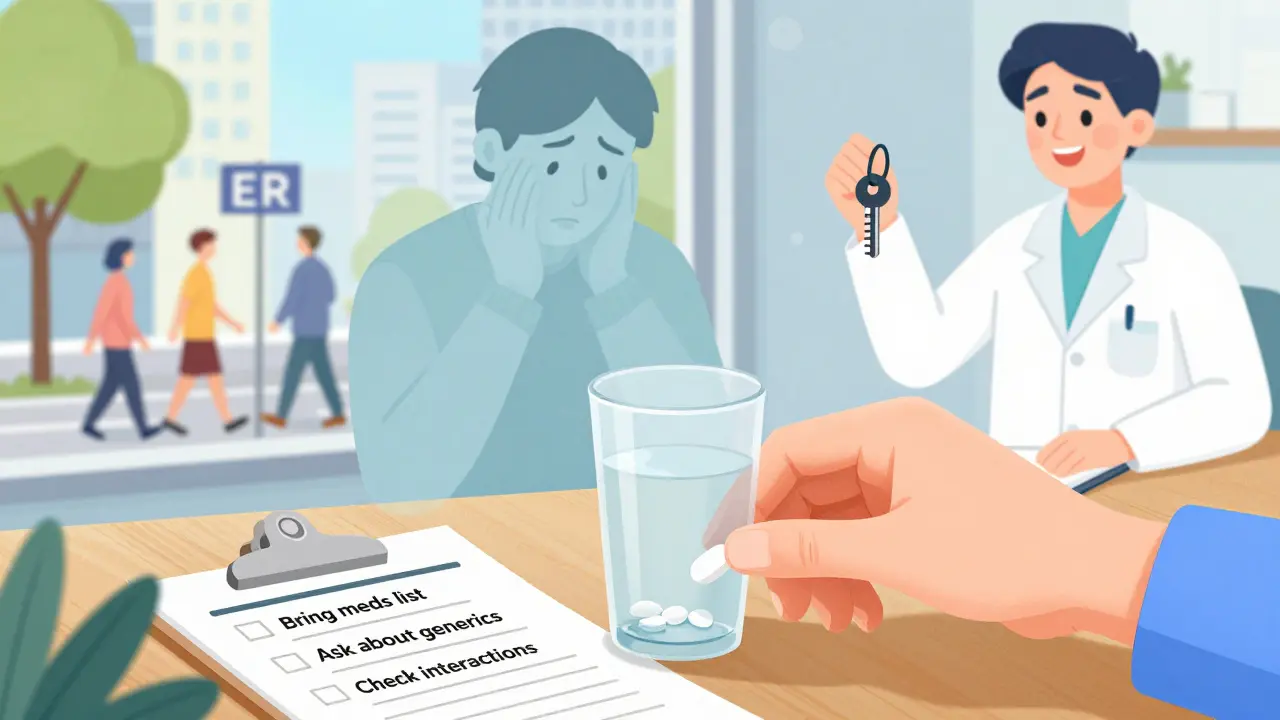
Don’t wing it. To make the most of your time, come prepared. Bring: your complete medication list (prescription, OTC, supplements), your insurance card, and a notebook or phone to write down answers. Use the FDA’s "My Medicine Record" form-it’s free and helps you track everything. Ask for a printed copy of your medication list after your visit. Many pharmacies now offer digital copies you can access through their app. And if you’re overwhelmed, use the "Ask Me 3" method: ask "What is my main problem?" "What do I need to do?" and "Why is it important?" Patients who use this approach have 31% fewer medication errors.
Why This Matters More Than You Think
Pharmacists are the most accessible healthcare providers in the country. Over 94% of Americans live within five miles of a community pharmacy. But most people treat them like a vending machine. That’s a missed opportunity. Studies show that when patients ask just three specific questions, they have 65% fewer medication-related problems. Pharmacist-led interventions reduce hospital admissions by 27% and ER visits by 33%. That’s not just savings-it’s safer, healthier living. You don’t need to be an expert. You just need to be curious. Your life depends on getting this right.
Can I ask my pharmacist about side effects even if I’m not having them yet?
Yes, absolutely. Pharmacists expect these questions. Knowing what side effects to watch for helps you act early if they appear. Some reactions, like swelling, trouble breathing, or severe dizziness, need immediate attention. Others, like mild nausea or dry mouth, are common and manageable. Being informed helps you avoid panic and know when to call your doctor.
Do pharmacists know about my other doctors’ prescriptions?
Not always. Each pharmacy has access to its own records, but if you use multiple pharmacies or get prescriptions from different doctors, they might not see everything. That’s why it’s your job to bring a full list of everything you take-including over-the-counter meds and supplements. Pharmacists can spot duplicates or dangerous interactions you might not even realize exist.
Is it okay to ask for a second opinion on my medication?
Yes. Pharmacists often review prescriptions for safety and appropriateness. If something seems unusual-like a high dose, a drug that doesn’t match your condition, or a new prescription that conflicts with an old one-they’ll flag it. You can ask: "Does this make sense based on everything I’m taking?" They’re trained to catch errors, even ones your doctor might have missed.
Can pharmacists help me with insurance issues or prior authorizations?
Yes. If your insurance denies coverage or requires prior authorization, your pharmacist can help you navigate the process. They often have direct lines to insurance companies and can explain what’s needed, fill out forms, or suggest alternative medications that are covered. Don’t assume you’re stuck with a costly drug-ask for help.
How do I know if my pharmacist is giving me good advice?
Good advice is clear, specific, and backed by facts. If they say "it’s fine" without explaining why, or avoid answering your questions, that’s a red flag. Ask for written information or point you to reliable sources like the FDA or NIH. A good pharmacist will encourage you to ask questions, use the "teach-back" method (asking you to repeat the instructions in your own words), and follow up if needed.
What to Do Next
Next time you pick up a prescription, don’t rush out. Take five minutes. Write down your questions. Bring your list. Ask about side effects, interactions, costs, and alternatives. If the pharmacist is busy, ask if you can schedule a quick consultation later in the day. Many pharmacies offer free 10-minute medication reviews. You don’t need to be sick to use this service. You just need to care about your health. The more you ask, the safer you’ll be-and the more control you’ll have over your treatment.
9 Comments
Shanna Sung
They don't want you to know pharmacists can see your full med history across all pharmacies. The government and Big Pharma collude to keep you in the dark. You think you're safe? You're just a data point. They track every pill you take. And they sell it. Always ask: who else sees this?
Allen Ye
There's a deeper philosophical layer here that most people miss. The act of asking questions at the pharmacy isn't just about safety-it's a radical assertion of personal agency in a healthcare system designed to render you passive. We've been conditioned to trust authority without inquiry, to swallow pills and silence doubts. But true autonomy begins when you demand clarity from the person handing you the bottle. It's not about fear-it's about reclaiming your body as your own. The pharmacist isn't a gatekeeper; they're the last line of defense between you and systemic negligence. And if you don't ask, you're complicit in your own vulnerability.
mark etang
It is imperative that every individual who receives a prescription medication exercise due diligence by engaging in a comprehensive consultation with their licensed pharmacist. This professional interaction constitutes a critical component of patient-centered care and significantly mitigates the risk of adverse drug events. I strongly encourage all patients to prepare a complete medication reconciliation list prior to each visit, and to utilize evidence-based resources such as the FDA's My Medicine Record tool to ensure optimal therapeutic outcomes.
josh plum
You think this is about asking questions? Nah. This is about control. They want you dependent. If you knew how to manage your own health-without pills-you'd stop buying their crap. I stopped taking my statin after I learned about the placebo effect in clinical trials. My cholesterol? Fine. My energy? Better. They don't tell you that 80% of side effects are psychosomatic. You're being manipulated. Wake up.
Clint Moser
The real issue is polypharmacy cascades triggered by algorithm-driven prescribing. Pharmacists are gatekeepers of the pharmacokinetic matrix but are often under-resourced to perform TDM (therapeutic drug monitoring) at scale. You need to ask about CYP450 interactions, not just "does this clash with my vitamin?" Most docs don't even know the half-life of their own scripts. Bring your own lab data. Demand the full metabolic profile. Otherwise you're just a walking pharmacovigilance blindspot.
Ashley Viñas
Honestly, I'm shocked people still don't do this. I used to just grab my script and leave. Then I started asking about alternatives and saved $300/month on my thyroid med. It’s not rocket science. If you’re too embarrassed to ask, you’re letting your health be dictated by convenience. And honestly? That’s just lazy. You wouldn’t buy a car without asking about the warranty-why treat your body like a disposable gadget?
Brendan F. Cochran
America's got the best pharmacists in the world and we treat 'em like cashiers. You wanna be healthy? Stop being a zombie. Walk in. Ask questions. Bring your list. Don't let 'em rush you. I told my pharmacist I was taking turmeric with my blood thinner-he said "bro, you're one bad day away from a stroke." Now I don't touch it. That's the kind of real talk you get when you stop being polite and start being smart.
jigisha Patel
The efficacy of pharmacist-led interventions is statistically significant in reducing medication errors (p < 0.01), yet cultural inertia and low health literacy in Western populations severely constrain uptake. The absence of standardized patient education protocols across community pharmacies remains a structural flaw in the healthcare delivery model. Your question is valid, but systemic reform is required.
Jason Stafford
They're watching you. Every time you ask about side effects, they log it. Every refill, every question, every time you say "I don't feel right"-it goes into a database. They're building profiles. They know who asks too much. And when you're flagged? Your next script gets delayed. Your insurance gets denied. You think that's coincidence? It's not. This isn't healthcare. It's surveillance with a white coat.