
Bird Plumage Problems: Causes, Signs, and What You Can Do
When a bird’s feathers look ragged, fall out in patches, or seem dull and brittle, it’s not just a cosmetic issue—it’s a red flag. Bird plumage problems, abnormalities in feather structure, growth, or retention that often reflect internal health issues. Also known as avian dermatological conditions, these signs rarely appear out of nowhere—they’re the body’s way of screaming for help. Feathers aren’t just for flying or looking pretty. They’re insulation, protection, and communication tools. If they’re failing, something’s wrong inside.
Common causes include nutritional deficiencies, lack of key vitamins like A, D, or B-complex, or insufficient protein to rebuild feathers. A bird on a seed-only diet might look fine at first, but over time, its feathers become brittle and fall out. Then there’s parasites, like mites or lice that burrow into the skin, causing itching, scabbing, and feather loss. You might not see the bugs, but you’ll see the bird picking at its skin, or patches of missing feathers around the neck or under the wings. Fungal infections like aspergillosis or bacterial skin infections can also wreck plumage, especially in damp or dirty environments.
Stress is another silent killer. Moving cages, loud noises, lack of sleep, or even a new pet in the house can trigger feather plucking. This isn’t just bad habits—it’s a clinical condition called psychogenic feather picking. Some birds even pull out feathers because they’re bored. And don’t ignore hormonal changes—female birds in breeding season can develop feather loss around the belly, which looks alarming but may be normal. The trick is knowing when it’s natural and when it’s dangerous.
What you see on the outside tells you what’s happening inside. A bird with dull, frayed feathers might have liver disease. One with bald patches and red, inflamed skin could be suffering from an autoimmune disorder. And if the bird is losing feathers but still eating and acting normal? That’s often worse—it means the problem has been creeping up for weeks.
The good news? Most bird plumage problems are fixable—if caught early. A vet can run blood tests, check for parasites, and recommend diet changes. Simple fixes like adding fresh greens, switching to pelleted food, or improving cage hygiene can turn things around fast. But waiting too long? That’s when infections spread, organs get damaged, and recovery becomes harder.
Below, you’ll find real-world guides on how to spot these problems early, what treatments actually work, and which common mistakes make things worse. Whether you’re dealing with a parrot, canary, or finch, the signs are the same. Don’t wait for your bird to stop singing. Check its feathers now—before it’s too late.
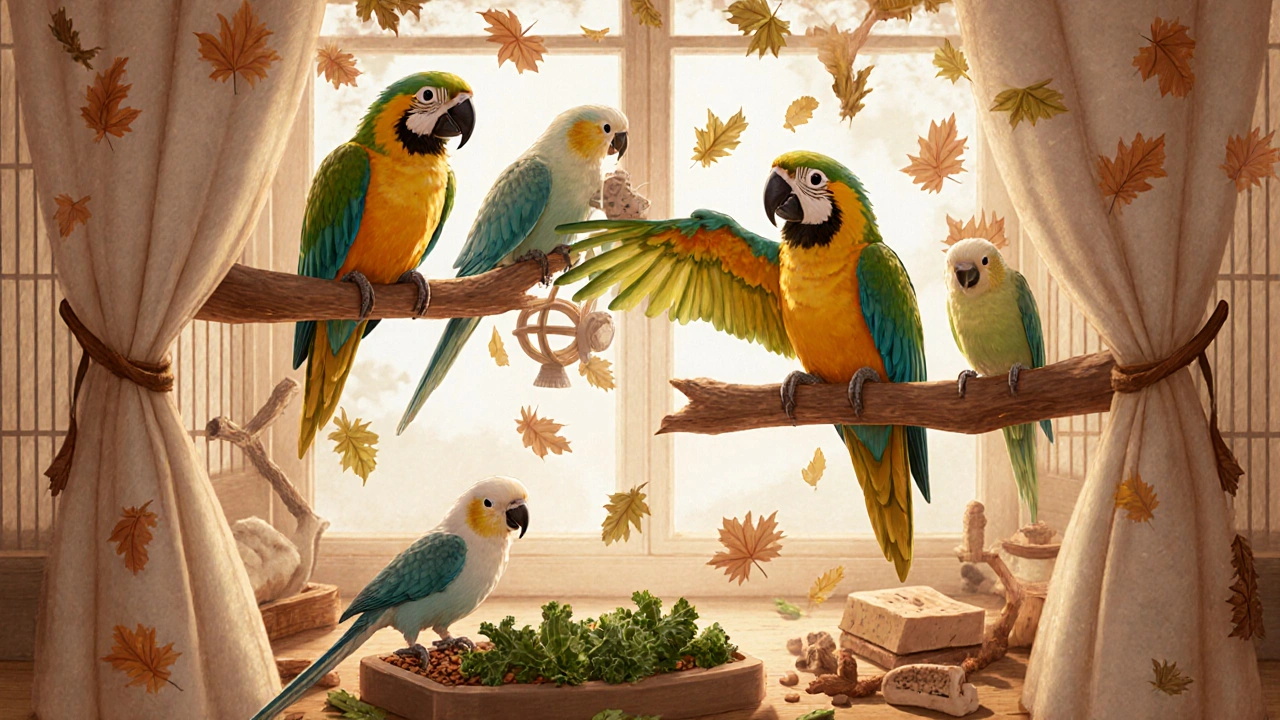
How to Manage Deplumation in a Multi-Bird Household
- Beata Staszkow
- |
- |
- 9
Learn how to stop feather loss in multiple birds living together. Discover the real causes of deplumation-from stress and diet to aggression-and what actually works to restore your birds' feathers and peace.
View more