
Bird Stress Management: Signs, Causes, and Practical Solutions
When a bird stops singing, plucks its feathers, or hides in the corner of its cage, it’s not being moody—it’s bird stress management, the process of identifying and reducing psychological and environmental pressures that harm avian well-being. Also known as avian anxiety relief, it’s not optional for pet owners who want their birds to live long, healthy lives. Unlike dogs or cats, birds can’t tell you they’re overwhelmed. They show it through silence, aggression, or self-harm. A parrot that suddenly stops eating? A finch that won’t fly? These aren’t quirks—they’re red flags.
bird environmental stressors, external factors like noise, lighting, or poor cage placement that trigger chronic anxiety in birds are often the hidden culprits. Think loud TVs, sudden movements, or cages placed in drafty corners. Birds are prey animals. They’re wired to notice changes fast. A new chair, a different window blind, even a change in your work schedule can throw them off. And if they’re kept alone without social interaction? That’s a recipe for depression. Studies show that birds in enriched, predictable environments live up to 40% longer than those in unstable ones.
avian behavioral health, the overall mental and emotional state of birds, shaped by diet, routine, and stimulation isn’t just about avoiding bad habits—it’s about building good ones. Birds need mental exercise. Puzzle toys, foraging opportunities, and daily out-of-cage time aren’t luxuries. They’re necessities. A bird that can’t stretch its wings, explore, or make noise will eventually shut down. And once that happens, reversing it takes months—not days.
Many owners think giving a bird more treats or a bigger cage fixes everything. It doesn’t. The real fix is consistency. Same wake-up time. Same feeding routine. Same quiet space to rest. No sudden changes. No yelling. No other pets looming too close. Even the color of the walls matters. Bright, chaotic rooms? Stress. Calm, neutral tones? Calm bird.
And don’t ignore the basics: clean water, fresh food, proper lighting (full-spectrum if possible), and enough space to flap without hitting things. A cage that’s too small is like a prison. A cage with no perches at different heights? A recipe for muscle loss and boredom. Birds don’t need fancy gadgets. They need predictability, safety, and a little bit of control over their world.
What you’ll find in the articles below aren’t generic tips. These are real solutions from people who’ve seen birds recover from feather plucking, screaming fits, and withdrawal. You’ll learn how to read your bird’s body language, fix common cage mistakes, and create a daily routine that actually works. No fluff. No theory. Just what you need to help your bird breathe easier—literally and emotionally.
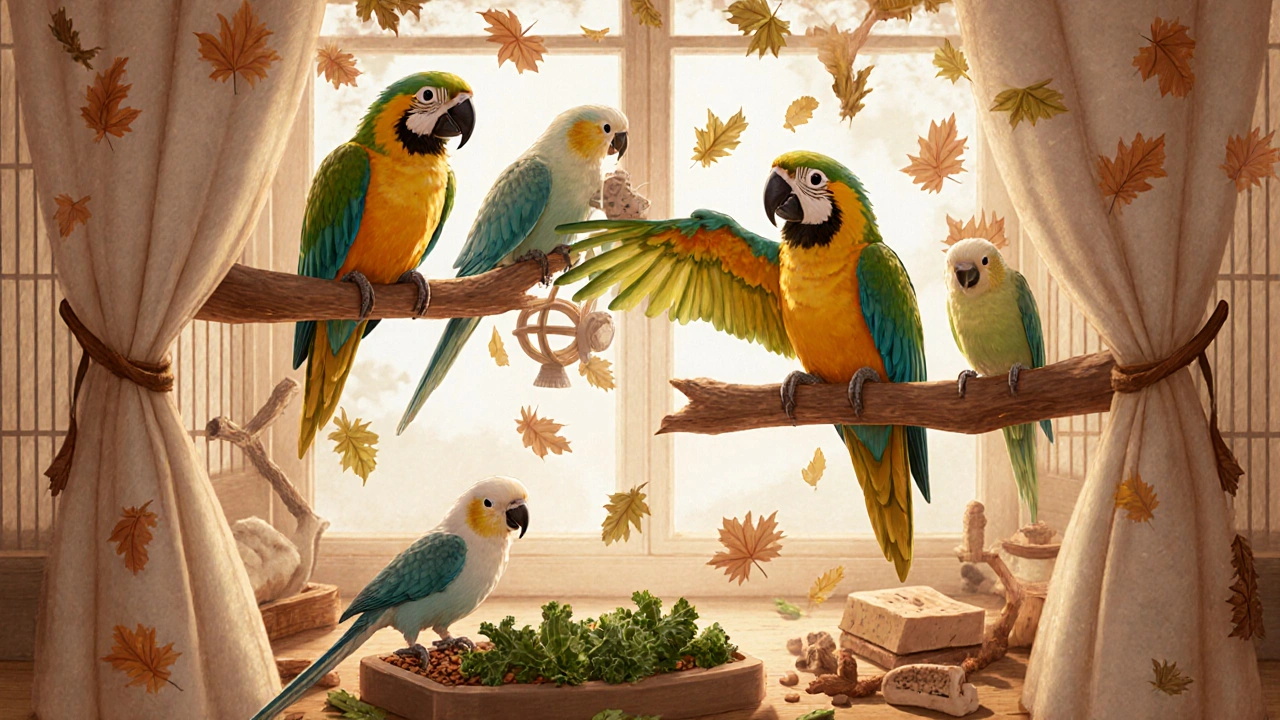
How to Manage Deplumation in a Multi-Bird Household
- Beata Staszkow
- |
- |
- 9
Learn how to stop feather loss in multiple birds living together. Discover the real causes of deplumation-from stress and diet to aggression-and what actually works to restore your birds' feathers and peace.
View more