
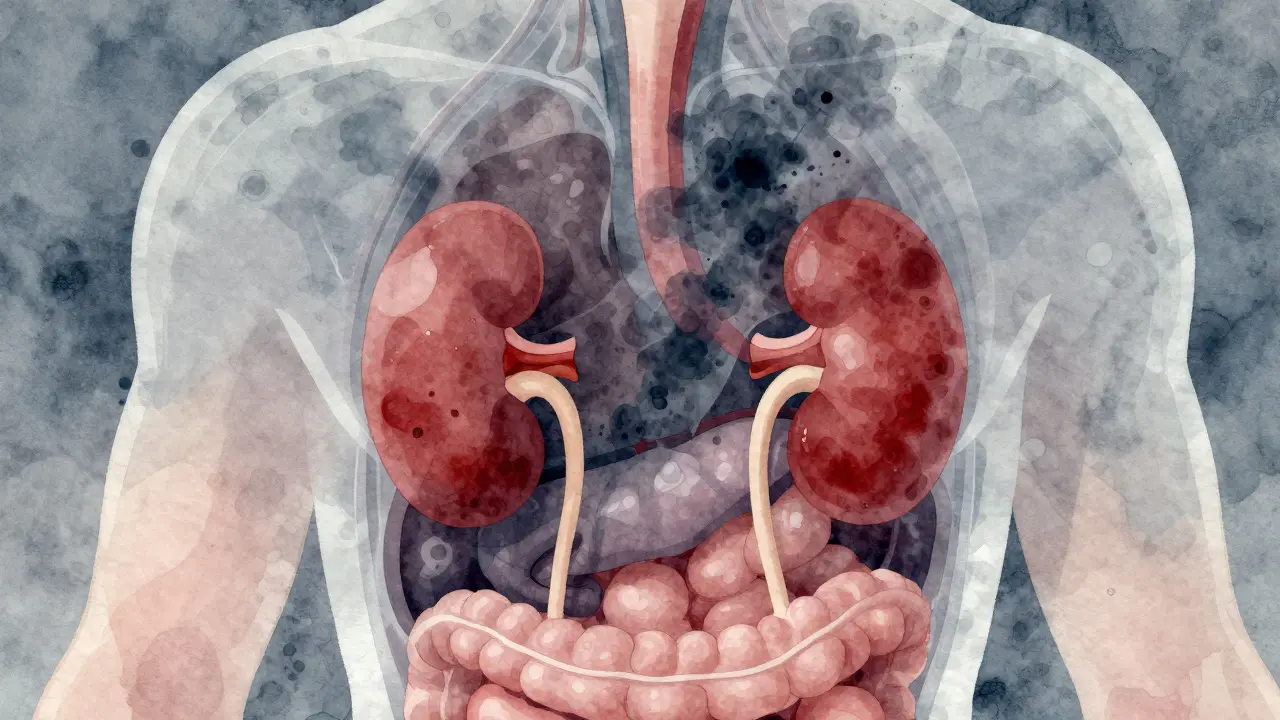
Uremic Symptoms signal that your kidneys are struggling to filter waste from your blood. If you have been diagnosed with advanced kidney disease, you might feel a constant heaviness or notice your skin acting differently than usual. You are not alone in this experience. Approximately 786,000 people in the United States live with end-stage kidney disease, and many face these specific challenges before beginning treatment. Understanding exactly what these signals mean can change how you manage your health journey.
Understanding Uremia and Waste Buildup
To grasp why you feel unwell, we need to look at what happens inside your body when filtration slows down. Healthy kidneys remove toxins like urea and creatinine from your bloodstream. When they fail, these nitrogenous waste products accumulate, a condition medically defined as uremia. Richard Bright first described this syndrome back in 1827, noting it was often terminal until Willem Kolff invented hemodialysis in 1943. Today, while treatments exist, the symptoms remain a direct reflection of that toxicity level.
The National Kidney Foundation guidelines explain that this isn't just about feeling tired. It is a multisystem syndrome. The primary mechanism involves the failure to excrete metabolic waste. Clinicians track this using lab values. Typically, serum urea nitrogen levels exceeding 60 mg/dL and creatinine levels surpassing 10 mg/dL correlate strongly with the onset of physical complaints. These numbers matter because they tell us the kidneys are no longer working at a capacity to support normal bodily functions.
Uremia refers to the clinical manifestations of kidney failure resulting from the accumulation of waste products. While the name sounds technical, it simply means your blood is carrying substances it should not hold onto for too long. This buildup affects nearly every organ system, but the digestive tract and skin are often the first to show distress.
Recognizing Nausea and Digestive Distress
Nausea is arguably the most disruptive symptom for patients waiting for treatment to begin. It is not just a mild stomach ache; it is often persistent and severe. Research from the European Renal Association shows that about 68% of stage 5 CKD patients report this issue. You might find yourself losing your appetite entirely or feeling repulsed by food textures.
Why does this happen? The underlying mechanism involves uremic toxins stimulating the chemoreceptor trigger zone in the brain, located in the area postrema. Specific toxins like p-cresyl sulfate and indoxyl sulfate build up and directly correlate with how sick you feel. A study from the University of California found a correlation of 0.78 between elevated toxin levels and nausea severity. This suggests that the sicker you feel, the higher those specific chemicals are floating in your blood.
Patient accounts often describe this as a metallic taste making food seem like swallowing sand. One individual shared on a kidney health forum that they lost 18 pounds in two months because eating felt physically painful. This malnutrition creates a dangerous cycle where your body lacks the nutrients to fight the underlying illness. If you notice a weight loss of 5% over three months due to poor intake, that is a critical warning sign that you may need intervention soon.
The Burden of Uremic Itching
If nausea feels overwhelming, uremic pruritus, or kidney-related itching, can be equally debilitating. Unlike allergies, this itch originates from deep within your body. Current data indicates that between 20% to 70% of people on hemodialysis struggle with this symptom. Even before starting treatment, roughly 37% of non-dialysis patients with CKD report itching.
This condition differs from typical dry skin. StatPearls identifies that 82% of affected patients experience itching across large, discontinuous, and symmetric areas. It often gets worse at night, disrupting sleep significantly. Users tracking their health via fitness devices have reported sleep scores dropping from healthy ranges to critical lows for months before receiving care. The 5-D Itch Scale helps doctors measure this, looking at duration, degree, direction, disability, and distribution. Scores above 12 indicate severe pruritus requiring medication rather than just moisturizers.
Scientists believe inflammation plays a huge role here. Objective measurements show elevated C-reactive protein levels averaging 12.7 mg/L in patients who itch compared to 4.2 mg/L in those who do not. High phosphate levels and imbalances in calcium-phosphorus products also drive this sensation. If you scratch until you bleed or cannot sleep through the night, these are objective clinical signs that your body needs help clearing toxins.

Determining When to Start Dialysis
Deciding on treatment timing is often the hardest part of the journey. For decades, doctors waited until symptoms were life-threatening to begin. That approach has shifted. Dr. Mark Unruh, chair of the KDOQI Workgroup, states that dialysis should start when symptoms become refractory to conservative management. This usually happens when the estimated glomerular filtration rate falls below 10.5 mL/min/1.73m², accompanied by a BUN greater than 70 mg/dL.
| Trigger Indicator | Clinical Threshold | Impact |
|---|---|---|
| Persistent Nausea | Affects Nutritional Intake | Weight Loss > 5% |
| Uremic Pericarditis | Inflammation of Heart Lining | Requires Urgent Care |
| Severe Pruritus | 5-D Scale Score > 15 | Sleep Disruption |
| eGFR Level | < 10.5 mL/min | Filter Function Lost |
The 2020 IDEAL trial followed-up showed no mortality benefit for starting extremely early versus late initiation based purely on blood numbers. However, quality-of-life metrics improved by 32% in the late initiation group when symptoms were managed well beforehand. This nuance matters. Starting too early doesn't necessarily extend life expectancy, but waiting too long hurts your daily existence. Individualized decisions matter. Dr. Adeera Levin emphasizes that the choice depends on symptom burden, not just a number on a paper sheet.
Some experts argue for earlier starts to prevent complications. Dr. Ravindra Mehta suggests initiation around an eGFR of 12-15 mL/min to stop severe uremic issues from developing. While guidelines differ slightly, the consensus centers on managing quality of life. If conservative treatments cannot control your symptoms, the machine becomes necessary to replace kidney function.
Managing Symptoms Before Treatment Starts
Waiting for dialysis does not mean you must suffer unnecessarily. There are proven protocols for symptom relief. For nausea, the ERA-EDTA 2022 guidelines suggest ondansetron 4mg orally three times daily as a first-line option. If that fails, domperidone 10mg four times daily can be used, though it requires heart monitoring due to QTc prolongation risks.
Treating the itch involves a tiered strategy. Step 1 optimizes your dialysis adequacy if you are already on treatment, targeting a Kt/V of at least 1.4. Step 2 introduces medications like gabapentin. Doctors typically start low, around 100mg nightly, and titrate up to 300mg three times daily depending on tolerance. Step 3 utilizes newer agents like difelikefalin or nalfurafine. A 2022 meta-analysis confirmed difelikefalin reduced itch scores by over 30% compared to placebo, with relief often noticed within 48 hours. These tools allow you to maintain dignity and function while preparing for long-term therapy.
Interdisciplinary teams play a vital role here. Nephrology social workers spend significant time counseling on symptom management, ensuring you understand your medication schedule. Diagnostic algorithms check for secondary causes like high phosphate levels or parathyroid hormone spikes. Addressing these mineral bone disorders can sometimes reduce itching intensity independently of other drugs.

Risks of Delayed Diagnosis
Time is a factor you cannot ignore. A national poll found that nearly half of patients visited at least three physicians before getting a correct diagnosis. The average delay from symptom onset to proper identification was 8.7 months. During this gap, damage accumulates. Healthcare costs skyrocket, with patients suffering severe pruritus incurring over $8,000 more annually in healthcare expenses, mostly due to hospitalizations.
Disparities also affect access to care. Studies indicate that Black patients often experience longer durations of symptoms before initiation compared to White counterparts. This delay contributes to higher hospitalization rates. It underscores the importance of advocating for your own health. If standard creams or anti-nausea meds don't work, demand a review of your kidney function tests.
Frequently Asked Questions
Can uremic symptoms go away without dialysis?
Usually no. Once uremic symptoms become persistent, they indicate significant kidney failure. While diet and medication can manage mild cases, severe buildup typically requires dialysis to remove toxins effectively. Conservative management works best in very early stages.
What are the first signs of uremia?
Common early signs include excessive fatigue, nausea, and changes in urination. Itching, particularly at night, is also a strong indicator. Confusion or difficulty concentrating can occur as toxins affect brain function.
Is itching caused by dehydration?
While dry skin causes itch, uremic itching is different. It stems from inflammation and toxin buildup affecting nerve pathways. Moisturizers alone rarely cure it because the cause is internal, not just surface dryness.
When should I worry about nausea?
Worry if nausea prevents you from eating consistently or causes rapid weight loss. If vomiting occurs frequently or you lose more than 5% of your body weight in a short period, contact your nephrologist immediately.
Does starting dialysis cure the itch?
Starting dialysis removes toxins that contribute to itching, often providing relief. However, some patients continue to itch even on treatment. Medications like gabapentin or difelikefalin are commonly added to ensure complete symptom control.
Living with declining kidney function is challenging, but knowledge empowers you. By recognizing the specific patterns of uremia, you can communicate better with your care team. Monitoring your labs and symptoms closely ensures that treatment begins at the right time, maximizing your quality of life.
10 Comments
Eva Maes
The correlation cited between toxin levels and nausea often ignores confounding variables regarding individual metabolism rates. Research from the University of California shows a strong link but fails to account for dietary intake variations. Many patients report fluctuations that do not align with static blood work results alone. We need to look at the area postrema stimulation more critically when discussing severity scales. Clinical guidelines sometimes lag behind emerging patient data on symptom onset timing. Understanding the chemoreceptor trigger zone requires precise mapping of uremic toxin pathways. Doctors frequently overlook the specific chemical interactions described in recent studies. This oversight leads to delayed interventions that worsen nutritional status over time. Conservative management works for some but fails others despite similar lab values. We must demand more personalized tracking beyond basic BUN measurements. Ignoring these nuances puts patients at risk for unnecessary suffering before dialysis starts.
Debra Brigman
The physical manifestation of toxicity is merely the surface level of the spiritual burden carried by the body. When filtration slows down the soul begins to struggle alongside the organs in a dual decline. This multisystem syndrome reflects a deeper imbalance in the natural order of human physiology. Richard Bright noted terminal outcomes because the spirit eventually abandoned the failing vessel entirely. We must consider the existential weight of waiting for treatment while feeling poison accumulate internally. The historical context adds gravity to the modern struggle against nitrogenous waste buildup.
Devon Riley
I truly appreciate the focus on managing quality of life before the procedure starts 🙏. It makes sense that nutrition plays a huge role in how symptoms progress for everyone. Staying positive during this hard transition is important for the whole family supporting the patient. Medications like gabapentin can help manage the physical discomfort significantly 😊. Knowing what triggers like weight loss signals provide clear guidance for when to call the doctor. Keep pushing forward and never hesitate to advocate for your own care needs 💪.
Tommy Nguyen
hope everyone finds relief soon
Kameron Hacker
Strict adherence to clinical thresholds prevents unnecessary hospitalizations and financial burdens. The 5-D Itch Scale provides objective metrics that override subjective feelings of discomfort. Physicians must interpret scores above twelve as requiring immediate pharmacological intervention rather than topical creams. Delayed action contributes directly to higher costs and worse health outcomes for the population. Guidelines from the KDOQI Workgroup establish clear benchmarks for initiating therapy protocols. Deviations from these standards compromise patient safety and efficacy of long-term care strategies.
Jeannette Kwiatkowski Kwiatkowski
Honestly the average person does not understand the depth of mineral bone disorder implications in this discussion. Most patients just want a quick fix without grasping the complex calcium-phosphorus products driving the sensation. It is fascinating how inflammation markers differentiate severe cases from mild annoyances effectively. Only those familiar with nephrology literature grasp why CRP levels matter so much here. We are talking about systemic toxicity rather than surface level irritation issues. Proper education separates the informed few from the confused masses dealing with this condition.
Aaron Olney
i remember my uncle sitting there scratching non stop. it was just heartbreaking to watch him suffer. the nights without sleep were brutal for him. his skin felt like burning embers inside his veins constantly. he would wake up covered in red marks from itching. nobody around him understood why this happened to him. antihistamines did absolutely nothing for him either which was frustrating. this made everyone feel helpless during those dark months. diagnosis even came up way too late for treatment options. the doctors kept telling us it was stress related mostly. looking back now with fresh eyes we see the truth clearly. it was the toxins building up silently over time. this happened throughout every single day without warning signs. nobody realized the severity until finally it became obvious. blood work showed the creatinine levels spiking past normal ranges. i learned later that early intervention could have saved him from pain. the information wasnt available like this today unfortunately. honestly its scary how many people slip through the cracks easily. while waiting for proper triage protopcols kick in properly.
Paul Vanderheiden
its great to see people sharing real stories like this openly. knowing someone else went through it makes you feel less alone in the struggle. medication options like difelikefalin sound like they could change lives for the better. we should keep supporting each other through these tough health challenges together. staying hopeful helps manage the symptoms better than worrying constantly does. lets keep spreading awareness about kidney health issues always.
Poppy Jackson
Absolutely terrifying symptoms frankly to think about living through daily. It is utterly devastating how quickly the fatigue takes hold of a person completely. The description of the metallic taste makes me shiver just reading about it now. One hopes medical science finds faster solutions for relief soon enough. These experiences really bring the reality of organ failure home sharply. Utterly horrific yet important knowledge for us all to retain.
Jordan Marx
eGFR thresholds vary wildly depending on comorbidities present in the patient population. Secondary hyperparathyroidism indicates significant mineral bone disorder involvement requiring specific monitoring. Parathyroid hormone spikes often precede the clinical presentation of severe pruritus symptoms. Tracking albumin adjusted globulin levels helps refine the decision matrix for initiation. Clinicians rely heavily on biochemical markers to guide conservative versus invasive management choices.