

If you’ve ever felt like the room is spinning, your balance is off, and your head is pounding-all at once-you might be dealing with vestibular migraine. It’s not just a bad headache. It’s a neurological condition that throws off your sense of balance, makes you nauseous, and can leave you stuck in a dark room for hours. And here’s the kicker: many people are misdiagnosed for years, treated for ear infections or BPPV, when what they really need is migraine-specific care.
What Exactly Is Vestibular Migraine?
Vestibular migraine (VM) is a subtype of migraine where dizziness and vertigo are the main symptoms-not always the headache. The International Headache Society officially recognized it in 2013, but doctors still miss it. About 1% of people have it, and women are three and a half times more likely to be affected than men. It’s the most common cause of unexplained dizziness in specialty clinics, making up 7-10% of all referrals.
Unlike a typical migraine, you might not get a throbbing pain at all. Instead, you could feel like you’re on a boat, lightheaded, or off-balance for minutes or even days. Common triggers include stress, poor sleep, weather changes, caffeine, alcohol, and aged cheeses. During an attack, you might also be sensitive to light, sound, or movement. Some people even get visual auras-flashing lights or blind spots-before the dizziness hits.
There’s no blood test or scan that confirms vestibular migraine. Diagnosis relies on your history: at least five episodes of moderate-to-severe vertigo lasting 5 minutes to 72 hours, a personal or family history of migraine, and the vertigo episodes clearly linked to migraine features like light sensitivity or nausea.
Why Misdiagnosis Is So Common
Too many people spend months-or years-going from ENTs to neurologists to physical therapists, getting treated for things that don’t match their real problem. About 40% of vestibular migraine cases are wrongly labeled as benign paroxysmal positional vertigo (BPPV), and 25% get tagged as Ménière’s disease.
Here’s the problem: BPPV is treated with head maneuvers like the Epley, which do nothing for VM. Ménière’s gets diuretics to reduce inner ear fluid, but those only work in 20% of VM cases. If you’re taking diuretics and still dizzy, it might not be Ménière’s at all.
One study found the average delay in diagnosis is over 11 months. On Reddit’s r/migraine community, nearly 70% of people with VM waited more than a year before getting the right diagnosis. That’s a lot of unnecessary tests, medications, and frustration.
Three-Step Treatment Plan That Actually Works
Managing vestibular migraine isn’t about one magic pill. It’s about a layered approach: lifestyle changes, acute attack control, and long-term prevention.
Step 1: Lifestyle and Trigger Management
Start with what you can control. Keep a symptom diary for 6-8 weeks. Track sleep, stress levels, food, weather, and menstrual cycles. The biggest triggers? Stress (82% of patients), sleep disruption (76%), and caffeine (54%).
Try cutting out caffeine completely for a month. Many people don’t realize their daily coffee or soda is fueling their dizziness. Alcohol and aged cheeses (like blue cheese or cheddar) are also common culprits. A 2017 study showed eliminating caffeine reduced attack frequency by 35%.
Regular sleep and stress management aren’t just "nice to have"-they’re medical necessities. Even 30 minutes of daily walking or yoga can lower attack frequency. The goal isn’t perfection; it’s consistency.
Step 2: Managing Attacks When They Happen
When a vestibular migraine attack hits, you need quick relief. But the treatment depends on what’s bothering you most: the headache or the dizziness.
For headache pain, triptans like sumatriptan (50-100 mg) work well. Studies show they relieve pain in 70% of cases within two hours. Over-the-counter NSAIDs like ibuprofen (400-800 mg) or naproxen (500-850 mg) help about half the time.
For vertigo and nausea, anti-nausea meds are key. Prochlorperazine (5-10 mg) reduces dizziness in 68% of patients within two hours. Ondansetron (4-8 mg) is great for nausea without making you sleepy. Domperidone is another option, especially if you’re avoiding sedating drugs.
Don’t reach for benzodiazepines like diazepam unless it’s a last resort. They help short-term but can mess with your brain’s ability to recover balance over time. Long-term use can make dizziness worse.
And yes, rest matters. Lying in a dark, quiet room for even an hour can reduce symptom severity by 35%. Drink 2 liters of water during an attack-dehydration makes everything worse.
Step 3: Preventing Future Attacks
If you’re having more than four attacks a month, prevention is your next step. There are several proven options:
- Propranolol (40-160 mg daily): A beta-blocker that cuts attack frequency by 50% in 62% of patients.
- Amitriptyline (10-75 mg at night): A tricyclic antidepressant with 40-60% success in reducing vertigo. Side effects? Drowsiness (reported by 65% of users).
- Topiramate (25-100 mg daily): An antiseizure drug that helped 54% of patients cut attacks in half in clinical trials.
- Verapamil (120-240 mg daily): A calcium channel blocker, especially helpful if you have aura or family history of VM.
- Flunarizine (5-10 mg daily): Not FDA-approved in the U.S., but widely used in Europe. One Cochrane review found it worked better than placebo.
For people who want to avoid prescription meds, supplements can help:
- Magnesium (600 mg daily): Shown to reduce attacks by 30-40% in the CHARM study.
- Riboflavin (400 mg daily): Also reduced frequency by 30-40%.
- Coenzyme Q10 (300 mg daily): Another low-risk option with solid evidence.
Butterbur was once popular, but it’s been linked to liver damage. Germany banned it in 2015. Avoid it.
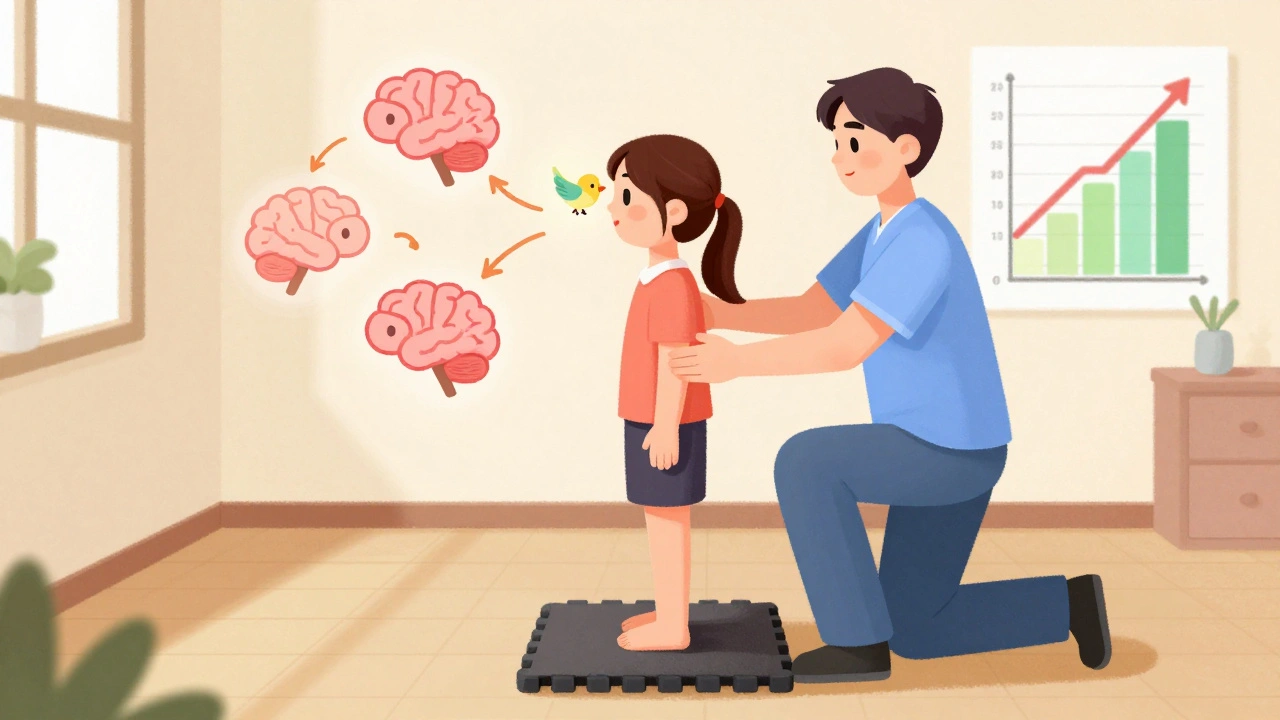
Vestibular Rehabilitation Therapy: The Hidden Game-Changer
Most people don’t know about vestibular rehabilitation therapy (VRT), but it’s one of the most effective tools for long-term recovery. VRT is a series of customized exercises designed to retrain your brain to rely on other balance signals when your inner ear is sending mixed messages.
Studies show VRT improves dizziness handicap scores by 40-60% after 8-12 weeks. In one 2020 study, 78% of patients who completed 12 sessions reported over 50% symptom reduction. It’s not quick, but it’s lasting.
Typical exercises include gaze stabilization (keeping your eyes fixed while moving your head), balance training on uneven surfaces, and habituation drills (slowly exposing yourself to motion triggers). You’ll need a physical therapist trained in vestibular rehab-general physical therapy won’t cut it.
Once you learn the basics, you do daily home exercises. Many people say VRT gave them their life back. Unlike drugs, it doesn’t cause brain fog or weight gain. It rebuilds your confidence.
What’s New in 2025: The Future of VM Treatment
The treatment landscape is changing fast. In 2023, the FDA approved atogepant, a new preventive migraine drug that reduced vertigo days by 56% in VM patients. Another drug, rimegepant, showed a 49% drop in vertigo episodes in a 2022 trial.
Researchers are also exploring genetic testing. About 25% of VM cases run in families, linked to a gene called CACNA1A. If you have this variant, calcium channel blockers like verapamil may work especially well for you.
Non-invasive devices like gammaCore (a vagus nerve stimulator) are now being used off-label. In a 2021 trial, it cut vertigo frequency by 45%.
And there’s hope for better diagnosis. A new test called vestibular-evoked myogenic potentials (VEMPs) can detect VM with 82% accuracy-something that could cut diagnostic delays dramatically in the next few years.
What Doesn’t Work (And Why)
Not every treatment you hear about is right for VM. Here’s what to avoid:
- Diuretics (like hydrochlorothiazide): Only help Ménière’s, not VM.
- Corticosteroids: Used for vestibular neuritis, but only 30% of VM patients respond.
- Long-term benzodiazepines: Can cause dependency and prevent your brain from relearning balance.
- Over-the-counter "vertigo pills": Often just antihistamines like meclizine. They mask symptoms but don’t treat the root cause.
And don’t expect instant results. Most people need to try 2-3 medications before finding one that works. One neurologist at Mayo Clinic says delaying prevention leads to chronic dizziness in 30% of cases within two years.

When to See a Specialist
You don’t need to suffer alone. If you’ve had more than three unexplained dizziness episodes in six months, see a neurologist who specializes in headaches-or an ENT with vestibular expertise. The best outcomes happen when you have a team: a neurologist for migraine control and an ENT or vestibular therapist for balance rehab.
Look for clinics that offer dedicated vestibular migraine programs. In 2025, 65% of U.S. academic medical centers have them-up from just 25% in 2015.
Real People, Real Results
One woman, 42, had dizziness for 3 years. She was told she had anxiety. Then she found a VM specialist. She stopped caffeine, started propranolol, and began VRT. Within 4 months, her attacks dropped from 10 a month to 1 or 2. She’s back to hiking and driving.
Another man, 58, tried topiramate but got brain fog. He switched to magnesium and riboflavin. His attacks halved. He now does VRT every morning. "I didn’t know balance could be trained," he said.
Success isn’t about being symptom-free. It’s about getting back to your life. Most people with VM can live well-they just need the right plan.
Final Takeaways
- Vestibular migraine is real, common, and often misdiagnosed.
- Diagnosis requires a pattern: migraine history + recurrent vertigo + no other cause.
- Stop caffeine, fix sleep, manage stress-these are your first-line treatments.
- Use triptans for headache, prochlorperazine or ondansetron for vertigo.
- Preventive meds like propranolol, amitriptyline, or topiramate work for frequent attacks.
- Supplements like magnesium, riboflavin, and CoQ10 are safe and effective for many.
- Vestibular rehab isn’t optional-it’s essential for long-term recovery.
- Don’t use benzodiazepines long-term. Don’t treat VM like Ménière’s or BPPV.
- Specialist care makes a huge difference. Find a neurologist or ENT who knows VM.
You’re not alone. And you don’t have to live with dizziness forever. With the right approach, you can take back control.
Can vestibular migraine go away on its own?
Sometimes, yes-especially if triggers are removed and lifestyle improves. But for most people, symptoms persist or worsen without treatment. Left untreated, vestibular migraine can become chronic, with attacks occurring more than 15 days a month. Early intervention with prevention and vestibular rehab greatly improves long-term outcomes.
Is vestibular migraine the same as Meniere’s disease?
No. Meniere’s involves hearing loss, ringing in the ear, and pressure in the ear, along with vertigo. It’s caused by fluid buildup in the inner ear and responds to diuretics. Vestibular migraine has no hearing loss, is linked to brain-based triggers like stress and caffeine, and responds to migraine preventives. The two can look similar, but treatments are completely different.
Do I need an MRI for vestibular migraine?
Not usually. MRI is only ordered to rule out other serious conditions like tumors or MS, especially if symptoms are atypical-like sudden hearing loss, weakness, or double vision. If your history matches classic vestibular migraine criteria, an MRI isn’t needed. Most diagnoses are clinical, based on symptoms and pattern.
Can children get vestibular migraine?
Yes. Children can experience vestibular migraine, often with dizziness and vomiting as the main symptoms, sometimes without headache. It’s underdiagnosed in kids because doctors may assume it’s a stomach bug or ear infection. If a child has recurrent episodes of dizziness with light sensitivity or family history of migraine, VM should be considered.
How long does vestibular rehabilitation take to work?
Most people start noticing improvement after 4-6 weeks of consistent therapy. Full benefits usually take 8-12 weeks with daily home exercises. It’s not a quick fix-it’s a brain retraining program. The key is doing the exercises even when you feel fine. Skipping sessions slows progress.
Are there any new drugs for vestibular migraine in 2025?
Yes. Atogepant, approved by the FDA in 2023, is now used off-label for VM and has shown a 56% reduction in vertigo days in clinical trials. Rimegepant is also showing strong results. CGRP inhibitors, originally developed for migraine, are increasingly being studied for vestibular migraine, with promising early data. These drugs target the underlying brain pathway causing both pain and dizziness.
Can stress cause vestibular migraine?
Stress doesn’t cause vestibular migraine, but it’s the #1 trigger. Studies show 82% of patients link attacks to high stress levels. Stress activates the brain’s pain and balance centers simultaneously, which can trigger an episode. Managing stress through sleep, exercise, mindfulness, or therapy isn’t optional-it’s part of medical treatment.
Is vestibular migraine a mental health issue?
No. Vestibular migraine is a neurological disorder with biological roots in brainstem dysfunction and genetic factors. While anxiety and depression can develop as a result of chronic dizziness, they are not the cause. Blaming it on stress or anxiety delays proper diagnosis and treatment. It’s a physical condition that needs physical solutions.
What should I avoid if I have vestibular migraine?
Avoid caffeine, alcohol, aged cheeses, MSG, artificial sweeteners, and skipping meals. Also avoid prolonged screen time, especially in dim light. Don’t use benzodiazepines long-term. Don’t ignore sleep. Don’t delay seeing a specialist. And don’t assume your dizziness is "all in your head." It’s real, and it’s treatable.
Can I still drive with vestibular migraine?
It depends. If you have frequent or unpredictable attacks, driving can be dangerous. Many people stop driving until their symptoms are under control. Once you’re on effective preventives and doing vestibular rehab, most can return to driving safely. Always follow your doctor’s advice and check your state’s laws-some require reporting neurological conditions that affect balance.
15 Comments
Declan Flynn Fitness
Been dealing with this for years. Cut out caffeine and started daily walks - life changed. No more 10 attacks a month, now it’s maybe 1 or 2. VRT was the real game changer 🙌
Michelle Smyth
How quaint. You’re all just reducing complex neurophysiological dysregulation to a lifestyle blog post. Did you consider the epistemological limits of self-reported symptom diaries? The very notion of ‘trigger management’ reifies a Cartesian dualism that’s been thoroughly deconstructed in contemporary neurophenomenology.
Jeremy Butler
While the empirical data presented is methodologically sound, one must interrogate the ontological presuppositions underlying the diagnostic criteria. The IHS classification system, while operational, remains fundamentally rooted in a reductionist model that fails to account for the embodied temporality of vestibular experience.
Patrick Smyth
I’ve been misdiagnosed for 7 years. Doctors told me it was anxiety. I lost my job. My wife left me. I cried every night. Now I’m on propranolol and VRT and I can hold my grandkids again. Please don’t ignore this. It’s not in your head.
Courtney Co
Wait so you’re saying if I just stop drinking wine and eat less cheese I won’t feel like I’m on a rocking boat? I’ve been doing that for years and I still feel like I’m gonna puke every time I turn my head. This article is just giving people false hope
Shashank Vira
One must recognize that the vestibular system is not merely a sensory organ but a metaphysical interface between the self and the cosmos. The migraine is not a disease - it is an awakening. To suppress it with beta-blockers is to deny the soul’s necessary turbulence.
Eric Vlach
Biggest thing I learned - sleep and stress are everything. I used to think I could power through 5 hours of sleep and still be fine. Nope. Now I nap if I can, drink water like it’s my job, and do my VRT exercises even when I feel okay. It’s not sexy but it works
Souvik Datta
Hey everyone - if you’re reading this and feeling hopeless, I get it. I was there too. But this isn’t about being perfect. It’s about showing up. One day you’ll do your balance drill and realize you didn’t feel dizzy. That’s the win. Keep going. You’re not broken. Your brain just needs time to relearn. I’m rooting for you.
Priyam Tomar
Propranolol? Amitriptyline? You people are still using 1980s meds? Have you heard of CGRP monoclonal antibodies? They’re the future. Also, anyone who says magnesium works hasn’t actually had a real VM attack. This whole post is amateur hour.
Jack Arscott
VRT saved me. I was scared to move. Now I hike. 🏔️💪
Irving Steinberg
Oh so now I’m supposed to believe that my dizziness is from cheese and not the fact that modern life is a nightmare? I’m not gonna stop drinking wine just because some guy with a clipboard says so. Also I’m pretty sure my cat is the real cause
Lydia Zhang
Interesting
Kay Lam
When I first started VRT I thought it was ridiculous - staring at a dot while shaking my head? But after six weeks I noticed I could turn my head in the grocery store without feeling like I was going to fall. And then I could walk the dog. And then I could drive again. It’s not magic. It’s neuroplasticity. Your brain is literally rewiring itself. You just have to show up every day even when you’re tired. Even when you’re scared. Even when you think it’s not working. It is.
Matt Dean
Anyone else notice how this post ignores the fact that 70% of VM patients have comorbid anxiety? You can’t treat the vestibular system without addressing the limbic system. This whole thing is a bandaid on a hemorrhage.
Declan Flynn Fitness
@5322 I had anxiety too - but it was the result of the dizziness, not the cause. Once my brain stopped getting confused by the signals, my anxiety dropped. I didn’t need therapy for the dizziness - I needed it for the trauma of being gaslit by doctors for 5 years.