
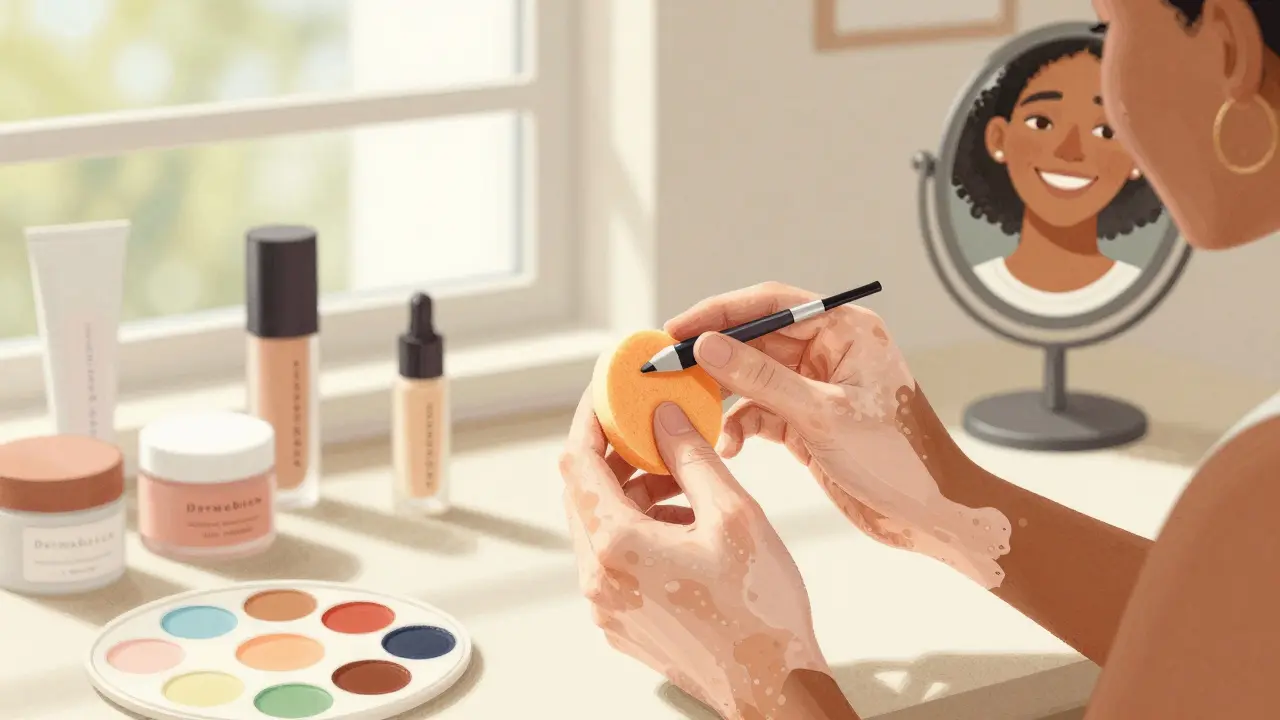
Living with vitiligo doesn’t mean you have to hide. For many, the emotional toll of visible skin patches is heavier than the condition itself. That’s where vitiligo camouflage comes in - not as a cure, but as a powerful tool to restore confidence, reduce anxiety, and make everyday life easier. Whether you’re dealing with small patches on your hands or widespread depigmentation, modern camouflage techniques can make a real difference. And the good news? You don’t have to guess how to use them. There are clear, proven methods - and products designed just for this.
What Is Vitiligo Camouflage, Really?
Vitiligo camouflage isn’t just regular makeup. It’s medical-grade pigment designed to blend with your natural skin tone, even when that tone is uneven. Unlike regular foundations, these products contain up to 25% more pigment, making them dense enough to cover white patches without looking cakey or unnatural. They’re tested on sensitive skin, often fragrance-free, and built to last through sweat, showers, and long days. The goal isn’t to hide your skin - it’s to give you back control. A 2022 study from the Indian Journal of Dermatology found that 78% of vitiligo patients actively look for camouflage options. Why? Because when your skin looks more even, you feel more like yourself. People report less fear of stares, fewer missed social events, and even better sleep. It’s not vanity. It’s mental health support in a bottle.Two Main Types: Temporary vs. Permanent
There are two paths: one you can wash off, and one that lasts months or years. Temporary camouflage is for daily use. Think of it like sunscreen - you apply it every morning, and it lasts until you cleanse your skin. These include creams, liquids, and pencils made by brands like Dermablend and Dermacolour. They’re the go-to for most people because they’re safe, reversible, and adjustable. You can change your coverage depending on your mood, outfit, or how much sun you’ve had. Permanent camouflage, also called micropigmentation, is a medical procedure. A trained specialist uses a tiny needle to deposit iron oxide pigments into your skin. The particles are exactly 6 microns in size - small enough to stay stable, not toxic, and not migrate. This isn’t a tattoo. It’s pigment placed just deep enough to last, but not so deep that it changes color over time. It’s ideal for areas like lips, wrists, elbows, and fingers - places where daily makeup smears or rubs off. But here’s the catch: permanent camouflage only works if your vitiligo has been stable for at least 12 months. If your patches are still spreading, the pigment can end up looking like a halo around new white areas. That’s why dermatologists always check your medical history first.How Temporary Camouflage Works - Step by Step
Getting good results with temporary products isn’t luck. It’s technique. Here’s how to do it right:- Start with clean skin. Use a gentle, pH-balanced cleanser. Don’t skip this. Oils or residue can make the product slide off.
- Match your color under natural light. Artificial lighting tricks your eyes. Step outside or stand near a window. Test shades on your jawline or neck - not just the patch. The goal is to match your surrounding skin, not just cover the white.
- Apply in thin layers. Don’t dump it on. Use a damp sponge or stippling brush. Build coverage slowly. One layer might be enough for small patches. Two or three might be needed for larger areas.
- Let it set. Water-based formulas need 90 seconds. Oil-free or waterproof ones need 3-5 minutes. Rushing this step means you’ll smear it.
- Set with powder. Use a translucent, pigment-free setting powder. It locks everything in and reduces shine. Avoid colored powders - they’ll throw off your match.
- Reapply as needed. Most products last 6-14 hours. Sweat, water, or rubbing will wear them down. Keep a compact in your bag.
Product Breakdown: What Actually Works
Not all camouflage is created equal. Here’s what real users and dermatologists recommend:| Product | Type | Duration | SPF | Best For | Price Range |
|---|---|---|---|---|---|
| Dermablend Cover Creme | Water-free, anhydrous | 12-14 hours | SPF 2 | Face, hands, legs | $35-$45 |
| Dermacolour | Oil-free, silicone-based | 10-12 hours | SPF 2 | Oily skin, humid climates | $30-$40 |
| Self-tanners (DHA-based) | Gradual tan | 4-7 days | None | Large body areas | $15-$25 |
| Indigo carmine / Henna | Temporary dye | 4-6 hours | None | Experimental, low-cost | $5-$10 |

Permanent Camouflage: What to Expect
If you’re considering micropigmentation, here’s what you’ll go through:- Consultation first. A specialist will check if your vitiligo is stable. They’ll map your patches and pick 3-5 pigment shades to blend.
- Two to three sessions. Each lasts 45-90 minutes. Sessions are spaced 6-8 weeks apart so your skin heals and the pigment settles.
- It’s not painless. You’ll feel tiny pinpricks. Most clinics use numbing cream. Aftercare is simple: avoid sun, swimming, and sweating for 7 days.
- Costs $300-$800 per session. Facial treatments are cheaper. Hands and feet cost more because pigment fades faster there - up to 40% quicker than on your face or arms.
- Results vary. 74% of people are happy with facial results. Only 48% are satisfied with hand treatments. Why? Movement. Your knuckles bend. Your feet rub against shoes. Pigment wears off faster in high-friction zones.
Psychological Impact: It’s More Than Skin Deep
Dr. Madhulika Upadhyay, a pigment specialist, says proper camouflage can improve a patient’s Dermatology Life Quality Index (DLQI) score by 22-35%. That’s a big jump. DLQI measures how much a skin condition affects daily life - relationships, work, sleep, self-esteem. Dr. Davin Lim’s practice shows 68% of patients who use camouflage report less anxiety in social situations. One woman stopped avoiding pool parties. A man stopped wearing long sleeves in summer. A teenager stopped skipping school photos. And here’s something few talk about: SPF protection. Many camouflage products include SPF 2-3. That’s not enough for sun protection alone, but it’s a bonus. Sunburn can darken surrounding skin and make vitiligo patches more noticeable. So, even a little UV defense helps.Common Mistakes and How to Avoid Them
- Using regular foundation. It’s too sheer. It won’t cover. You’ll end up applying five layers - and it still won’t look natural.
- Applying in bad light. Bathroom lighting is terrible for color matching. Always check outside.
- Skipping the primer. Even a light moisturizer helps the product glide and last longer.
- Trying to remove it with harsh cleansers. Waterproof formulas need oil-based removers. Baby oil or micellar water works. Avoid rubbing - it irritates skin.
- Expecting perfection on day one. It takes 2-4 weeks of daily practice to get good at it. Don’t quit after a bad try.

Future of Camouflage: AI and Beyond
The field is evolving fast. L’Oréal’s ModiFace app, expected in Q2 2024, will let you upload a photo and get a personalized shade match for Dermablend. No more guessing. No more buying three tubes to find the right one. AI-powered color matching isn’t just convenient - it’s democratizing access. People in rural areas or countries without dermatologists can now get accurate recommendations from their phones. Meanwhile, clinics are refining their techniques. The "center-out" method, now used by the Dermopigmentation Center, allows for more natural blending on patches that are still slowly changing. It’s not perfect, but it’s better.Final Thoughts: Camouflage Is a Choice, Not a Compromise
Vitiligo camouflage isn’t about pretending you don’t have the condition. It’s about giving yourself the freedom to choose how you show up in the world. Some days, you’ll want to wear it. Other days, you won’t. And that’s okay. The most successful users aren’t the ones who cover every patch. They’re the ones who use camouflage as a tool - not a cage. Whether you pick a cream, a pencil, or a micropigmentation session, the goal is the same: to feel more like yourself. Talk to a dermatologist who specializes in pigment disorders. Ask for a referral to a certified camouflage consultant. Try a sample. Give yourself time. You deserve to feel comfortable in your skin - no matter what it looks like.Can I use regular makeup to cover vitiligo?
Regular makeup usually doesn’t work well for vitiligo. It’s too sheer and won’t cover white patches completely. You’ll need specialized camouflage products with higher pigment concentration - like Dermablend or Dermacolour - which are designed specifically for skin conditions like vitiligo. Regular foundations may require multiple layers and still look patchy or unnatural.
How long does vitiligo camouflage last?
Temporary camouflage lasts 6-14 hours and washes off with cleanser. Waterproof formulas can survive swimming and sweating but still need reapplication after washing your face. Self-tanners last 4-7 days but fade unevenly. Permanent micropigmentation lasts 1-3 years, depending on skin area and sun exposure, but may need touch-ups every 12-18 months, especially on hands and feet.
Is micropigmentation safe for vitiligo?
Yes, but only if your vitiligo has been stable for at least 12 months. If patches are still spreading, micropigmentation can cause uneven results or halo effects around new white areas. Always consult a specialist trained in vitiligo camouflage - not just a tattoo artist. The pigment used is medical-grade iron oxide, not regular tattoo ink, and must be implanted at the correct depth to avoid complications.
How do I find the right color match?
Match your shade under natural daylight, not indoor lighting. Test the product on your jawline or neck - not just the patch. Many brands offer sample kits with multiple shades. Some, like Dermablend, now offer virtual color matching via apps. Certified camouflage consultants can also help you find the perfect blend using color theory to neutralize undertones.
Can I use camouflage with medical treatments like phototherapy?
Yes, and many dermatologists recommend combining both. Camouflage gives you immediate cosmetic relief while medical treatments like narrowband UVB or topical creams work over weeks or months. Some products even include SPF, offering extra protection during phototherapy. Just avoid applying camouflage right before a phototherapy session - wait until after, or ask your doctor for timing advice.
Are there affordable options for vitiligo camouflage?
Yes. While premium brands like Dermablend cost $35-$45, self-tanners (DHA-based) can be as low as $15 and last longer. Some clinics offer payment plans for micropigmentation. Non-profit organizations and dermatology associations sometimes provide free samples or discounts. Check with the Vitiligo Society or local support groups - they often have resources for people on a budget.
Next Steps for You
If you’re new to camouflage:- Order a sample kit from Dermablend or Dermacolour - most offer 3-5 shades for under $20.
- Watch YouTube tutorials from certified specialists, not influencers.
- Ask your dermatologist for a referral to a camouflage consultant - many hospitals and clinics now offer these services.
- If you’re considering micropigmentation, get a second opinion. Ask to see at least five before-and-after photos of vitiligo patients.
10 Comments
jefferson fernandes
Okay, let’s be real-this post is a godsend. I’ve been using Dermablend for three years now, and yes, it’s expensive, but it’s the only thing that doesn’t slide off my hands during my 12-hour shifts as a paramedic! I used to wear gloves all summer-now I don’t even think about it. Just remember: apply it after moisturizer, not before. And always, ALWAYS test under natural light. Window light is your best friend. Also, the color corrector tip? Life-changing. Green for pink undertones? Yes. I cried the first time it looked like real skin.
Milla Masliy
I’m so glad this exists. My daughter has vitiligo, and she’s 11. She started using Dermacolour last year after we found a local dermatologist who specializes in this. She used to hide in hoodies all summer. Now? She wears tank tops. And she doesn’t apologize for it anymore. This isn’t about ‘covering up’-it’s about letting kids be kids without fear. Also, the self-tanner tip? We tried it, and it made her patches look worse. Stick to the medical-grade stuff. Worth every penny.
sam abas
Look, I’ve read this entire thing, and honestly? The micropigmentation part is sketchy. You say it’s not a tattoo-but it’s literally a tattoo. Iron oxide? Sure. But the body doesn’t care what you call it-it’s still foreign material injected into your dermis. And you’re telling people to wait 12 months for stability? What if it’s stable for 13 months and then spreads? You’re not accounting for the unpredictable nature of autoimmune conditions. Also, why is SPF 2 even mentioned? That’s not protection-that’s a joke. You’re giving people false security. And the ‘center-out’ method? That’s marketing jargon. Who even came up with that? Probably someone who got paid to sound smart. Also, typo: ‘anhydrous’ is spelled right but I still don’t trust it.
John Pope
Let me drop some truth bombs. Camouflage isn’t about skin-it’s about the gaze. The real enemy isn’t the patch-it’s the stare. The pause. The whispered question. The ‘oh, is that a burn?’ I’ve had people ask me if I’m ‘trying to look like a ghost’-and I’m like, no, I’m trying to eat lunch without someone staring at my elbow like it’s a crime scene. Micropigmentation? I did it on my wrists. It’s been two years. Faded 30%. Worth it. But here’s the thing: the real magic isn’t the pigment-it’s the moment you stop explaining yourself. You stop saying ‘it’s not contagious.’ You stop smiling politely while they look away. That’s when you win. The product? Just the tool. The power? That’s yours.
vishnu priyanka
Bro, in India, we’ve been using henna for ages to cover skin patches-my uncle did it for his hands. But you’re right, most of it turns orange or fades weird. I tried that Indigo carmine thing last year-looked like I dipped my fingers in ink. Not cool. But I did find this local artist in Jaipur who mixes natural pigments with aloe and turmeric-no chemicals, lasts 5-6 hours, smells like chai. Cost me 500 rupees. Not Dermablend-level, but for daily use? It’s chill. And no one stares anymore. Just say it’s ‘ritual color.’ Works every time. Also, love that you mentioned self-tanners. They’re a gamble, but if you’re on a budget? Try Jergens Natural Glow. Apply it lightly over the whole arm, not just the patch. Makes the transition less jarring.
Angel Molano
Stop encouraging people to waste money on makeup. Just embrace your skin. You’re not broken. You don’t need to ‘blend.’ This is toxic positivity in a bottle. If you’re ashamed of your skin, fix your mindset-not your foundation.
Vinaypriy Wane
To the person who said ‘just embrace your skin’-I’m sorry, but that’s not helpful. I’ve been living with vitiligo for 18 years. I’ve been called ‘ghost,’ ‘leper,’ ‘freak.’ I’ve missed job interviews because my hands looked ‘unprofessional.’ I’ve cried in bathrooms before dates. Camouflage didn’t make me ashamed-it made me brave. It gave me the courage to walk into those rooms. You don’t know what it’s like until you’ve lived it. So please. Don’t preach. Listen. This post? It’s a lifeline. Thank you.
Randall Little
So… you recommend Dermablend, but it has SPF 2? That’s less than a cloudless day in Alaska. Are we supposed to pretend that’s sunscreen? Also, the AI color-matching app from L’Oréal? You say it’s ‘democratizing access’-but only if you have a smartphone, good lighting, and aren’t colorblind. And what about people in rural India or sub-Saharan Africa? You mention self-tanners as affordable, but DHA can turn vitiligo patches a weird orange-brown if your skin tone is deep. Did you test this on Fitzpatrick V skin? No. You didn’t. You wrote this for white people with light vitiligo. Classic.
lucy cooke
Oh darling, this is the most *poetic* piece on vitiligo I’ve ever read. Truly, it reads like a Vogue editorial written by a therapist who moonlights as a cosmetic chemist. I’m weeping. Not just because of the product breakdown (though, darling, Dermablend’s 28 shades? Divine) but because you’ve captured the *existential weight* of the patch. It’s not skin-it’s a canvas of quiet rebellion. And micropigmentation? A silent symphony of resilience. I’ve worn it on my collarbones for a gala last month. Men didn’t stare-they whispered, ‘Is that art?’ And I said, ‘Yes. And it’s mine.’ Thank you. For this. For me. For the ones who need to feel seen, not fixed.
Trevor Whipple
lol i got a 10$ kit off amazon called 'vitiligo cover' it was just a brown cream that looked like mud. i put it on and my face looked like i fell in a dirt pile. i cried. then i used a tinted moisturizer and it looked better. also why is everyone talking about 'permanent' stuff? i just want to not look like a ghost at the beach. also the app thing sounds like a scam. i tried a 'skin match' app once and it told me i was 'ochre' which is not a color. also my dermatologist said don't trust anyone who says 'micropigmentation' without showing you 10 before pics. and if they don't have them? run.