
180-Day Exclusivity: What It Means for Generic Drugs and Drug Prices
When a generic drug company wins 180-day exclusivity, a temporary market advantage granted by the FDA to the first generic applicant who successfully challenges a brand-name drug’s patent. Also known as generic exclusivity period, it lets that company be the only generic version on the market for six months—before anyone else can join. This isn’t a reward for innovation. It’s a legal tool designed to push down drug prices by encouraging competition.
Here’s how it plays out: a brand-name drug has a patent that blocks generics. But if a generic maker files a challenge proving the patent is weak or invalid—and wins—the FDA gives them 180-day exclusivity. During that time, no other generic can enter. That means the first generic company can charge a bit more than usual, but still way less than the brand. Meanwhile, patients get cheaper options faster. After 180 days, other generics flood in, and prices drop even further.
This system ties directly into generic substitution, the practice where pharmacists swap brand-name drugs for cheaper generics unless the doctor or patient says no. States have different rules about whether substitution is mandatory or optional, but 180-day exclusivity makes sure there’s at least one affordable option available right away. It also connects to drug pricing, the complex system where patents, legal battles, and insurer formularies determine what you pay at the pharmacy. Without this exclusivity window, many generic companies wouldn’t risk the legal costs of challenging patents—meaning fewer generics, higher prices, and slower access.
But it’s not perfect. Sometimes companies delay the launch of their generic just to keep others out. Or they team up with the brand-name maker to split the market. These tactics, called "pay-for-delay," can block competition and keep prices high. That’s why the FTC watches these deals closely.
What you’ll find in the posts below are real-world examples of how this system affects your prescriptions. You’ll see how FDA exclusivity, the broader set of rules that include 180-day exclusivity and other protections for new drugs. shapes what drugs get approved, who gets to sell them, and why your insurance might cover one generic but not another. You’ll also learn how state laws, pharmacy policies, and manufacturer strategies interact with this 180-day window—and how it all adds up to real savings (or hidden costs) for you.
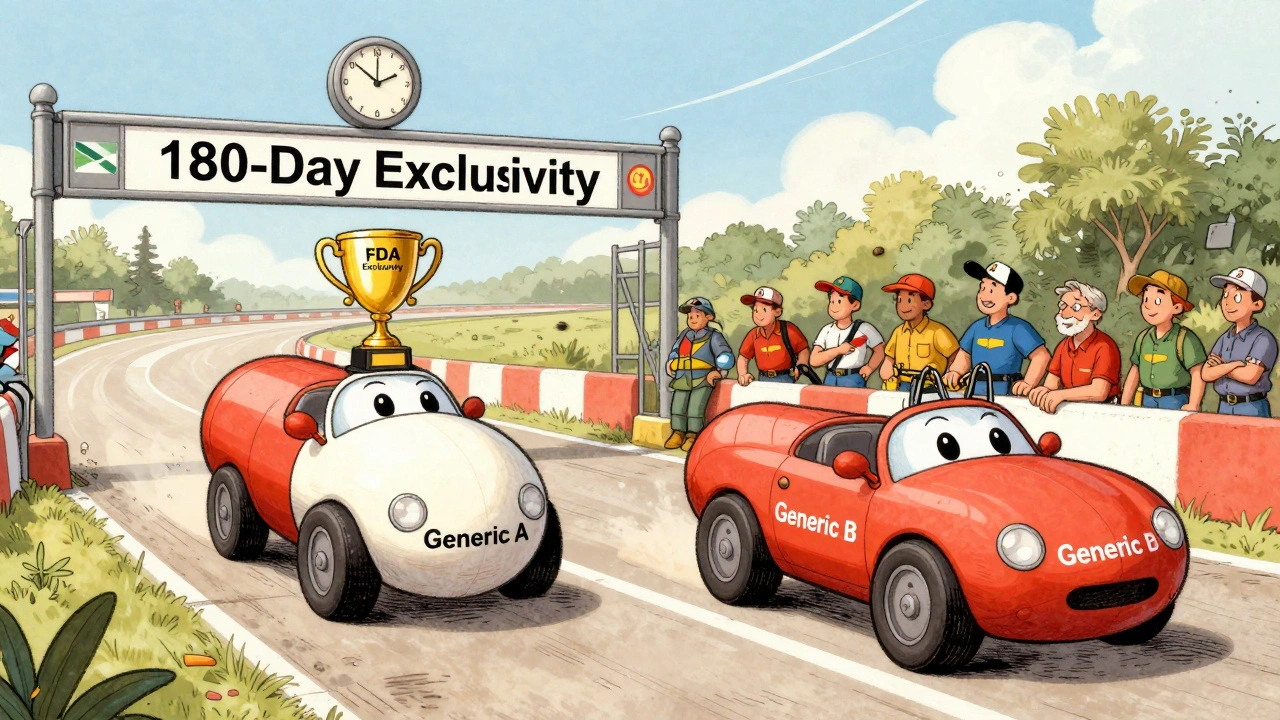
180-Day Exclusivity in Generic Drug Market Entry: How Patent Law Controls Access
- Keith Ashcroft
- |
- |
- 11
The 180-day exclusivity rule under the Hatch-Waxman Act gives the first generic drug maker to challenge a patent a temporary monopoly - but it often delays competition and keeps prices high. Here’s how it works, why it’s controversial, and what’s being done to fix it.
View more