
ANDA: What It Is and How It Shapes Generic Drug Access in the U.S.
When you pick up a generic pill at the pharmacy, chances are it got there because of an ANDA, Abbreviated New Drug Application, the FDA’s official process for approving generic versions of brand-name medicines. Also known as Abbreviated New Drug Application, it’s the reason your $200 brand-name drug now costs $5—and why pharmacists can legally swap it without asking you first.
ANDA isn’t just paperwork. It’s the backbone of how generic drugs enter the market. To get approval, a company doesn’t need to repeat expensive clinical trials. Instead, they prove their version is the same as the original in active ingredient, strength, dosage form, and how the body absorbs it. The FDA checks that it works just as well and is just as safe. That’s why you can trust a generic metformin or a generic statin—even if the label looks different. This process cuts drug costs by up to 85%, saving the U.S. healthcare system billions every year.
But ANDA doesn’t work the same everywhere. State laws control whether pharmacists must substitute a generic (mandatory) or just can (permissive). Some states block substitutions for drugs like warfarin or epilepsy meds because small differences matter. Others let pharmacists switch freely. And when it comes to nursing homes, Medicare Part D covers generics approved under ANDA—but long-term care insurance often doesn’t. That’s why patients can get hit with surprise bills, even if the drug itself is approved and safe.
ANDA also connects to how insurers pick which generics to cover. Pharmacy and Therapeutics (P&T) committees look at the ANDA data, compare prices, and decide what goes on Tier 1. If a generic passes ANDA but costs more than another approved version, it might get bumped to a higher tier—or denied entirely. That’s why two people on the same plan might get different generics, even for the same condition.
And it’s not just about pills. ANDA applies to injectables, eye drops, and even complex biosimilars—though those have their own review path. When you see a drug like denosumab or domperidone in a post about multiple myeloma or Parkinson’s, chances are it started with an ANDA. Even the fixed-dose combinations you take for high blood pressure or diabetes? They needed ANDA approval too.
What you’ll find below isn’t just a list of articles. It’s a map of how ANDA touches your life: from the safety of pediatric meds and the rules pharmacists follow, to why your insurance denies a generic, how long-term care insurance handles it, and why some drugs can’t be swapped without your consent. These posts don’t just explain the system—they show you how to navigate it, protect yourself, and ask the right questions when something doesn’t add up.
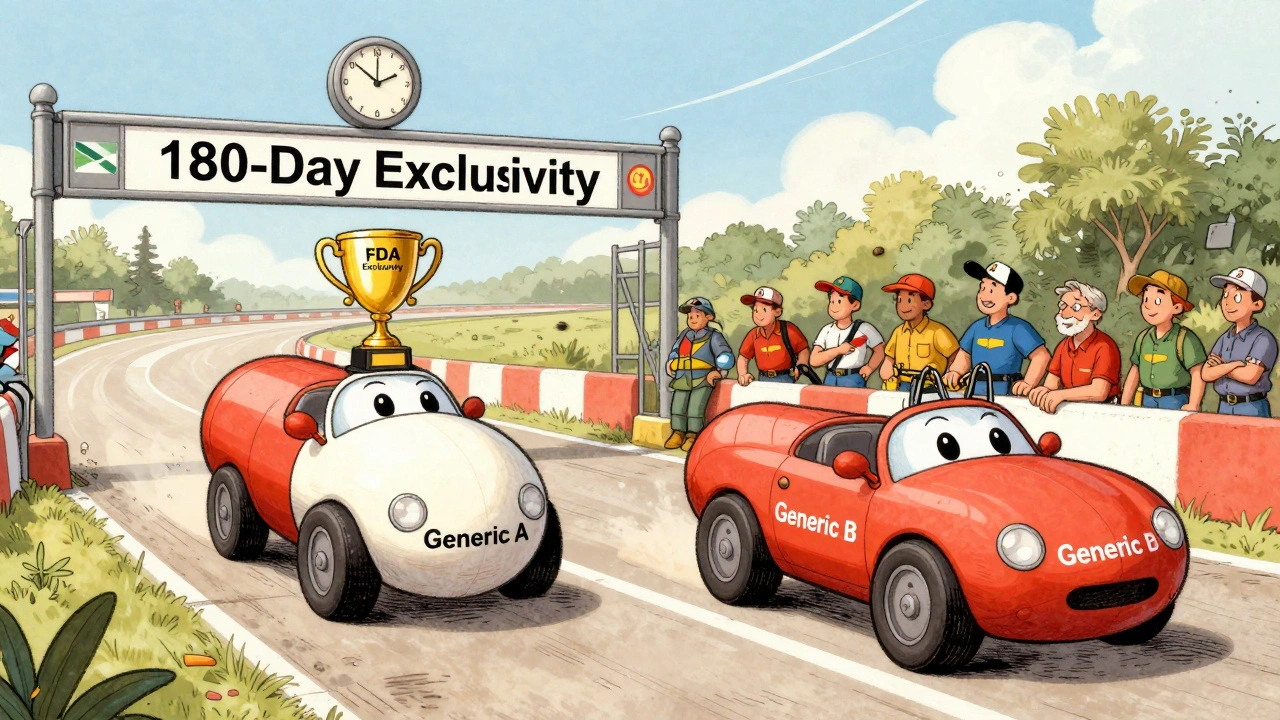
180-Day Exclusivity in Generic Drug Market Entry: How Patent Law Controls Access
- Keith Ashcroft
- |
- |
- 11
The 180-day exclusivity rule under the Hatch-Waxman Act gives the first generic drug maker to challenge a patent a temporary monopoly - but it often delays competition and keeps prices high. Here’s how it works, why it’s controversial, and what’s being done to fix it.
View more