
B12 Deficiency Symptoms: What You Need to Know Before It’s Too Late
When your body runs low on vitamin B12, a critical nutrient for nerve function and red blood cell production. Also known as cobalamin, it doesn’t stay in your system long—and if you’re not getting enough from food or supplements, things start to break down quietly. Unlike a cold or a headache, B12 deficiency doesn’t announce itself with a fever. It creeps in with tiredness you can’t shake, fingers that go numb for no reason, or memory lapses that make you wonder if you’re just getting older.
Many people think B12 deficiency only affects vegans or older adults, but that’s not true. It can happen to anyone—even if you eat meat—because absorption is the real issue. Stomach acid, certain medications like acid blockers, gut conditions like Crohn’s or celiac, and even genetics can block your body from pulling B12 into your bloodstream. That’s why symptoms don’t always match what you eat. neurological symptoms, like tingling in hands and feet, balance problems, or brain fog are often the first red flags, and they can show up before anemia does. And if you ignore them, damage to nerves can become permanent. B12 levels, measured through a simple blood test are the only way to know for sure if you’re running low.
What you’ll find in these articles isn’t just a list of symptoms. You’ll see real cases where people mistook B12 deficiency for anxiety, depression, or even early dementia—and how fixing their B12 levels changed everything. There’s also breakdowns on who’s at risk beyond the usual suspects, what tests actually matter (and which ones don’t), and why some people need shots instead of pills. You’ll learn how to spot the subtle signs before they turn into something serious, and what to ask your doctor if you suspect something’s off.
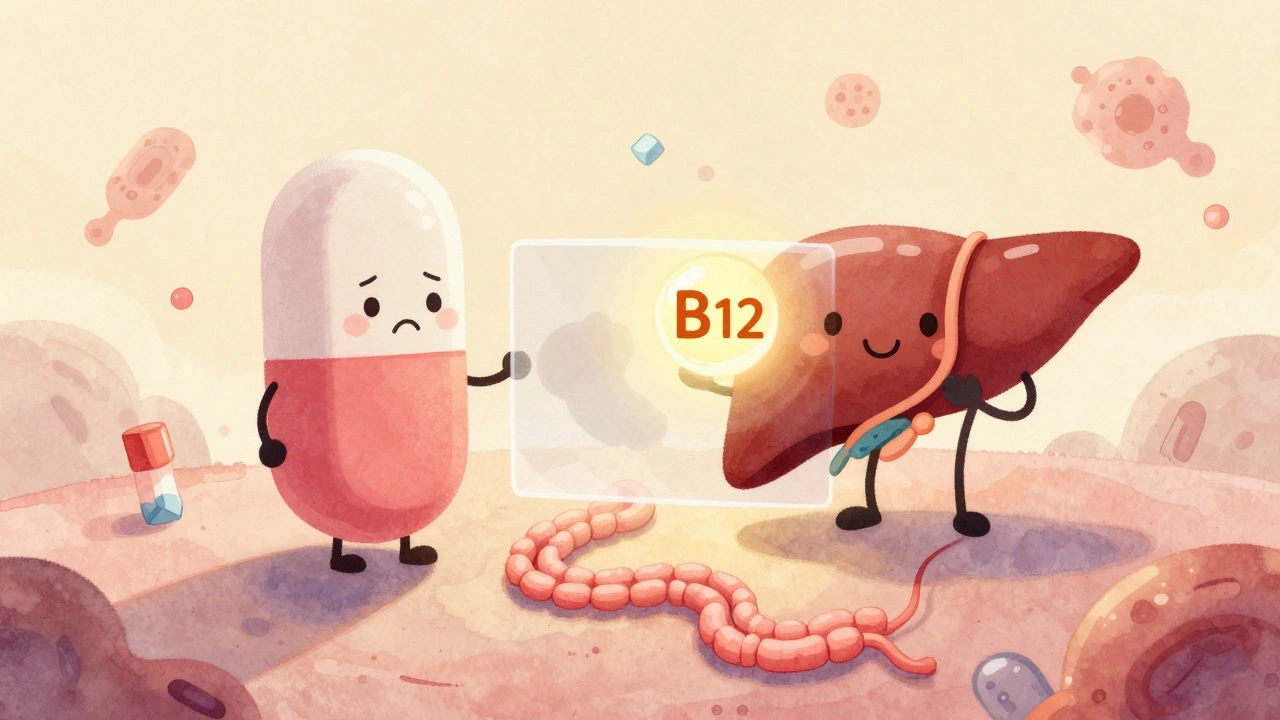
Metformin and Vitamin B12 Deficiency: What You Need to Know About Long-Term Risks
- Keith Ashcroft
- |
- |
- 12
Long-term metformin use can cause vitamin B12 deficiency, leading to nerve damage, fatigue, and confusion. Learn the symptoms, who's at risk, and how to prevent irreversible complications with simple blood tests and supplements.
View more