
Child-Safe Medicine Storage: How to Keep Kids Away from Dangerous Pills
When it comes to child-safe medicine storage, the practice of securing medications in places children cannot access or open. Also known as childproof medicine storage, it’s not just about locking cabinets—it’s about stopping accidents before they happen. Every year, over 50,000 children under six end up in emergency rooms after swallowing pills they found at home. Most of these cases aren’t due to negligence—they’re because people assume a bottle is "childproof" enough, or that keeping meds on a high shelf is safe. It’s not.
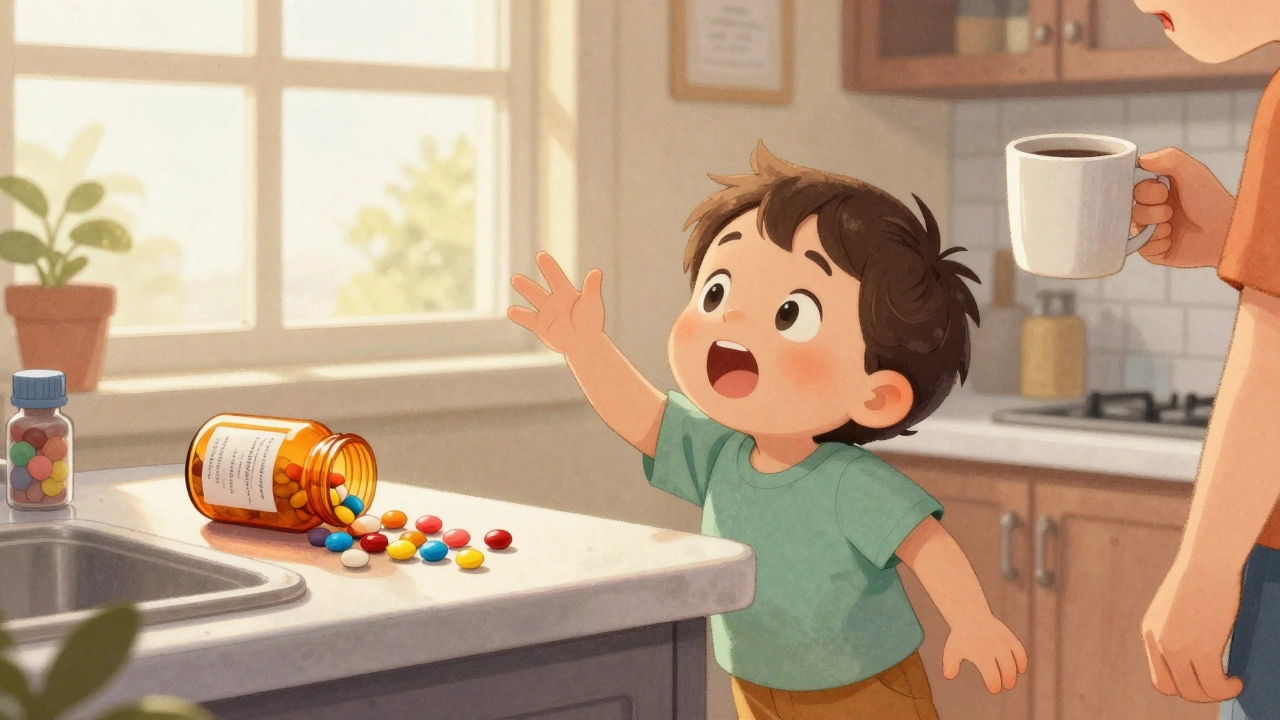
Medication safety, the system of practices that prevent accidental ingestion, misuse, or exposure to drugs starts with knowing where kids look. They don’t check the top shelf—they check eye level. That means the nightstand, the bathroom counter, the purse on the chair, even the coffee table where you left your morning pills. A study from the American Academy of Pediatrics found that 70% of poisonings happen in the home, and nearly half occur in the living room or bedroom—not the medicine cabinet.
Poison prevention, the proactive steps taken to reduce exposure to toxic substances isn’t about buying fancy locks. It’s about consistency. Keep all meds—prescription, over-the-counter, vitamins, even topical creams—in one locked container, preferably one that requires two actions to open (like a push-and-turn cap). Don’t rely on child-resistant caps alone; kids as young as two can figure them out. Store them in a high cabinet, out of sight, and never in a drawer with toys. If you use a pill organizer, lock it too. And never, ever leave pills in a child’s sight while taking them—kids mimic adults.
What about supplements? Many parents think gummy vitamins are harmless. But they look like candy, and kids know it. In 2023, the CDC reported a 40% spike in emergency visits from vitamin overdoses—mostly from chewables left on counters. The same goes for nicotine patches, insulin pens, and even liquid cough syrup. If it’s not food, it belongs locked up.
And what happens after you use a pill? Don’t leave empty bottles lying around. Kids will play with them. They’ll chew the caps. They’ll try to pour out the residue. Dispose of unused meds properly—don’t flush them, but don’t leave them in the trash either. Use a drug take-back program or mix them with coffee grounds or cat litter in a sealed container before tossing.
There’s no single magic solution. But combining a few simple habits—locking meds, storing them away from sight, and never leaving them unattended—cuts the risk of accidental poisoning by more than 80%. It’s not about being paranoid. It’s about being smart.
Below, you’ll find real-world guides from parents, pharmacists, and doctors on how to set up a truly child-safe storage system, what products actually work, and how to handle situations when a child gets into medicine—even if you think you’ve done everything right.
Accidental Pediatric Medication Overdose: How to Prevent It and What to Do If It Happens
- Keith Ashcroft
- |
- |
- 12
Accidental pediatric medication overdoses are preventable. Learn how child-resistant packaging, proper dosing, and locked storage can protect young children-and what to do if a child swallows medicine by mistake.
View more