
Drug Stability: What Keeps Medicines Safe and Effective Over Time
When you take a pill, you expect it to work exactly as it should. That’s only possible because of drug stability, the ability of a medication to maintain its chemical structure, potency, and safety under normal storage and use conditions. Also known as pharmaceutical stability, it’s what keeps your antibiotics from turning into useless powder, your insulin from losing its punch, and your blood pressure pills from becoming unsafe. Without proper stability, even the best-designed drug can fail — and that’s not just inconvenient, it’s dangerous.
Drug stability isn’t just about expiration dates on the bottle. It’s about how heat, light, moisture, and even the air inside the container slowly break down the active ingredients. A tablet might look fine, but if it’s been sitting in a hot bathroom for months, the medicine inside could be 30% weaker. Liquid medicines are even more sensitive — they can grow bacteria or separate into layers. That’s why manufacturers test drugs under extreme conditions to predict how they’ll behave over time. These tests aren’t just paperwork; they’re what lets the FDA approve a drug in the first place. And it’s not just the active ingredient that matters. The filler, coating, and packaging all play a role. A poorly designed bottle can let in moisture. A cheap cap might not seal right. These small things add up.
Stability also affects how pharmacies handle drugs. A hospital might store a drug in the fridge, but your home medicine cabinet? Not always. Some drugs need cold storage — like certain vaccines or injectables — while others just need to stay dry and out of direct sunlight. If you’ve ever wondered why some prescriptions come with those little warning labels about "keep in original container" or "do not refrigerate," that’s drug stability in action. Even the shape of the pill can matter. Some tablets are designed to dissolve slowly, and if they break down too fast because of humidity, they won’t work right.
When a drug degrades, it doesn’t just lose strength. Sometimes, it turns into something harmful. That’s why stability testing includes checking for toxic byproducts. A common painkiller, for example, can break down into a compound that irritates the stomach — if it’s stored wrong. This is why generic drugs have to prove they’re just as stable as the brand name. It’s not enough to have the same active ingredient; it has to behave the same way over time. That’s why the FDA checks manufacturing conditions so closely. A factory that’s too humid, or uses packaging that doesn’t block light, can make a perfectly good drug unsafe.
And it’s not just about you taking your meds. Think about the supply chain. Drugs sit in warehouses, get shipped across the country, sit on store shelves, and maybe even get left in a hot car. All those steps matter. That’s why some pharmacies use special packaging or temperature-controlled shipping — especially for high-risk drugs like insulin or chemotherapy. Even small temperature changes can shorten a drug’s life by months.
Below, you’ll find real-world examples of how drug stability affects safety, access, and outcomes. From how the FDA monitors manufacturing to why some medications need double checks or special storage, these posts show you exactly how stability isn’t just a lab concept — it’s something that touches every pill you take, every time you fill a prescription.
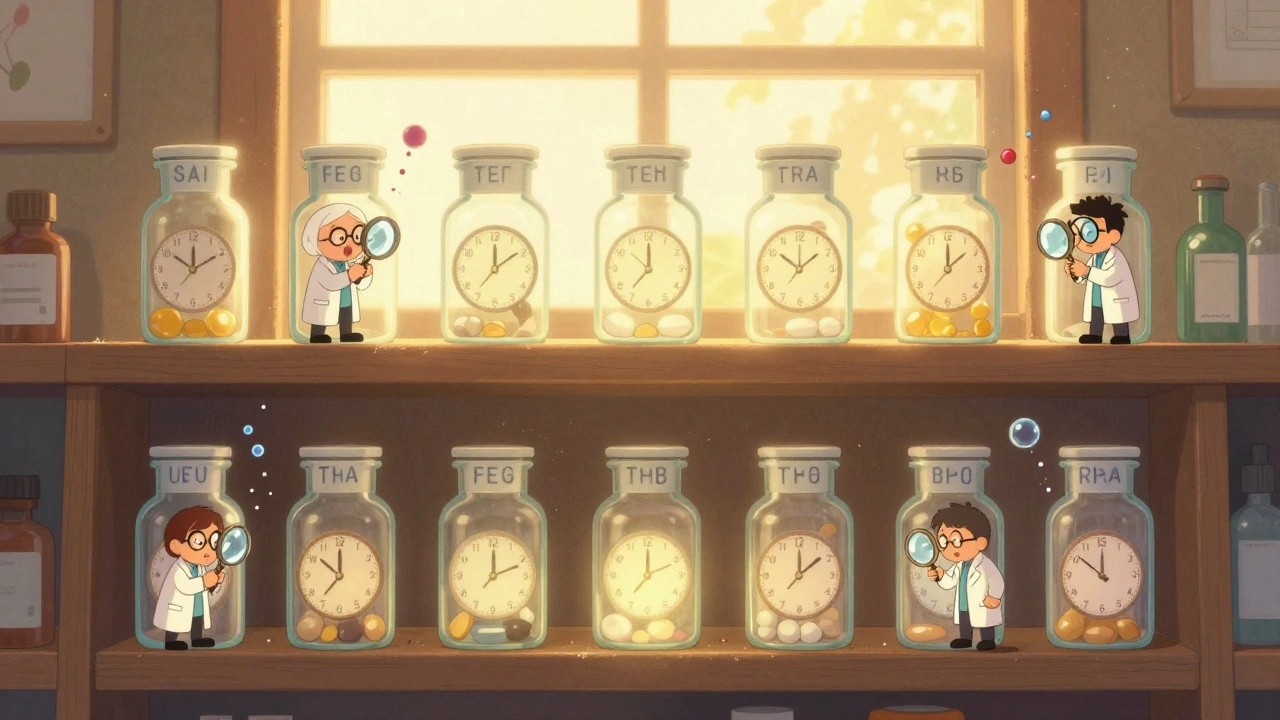
Stability Testing: Long-Term Quality Monitoring Post-Manufacture in Pharmaceuticals
- Keith Ashcroft
- |
- |
- 13
Stability testing ensures pharmaceuticals remain safe and effective after manufacture. Learn how ICH guidelines, real-time monitoring, and AI are shaping long-term quality control in drug production.
View more