
Electrolyte Balance: What It Is and Why It Matters for Your Health
When you hear electrolyte balance, the critical mix of minerals like sodium, potassium, calcium, and magnesium in your blood that control nerve signals, muscle contractions, and fluid levels. Also known as mineral balance, it’s not something you think about—until it’s off. Your body doesn’t store these minerals like vitamins. You lose them every day through sweat, urine, and even breathing. If you’re on a diuretic, a medication that makes you pee more to reduce fluid buildup, often used for high blood pressure or heart failure, you’re actively draining them out. That’s why people on long-term diuretics often end up with hypokalemia, dangerously low potassium levels that can cause muscle cramps, irregular heartbeat, and even cardiac arrest—a risk so real, doctors now track potassium levels like blood pressure.
It’s not just about pills. Your diet, how much you sweat, and even how much water you drink can throw off your balance. A heart failure patient on loop diuretics might lose potassium faster than their body can replace it. That’s why managing electrolyte balance, the critical mix of minerals like sodium, potassium, calcium, and magnesium in your blood that control nerve signals, muscle contractions, and fluid levels isn’t just a lab test—it’s a daily routine. Some people need potassium supplements. Others need to eat more bananas, spinach, or potatoes. But you can’t guess. Too little potassium and your heart stumbles. Too much, and you risk kidney damage or paralysis. It’s a tight line, and the stakes are high.
What you’ll find here isn’t theory. It’s real-world advice from people who’ve lived with this. You’ll see how diuretics quietly steal potassium, how heart failure patients stay safe, and why some meds that fix one problem can break another. Whether you’re managing a chronic condition, just started a new pill, or noticed unexplained fatigue or cramps, this collection gives you the facts—not the fluff. No jargon. No marketing. Just what works, what doesn’t, and what your doctor might not have told you.
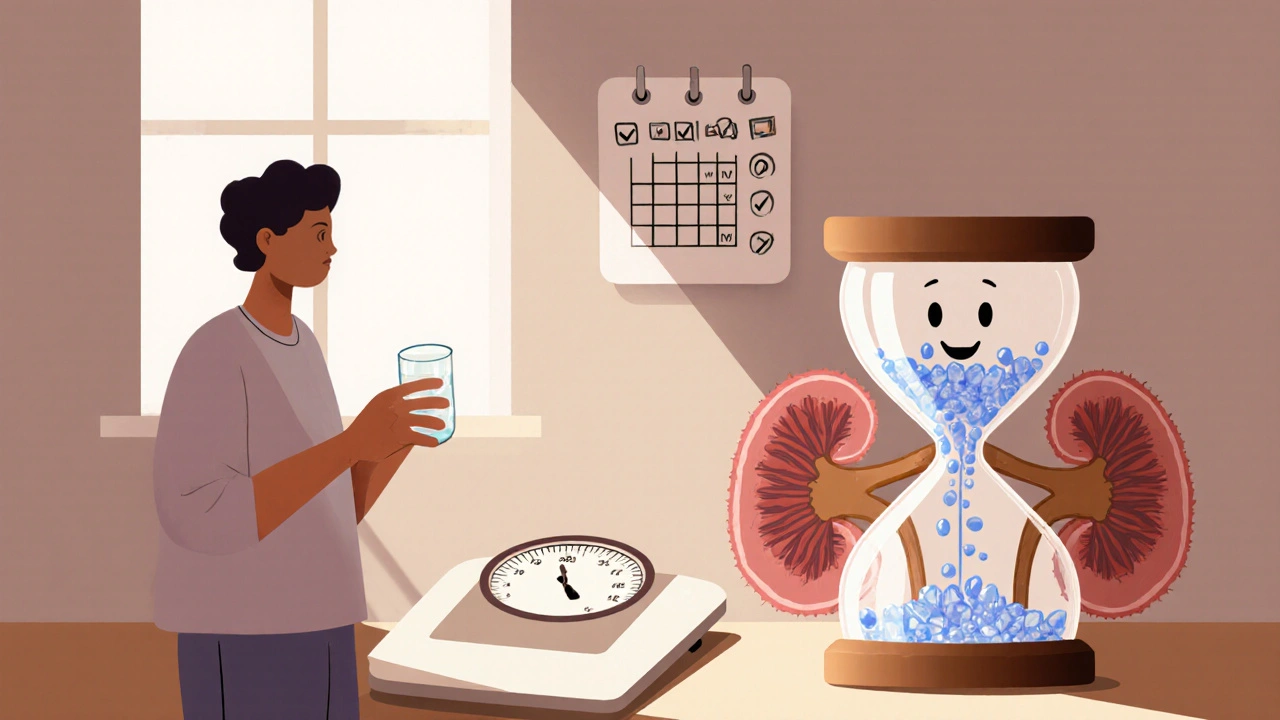
Hydration and Diuretics: How to Balance Fluid Intake to Avoid Side Effects
- Keith Ashcroft
- |
- |
- 12
Learn how to balance fluid intake when taking diuretics to avoid dehydration, electrolyte loss, and dangerous side effects. Practical tips on water, electrolytes, weight tracking, and what to avoid.
View more