
Fluid Intake: Why Your Daily Water Habit Matters More Than You Think
When you think about fluid intake, the total amount of liquids you consume daily, including water, beverages, and moisture from food. Also known as hydration, it’s not just about quenching thirst—it’s a silent driver behind how your body handles medications, manages electrolytes, and keeps your organs running. Too little and your kidneys strain. Too much and you risk swelling, low sodium, or worse. For people on diuretics, medications that increase urine output to reduce fluid buildup, often used in heart failure or high blood pressure, getting fluid intake right isn’t optional—it’s life-saving. These drugs pull water out of your system, but if you don’t replace it wisely, you can tip into dehydration or electrolyte chaos.
That’s where hypokalemia, dangerously low potassium levels in the blood, often caused by excessive fluid loss from diuretics or vomiting comes in. Low potassium doesn’t just make you tired or crampy—it can throw off your heartbeat. And if you’re managing heart failure, a condition where the heart can’t pump blood effectively, often requiring fluid and electrolyte balance as part of treatment, your fluid intake directly impacts how much swelling you have, how hard your heart works, and whether your meds even work as they should. Studies show that patients who track their daily fluid intake and weight lose fewer hospital days than those who don’t. It’s not magic—it’s math. One extra glass a day might mean the difference between staying home and ending up in the ER.
Fluid intake isn’t one-size-fits-all. Someone on a loop diuretic for heart failure needs different numbers than someone taking a mild diuretic for swelling after surgery. Even your diet matters—salty foods make you hold water, while caffeine and alcohol pull it out. And while most people think they need eight glasses a day, the truth is your body tells you when it needs more. Thirst, dark urine, dizziness, or sudden weight gain are all signals. No app or chart replaces listening to your body.
Below, you’ll find real-world guides from people who’ve walked this path—how to balance fluid intake with diuretics, what to eat when potassium drops, how heart failure patients track their daily numbers, and why some meds make hydration a tightrope walk. These aren’t theories. They’re lessons learned the hard way.
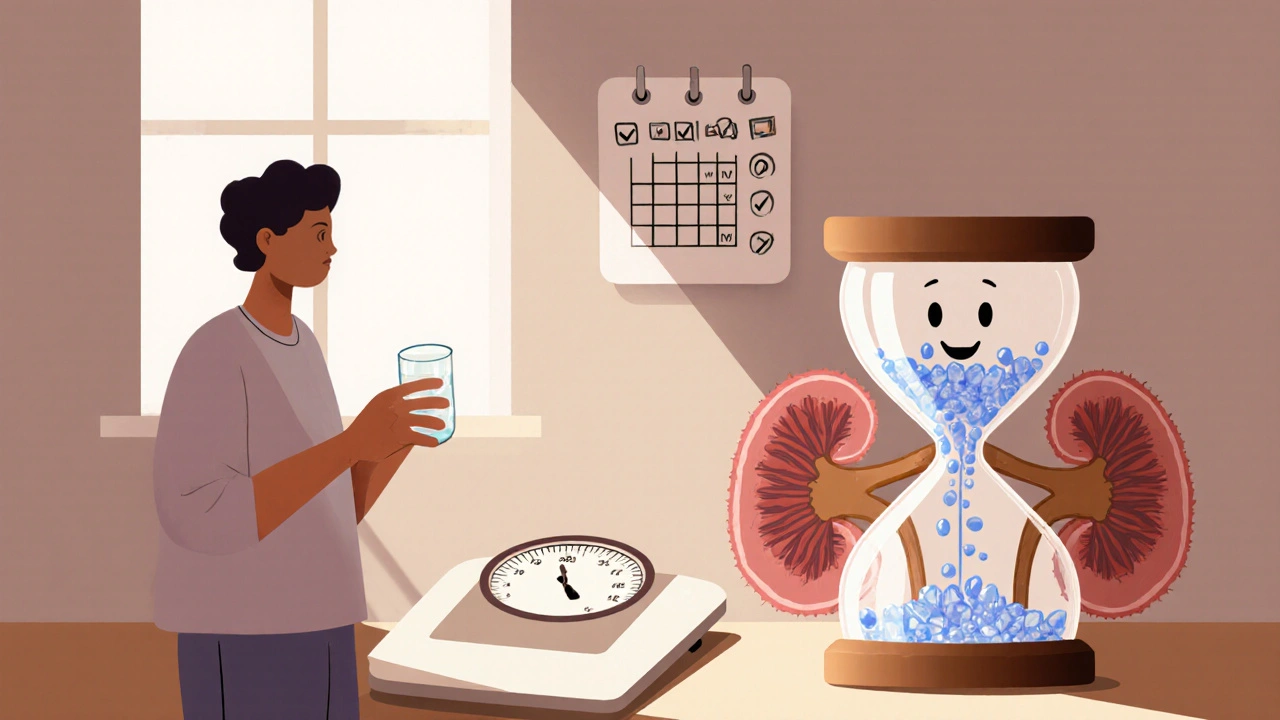
Hydration and Diuretics: How to Balance Fluid Intake to Avoid Side Effects
- Keith Ashcroft
- |
- |
- 12
Learn how to balance fluid intake when taking diuretics to avoid dehydration, electrolyte loss, and dangerous side effects. Practical tips on water, electrolytes, weight tracking, and what to avoid.
View more