
Generic vs Brand Name Drugs: What You Really Save and What You Might Lose
When you pick up a prescription, you might see two names: one you recognize from TV, and another that’s cheaper but looks totally different. That’s the generic vs brand name, the difference between a drug sold under its chemical name and the same drug sold under a company’s trademark. Also known as off-patent drugs, generics are exact copies of brand-name medications once the patent expires—but they’re not always treated the same by insurers, pharmacists, or even doctors. The truth? Most generics work just as well. The FDA requires them to have the same active ingredient, strength, dosage form, and route of administration. They’re tested to ensure they deliver the same amount of medicine into your bloodstream at the same rate. So if your doctor prescribes Lipitor and your pharmacy gives you atorvastatin, you’re getting the same drug—just without the fancy packaging or marketing budget.
But here’s where it gets messy. Generic substitution, the practice of swapping a brand-name drug for its generic version at the pharmacy. Also known as automatic substitution, it’s governed by state laws that vary wildly across the U.S. Some states require pharmacists to substitute unless the doctor says no. Others let pharmacists choose. And in a few, you have to ask for the generic yourself. This matters because even tiny differences in inactive ingredients—like fillers or coatings—can affect how a drug feels to you. One person might get a rash from a generic’s dye. Another might feel nauseous because the tablet dissolves a bit slower. These aren’t side effects of the medicine itself—they’re quirks of the formulation.
Then there’s the drug cost savings, the billions of dollars saved every year by switching from brand-name drugs to generics. Also known as prescription savings, this is why insurers push generics so hard. In 2024 alone, generics saved the U.S. healthcare system $482 billion. That’s not just a number—it’s a lower copay for you, a less strained budget for Medicare, and more people getting the meds they need. But savings don’t mean zero trade-offs. Some patients get switched without warning, especially if their insurance changes its formulary. And when a new generic hits the market, there’s often a delay as pharmacies adjust. That’s why you’ll sometimes see a post about 180-day exclusivity—a loophole that lets the first generic maker block others for half a year, keeping prices high longer than they should be.
And don’t forget the insurance formularies, the lists insurers use to decide which drugs they’ll cover and at what cost. Also known as tiered drug lists, these are the real gatekeepers. Most generics end up in Tier 1—lowest cost. But if your brand-name drug gets pulled from coverage, you might get stuck with a generic you don’t tolerate well. That’s why posts on this page dig into things like mandatory substitution laws, how insurers pick which generics to cover, and why your doctor’s note saying "dispense as written" doesn’t always stop the switch.
What you’ll find below isn’t just a list of articles. It’s a map of the real-world maze between what’s written on your prescription and what ends up in your hand. You’ll see how patent laws delay competition, how state rules change your access, and why some people swear by their brand-name drug while others never notice the difference. No fluff. No marketing. Just what happens when money, law, and medicine collide—and how to make sure you’re not the one paying the price.
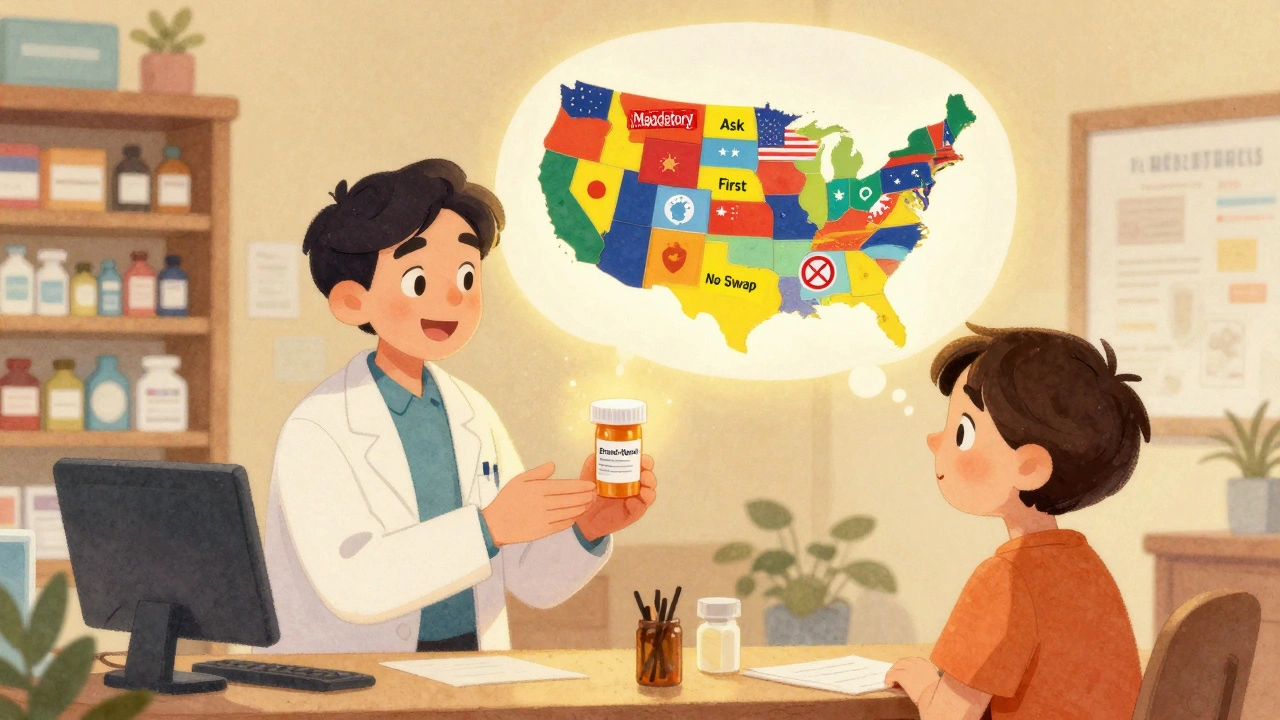
State Laws on Generic Drug Substitution: What Pharmacists and Patients Need to Know
- Keith Ashcroft
- |
- |
- 10
State laws on generic drug substitution vary widely across the U.S., affecting how pharmacists swap brand-name drugs for generics. Learn how consent rules, NTI drug restrictions, and biosimilar policies differ by state-and what patients and pharmacists need to know.
View more