
Hydration: Why Water Matters More Than You Think for Medications and Health
When you think about hydration, the process of maintaining adequate fluid levels in the body to support normal function. Also known as fluid balance, it's not just about quenching thirst—it's the invisible foundation behind how your body handles every pill, injection, and supplement you take. Skip it, and even the best meds can fail you. Take diuretics for heart failure: they pull fluid out, but if you don’t replace it, your potassium drops too fast, leading to dangerous rhythms. Or look at lithium for bipolar disorder—it’s cleared by your kidneys, and if you’re dehydrated, levels spike and you risk toxicity. Hydration isn’t a side note. It’s part of the treatment.
It’s not just about drugs. electrolytes, minerals like sodium, potassium, and magnesium that regulate fluid movement and nerve signals are what keep your cells working. When you’re sick, on antibiotics like tinidazole, or managing gout flares with colchicine, your body loses more than just water—it loses balance. That’s why doctors check your blood work. Low sodium from too much water? High potassium from too little? Both can land you in the ER. And if you’re on blood thinners or steroids, dehydration thickens your blood and raises clot risk. It’s not magic. It’s math: your kidneys need fluid to filter toxins, your liver needs it to process meds, and your muscles need it to stop cramping.
And let’s be real—you don’t need to chug eight glasses a day. That rule is outdated. Your body tells you when it needs water: dry mouth, dark urine, dizziness, fatigue. If you’re on meds that make you pee more, sweat more, or feel nauseous, you need to pay closer attention. Athletes on anticoagulants? Hydration keeps blood flowing smoothly. Elderly patients on multiple prescriptions? One glass of water with each pill cuts confusion and prevents kidney strain. Even birds with feather loss from stress? Dehydration worsens it. It’s everywhere.
What you’ll find below isn’t a list of water tips. It’s a collection of real cases where hydration made the difference—between a safe dose and a hospital visit, between relief and a flare-up, between staying active and being sidelined. These aren’t theories. They’re stories from people managing meds, side effects, and chronic conditions where water wasn’t optional. It was the missing piece.
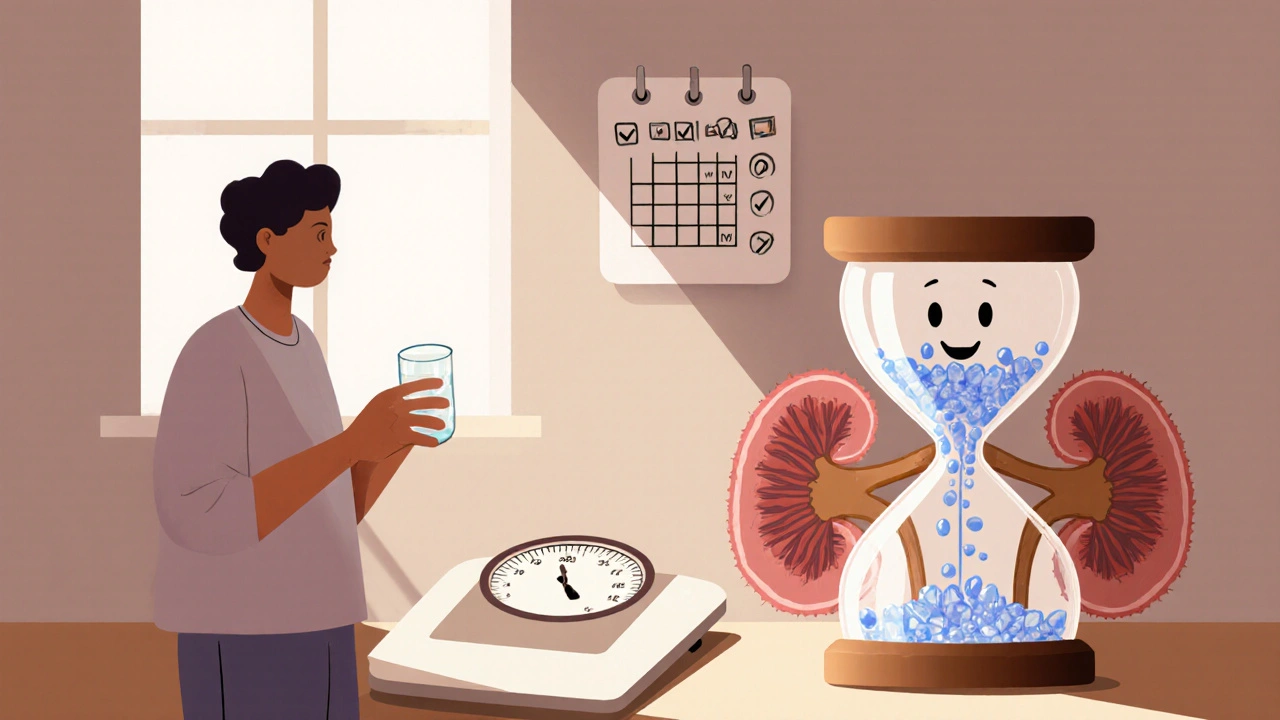
Hydration and Diuretics: How to Balance Fluid Intake to Avoid Side Effects
- Keith Ashcroft
- |
- |
- 12
Learn how to balance fluid intake when taking diuretics to avoid dehydration, electrolyte loss, and dangerous side effects. Practical tips on water, electrolytes, weight tracking, and what to avoid.
View more