
Liquid Medicine Dosing: How to Get It Right Every Time
When you’re giving liquid medicine dosing, the precise measurement of oral liquid medications to ensure safe and effective treatment. Also known as oral liquid administration, it’s one of the most common—but most misunderstood—ways to give medicine, especially to children, elderly patients, and those who can’t swallow pills. A teaspoon isn’t a teaspoon, and a dropper isn’t a measuring tool unless it’s marked. Mistakes here aren’t just inconvenient—they can lead to underdosing, overdose, or dangerous side effects.
It’s not just about the medicine. The syringe dosing, using oral syringes to measure and deliver exact volumes of liquid medication. Also known as oral dosing syringes, these are the gold standard for accuracy. Kitchen spoons? Don’t use them. They vary by brand, shape, and even how full you fill them. A 5 mL dose in one spoon might be 7 mL in another. That’s a 40% error. For a child on antibiotics or an adult on seizure meds, that’s risky. And it’s not just kids—many seniors have shaky hands or vision problems. A clear, labeled syringe is easier to read and control than a cup with tiny markings.
pediatric medication, liquid drugs prescribed specifically for infants and children, often requiring weight-based dosing. Also known as children’s liquid drugs, these are among the most sensitive to dosing errors. A 10-pound baby needs a fraction of what a 40-pound toddler needs. Dosing is usually based on weight in kilograms, not age. But parents often guess. Pharmacists know this. That’s why many now print the dose in milliliters right on the label—and why some pharmacies include a free syringe. Even then, confusion happens. Is it 2.5 mL or 2.5 tsp? Always double-check the unit. And if the label says "shake well," do it. Some meds settle, and the top of the bottle might be weak while the bottom is too strong.
It’s not just about the tool or the math. It’s about timing, storage, and communication. Some liquid antibiotics need refrigeration. Others lose strength if left out. Some mix with juice. Others don’t. And if you’re giving two different liquids, how do you space them? Five minutes apart? An hour? Ask. Don’t assume. The same goes for switching brands—different manufacturers use different concentrations. A bottle of amoxicillin labeled "250 mg/5 mL" isn’t the same as one labeled "400 mg/5 mL." Same name, different strength. That’s why you need to check the concentration every time you refill.
There’s no magic trick. Just three things: use the right tool, read the label like your life depends on it (because it might), and ask if you’re unsure. You wouldn’t fly a plane without checking the fuel gauge. Don’t give medicine without checking the dose. The posts below cover real cases—where dosing went wrong, how to spot a bad label, why some pharmacies skip the syringe, and what to do when your child refuses to take it. You’ll find practical fixes, common pitfalls, and the one question you should always ask your pharmacist before walking out the door.
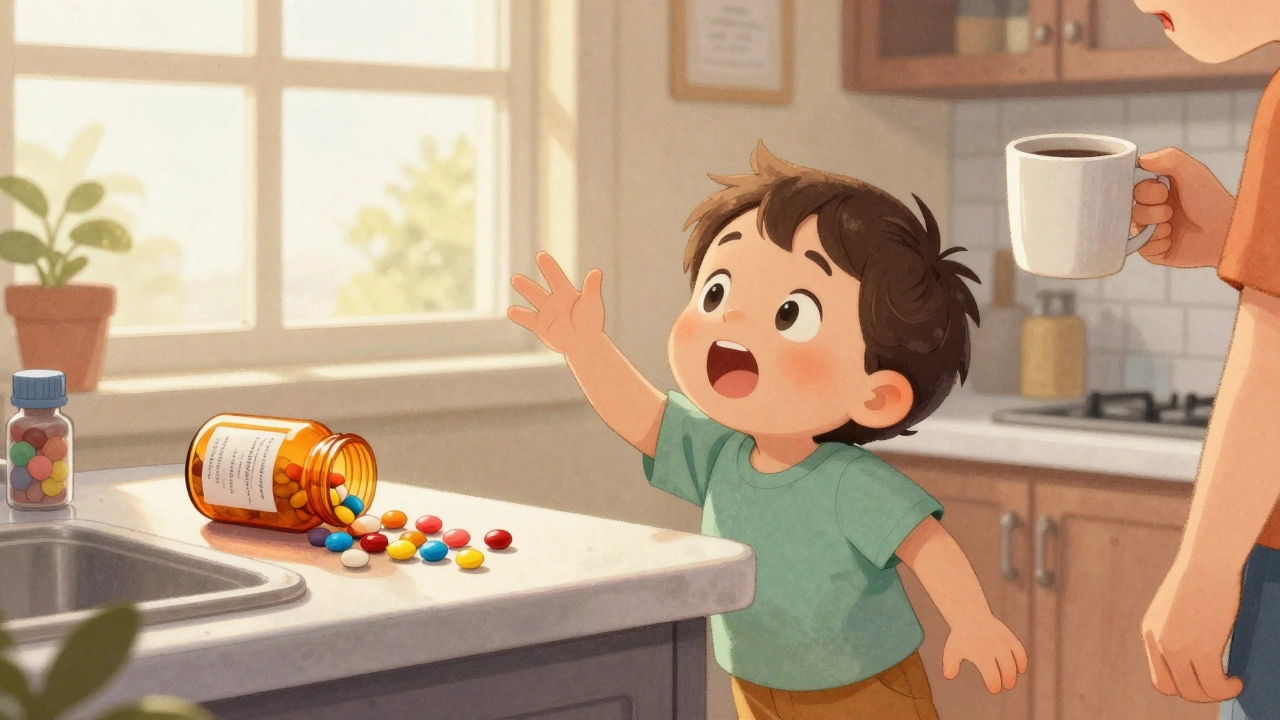
Accidental Pediatric Medication Overdose: How to Prevent It and What to Do If It Happens
- Keith Ashcroft
- |
- |
- 12
Accidental pediatric medication overdoses are preventable. Learn how child-resistant packaging, proper dosing, and locked storage can protect young children-and what to do if a child swallows medicine by mistake.
View more