
Long-Term Care Insurance: What It Covers and Who Needs It
When you think about health insurance, you probably think of doctor visits, hospital stays, or prescriptions. But what happens when you can’t dress yourself, bathe, or eat without help? That’s where long-term care insurance, a type of policy designed to cover non-medical support for people who need help with daily activities due to aging, illness, or disability. Also known as extended care insurance, it doesn’t fix your heart or cure your diabetes—it keeps you safe and dignified when your body starts to fail. Most people assume Medicare will cover this, but it doesn’t. Medicare pays for short-term rehab after a hospital stay, not for ongoing help with bathing, dressing, or eating. That’s where long-term care insurance steps in.
People who buy this coverage usually do it before they turn 60. Why? Because premiums jump sharply with age. If you wait until you’re 70, you might pay double—or get denied outright if you already have mobility issues or memory problems. The policy kicks in when you need help with at least two activities of daily living, like toileting, transferring from bed to chair, or managing incontinence. It can pay for care at home, in an assisted living facility, or in a nursing home. Some policies even cover adult day care or memory care units for dementia. But here’s the catch: not all policies are the same. Some only pay $100 a day, others $300. Some limit coverage to three years, others to lifetime. And if you don’t use it, you might lose your premiums—unless you’ve added a return-of-premium rider, which most people skip because it’s expensive.
Medicaid can pay for long-term care, but only after you’ve spent nearly all your money. That’s called the "spend-down" rule. If you own a house, a car, or even a small savings account, you might be forced to sell it just to qualify. That’s why many people use long-term care insurance as a shield—to protect their life savings and avoid becoming a financial burden on their kids. It’s not just about money, though. It’s about choice. With coverage, you get to pick where you live and who cares for you. Without it, the system decides for you.
Looking at the posts here, you’ll find real-world examples of how medications, insurance rules, and health systems intersect. From how insurers pick which generics to cover, to how state laws control generic substitutions, these articles show how deeply policy shapes your access to care. Long-term care insurance is part of that same system. It’s not flashy, but it’s one of the quietest life preservers you can buy for your future self.
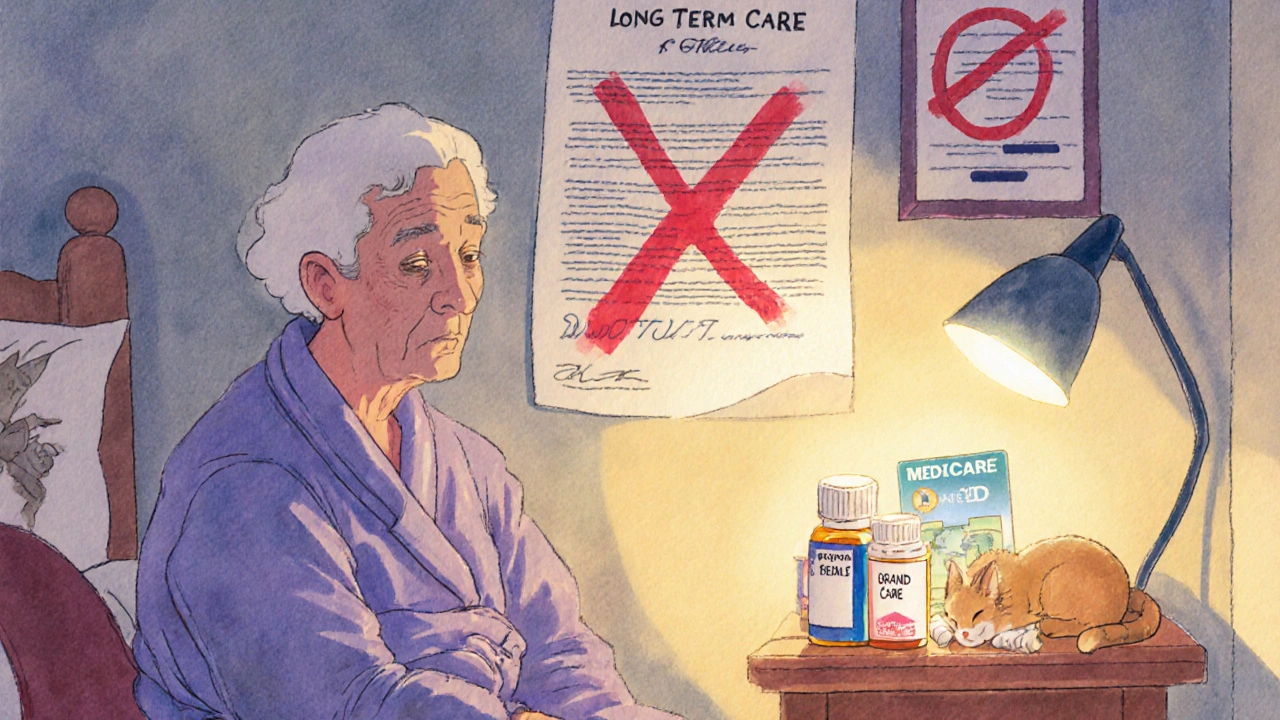
Long-Term Care Insurance and Generic Drug Coverage in Nursing Homes: What You Really Need to Know
- Beata Staszkow
- |
- |
- 9
Long-term care insurance doesn't cover generic drugs in nursing homes. Medicare Part D does - but formularies, delays, and enrollment gaps can block access. Know how it works to avoid costly surprises.
View more