
Manufacturing Oversight: How Drug Safety Rules Protect You
When you swallow a pill, you expect it to work the same way every time. That’s not luck—it’s manufacturing oversight, the system of rules and inspections that ensures every batch of medicine meets strict quality, purity, and consistency standards. Also known as pharmaceutical quality control, it’s the invisible guardrail between a drug’s lab design and your medicine cabinet. Without it, a batch of insulin could be too weak. A generic antibiotic might not kill the infection. A heart medication could contain toxic impurities. This isn’t hypothetical—it’s happened. And it’s why manufacturing oversight isn’t just paperwork. It’s life-or-death.
Manufacturing oversight covers everything from the raw ingredients to the final sealed bottle. It’s enforced by agencies like the FDA in the U.S. and similar bodies worldwide. They inspect factories, review production logs, and test samples—not just for the right chemical, but for contaminants, particle size, dissolution rate, and even the humidity in the packaging room. FDA regulations, the legal framework that sets minimum standards for drug production and testing in the United States require every generic drug to prove it’s bioequivalent to the brand-name version. That means your $5 generic statin must release into your bloodstream at the same rate and amount as the $300 brand. If it doesn’t, it’s pulled. pharmaceutical quality, the measurable consistency and safety of a drug across all production batches isn’t optional—it’s the baseline.
But oversight isn’t perfect. Some factories cut corners. Some countries have weaker enforcement. That’s why recalls happen. Why some patients report different side effects from the same generic. Why long-acting injectables need extra monitoring—because a tiny variation in the suspension can change how slowly the drug releases. generic drug standards, the specific requirements that ensure generic medications are as safe and effective as their brand-name counterparts are clear on paper, but real-world compliance varies. That’s why knowing your meds come from a regulated source matters. And why posts here dive into double-check protocols for high-alert drugs, state laws on generic substitution, and how 180-day exclusivity can delay competition and lower quality incentives.
You don’t need to be a pharmacist to care about this. If you take any medication—daily for diabetes, occasionally for pain, or even a single course of antibiotics—you’re part of this system. Manufacturing oversight keeps your pills consistent. It stops dangerous mix-ups. It protects kids from overdoses by ensuring child-resistant caps work. It ensures that the statin you get today is the same as the one you got last month. When oversight fails, people get hurt. When it works, you never even notice. That’s the point.
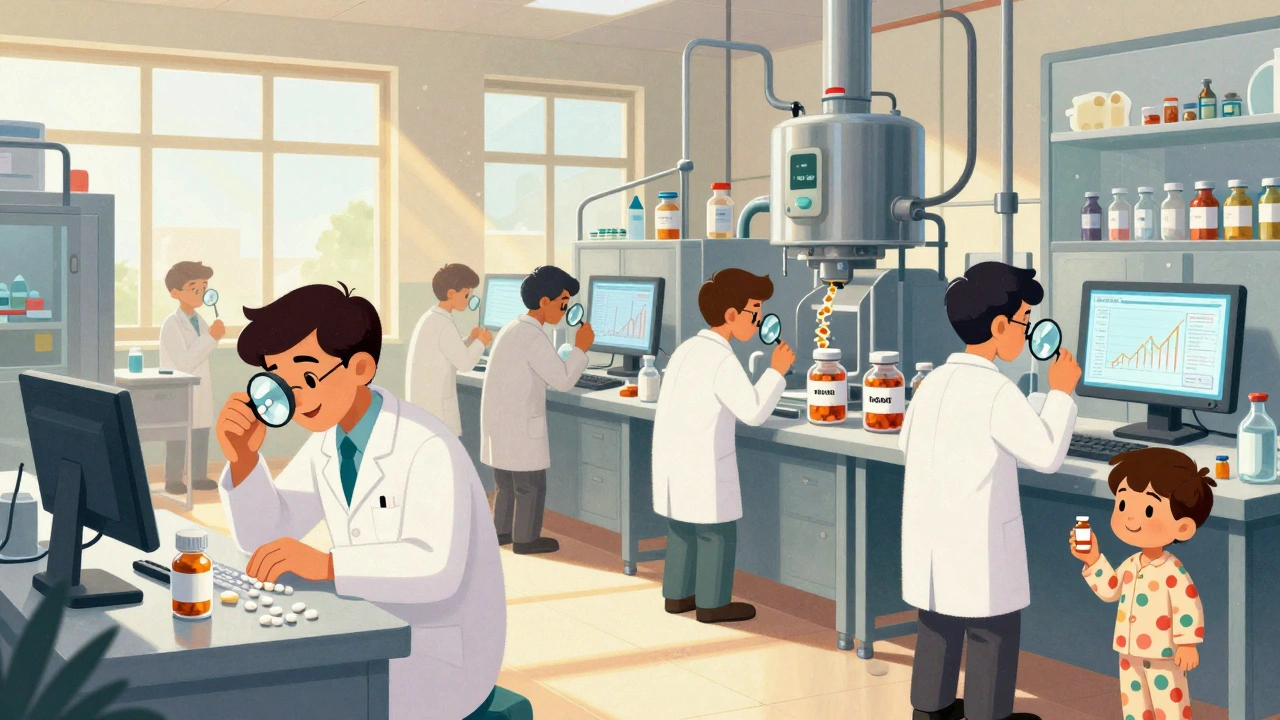
How the FDA Ensures Generic Drug Safety Through Manufacturing Oversight
- Keith Ashcroft
- |
- |
- 13
The FDA ensures generic drug safety through strict manufacturing standards, bioequivalence testing, and global inspections. Learn how generics are monitored from factory to pharmacy.
View more