
Metformin: What It Is, How It Works, and What You Need to Know
When it comes to managing metformin, a first-line oral medication used to lower blood sugar in people with type 2 diabetes. Also known as Glucophage, it’s been the go-to drug for over 60 years because it works without causing weight gain or low blood sugar — unlike many older diabetes pills. It doesn’t force your body to make more insulin. Instead, it helps your cells use insulin better, reduces sugar production in your liver, and slows sugar absorption in your gut. That’s why doctors start with it: it’s safe, cheap, and effective.
Metformin doesn’t work the same way as insulin or drugs that boost insulin release. It’s not a quick fix — you won’t see results overnight. But over weeks, it steadily lowers your A1C by 1% to 2%, often without side effects. When it does cause issues, they’re usually mild: stomach upset, bloating, or diarrhea. These tend to fade as your body adjusts. Taking it with food helps. There’s also a slow-release version that’s easier on the stomach.
Metformin isn’t just for diabetes. Studies show it helps people with prediabetes avoid full-blown type 2 diabetes. It’s also used off-label for PCOS, helping with irregular periods and fertility issues by improving insulin sensitivity. That’s because high insulin levels often drive those problems. It’s not a weight-loss drug, but many people lose a few pounds on it — not because it burns fat, but because it reduces cravings and stabilizes energy levels.
What makes metformin stand out is how few serious risks it has. Unlike older drugs like Avandia, it doesn’t raise heart risks. Unlike sulfonylureas, it won’t crash your blood sugar. And unlike newer GLP-1 agonists, it doesn’t require injections. It’s a pill you take once or twice a day. But it’s not for everyone. People with severe kidney problems, liver disease, or a history of lactic acidosis should avoid it. Your doctor will check your kidney function before starting you on it — and often yearly after that.
Metformin is often combined with other diabetes medications. You’ll see it paired with SGLT2 inhibitors, DPP-4 inhibitors, or even insulin in more advanced cases. But even then, it’s usually the foundation. Many people stay on it for decades. It’s not glamorous, but it’s reliable. And with newer diabetes drugs costing hundreds of dollars a month, metformin remains the most affordable option — often under $10 a month at most pharmacies.
What you’ll find in the articles below are real-world comparisons and practical insights. You’ll see how metformin stacks up against Avandia and other diabetes pills, how it fits into broader treatment plans, and why it’s still the starting point even when new drugs hit the market. You’ll also learn about drug interactions, what to do if you miss a dose, and how lifestyle changes make it work even better. This isn’t theory. These are the things people actually need to know to manage their condition — without confusion, hype, or unnecessary complexity.
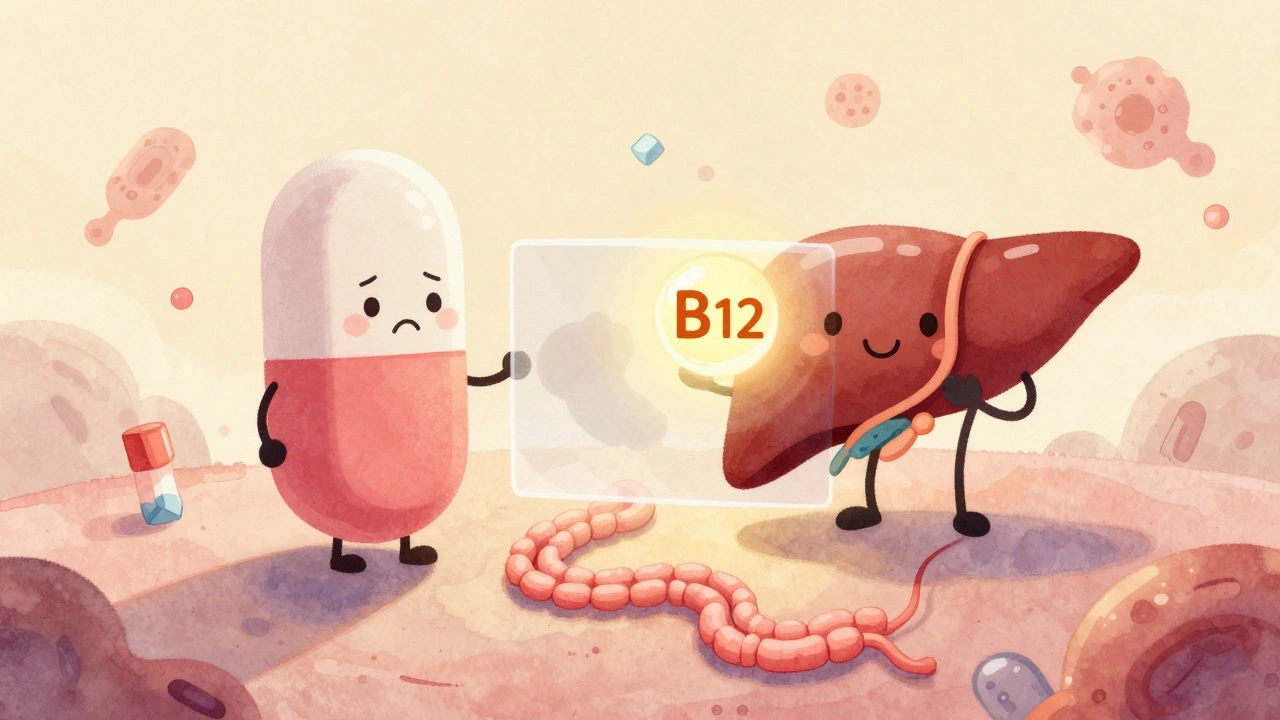
Metformin and Vitamin B12 Deficiency: What You Need to Know About Long-Term Risks
- Keith Ashcroft
- |
- |
- 12
Long-term metformin use can cause vitamin B12 deficiency, leading to nerve damage, fatigue, and confusion. Learn the symptoms, who's at risk, and how to prevent irreversible complications with simple blood tests and supplements.
View more