
Nursing Home Medications: What Residents Really Need to Know
When someone moves into a nursing home medications, the specific drugs given to residents in long-term care facilities to manage chronic conditions, pain, and behavioral symptoms. Also known as long-term care pharmacy regimens, these medications are often the difference between stability and decline. Many residents take five, ten, or even more pills a day—a practice called polypharmacy, the use of multiple medications by a patient, often leading to increased risk of side effects and interactions. It’s not just about treating illness; it’s about keeping people comfortable, safe, and as independent as possible. But too many drugs can do more harm than good, especially when they’re not regularly reviewed.
Common nursing home medications, the specific drugs given to residents in long-term care facilities to manage chronic conditions, pain, and behavioral symptoms. include diuretics for heart failure, antipsychotics for agitation, and painkillers for arthritis. But many of these drugs come with hidden dangers. For example, long-acting injectables, extended-release psychiatric medications given as shots instead of pills to improve adherence. are used to reduce daily pill burden, but they require careful monitoring for side effects like weight gain, tremors, or metabolic changes. Diuretics help with swelling, but if fluid intake isn’t balanced, they can cause dangerous drops in potassium—something diuretics, medications that increase urine output to reduce fluid buildup in the body. are known for. And let’s not forget how often residents are given medications for behaviors that might be better handled with changes in environment, routine, or social interaction.
What makes this even trickier is that nursing home staff often rely on prescriptions from doctors who never see the patient in person. A pill that worked fine at home might cause confusion or dizziness in a new setting. That’s why regular med reviews matter. Families should ask: Is this drug still needed? Are there simpler or safer options? Could we cut one or two? You’d be surprised how many medications can be stopped without harm—sometimes even improving alertness and mobility.
The posts below dig into exactly these issues: how combination pills reduce confusion, why certain drugs need extra monitoring, how diuretics affect hydration, and how insurance rules shape what’s available. You’ll find real talk about what’s actually prescribed in nursing homes—not just textbook answers, but what happens behind the scenes. Whether you’re a family member, caregiver, or resident, this collection gives you the tools to ask better questions and push for smarter care.
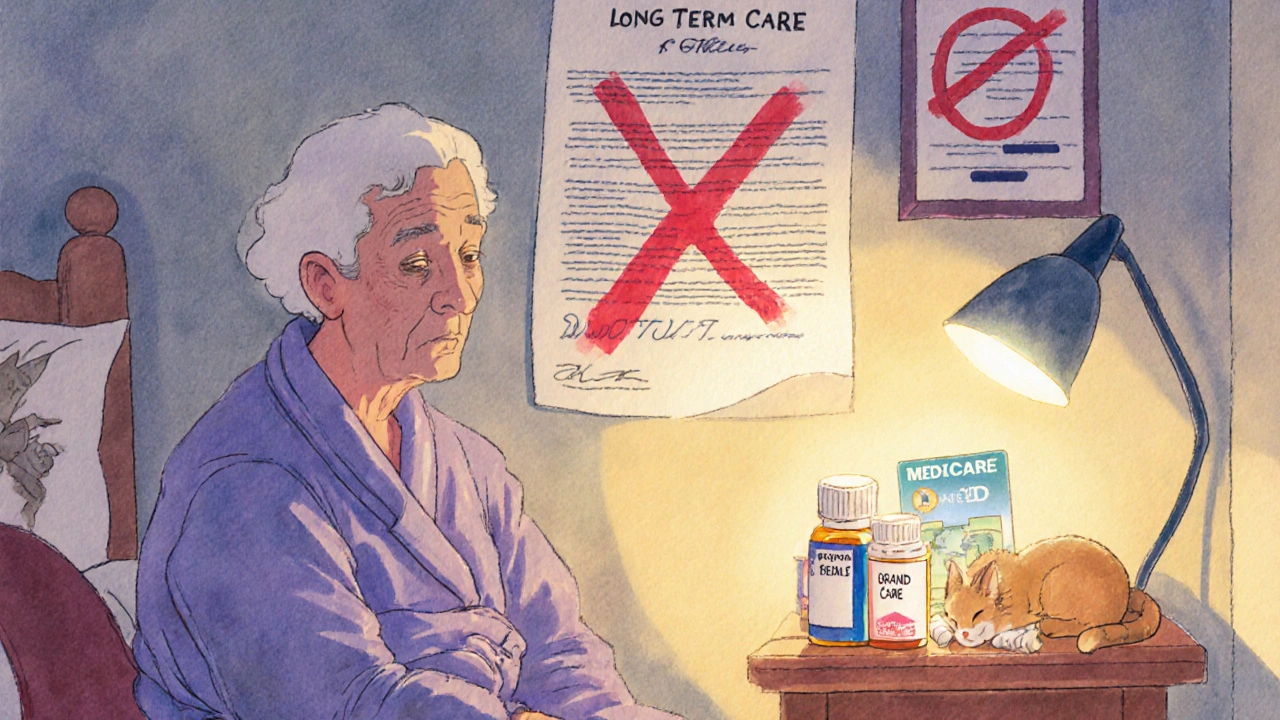
Long-Term Care Insurance and Generic Drug Coverage in Nursing Homes: What You Really Need to Know
- Beata Staszkow
- |
- |
- 9
Long-term care insurance doesn't cover generic drugs in nursing homes. Medicare Part D does - but formularies, delays, and enrollment gaps can block access. Know how it works to avoid costly surprises.
View more