
Patent Challenge: How Generic Drugs Fight for Access and Lower Costs
When a patent challenge, a legal effort to overturn or weaken a drug company’s exclusive rights to sell a medication. Also known as generic drug litigation, it’s how cheaper versions of medicines break through barriers and reach patients. A patent gives a drugmaker a 20-year monopoly on selling a brand-name drug. But once that clock starts ticking, other companies can file a patent challenge to prove the patent is invalid—maybe because the drug isn’t really new, or the claims are too broad. If they win, the FDA can approve generic versions before the patent expires, slashing prices overnight.
These challenges don’t happen in a vacuum. They’re tied to generic drugs, lower-cost versions of brand-name medications that contain the same active ingredient and work the same way. Also known as copycat drugs, they’re the backbone of affordable healthcare in the U.S. Every time a patent is successfully challenged, thousands of patients gain access to pills that cost 80–95% less. That’s why companies like Teva, Mylan, and Sandoz spend millions on legal teams—to get their generics approved faster. And it’s why big pharma fights back hard, sometimes filing dozens of secondary patents just to delay competition. This is the real game behind your prescription bill.
It’s not just about money. brand-name drugs, medications sold under a company’s trademark, often priced far above production cost. Also known as originator drugs, they’re the ones you see advertised on TV. When a patent challenge succeeds, it doesn’t just lower prices—it forces innovation. Drugmakers can’t just sit on a formula forever. They have to keep developing something better, or risk losing their market. That’s why so many of the posts here talk about generic substitution, insurance formularies, and state laws: they’re all connected to who gets access, when, and at what price. A patent challenge can shift the entire system.
Behind every generic drug you pick up at the pharmacy, there’s often a legal battle that happened months or years earlier. Some challenges are based on real science—proving a patent was filed fraudulently. Others are tactical, using loopholes in patent law to speed things up. The result? More choices. Lower costs. Better access. And for patients managing chronic conditions like diabetes, heart disease, or depression, that’s not just a policy win—it’s life-changing.
Below, you’ll find real examples of how patent challenges ripple through healthcare—from how pharmacists substitute generics under state laws, to how insurers decide which drugs to cover, to why some medications stay expensive even after their patents expire. These aren’t abstract legal concepts. They’re the reason your metformin costs $4 instead of $400.
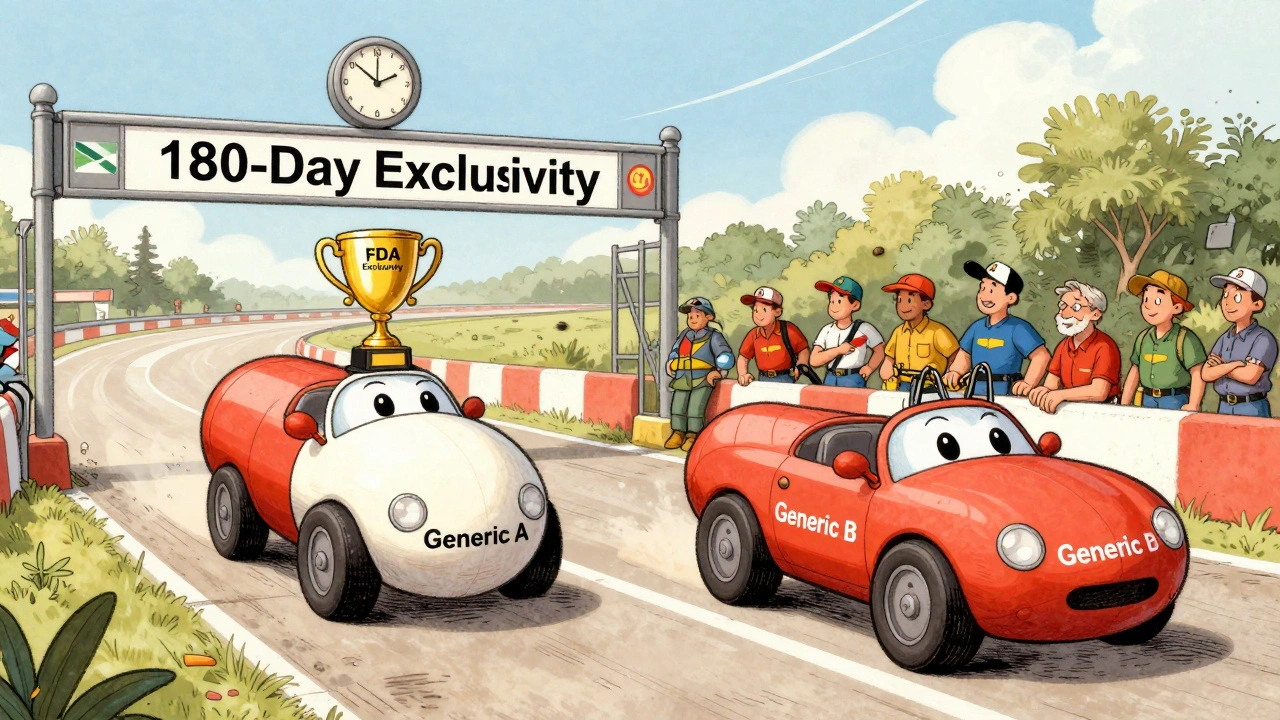
180-Day Exclusivity in Generic Drug Market Entry: How Patent Law Controls Access
- Keith Ashcroft
- |
- |
- 11
The 180-day exclusivity rule under the Hatch-Waxman Act gives the first generic drug maker to challenge a patent a temporary monopoly - but it often delays competition and keeps prices high. Here’s how it works, why it’s controversial, and what’s being done to fix it.
View more