
Pharmaceutical Quality: What Makes a Drug Safe and Effective
When you pick up a prescription, whether it's brand-name or generic, you're trusting that the pharmaceutical quality, the set of standards ensuring a drug is pure, potent, and consistently made. Also known as drug integrity, it's what separates life-saving medicine from dangerous filler. It’s not enough for a pill to look right—it has to act right, every time. That’s why the same rules apply to a $2 generic as to a $200 brand name: the active ingredient must be identical, the manufacturing must be controlled, and the final product must deliver the same effect in your body.
Behind every safe drug is a system built on cGMP compliance, current Good Manufacturing Practices that enforce strict controls over how drugs are made, tested, and packaged. Factories aren’t just inspected—they’re monitored in real time. From the raw chemicals to the sealed blister packs, every step is documented and verified. Then comes bioequivalence, the scientific proof that a generic drug behaves the same way in your bloodstream as the original. No guessing. No shortcuts. If it doesn’t match the brand’s absorption rate within tight limits, it doesn’t get approved. And it’s not just about the pill itself—it’s about what’s inside the bottle. Contaminants, impurities, even the moisture level in the packaging can break pharmaceutical quality standards.
These rules aren’t theoretical. They’re enforced by agencies like the FDA, which sends inspectors to plants across the globe—because drugs made in one country end up in your medicine cabinet. That’s why a $5 generic from India or Bangladesh has to meet the same bar as one made in the U.S. It’s also why some drugs get pulled: a single batch of tainted medication can cause kidney failure, nerve damage, or worse. That’s why medication safety, the ongoing process of preventing harm from drugs through oversight, labeling, and monitoring isn’t just a buzzword—it’s a daily battle against cutting corners.
What you’ll find below isn’t a list of random articles. It’s a deep dive into how pharmaceutical quality actually works in the real world—from how the FDA checks factories, to why some generics get delayed by patent games, to how a simple mix-up in dosage can turn a lifesaver into a danger. These posts show you the hidden systems that keep your pills working—and where things can go wrong if those systems fail. You’ll learn what to ask your pharmacist, how to spot if a drug might be off-spec, and why your insurance picks one generic over another. This isn’t about theory. It’s about knowing what’s in your body, and why you can trust it—or when you should question it.
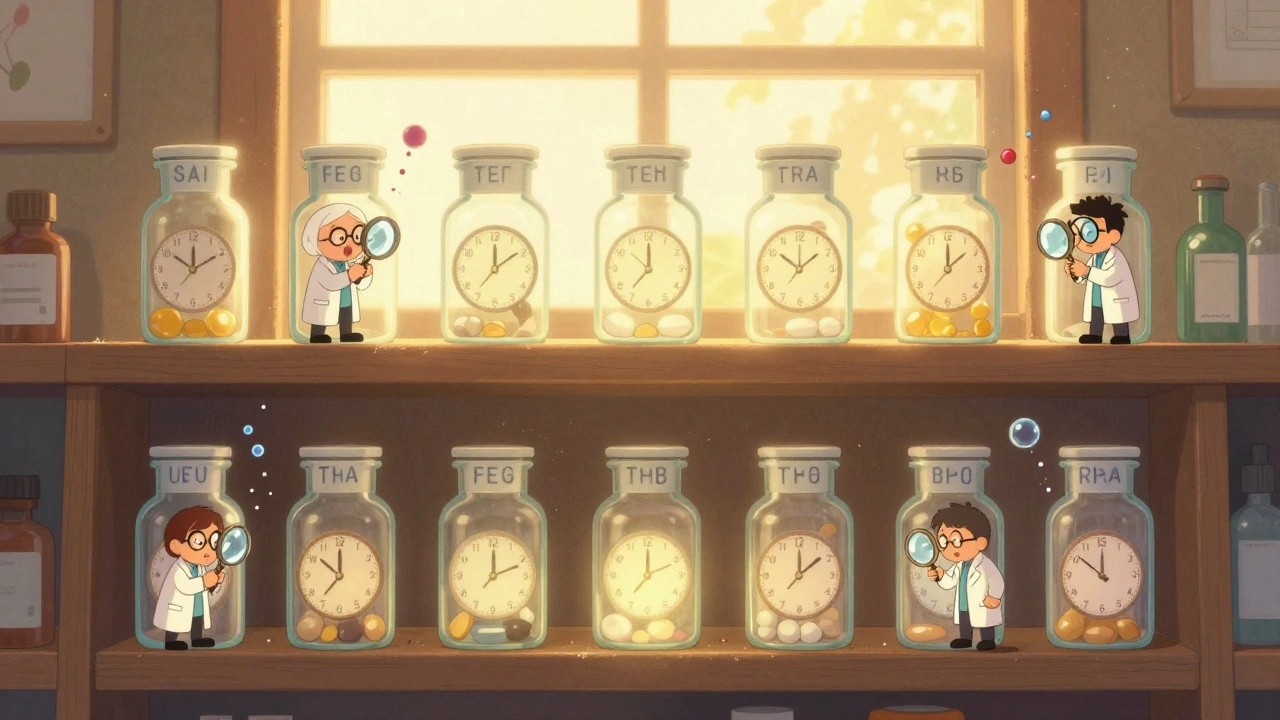
Stability Testing: Long-Term Quality Monitoring Post-Manufacture in Pharmaceuticals
- Keith Ashcroft
- |
- |
- 13
Stability testing ensures pharmaceuticals remain safe and effective after manufacture. Learn how ICH guidelines, real-time monitoring, and AI are shaping long-term quality control in drug production.
View more