
Shelf Life: How Long Your Medications Stay Safe and Effective
When you see an expiration date on a pill bottle, it’s not just a formality—it’s the shelf life, the period during which a medication remains safe, effective, and stable under specified storage conditions. Also known as drug stability period, it’s determined by rigorous testing that tracks how active ingredients break down over time in real-world conditions. That date isn’t arbitrary. It’s the result of studies done by manufacturers under controlled heat, humidity, and light to find out exactly when potency drops below 90% or when harmful byproducts start forming.
Not all drugs lose strength at the same rate. liquid medications, like antibiotics or insulin, often degrade faster than tablets because water accelerates chemical breakdown. storage conditions, especially heat and moisture, can cut shelf life in half even before the printed date. A bottle of amoxicillin left in a hot bathroom cabinet might be useless by the time you open it. Meanwhile, some solid tablets stored in a cool, dry drawer can stay effective years past their label date—though manufacturers won’t guarantee it.
Generic drugs follow the same rules. The FDA doesn’t give them a shorter shelf life just because they’re cheaper. A generic metformin tablet has the same chemical structure and stability profile as the brand version. But if you’re storing it wrong, it doesn’t matter. That’s why drug stability, how well a medication holds up under environmental stress, matters more than the brand name. You can’t tell if a pill is still good by how it looks. A discolored tablet, a weird smell, or a liquid that’s cloudy? Toss it. No second chances.
Some meds, like nitroglycerin or epinephrine auto-injectors, are especially sensitive. Their shelf life isn’t just about effectiveness—it’s about survival. If your EpiPen expired last year, it might not work when you need it most. Same with insulin. Even if it looks fine, a vial stored at room temperature for too long can lose potency fast, leading to dangerous blood sugar spikes.
What you’ll find in the posts below isn’t just a list of dates. It’s a practical guide to what really affects how long your meds last—from how the FDA tests them, to why some generics last longer than others, to how packaging and humidity play a role. You’ll learn how to read labels correctly, what to do when you find an old bottle in the back of your cabinet, and why the date on the box isn’t always the whole story. This isn’t about fear. It’s about knowing exactly what’s in your medicine cabinet—and making sure it still does what it’s supposed to.
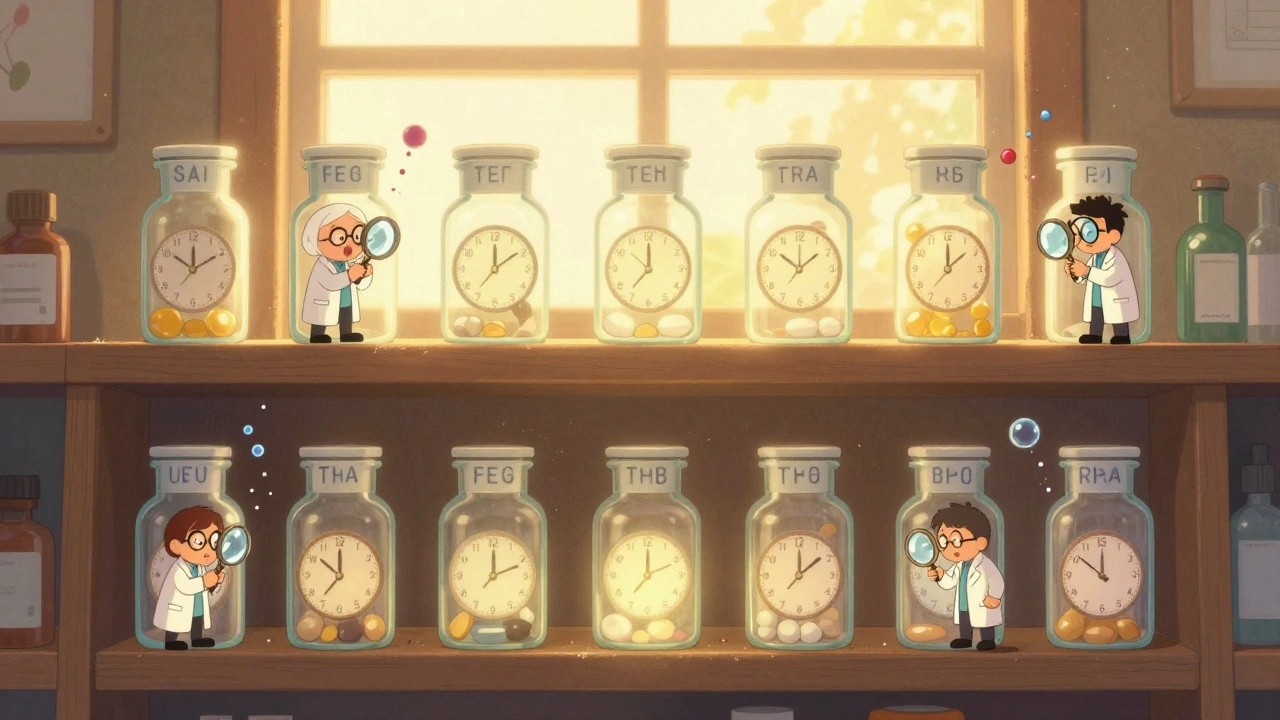
Stability Testing: Long-Term Quality Monitoring Post-Manufacture in Pharmaceuticals
- Keith Ashcroft
- |
- |
- 13
Stability testing ensures pharmaceuticals remain safe and effective after manufacture. Learn how ICH guidelines, real-time monitoring, and AI are shaping long-term quality control in drug production.
View more