
Stability Testing: What It Is and Why It Matters for Your Medications
When you pick up a pill bottle, you assume it’ll work the same way tomorrow as it did today. That’s not luck—it’s stability testing, the process pharmaceutical companies use to prove a drug won’t break down, lose potency, or turn harmful over time. Also known as drug stability testing, it’s the quiet backbone of every medication you take—from your daily blood pressure pill to the generic version your pharmacist swaps in without asking. Without it, expired antibiotics could turn useless. Insulin might clump. Painkillers could become toxic. The FDA and global regulators don’t just approve drugs based on how well they work in a lab—they demand proof they’ll stay safe for months or years on your shelf.
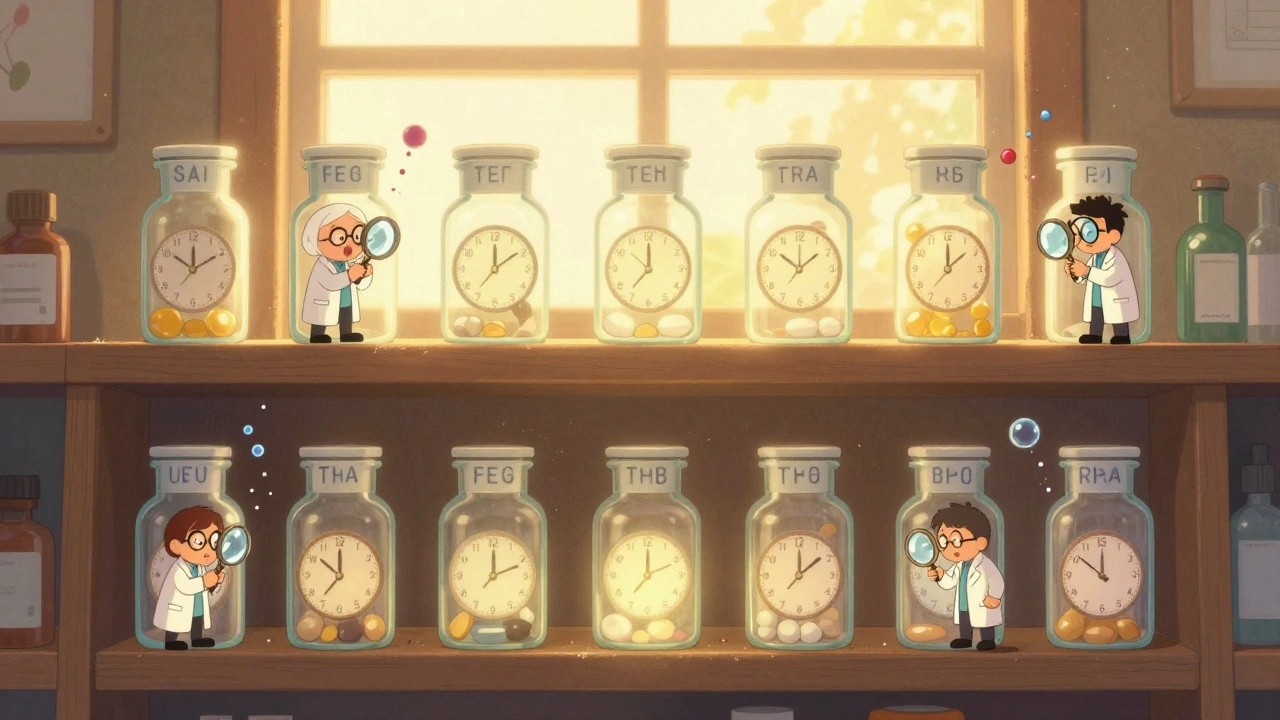
Stability testing isn’t a one-time check. It’s a long-term watch. Companies store drugs under different conditions—heat, humidity, light—and test them at intervals: 0 months, 3 months, 6 months, 12 months, even up to 3 years. They measure things like chemical breakdown, color changes, tablet hardness, and how fast the active ingredient dissolves. If a drug degrades too fast under normal storage, it gets a shorter expiration date. If it holds up, it might get a longer one. This is why some generics last longer on the shelf than others, even if they’re chemically identical. It’s not about quality—it’s about how well the formula survives time and environment.
This process directly affects generic drug approval, the pathway that lets cheaper versions of brand-name drugs reach the market. The FDA doesn’t just require bioequivalence—it demands proof that the generic won’t fall apart faster than the original. That’s why a $5 generic might still cost manufacturers millions in testing. It’s also why some drugs can’t be copied easily: their chemistry is too fragile. And when you see a pharmaceutical testing, the broad set of methods used to verify a drug’s safety, strength, purity, and consistency label on a bottle, that’s not marketing—it’s a record of hundreds of tests done behind the scenes.
Stability testing doesn’t just protect you from ineffective meds—it protects the whole system. If a batch of diabetes pills loses potency in a hot warehouse, thousands could get sick. If a heart medication breaks down in transit, lives are at risk. That’s why regulators inspect factories, track storage conditions, and require manufacturers to report any stability failures. Even small changes—like switching packaging or altering a preservative—trigger new stability studies.
What you’ll find below isn’t just a list of articles. It’s a collection of real-world stories where stability testing connects to your health: how generic drugs pass or fail these tests, why some medications need double checks, how insurance picks which generics to cover, and what happens when a drug’s shelf life isn’t properly monitored. These aren’t theoretical concerns. They’re the invisible rules that keep your medicine working—when you need it most.
Stability Testing: Long-Term Quality Monitoring Post-Manufacture in Pharmaceuticals
- Keith Ashcroft
- |
- |
- 13
Stability testing ensures pharmaceuticals remain safe and effective after manufacture. Learn how ICH guidelines, real-time monitoring, and AI are shaping long-term quality control in drug production.
View more