
NTI Drugs: What They Are, Why They Matter, and How They Affect Your Safety
When it comes to medications, not all drugs are created equal. Some, like NTI drugs, medications with a narrow therapeutic index where small changes in dose can lead to toxicity or treatment failure. Also known as narrow therapeutic index drugs, they demand extreme precision—because the line between healing and harm is razor-thin. These aren’t rare oddities. They’re common prescriptions you or someone you know might be taking right now.
Think of warfarin, a blood thinner used to prevent clots but so sensitive that a 10% dose change can trigger dangerous bleeding or clotting. Or levodopa, used for Parkinson’s, where even slight shifts in timing or amount can cause uncontrollable movements or worsening stiffness. Then there’s phenytoin, an old-school seizure drug that builds up in your system over time, turning a normal dose into a toxic one if your liver slows down. These aren’t theoretical risks. Real people end up in emergency rooms because their levels drifted just a little too far.
NTI drugs require more than just following the label. They need regular blood tests, careful timing, and awareness of what you eat, drink, or take alongside them. A single over-the-counter painkiller or herbal supplement can throw off your levels. Even switching from one generic version to another—something most people assume is safe—can cause problems because absorption rates vary slightly between manufacturers. That’s why pharmacists and doctors track these meds closely. And why you should too.
What you’ll find in the articles below isn’t just a list of drugs. It’s a practical guide to understanding how these high-risk medications behave, how they interact with others, and how to spot the warning signs before something goes wrong. From double-check protocols in hospitals to how insurance formularies handle these tricky drugs, the posts here give you the real-world tools to stay safe. You won’t find fluff. Just clear, direct info on what to watch for, what to ask, and how to avoid the most common mistakes.
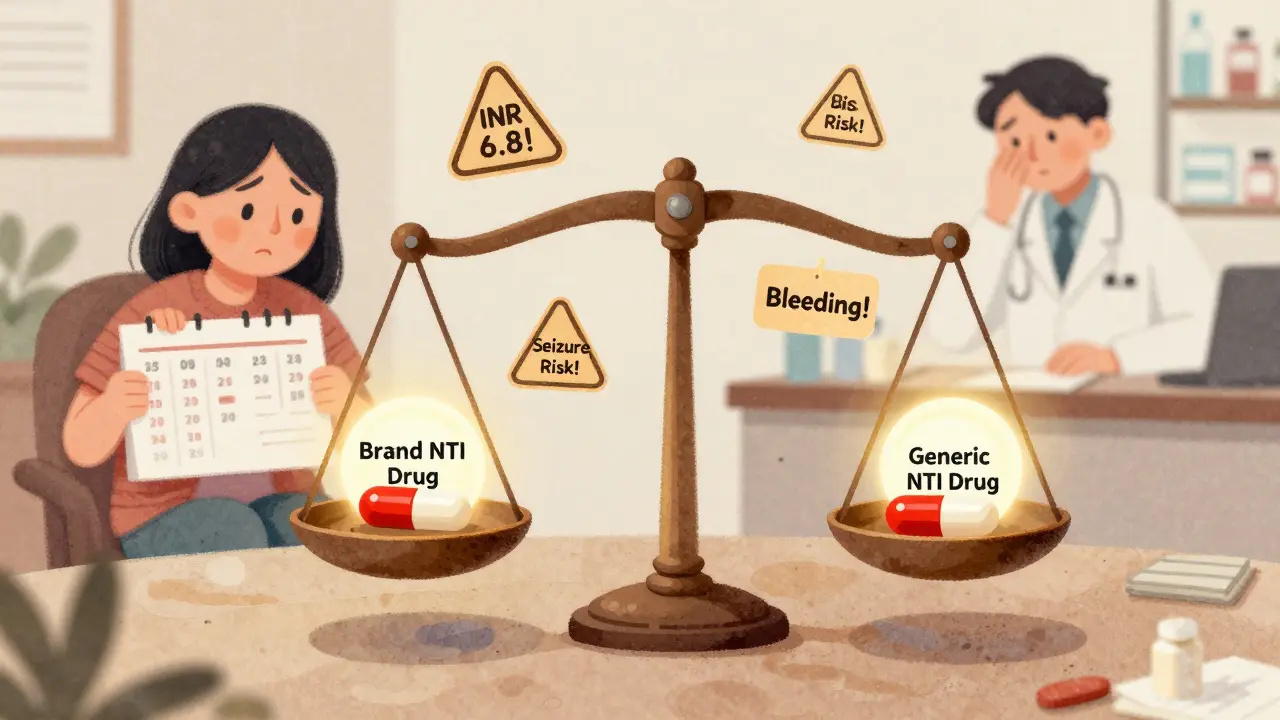
Combination NTI Drugs and Generic Availability: Coverage and Gaps
- Keith Ashcroft
- |
- |
- 12
Combination NTI drugs offer powerful treatment for complex conditions, but generic versions are nearly nonexistent due to strict bioequivalence requirements and high safety risks. Patients face gaps in access and monitoring, with real-world consequences.
View more
State Laws on Generic Drug Substitution: What Pharmacists and Patients Need to Know
- Keith Ashcroft
- |
- |
- 10
State laws on generic drug substitution vary widely across the U.S., affecting how pharmacists swap brand-name drugs for generics. Learn how consent rules, NTI drug restrictions, and biosimilar policies differ by state-and what patients and pharmacists need to know.
View more