
Hatch-Waxman Act: How It Changed Generic Drugs and Your Prescription Costs
When the Hatch-Waxman Act, a 1984 U.S. law that balanced brand-name drug patents with faster generic drug approval. Also known as the Drug Price Competition and Patent Term Restoration Act, it changed how medicines reach patients forever. Before this law, companies could sit on patents for years, blocking cheaper versions even after the original drug’s effectiveness was proven. The Hatch-Waxman Act broke that logjam. It let generic makers prove their drugs worked without repeating every expensive clinical trial — just show they’re the same as the brand-name version. That’s why today, 9 out of 10 prescriptions are filled with generics.
The law didn’t just help patients save money. It created a clear path for generic drug approval, the process that lets manufacturers get FDA permission to sell cheaper versions of brand-name drugs. It also gave brand-name companies a limited extension on their patents — up to five extra years — to make up for time lost during FDA review. This trade-off kept innovation alive while opening the door for competition. Today, that balance still shapes how brand-name drugs, original medications developed and marketed by pharmaceutical companies under patent protection and generics fight for shelf space. You see the results every time your pharmacist hands you a lower-cost pill with a different label.
But it’s not perfect. Some drugs — especially those with narrow therapeutic windows like warfarin or levothyroxine — still face delays because states and insurers are cautious about substitution. And while the Hatch-Waxman Act made generics possible, it didn’t stop companies from using legal tricks to delay them. Pay-for-delay deals, where brand makers pay generics to stay off the market, are still a problem. That’s why you’ll find articles here on Hatch-Waxman Act impacts — from state-level substitution rules to how insurers pick which generics to cover. You’ll also see how this law connects to real-world issues: why your insulin costs less now, why some meds require double-checks, and how biosimilars are the next chapter in this story. What you’ll find below isn’t just history — it’s the reason your prescription is cheaper today, and what’s coming next.
FDA's 180-Day Exclusivity: Benefits for First Generic Applicants
- Beata Staszkow
- |
- |
- 0
Learn how FDA's 180-day exclusivity works for generic drug manufacturers, including eligibility, forfeiture risks, and upcoming regulatory reforms in the US market.
View more
ANDA Process: Legal Requirements for Generic Drug Approval in the U.S.
- Beata Staszkow
- |
- |
- 11
The ANDA process lets generic drug makers get FDA approval by proving bioequivalence to brand-name drugs, cutting costs and speeding access. Legal requirements include identical active ingredients, strict CMC standards, patent certifications, and GDUFA fees.
View more
When Do Drug Patents Expire? Understanding the 20-Year Term and Real-World Timeline
- Beata Staszkow
- |
- |
- 12
Drug patents last 20 years from filing, but real market exclusivity is often just 7-12 years due to clinical trials. Extensions, regulatory exclusivity, and patent thickets can delay generics for years - here's how it really works.
View more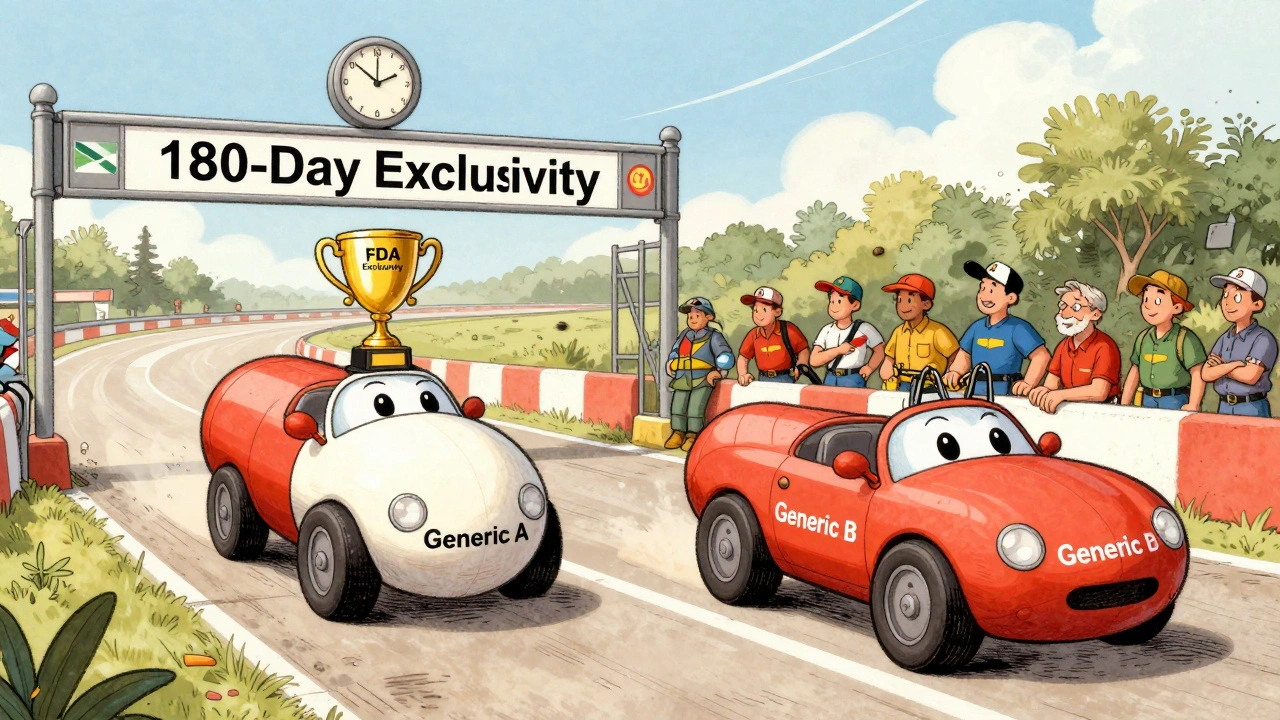
180-Day Exclusivity in Generic Drug Market Entry: How Patent Law Controls Access
- Keith Ashcroft
- |
- |
- 11
The 180-day exclusivity rule under the Hatch-Waxman Act gives the first generic drug maker to challenge a patent a temporary monopoly - but it often delays competition and keeps prices high. Here’s how it works, why it’s controversial, and what’s being done to fix it.
View more